Archive by Author | oktable

Michigan Public Health System is Not Ready to Combat Avian Flu

Dairy workers at risk of disease don’t have protective equipment when they need it

As H5N1, or avian flu, continues to spread among dairy and egg facilities across the state, Michigan farmworkers and outreach workers report that the personal protective equipment (PPE), testing, and vaccines needed to combat the disease are not readily available. Staff from the Michigan Immigrant Rights Center (MIRC) recently connected with 20 dairy workers in Michigan’s upper peninsula who were sick with flu-like symptoms. It took repeated communication from MIRC staff and partner organizations to determine who could provide testing, flu vaccines, and PPE for the affected workers. This experience highlights the wide gaps that exist in the current response to avian flu in Michigan to ensure workers at highest risk are protected, and the stark need for additional resources to stop the virus from gaining opportunities to mutate and spread person to person.

In 2024, two human cases of H5N1 were identified in Michigan, both among dairy workers who are at high risk of contracting the virus from cows. Currently the Michigan Department of Health and Human Services (MDHHS) directs affected workers to their local public health departments for H5N1 PPE, flu vaccines, testing, and treatment. However, the reality is that many public health departments are ill-equipped to serve in this role. Many do not have PPE, tests, treatment, or vaccines readily available, nor do they have the staff and language resources needed to communicate effectively with this vulnerable workforce.

On January 16, 2025, a group of 20 dairy workers in the northern peninsula reported being sick with flu-like symptoms. The illness spread quickly among the workers. On January 22, the local health department stated that they did not have  H5N1 PPE, testing, or flu vaccines on hand, but would try to locate some resources. On January 28, they provided paper masks and COVID testing for the workers. On January 29, MDHHS stated that they had run out of PPE kits but would also look for resources. Two weeks later, on February 14, the local health department was able to access about seven avian flu tests and arranged a testing site for workers, however due to miscommunication and confusion about whether their employer would allow them to attend, no workers attended. On February 17, after a month of advocacy efforts by MIRC staff, MDHHS obtained PPE to send to the local health department and the workers finally received H5N1 PPE. To date, the local health department is still working to arrange flu shots for these individuals. 

Public health experts assert that speed is essential in responding to potential avian flu outbreaks. As this timeline indicates, Michigan is not ready to respond with the swiftness necessary to mitigate the spread of H5N1. The Michigan Department of Agriculture and Rural Development (MDARD) tested either the farm’s cows or the milk within two weeks of the first reported illness and fortunately the tests came back negative. However, the response to test the animals was much swifter than the response for the human workers.

One of the sick workers provided a statement to MIRC in Spanish that was translated by our outreach workers:

“We hope that through this communication, there can be protective equipment for the other ranches, since we’ve already gotten PPE at the ranch where we are working. It arrived a little late, we hoped to get it sooner, but now we have it. We hope that the agencies that helped us can help other farms too. The agencies should be better prepared, so that when there is a request or someone is ill, the agency can respond quicker to those who need the protective equipment. If the protective equipment had arrived faster, we might not all have gotten sick.”

“The services that public health departments provide really vary by location,” said Rachelle Linsenmayer, MIRC staff attorney. “Some health departments have seasonal flu vaccines, flu testing, and H5N1 testing, but many do not. We’ve noticed that more remote health department locations are less likely to have the Spanish language resources that animal production workers need.”

In Barry County, a dairy worker noticed her co-workers were sick and wanted to avoid contracting the same illness. When she reached out to the local health clinic, she was told they didn’t have the avian flu vaccine. She then contacted her local health department but the staff did not speak Spanish and she could not explain in English what she needed. Fortunately, a few days later, an outreach worker from MDHHS assisted her with communication with the local health department. However, the worker was disappointed that she could not be vaccinated, because no vaccines were available. Dairy workers in Kent County also reported flu-like symptoms, but they didn’t go to the clinic due to a lack of information, and their busy work schedules did not allow them to miss work. 

Accessing medical care is especially hard for dairy workers who work extremely long shifts, at least 12 hours per day. Many dairy farms operate 24 hours a day, 7 days per week, with round the clock milking schedules. The farms are remote and may not have access to nearby health facilities. When workers do have time off, they need to be able to quickly find and access resources, and cannot waste time contacting multiple agencies to locate H5N1 resources. Many dairy workers also fear seeking health services because they cannot afford an expensive medical bill. Given the heightened climate of immigration enforcement, workers are also afraid to travel to nearby health agencies. Health departments, if given additional state and federal support, can lower some of the barriers that animal production workers face by offering mobile clinics and providing PPE, testing, and vaccines on-site at workers’ housing or workplace. With the recent passage of the Earned Sick Time Act, dairy workers should now have access to paid leave when they need to seek preventive care or are sick.

The experience of dairy workers around the state highlights a major disconnect between what animal production workers are advised to do if they have been exposed to avian flu and the actual resources available to them. State and federal recommendations underline the importance of workers having PPE, getting preventative flu shots, and getting tested for avian flu if they are symptomatic, yet many local health departments – particularly in more remote and rural areas of Michigan where workers are located – do not have testing, PPE, or flu shots readily available. This leads workers to lose trust in local health departments. Organizations like MIRC also fear losing trust with workers if we direct them to resources that are not actually available. 

Additionally, employers have a role to play in ensuring their workforce is protected. Employers are required to pay for PPE when a workplace hazard exists or is likely to exist. At a minimum, employers must provide gloves to protect animal production workers against avian flu and may be required to provide boots, bibs, respirators, and/or goggles, if animals have symptoms or have tested positive for avian flu. Dairy employers with affected herds can receive reimbursement from the U.S. Department of Agriculture for purchasing PPE for their employees.

While state and local health departments express a sincere willingness to help, miscommunication and difficulty finding resources persists. For example, health departments have had to request PPE or vaccines from other departments, and MDHHS had to ship PPE to health departments that did not have it. Last year MDHHS had promoted free resources but ran out of PPE in November 2024; unknowingly, other agencies continued making referrals to this service. Increased communication between state and local agencies is clearly needed to ensure services are available for animal production workers.

Simply put, Michigan’s public health departments, both state and local, are underresourced and not prepared or trained to sufficiently respond to avian flu. There is also a lack of support, funding, and resources from the Centers for Disease Control (CDC). Speed is critical to controlling the spread of H5N1 and public health agencies must have H5N1 tests and treatment medications like Tamiflu on hand, along with proper procedures to isolate the illness. Consistent supplies of PPE and vaccines are needed to help prevent the transfer of the illness from animal to human. COVID and flu vaccine access is also critical to reduce the risk of being infected with both avian flu and another virus at the same time, which can help prevent the formation of a hybrid virus that could be more severe or contagious. 

“The animal production industry frequently treats its workers as disposable, but the time has come for Michigan to prioritize the health of workers,” said Christine Sauvé, MIRC Policy and Communications Manager. “Not just for the workers’ sake, but to stop the spread of avian flu and protect the health of all Michiganders.”

Workers who have questions about their rights can call MIRC’s free confidential Farmworker and Immigrant Worker hotline at 800-968-4046.

New City Farm to vend produce at Southeast Area Farmers Market

Our Kitchen Table is thrilled to announce that New City Farm will be selling its fresh local produce as a vendor at the  the Southeast Area Farmers Market during the 2025 market season.

New City Farms’ produce is 100% grown naturally,  hyper local, and offers a large selection. New City Farms’ programs support youth employment for 20 high school students annually. And, it assists young farm professionals in developing entrepreneurial skills while creating a more resilient food system in Grand Rapids.

New City Farm CSA shares available with SNAP


1. Select “Become a Shareholder.”
2. Click on the share size you want to buy.
3. Click on the seasons you want to participate — spring, summer, and/or fall.
4. Click on “EBT Checkout.”
5.  Checkout & register for an account.

You will receive a confirmation email 3-4 weeks before it’s time to pick up your first share at our farmhouse at 1115 Leonard St NE, 49505, located on bus lines 13 & 15.

Using Double Up Food Bucks, and EBT Card food Dollars, you can buy a CSA farm share from New City Farm for half price — and you can pay in advance or pay weekly. Bridge Card holders can sign up at NewCityFarm.org or scan the QR Code in the image below.

Help with your heating and electric bills

The State of Michigan Low Income Home Energy Assistance program helps low-income households with energy needs. Help for high energy bills, shut offs, and home energy repairs is available to YOU.

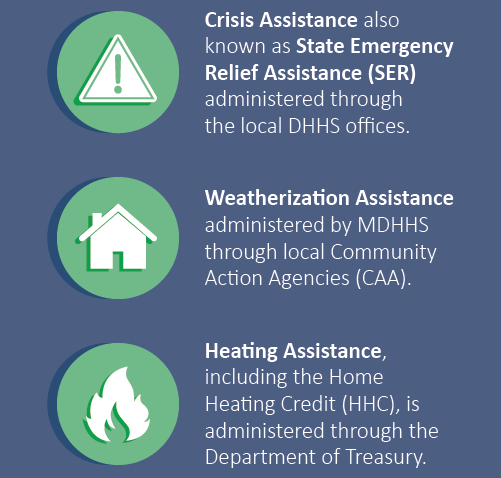
Crisis Assistance

You are responsible for your heat and
electric costs, however there is assistance to help you, known as crisis assistance, through MDHHS.

First, you must understand how to read
your bills, be careful how you use energy, and keep your costs as low as possible to avoid shutoff. Reach out to your heat or electric provider as they may be able to assist. Don’t wait until the last minute to ask for help. Call them about setting up a payment plan before you get shut off.

If you are in danger of shutoff, MDHHS may be able to assist with crisis money. Complete an
application either online through MI Bridges or by completing a MDHHS-1171, Assistance Application along with the SER, supplemental form or DHS-1514, Application for State Emergency Relief. Paper applications are available at your local DHHS office.

Home Heating Credit

The Home Heating Credit helps low-income households with their heating expenses if they
are a qualified Michigan homeowner or renter.
The amount of credit is based on income,
household size, and heat cost. If you received a credit in the last year, an application will be mailed to you near the end of the year.

The Home Heating Credit application, MI-1040CR-7 is available at your local library, MDHHS office, community agencies or the Department of Treasury.
You must complete the application between Jan. 1 and Sept. 30, or electronically when filing your tax returns. More information can be found at Home Heating Credit Information (Michigan.gov).

MLPP calls for Michigan lawmakers to keep kitchen table issues at the forefront of budget and policy

The Michigan League for Public Policy (MLPP) issued the following statement on the State of Michigan’s Consensus Revenue Estimating Conference (CREC) held today. MLPP president and CEO Monique Stanton shares:

“While revenues are coming in higher than expected for both the state’s General Fund and School Aid Fund, we are urging state lawmakers to keep in mind that there is a lot of uncertainty around how federal programs and funding will be impacted by the incoming administration at the federal level. Over the past few years, federal funding has made up more than 40% of Michigan’s budget, leaving our state’s economic standing particularly vulnerable if future cuts to federal revenue sources are made.

In these uncertain times, it’s critically important to remain focused on the people of Michigan and the things they need most. That means keeping kitchen table issues like healthcare and prescription drug costs, access to healthy and affordable food, strong education systems, child care access and affordability, and housing and utility costs at the forefront of budget and policy discussions in the weeks and months ahead. 

These are the issues that remain top of mind for many Michigan families, especially the approximately 4 million Michigan households facing financial hardship and could be just one emergency or missed paycheck away from severe economic decline. These are also the issues that remain critically important for the more than 2.1 million children in Michigan—nearly 1 in 5 of whom are living in poverty. Each and every child growing up in our state today needs and deserves to have a safe place to live, healthy food on the table, a strong education, and the quality early child care and healthcare they need to get a good start in life and grow up healthy and strong.

Given this morning’s projections, we also want to caution our state lawmakers not to heed calls for tax cuts, which we know will largely benefit the wealthiest Michiganders. Now is not the time to slash state revenues that are vital to helping communities flourish and to lifting up and providing stability for families who are struggling to make ends meet.”

MLPP recently released an overview of its 2026 State Budget Priorities, which have been developed by pairing community input with the League’s own data and research. The priorities are centered around what a state’s budget should value most: its people. For this reason, it is called The People’s Budget. The League urges state lawmakers and leaders to use The People’s Budget as a roadmap for their budget and policy decisions in the year ahead.

2024 was a good year for Our Kitchen Table

Thanks to the support of our food growers, market patrons, market vendors, and the schools hosting food gardens, OKT had another good year of growing and sharing fresh, local, healthy fruits, vegetables and herbs. As food prices rise, “growing your own” is an even more powerful way to feed our families and create an alternate to a broken food system that is focused on profits not health.

Southeast Area Farmers Market marked 20 years

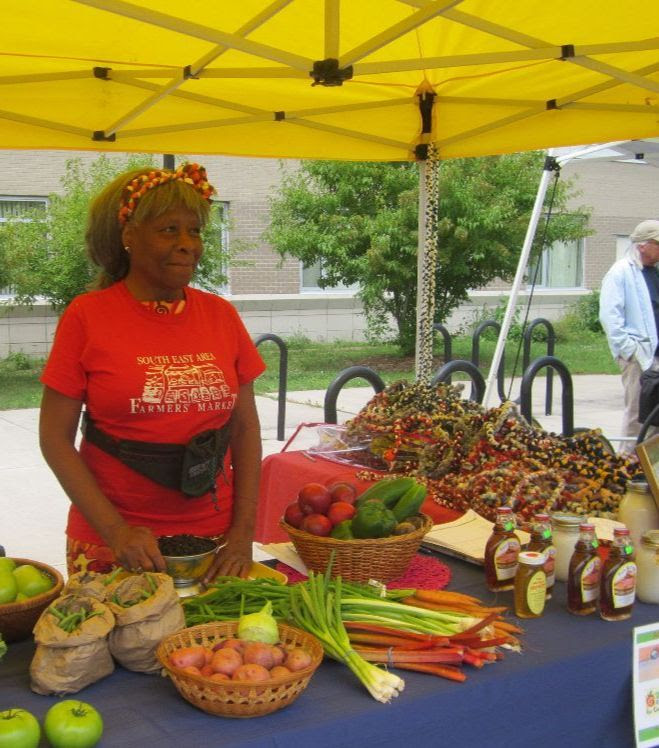
In addition to Ms. Yvonne (right), who has been with the market all 20 years, 2024 saw Moore’s Family Garden and Farm vending fresh produce grown in Muskegon. The Grand Rapids Food Coop and UMCH Fresh Market also brought fresh fruits and veggies every week. However, everyone’s favorite vendor was Jazae (above), a ten-year-old grower who is saving up for medical school, with help from her granny.

In 2024, OKT maintained food gardens at Glenwood Elementary School in Kentwood and Campus Elementary School in Grand Rapids. 

With direction from OKT peer garden coach Belinda Henderson, families who chose to were provided with organic food plants, soil, containers or raised beds, and coaching so they could grow their own food at home. All food plants were grown by Blandford Farm.

OKT wishes you and yours a happy, healthy, full-of-good-food 2025!

The risk of famine persists across the whole Gaza Strip.

Dove and Olives print by Caitlin Boyce-Jensen.

Reposted from World Food Program

Given the recent surge in hostilities, there are growing concerns that this worst-case scenario may materialize.

Violence has displaced nearly 2 million people, decimated livelihoods, crippled food systems, destroyed 70 percent of crop fields, severely restricted humanitarian operations and resulted in the collapse of health services and Water, Sanitation and Hygiene (WASH) systems.

Catastrophic acute food insecurity and concerning acute malnutrition levels will continue to prevail if the conflict continues, and humanitarian activities are restricted.

OKT featured in Why Hunger video

“From Security to Sovereignty: How Black Food Sovereignty Heals Local Food Systems and Economies.”

The Southeast Area Farmers Market and OKT’s growers are featured in this video produced by WhyHunger.

WhyHunger was founded in 1975 by the late musician Harry Chapin and Radio DJ Bill Ayres on the fundamental belief that access to nutritious food is a human right and hunger is a solvable problem in a world of abundance. What began as a simple commitment between two friends to make a difference has grown into a global non-profit, celebrating over 40 years of supporting social movements and grassroots innovations to change the systems, policies and institutions that perpetuate hunger and poverty in our world. WhyHunger has proven that change is possible and that justice can prevail.

House Passes Legislation to Protect Kids from Lead Exposure 

The Michigan House of Representatives passed legislation to protect children from lead exposure. The three-bill package updates the law to allow for more children exposed to lead to receive the proper treatment and help they need.

Lead poisoning especially impacts infants and children’s growing bodies and brains, causing developmental delays and behavioral problems, including aggression. Lead comes to the 49503 and 49507 neighborhoods via the soil, housing with lead paint, and possibly via the water supply, when old lead pipes are still in service. Here’s a breakdown of foods that can help:

  • Iron-rich foods: Deep green leafy vegetables like collards, mustard greens, kale, spinach; legumes (pinto, navy, black, and adzuki beans etc. and red lentils); raisins and dried prunes; meat.
  • Calcium rich foods: In addition to dairy, tuna, salmon, seeds (poppy, celery, chia and sesame), almonds, beans and lentils (legumes), and dark leafy greens (see above).
  • Vitamin C-rich foods: Citrus fruits, bell peppers, Brussels sprouts, broccoli, strawberries, kiwi fruit, kale, and mustard greens.

Cooking in an iron skillet and eating a vitamin C food along with an iron rich food helps the body absorb even more iron.

HB 5368, sponsored by state Rep. Julie M. Rogers (D-Kalamazoo), revises the definition of “elevated blood lead level” to the lowest number of micrograms per deciliter recognized by experts.

“As a practicing physical therapist, I have firsthand knowledge of the dangers that lead exposure can cause and have personally rehabilitated patients with balance and cognitive impairments traced to lead poisoning,” Rogers said. “There is no lead level in blood which can be considered safe … House Bill 5368 would bring Michigan in line with the new blood lead reference value by adopting the 3.5 micrograms per deciliter standard. All three bills are crucial to preventing lead poisoning, and if exposure does occur, the policy ensures that Michigan’s residents are connected with the resources they need as soon as possible.”

House Bill 4532, sponsored by state Rep. Rachel Hood (D-Grand Rapids), updates various lead provisions in statute and allows Michigan to administer and enforce the federal regulations on lead abatement.

“Michigan families deserve a safe and healthy home, and our legislation is a major victory for families across our state who lack one,” Hood said. “This legislation will protect our kids from the dangers of lead poisoning by providing funds to remove lead from homes, ensuring every child has a fair chance at a healthy future.”

House Bill 5369, sponsored by state Rep. Karen Whitsett (D-Detroit), requires a local health department or physician who is notified of a child less than 3 years old with an elevated blood lead level to refer that child to the Early On program, an early intervention program for children who need extra support and help because they have a development delay or pre-existing health issues that could slow their development

“Lead exposure continues to be a silent threat to the health and development of our children. By ensuring that children with elevated blood lead levels are connected to critical early intervention services like the Early On program, we are taking important steps toward protecting their future,” Whitsett said. “This package will help ensure that Michigan’s youngest residents get the support they need to thrive and prevent lifelong health consequences.”