Growing Food, Growing Justice:
Planting at 4th Street Garden Teaches More than How to Put a Plant in the Dirt!
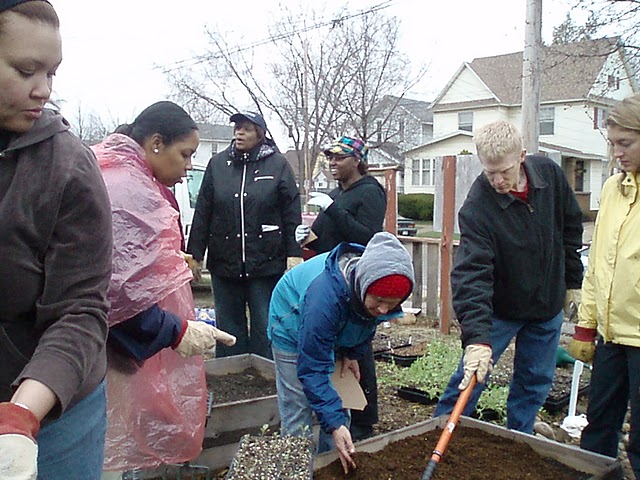
On April 16th, friends and community gathered at the 4th Garden Oasis for a workshop on bio-intensive planting. Though the skies were heavy with rain, that did not stop the sharing of experience around food and growing that was both inspiring and empowering. We explored learning the history of the site we garden on, how to create a soil that is good for planting in, what kind of tools we use in the garden, and how to plant to increase food and decrease water use.
We planted lettuce, red Russian kale, broccoli, radishes, and calendula flowers (it is a plant to keep out pesky critters, and bothersome bugs).
Thanks to all those who brought their insights, experiences, ideas, and enthusiasm to the table! We look forward to watching those little plants grow and feed our communities!
We will repeat the workshop on Saturday, April 23 at 9:30 am –noon, meeting at Boston Square CRC on Kalamazoo and Johnston.
Having a backyard or container garden is an important step toward eating the food you want, grown using the methods you feel are safe, and reducing the resources (ie. water, petroleum, and fertilizer) it takes to grow and deliver it!
Testing for Lead
Living in an urban neighborhood brings challenges around the soil that you can grow you food in. Grand Rapids has areas that test particularly high for both lead and arsenic in the soil, which makes growing food dangerous. Always be sure to have your soil tested by either a store bought test, or contacting OKT to advise you where you can have your soil tested! THERE ARE WAYS TO REMEDY THIS! Do not be discouraged if you find your soil has high levels of lead or arsenic, alternatives include raised beds and container gardening!
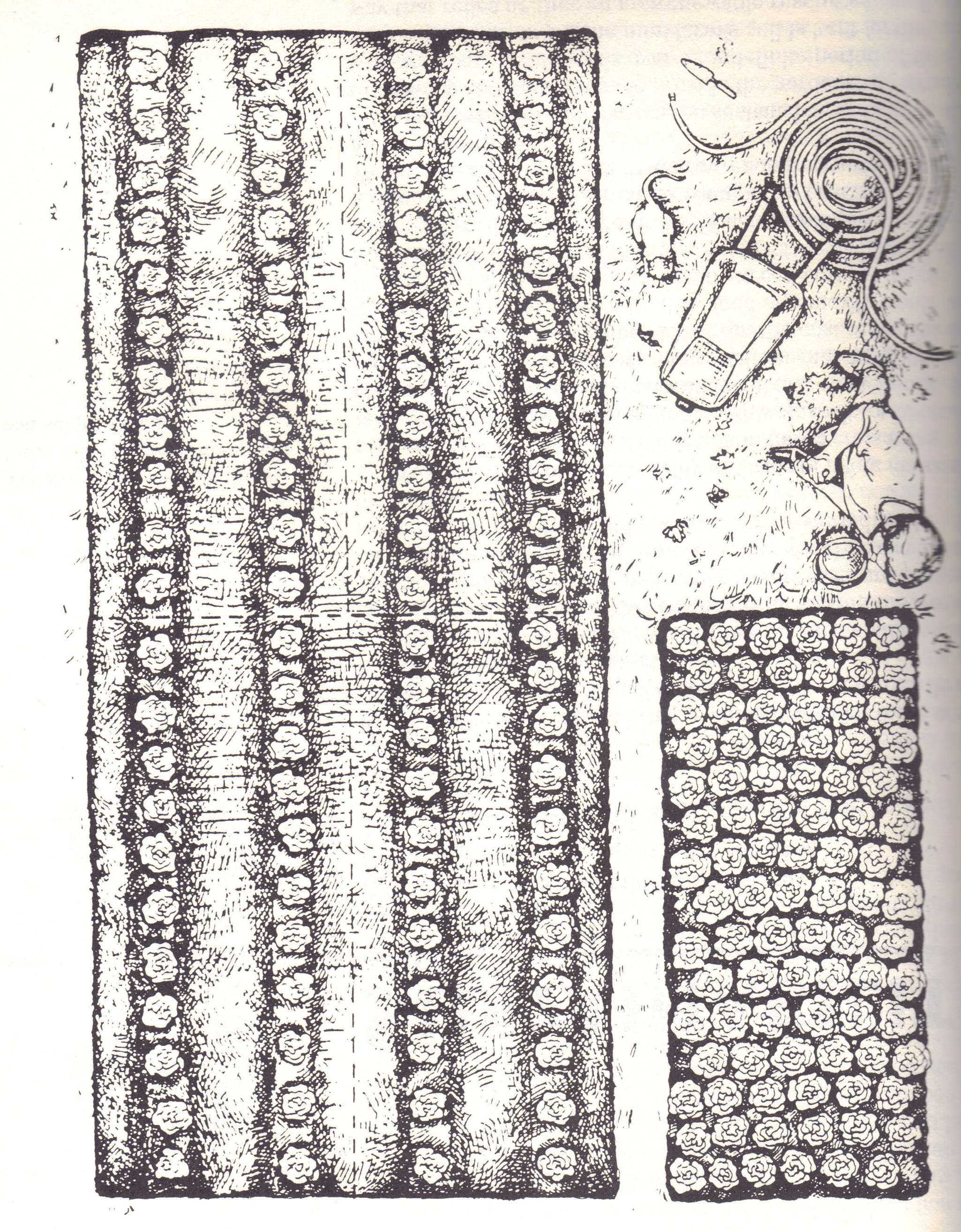
Biointensive Planting
The above shows two different styles of growing: traditional row growing and the biotensive growing method. You can see in the image that the biointensive method uses less space for the same amount of plants! Not only is space better utilized, but using this method, you will use less water, and have less weeds to clear out! Other benefits are:
Possibility of 200-400% increase in caloric production per area
Increased soil fertility 99% reduction in energy used per area
As the world grows larger, budgets become smaller, fuel becomes scarcer, droughts become more prevalent, creating a biointensive garden is an empowering thing to do.
Compost
Creating compost, or “growing soil”, is a large part of the biointensive growing process, which will be taught at another Our Kitchen Table workshop! We firmly believe we should create our own compost from our vegetable table scraps and other yard waste! For more resources on creating compost please visit www. Join us for the OKT compost workshop to learn this component!
Raised Beds
There are many ways to create a garden depending on what space and resources you have available to use. Many urban dwellers must deal with high lead levels in their soil, which can mean the need for raised beds or container gardens. Folks with limited ground space can grow from containers such as 5 gallon buckets on patios and rooftops. Exploring these options does not mean spending money, many restaurants will gladly donate 5 gallon buckets that pickles come in, or reclaimed wood is available on www.craigslist.com. Get creative! Some ideas include taking out inside of an old mattress and using the wooden frame, using hay bails, old tires filled with dirt, and pallet elbows!
COME TO OKT’s WORKSHOP TO LEARN MORE!

 Our Kitchen Table