Archives

OKT Policy Zine Series: What is food justice?

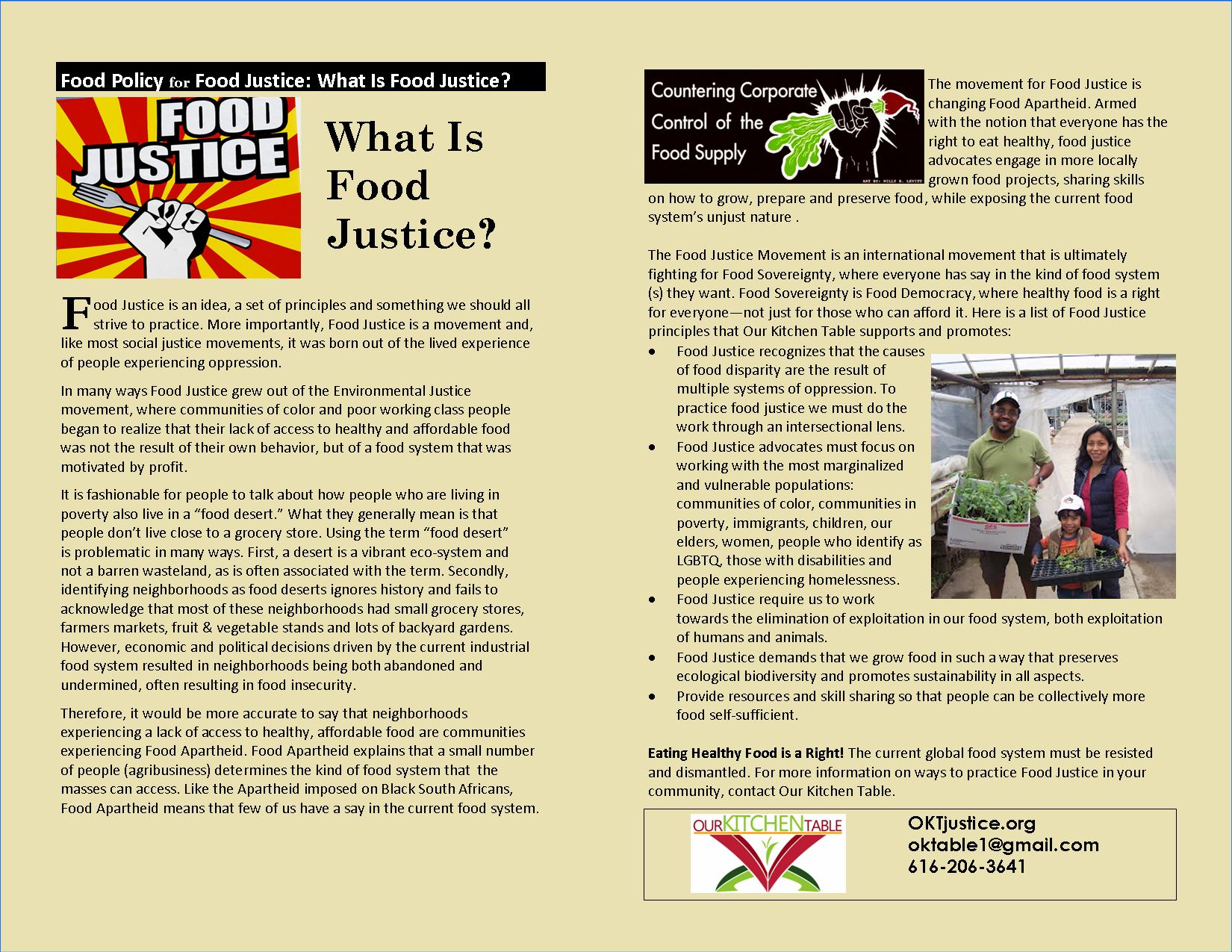
This second publication in the OKT policy zine series answers the question, “What is food justice?” Feel free to share or print out copies from the one-color, .pdf version, WHAT IS FOOD JUSTICE. Or, read the full text below the image.
OKT WHAT IS FOOD JUSTICE

Food Justice is an idea, a set of principles and something we should all strive to practice. More importantly, Food Justice is a movement and, like most social justice movements, it was born out of the lived experience of people experiencing oppression.


In many ways Food Justice grew out of the Environmental Justice movement, where communities of color and poor working class people began to realize that their lack of access to healthy and affordable food was not the result of their own behavior, but of a food system that was motivated by profit.


It is fashionable for people to talk about how people who are living in poverty also live in a “food desert.” What they generally mean is that people don’t live close to a grocery store. Using the term “food desert” is problematic in many ways. First, a desert is a vibrant eco-system and not a baren wasteland, as is often associated with the term. Secondly,
identifying neighborhoods as food deserts ignores history and fails to acknowledge that most of these neighborhoods had small grocery stores, farmers markets, fruit & vegetable stands and lots of backyard gardens. However, economic and political decisions driven by the current industrial food system resulted in neighborhoods being both abandoned andundermined, often resulting in food insecurity.

Therefore, it would be more accurate to say that neighborhoods experiencing a lack of access to healthy, affordable food are communities experiencing Food Apartheid. Food Apartheid explains that a small number of people (agribusiness) determines the kind of food system that  the masses can access. Like the Apartheid imposed on Black South Africans, Food Apartheid means that few of us have a say in the current food system.

The movement for Food Justice is changing Food Apartheid. Armed with the notion that everyone has the right to eat healthy, food justice advocates engage in more locally grown food projects, sharing skills on how to grow, prepare and preserve food, while exposing the current food system’s unjust nature .


The Food Justice Movement is an international movement that is ultimately fighting for Food Sovereignty, where everyone has say in the kind of food system(s) they want. Food Sovereignty is Food Democracy, where healthy food is a right for everyone―not just for those who can afford it. Here is a list of Food Justice principles that Our Kitchen Table supports and promotes:

  • Food Justice recognizes that the causes of food disparity are the result of multiple systems of oppression. To practice food justice we must do the work through an intersectional lens.
  • Food Justice advocates must focus on working with the most marginalized and vulnerable populations: communities of color, communities in poverty, immigrants, children, our elders, women, people who identify as LGBTQ, those with disabilities and people experiencing homelessness.
  • Food Justice require us to work towards the elimination of exploitation in our food system, both exploitation of humans and animals.
  • Food Justice demands that we grow food in such a way that preserves ecological biodiversity and promotes sustainability in all aspects.
  • Provide resources and skill sharing so that people can be collectively more food self-sufficient.

Eating Healthy Food is a Right! The current global food system must be resisted and dismantled. For more information on ways to practice Food Justice in your community, contact Our Kitchen Table.


Michigan loses. “Right to Farm Act” A Farewell To Backyard Chickens and Beekeepers

Reposted from The Inquisitr

Michigan residents lost their “right to farm” this week thanks to a new ruling by the Michigan Commission of Agriculture and Rural Development. Gail Philburn of the Michigan Sierra Club told Michigan Livethe new changes “effectively remove Right to Farm Act protection for many urban and suburban backyard farmers raising small numbers of animals.” Backyard and urban farming were previously protected by Michigan’s Right to Farm Act. The Commission ruled that the Right to Farm Act protections no longer apply to many homeowners who keep small numbers of livestock.

Kim White, who raises chickens and rabbits, said, “They don’t want us little guys feeding ourselves. They want us to go all to the big farms. They want to do away with small farms and I believe that is what’s motivating it.” The ruling will allow local governments to arbitrarily ban goats, chickens and beehives on any property where there are 13 homes within one eighth mile or a residence within 250 feet of the property, according to Michigan Public Radio. The Right to Farm Act was created in 1981 to protect farmers from the complaints of people from the city who moved to the country and then attempted to make it more urban with anti-farming ordinances. The new changes affect residents of rural Michigan too. It is not simply an urban or suburban concern.

Shady Grove Farm in Gwinn, Michigan is the six and a half acre home to 150 egg-laying hens that provide eggs to a local co-op and a local restaurant. The small Michigan farm also homes sheep for wool and a few turkeys and meat chickens to provide fresh healthy, local poultry. “We produce food with integrity,” Randy Buchler told The Blaze about Shady Grove Farm. “Everything we do here is 100 percent natural — we like to say it’s beyond organic. We take a lot of pride and care in what we’re doing here.” Shady Grove Farm was doing its part to bring healthy, local, organic food to the tables of Gwinn residents, and it mirrors the attitudes of hundreds of other small farming operations in Michigan and thousands of others popping up around the nation. The ruling comes within days of a report by The World Health Organization that stated the world is currently in grave danger of entering a post-antibiotic era. The WHO’s director-general Dr. Margaret Chan argued that the antibiotic use in our industrialized food supply is the worst offender adding to the global crisis. “The Michigan Agriculture Commission passed up an opportunity to support one of the hottest trends in food in Michigan – public demand for access to more local, healthy, sustainable food,” Gail Philbin told MLive.

Meanwhile, neighboring Indiana Governor Mike Pence signed Senate Bill 179 a few weeks before which freed up poultry and egg sales from local and state regulation. Yesterday, the USDA Secretary Tom Vilsack announced massive funding to support research about small and medium-sized family farms, such as small farms ability to build-up local and regional economic systems. “There’s a lot of unnecessary legal action being taken against small farms who are doing good things in their communities,” said Randy Buchler, who is also on the board of directors for the Michigan Small Farm Council. The Michigan Small Farm Council actively fought to support Michigan farming freedom, but ultimately the Commission voted to approve the new restrictions.

“Farm Bureau has become another special interest beholden to big business and out of touch with small farmers, and constitutional and property rights of the little guy,” Pine Hallow Farms wrote to the Michigan Small Farm Council. The Michigan Farm Bureau endorsed the new regulatory changes. Matthew Kapp, government relations specialist with Michigan Farm Bureau, told MLive that the members weighed in and felt that people raising livestock need to conform to local zoning ordinances. The Farm Bureau did not feel Michigan’s Right To Farm Act was meant to protect the smaller farms, and ultimately the Michigan Commission of Agriculture and Rural Development agreed.


Read more at http://www.inquisitr.com/1235774/michigan-loses-right-to-farm-this-week-a-farewell-to-backyard-chickens-and-beekeepers/#h1li66mXbmdIb6Ap.99

This entry was posted on May 6, 2014, in Policy.

New GVSU program: “Place-Based Education for Environmental Stewardship and Community Engagement”

Grand Valley State University’s College of Education is excited to offer two pilot courses in a potential* (see below) graduate certificate program in Place-Based Education for Environmental Stewardship and Community Engagement.  Through an interconnected sequence of four courses, the certificate program will prepare learners to:

  • Understand the principles and implementation of place-based education that nurtures and augments academic and ecological literacy
  • Develop insight into the cultural, historical, economic, and environmental character of one’s place
  • Recognize the unique issues that threaten the health and well-being of the inhabitants (both human and non-human) of a particular place
  • Cultivate a sense of responsibility, agency, and empowerment in facing these challenges and designing sustainable solutions


The program will be designed for anyone working within K-12 educational settings as well as individuals outside of the field of formal education who have an interest in issues related to sustainability, community problem-solving, and community well-being. The certificate program can be completed within 12 months and all courses will be held on Grand Valley State University’s Pew campus in downtown Grand Rapids.  Please see the attached flyer for descriptions and meeting times for the first two pilot courses in the anticipated certificate sequence.  Enrollment is currently open and the first course in the program begins the week of May 5, 2014.

This potential certificate program will also be available to undergraduate students.  Interested GVSU undergraduates taking graduate courses through the dual-credit process may be admitted to a graduate certificate program.  The credits for these courses may by applied either as undergraduate elective credit or toward completion of the graduate certificate.  However, an undergraduate student may NOT be awarded a graduate certificate until they have been awarded a baccalaureate degree. Non-GVSU students without a bachelor’s degree will be considered for the program on an individual basis.

*We anticipate the certificate program will be approved and officially established through the University curriculum process by Spring, 2015.  In the event that the program does not move from “pilot” to permanent status, credits earned can be applied as graduate or undergraduate electives depending upon the level of the student.

All interested individuals can apply to Grand Valley State University and register for courses with graduate non-degree-seeking status. Please visit https://www.gvsu.edu/admissions/graduate/apply-to-grand-valley-19.htm for further information about applying to Grand Valley State University with graduate non-degree-seeking-status and registering for courses.

All questions and inquiries about the program can be directed to:

Dr. Kevin Holohan
Grand Valley State University
College of Education
489C Richard M. DeVos Center
616.331.6229
holohank@gvsu.edu

This entry was posted on April 14, 2014, in Policy.

The Real Irish American Story Not Taught in Schools

Did you know the Great Potato famine was not a natural calamity, but the result of political food injustice? Like many countries in today’s gobal economy, Ireland, during the potato famine, exported an abundance of food while people starved to death. This article is reposted from Common Dreams.
Article by Bill Bigelow 

“Wear green on St. Patrick’s Day or get pinched.” That pretty much sums up the Irish-American “curriculum” that I learned when I was in school. Yes, I recall a nod to the so-called Potato Famine, but it was mentioned only in passing.To support the famine relief effort, British tax policy required landlords to pay the local taxes of their poorest tenant farmers, leading many landlords to forcibly evict struggling farmers and destroy their cottages in order to save money.
Sadly, today’s high school textbooks continue to largely ignore the famine, despite the fact that it was responsible for unimaginable suffering and the deaths of more than a million Irish peasants, and that it triggered the greatest wave of Irish immigration in U.S. history. Nor do textbooks make any attempt to help students link famines past and present.

Yet there is no shortage of material that can bring these dramatic events to life in the classroom. In my own high school social studies classes, I begin with Sinead O’Connor’s haunting rendition of “Skibbereen,” which includes the verse:

… Oh it’s well I do remember, that bleak
December day,
The landlord and the sheriff came, to drive
Us all away
They set my roof on fire, with their cursed
English spleen
And that’s another reason why I left old
Skibbereen.

By contrast, Holt McDougal’s U.S. history textbook The Americans, devotes a flat two sentences to “The Great Potato Famine.” Prentice Hall’s America: Pathways to the Present fails to offer a single quote from the time. The text calls the famine a “horrible disaster,” as if it were a natural calamity like an earthquake. And in an awful single paragraph, Houghton Mifflin’s The Enduring Vision: A History of the American People blames the “ravages of famine” simply on “a blight,” and the only contemporaneous quote comes, inappropriately, from a landlord, who describes the surviving tenants as “famished and ghastly skeletons.” Uniformly, social studies textbooks fail to allow the Irish to speak for themselves, to narrate their own horror.

These timid slivers of knowledge not only deprive students of rich lessons in Irish-American history, they exemplify much of what is wrong with today’s curricular reliance on corporate-produced textbooks.

First, does anyone really think that students will remember anything from the books’ dull and lifeless paragraphs? Today’s textbooks contain no stories of actual people. We meet no one, learn nothing of anyone’s life, encounter no injustice, no resistance. This is a curriculum bound for boredom. As someone who spent almost 30 years teaching high school social studies, I can testify that students will be unlikely to seek to learn more about events so emptied of drama, emotion, and humanity.

Nor do these texts raise any critical questions for students to consider. For example, it’s important for students to learn that the crop failure in Ireland affected only the potato—during the worst famine years, other food production was robust. Michael Pollan notes in The Botany of Desire, “Ireland’s was surely the biggest experiment in monoculture ever attempted and surely the most convincing proof of its folly.” But if only this one variety of potato, the Lumper, failed, and other crops thrived, why did people starve?

Thomas Gallagher points out in Paddy’s Lament, that during the first winter of famine, 1846-47, as perhaps 400,000 Irish peasants starved, landlords exported 17 million pounds sterling worth of grain, cattle, pigs, flour, eggs, and poultry—food that could have prevented those deaths. Throughout the famine, as Gallagher notes, there was an abundance of food produced in Ireland, yet the landlords exported it to markets abroad.

The school curriculum could and should ask students to reflect on the contradiction of starvation amidst plenty, on the ethics of food exports amidst famine. And it should ask why these patterns persist into our own time.

More than a century and a half after the “Great Famine,” we live with similar, perhaps even more glaring contradictions. Raj Patel opens his book, Stuffed and Starved: Markets, Power and the Hidden Battle for the World’s Food System: “Today, when we produce more food than ever before, more than one in ten people on Earth are hungry. The hunger of 800 million happens at the same time as another historical first: that they are outnumbered by the one billion people on this planet who are overweight.”

Patel’s book sets out to account for “the rot at the core of the modern food system.” This is a curricular journey that our students should also be on — reflecting on patterns of poverty, power, and inequality that stretch from 19th century Ireland to 21st century Africa, India, Appalachia, and Oakland; that explore what happens when food and land are regarded purely as commodities in a global system of profit.

But today’s corporate textbook-producers are no more interested in feeding student curiosity about this inequality than were British landlords interested in feeding Irish peasants. Take Pearson, the global publishing giant. At its website, the corporation announces (redundantly) that “we measure our progress against three key measures: earnings, cash and return on invested capital.” The Pearson empire had 2011 worldwide sales of more than $9 billion—that’s nine thousand million dollars, as I might tell my students. Multinationals like Pearson have no interest in promoting critical thinking about an economic system whose profit-first premises they embrace with gusto.

As mentioned, there is no absence of teaching materials on the Irish famine that can touch head and heart. In a role play, “Hunger on Trial,” that I wrote and taught to my own students in Portland, Oregon—included at the Zinn Education Project website— students investigate who or what was responsible for the famine. The British landlords, who demanded rent from the starving poor and exported other food crops? The British government, which allowed these food exports and offered scant aid to Irish peasants? The Anglican Church, which failed to denounce selfish landlords or to act on behalf of the poor? A system of distribution, which sacrificed Irish peasants to the logic of colonialism and the capitalist market?

These are rich and troubling ethical questions. They are exactly the kind of issues that fire students to life and allow them to see that history is not simply a chronology of dead facts stretching through time.

So go ahead: Have a Guinness, wear a bit of green, and put on the Chieftains. But let’s honor the Irish with our curiosity. Let’s make sure that our schools show some respect, by studying the social forces that starved and uprooted over a million Irish—and that are starving and uprooting people today.

Copyright 2014 Zinn Education Project
Bill Bigelow

Bill Bigelow taught high school social studies in Portland, Ore. for almost 30 years. He is the curriculum editor of Rethinking Schools and the co-director of the Zinn Education Project. This project offers free materials to teach people’s history and an “If We Knew Our History” article series. Bigelow is author or co-editor of numerous books, including A People’s History for the Classroom and The Line Between Us: Teaching About the Border and Mexican Immigration.

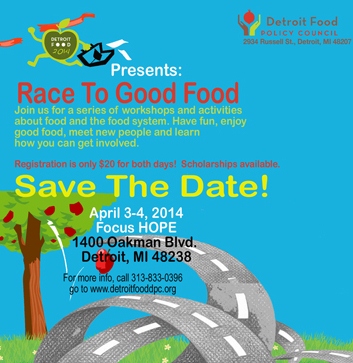
Detroit Food 2014: Race to Good Food, food justice conference

Keynote Speaker LaDonna Redmond, founder of the Campaign for Food Justice Now

updated-frt-save-date-detroit-foodApril 3-4, 2014
Focus: HOPE Conference Center, 1400 Oakman, Detroit, MI 48238

Workshop Tracks:

  • Food Systems 101
  • Race, Economics and Research
  • Policy Boot Camps
  • Youth Track

Register online, by mail or onsite. The registration fee is $20. Scholarships are available! No one will be turned away due to inability to pay the registration fee. To register visit www.detroitfoodpc.org/events/Annual-Summit

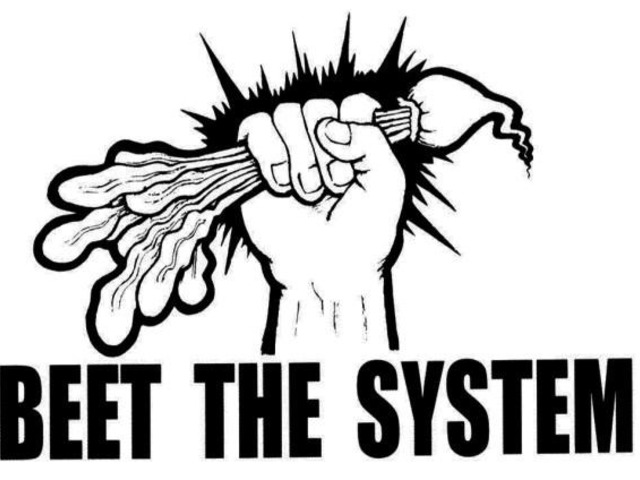
You can support “Beet the System” artists

If you are a friend of OKT, you have seen the popular Beet the System artwork on our website and in our handouts. Radical artists, Breakfast and Jess, created this image in 2000 and printed thousands of stickers to share with the food justice community at no cost.


They are now in the process of reprinting this and several other original food justice images, enough to last ten years (they hope). If you can, please support them in this effort by contributing through their Kickstarter campaign, which runs through tomorrow. They say, “We have made and distributed thousands and thousands of these stickers since 2000. We want to make more and distribute them as always….for FREE. So far they have been included in catalogs, sent to street artists all over the world and packed in produce boxes … People always ask us for more and we would love to continue distributing them, of course, for free.”

Support the Beet the System Kickstarter Campaign Here.

More food justice art by Breakfast and Jess

beet the system

This entry was posted on February 18, 2014, in Policy.

Time reports, “Children Exposed to More Brain-Harming Chemicals Than Ever Before

5652946954_fba956db2b_oA new report finds the number of chemicals contributing to brain disorders in children has doubled since 2006. Reposted from Time Magazine.

In recent years, the prevalence of developmental disorders such as autismattention-deficit/hyperactivity disorder (ADHD) and dyslexia have soared. While greater awareness and more sophisticated diagnoses are partly responsible for the rise, researchers say the changing environment in which youngsters grow up may also be playing a role.

In 2006, scientists from the Harvard School of Public Health and the Icahn School of Medicine at Mount Sinai identified five industrial chemicals responsible for causing harm to the brain — lead, methylmercury, polychlorinated biphenyls (found in electric transformers, motors and capacitors), arsenic (found in soil and water as well as in wood preservatives and pesticides) and toluene (used in processing gasoline as well as in paint thinner, fingernail polish and leather tanning). Exposure to these neurotoxins was associated with changes in neuron development in the fetus as well as among infants, and with lower school performance, delinquent behavior, neurological abnormalities and reduced IQ in school-age children.

(MORE: A Link Between Pesticides and Attention Disorders?)

Now the same researchers have reviewed the literature and found six additional industrial chemicals that can hamper normal brain development. These are manganese, fluoride, chlorpyrifos, dichlorodiphenyltrichloroethane, tetrachloroethylene and polybrominated diphenyl ethers. Manganese, they say, is found in drinking water and can contribute to lower math scores and heightened hyperactivity, while exposure to high levels of fluoride from drinking water can contribute to a seven-point drop in IQ on average. The remaining chemicals, which are found in solvents and pesticides, have been linked to deficits in social development and increased aggressive behaviors.

The research team acknowledges that there isn’t a causal connection between exposure to any single chemical and behavioral or neurological problems — it’s too challenging to isolate the effects of each chemical to come to such conclusions. But they say the growing body of research that is finding links between higher levels of these chemicals in expectant mothers’ blood and urine and brain disorders in their children should raise alarms about how damaging these chemicals can be. The developing brain in particular, they say, is vulnerable to the effects of these chemicals, and in many cases, the changes they trigger are permanent.

“The consequence of such brain damage is impaired [central nervous system] function that lasts a lifetime and might result in reduced intelligence, as expressed in terms of lost IQ points, or disruption in behavior,” they write in their report, which was published in the journal Lancet Neurology.

They point to two barriers to protecting children from such exposures — not enough testing of industrial chemicals and their potential effect on brain development before they are put into widespread use, and the enormous amount of proof that regulatory agencies require in order to put restrictions or limitations on chemicals. Most control of such substances, they note, occurs after negative effects are found among adults; in children, the damage may be more subtle, in the form of lower IQ scores or hyperactivity, that might not be considered pathological or dangerous. “Our very great concern is that children worldwide are being exposed to unrecognized toxic chemicals that are silently eroding intelligence, disrupting behaviors, truncating future achievements and damaging societies, perhaps most seriously in developing countries,” they write. “A new framework of action is needed.”

Read more: Children Exposed to More Brain-Harming Chemicals Than Ever Before | TIME.com http://healthland.time.com/2014/02/14/children-exposed-to-more-brain-harming-chemicals-than-ever-before/#ixzz2tcf4R3or

What is your biggest priority for health? Speak out at a meeting near you.

Healthy Kent is introducing a community-driven process to determine the health concerns of residents throughout Kent County. The next step in providing the best public health access and opportunities is called Mobilizing for Action through Planning and Partnerships, or MAPP. This framework is what Healthy Kent will use to implement a community-wide strategic planning process to improve health outcomes in Kent County.

MAPP is working to help communities improve health and quality of life. To reach these goals, we must take a community-wide and community-driven approach to strategic planning. Using the MAPP process, members of Healthy Kent believe it can help communities achieve optimal health. The group will work to identify and use existing resources wisely, consider each community’s unique circumstances and needs, and form effective partnerships for strategic action. The mostsuccessful efforts are those where people share a commitment to – and have a role in – the community’s health and overall well-being.

Choose the meeting in your neighborhood and RSVP here.

Meeting 1
Date Time Location
February 11, 2014 6:00 – 8:00 p.m. Mercy Health St. Mary’s Campus
200 Jefferson Ave. SE
Grand Rapids, MI 49503
February 12, 2014 5:30 – 7:30 p.m. Kentwood Branch (Richard L. Root) KDL
4950 Breton SE
Kentwood, MI 49508
February 18, 2014 6:00 – 8:00 p.m. Kent County Health Department
700 Fuller Ave. NE
Grand Rapids, MI 49503
February 19, 2014 5:30 – 7:30 p.m. East Grand Rapids Branch KDL
746 Lakeside Dr. SE
East Grand Rapids, MI 49506
February 20, 2014 5:30 – 7:30 p.m. Kentwood Branch (Richard L. Root) KDL
4950 Breton SE
Kentwood, MI 49508
February 26, 2014 6:00 – 8:00 p.m. Kroc Center
2500 Division Ave. S
Grand Rapids, MI 49507
February 27, 2014 6:00 – 8:00 p.m. 3 Mile Community Center
1470 3 Mile Rd. NW
Walker, MI 49544
March 4, 2014 5:30 – 7:30 p.m. Plainfield Township Branch KDL
2650 5 Mile Rd. NE
Grand Rapids, MI 49525
March 4, 2014 6:00 – 8:00 p.m. Straight School Building
Multi-Purpose Room
850 Chatham St. NW
Grand Rapids, MI 49504
March 6, 2014 6:00 – 8:00 p.m. 3 Mile Community Center
1470 3 Mile Rd. NW
Walker, MI 49544
March 11, 2014 5:30 – 7:30 p.m. Wyoming Branch KDL
3350 Michael Ave. SW
Wyoming, MI 49509
March 12, 2014 6:00 – 8:00 p.m. Grandville Public School: High School Cafeteria
4700 Canal Ave. SW
Grandville, MI 49418
March 18, 2014 5:30 – 7:30 p.m. Grandville Branch KDL
4055 Maple St. SW
Grandville, MI 49418
March 18, 2014 6:00 – 8:00 p.m. Hope Network
755 36th St. SE
Grand Rapids, MI 49548
March 20, 2014 6:00 – 8:00 p.m. Sparta Civic Center
75 N. Union St.
Sparta, MI 49345
March 25, 2014 5:30 – 7:30 p.m. Caledonia Township KDL
6260 92nd St. SE
Caledonia, MI 49316
March 27, 2014 6:00 – 8:00 p.m. Metro Health
14211 White Creek Road
Cedar Springs, MI 49319
March 31, 2014 5:30 – 7:30 p.m. Krause Memorial Branch KDL
140 E. Bridge St.
Rockford,  MI 49341
April 1, 2014 6:00 – 8:00 p.m. Tyrone Township Offices
28 E. Muskegon St.
Kent City, MI 49330
April 3, 2014 5:30 – 7:30 p.m. Byron Township Branch KDL
8191 Byron Center Ave. SW
Byron Center, MI 49315
April 14, 2014 5:30 – 7:30 p.m. Englehardt Branch KDL
200 N. Monroe St.
Lowell, MI 49331
April 15, 2014 5:30 – 7:30 p.m. Cascade Township Branch KDL
2870 Jacksmith Ave. SE
Grand Rapids,  MI 49546

Money Back in Michigan offers guidance on tax credits

Filers urged to use free tax help and skip rapid refund centers

Low- and moderate-income Michigan households will find useful information this tax season in the latest Money Back in Michigan report released by the Michigan League for Public Policy. By using free tax filing help and claiming all available credits, tax filers can put hundreds or even thousands of dollars back into their pockets.

The 2014 edition of Money Back in Michigan outlines seven federal and state tax credits available to low- and moderate-income families. The guide also encourages tax-filers to use free tax preparation services and skip expensive “rapid refund” centers that can eat up a portion of the refunds.

“That tax refund can make a positive difference in the lives of Michigan families.  Not everyone is aware that they qualify for these credits, and that there is free help to file for them,’’ said League President & CEO Gilda Z. Jacobs. “It’s important that working families get all of their tax credits due to them.’’

Among the credits are the federal Earned Income Tax Credit and the Michigan Earned Income Tax Credit, aimed at offsetting taxes paid by lower-income working families. A married couple raising two children who earned $48,378 could get $6,054 back in state and federal EITCs, for example.

“With refunds so much lower than two years ago, it’s more important than ever for families to claim all the credits that are due, and to avoid what are essentially high-cost loans from rapid refund centers,’’ Jacobs said.

The Michigan Earned Income Tax Credit is 6 percent of the federal EITC, dropping from 20 percent in Tax Year 2011. Also reduced from two years ago is the Homestead Property Tax Credit. In addition, the $600 per child state child tax exemption was eliminated for Tax Years 2012 and beyond. The reductions are the result of the 2011 legislation that shifted income taxes from businesses to individuals.

Other credits detailed in Money Back in Michigan are the federal Child and Dependent Care Credit, the federal Child Tax Credit and the state Home Heating Credit. It’s important that renters know that the Michigan Home Heating Credit and the Homestead Property Tax Credit are available to income-eligible renters.

The Money Back in Michigan packet also encourages tax-filers to use IRS-trained volunteers for help in filing taxes. Visit http://www.michiganfreetaxhelp.org or call 2-1-1 (or 1-800-552-1183 if no answer) to find the closest  Volunteer Income Tax Assistance site or to locate free software. And, of course, taxpayers can also find forms at post offices, libraries or by calling 1-800-TAXFORM, and file their own taxes.

Money Back in Michigan includes a series of fliers that can be printed and distributed at libraries, child care centers, municipal and county tax offices and other public areas to raise awareness of the tax breaks and refunds. It’s available at http://www.mlpp.org.

###

The Michigan League for Public Policy, http://www.mlpp.org, is a nonpartisan, state-level policy institute dedicated to economic opportunity for all. It convenes the Prosperity Coalition, http://www.prosperitycoalition.org.

– See more at: http://www.mlpp.org/money-back-in-michigan-2#sthash.6TyPueWU.dpuf

This entry was posted on February 10, 2014, in Policy.