Vote Solar is hosting a Community Solar Lobby Day in Lansing, MI on December 4th from 9am-2:30pm. We will meet at Central United Methodist Church: 215 N Capitol Ave, Lansing, MI 48933. Please RSVP here! This upcoming lame duck session is a last chance to really push for community solar and really make a lasting impact over the next few years
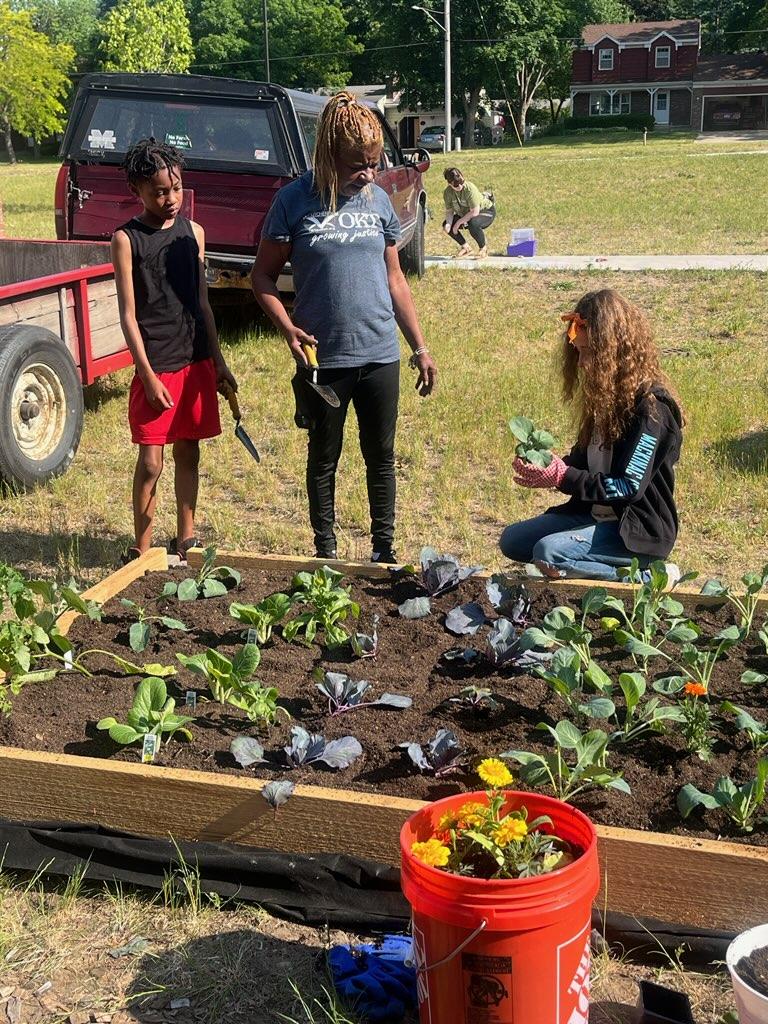
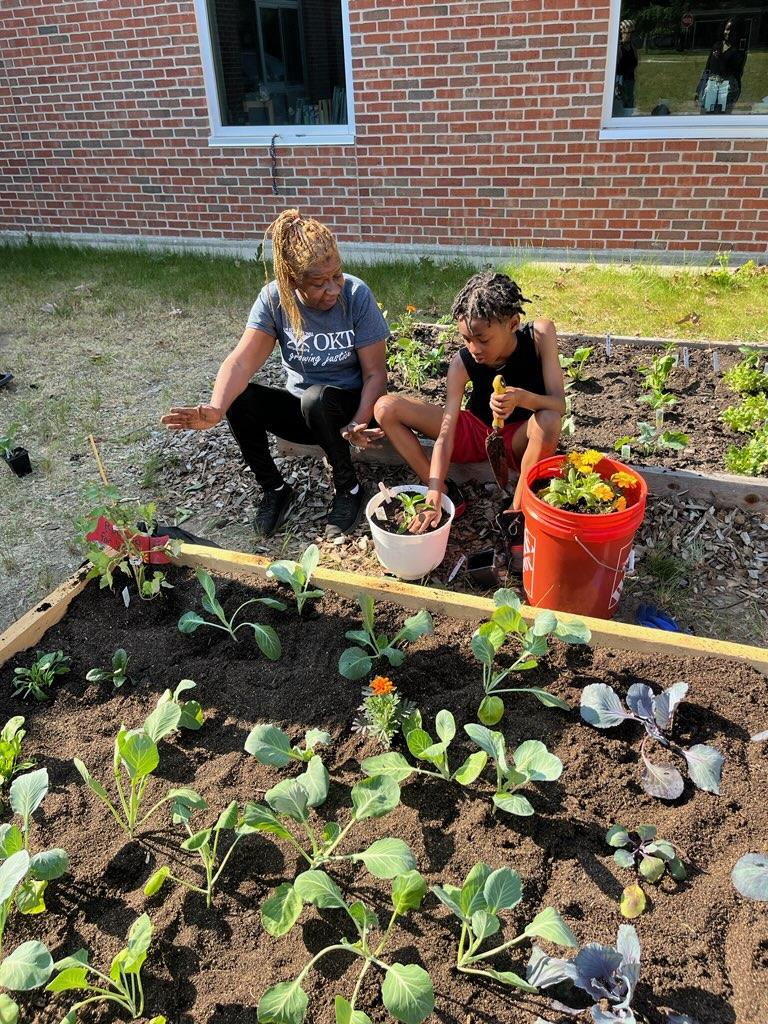
This growing season, OKT is growing food with two public schools: Grand Rapids Campus Elementary and Kentwood Glenwood Elementary. OKT garden coach, Belinda Henderson, is working with five families from Campus to grow food at their homes. OKT has a school garden growing at Glenwood and also works with five school families, recent immigrants to the US who wanted to also grow food at their homes.
OKT provided composted soil, organic food plants, containers, trellises, and tools needed for gardening. Belinda meets regularly with the growers to teach them how to grow and handle any problems that come up, for example harmful insects and hungry wildlife.
In addition to the families from Campus and Glenwood, OKT also continues to support food growers from years past who still want our assistance. OKT also provides learning sessions where participants learn more about how they can select and prepare healthier, affordable foods for their families.
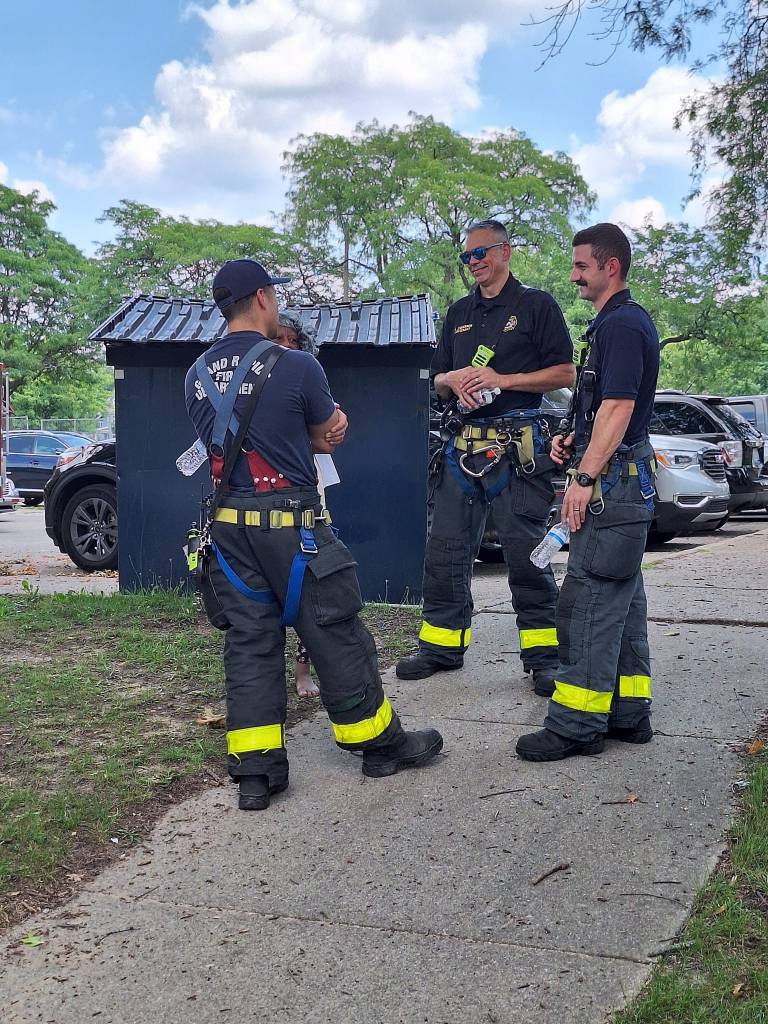
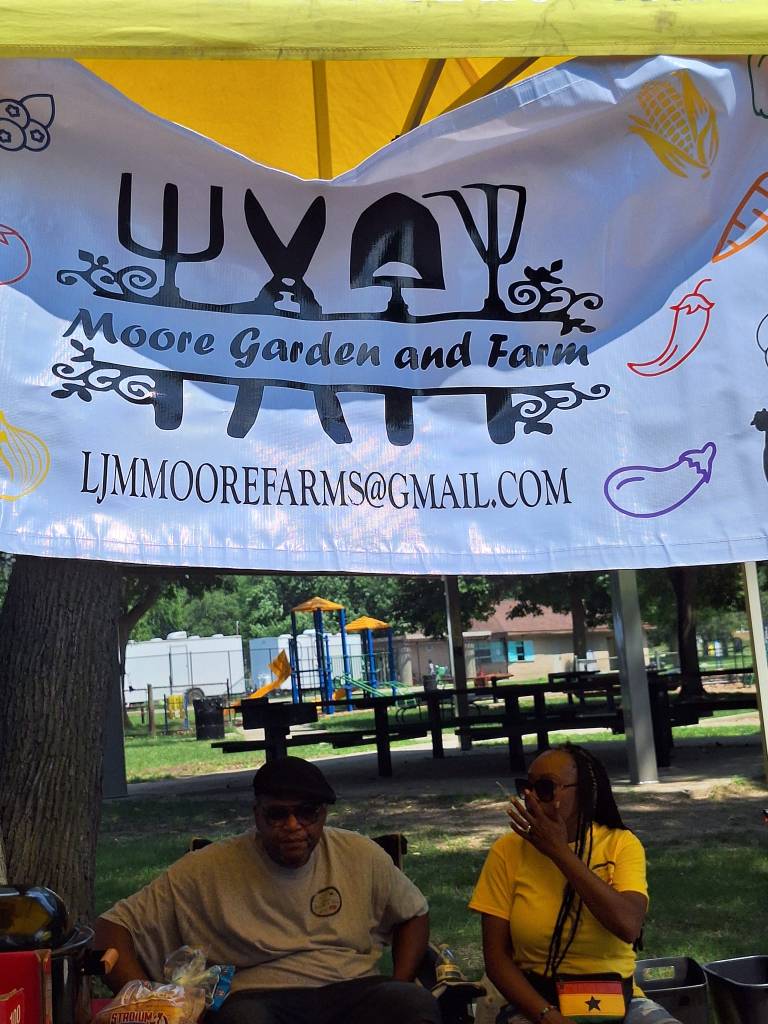
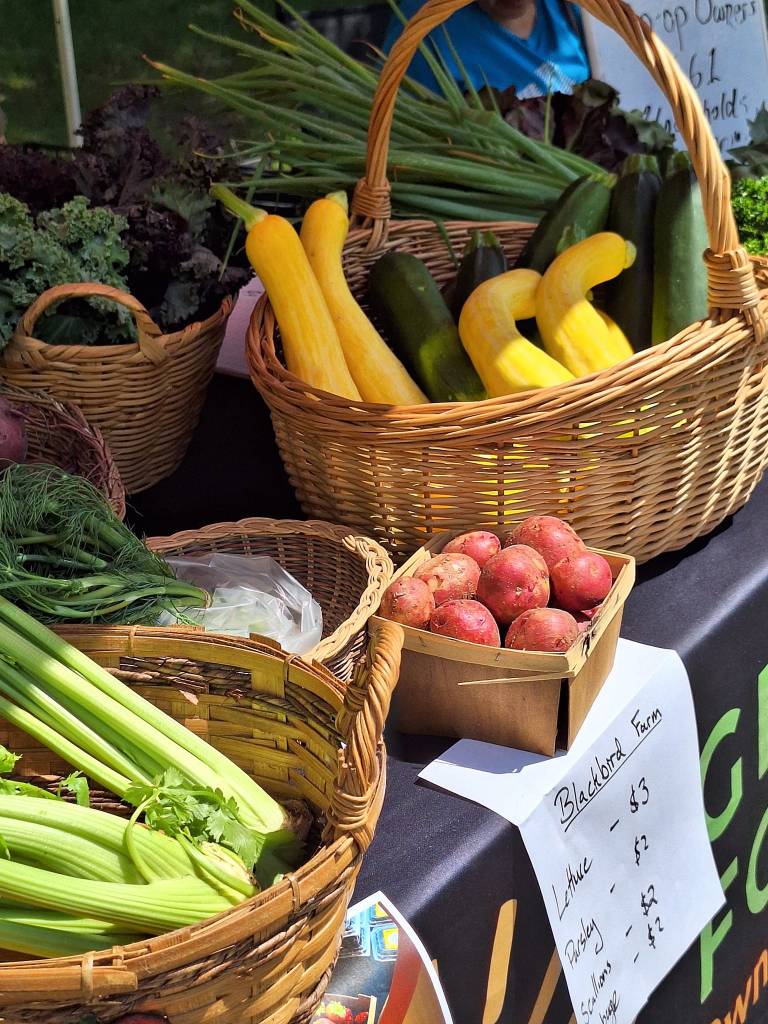
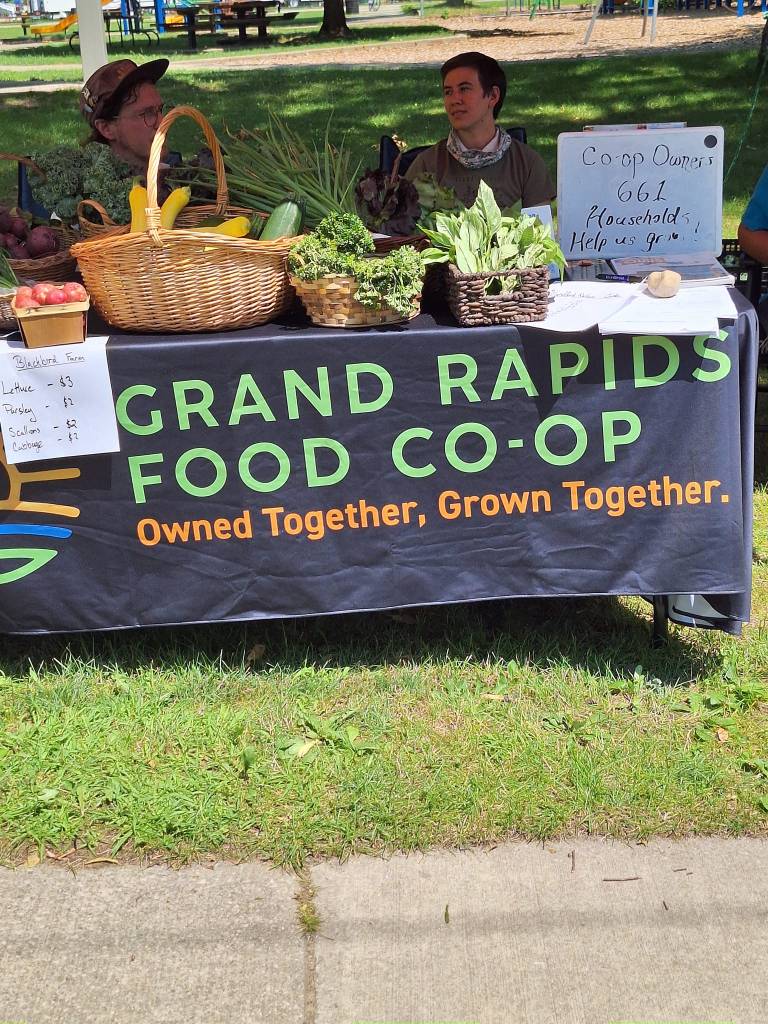
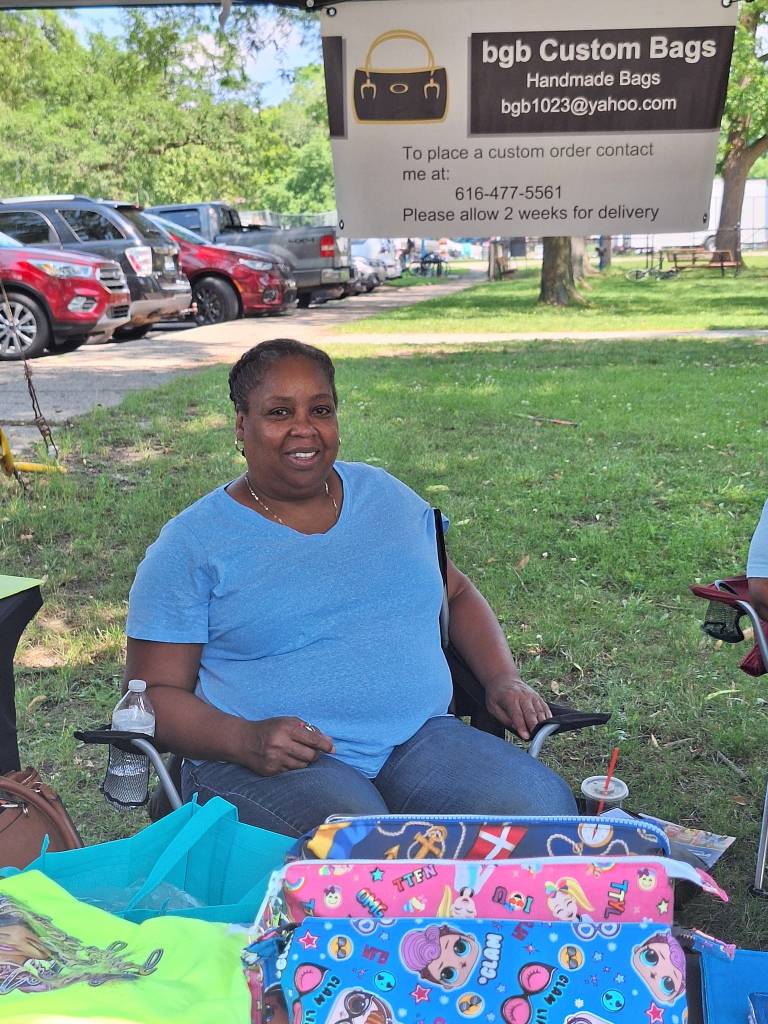
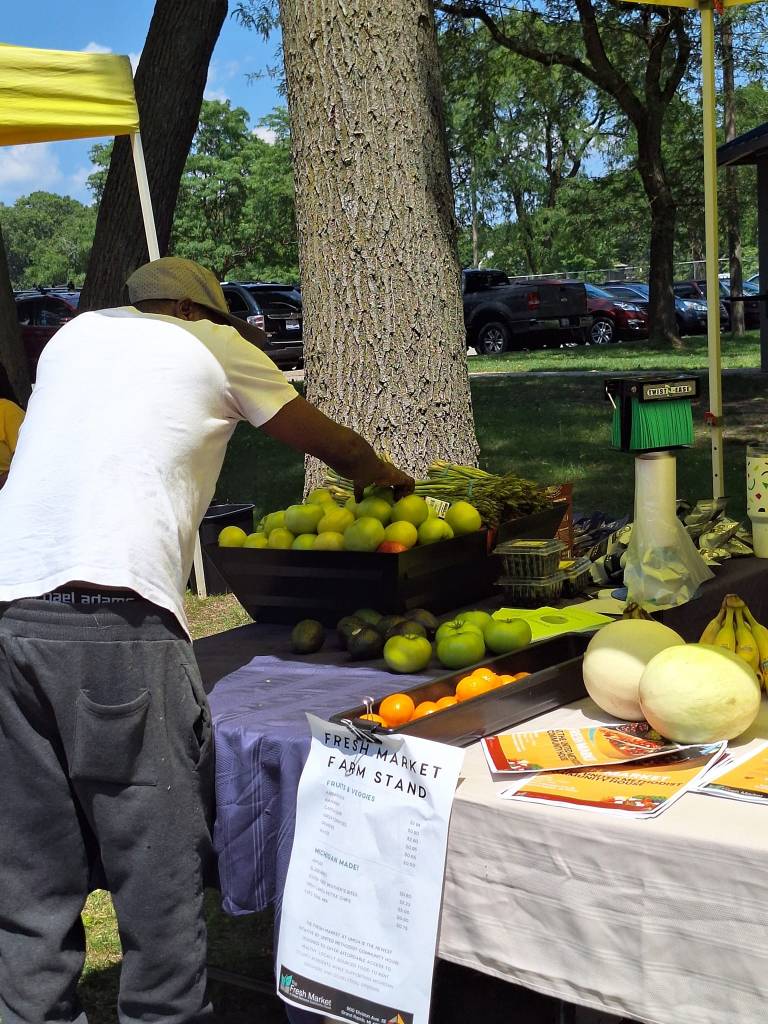
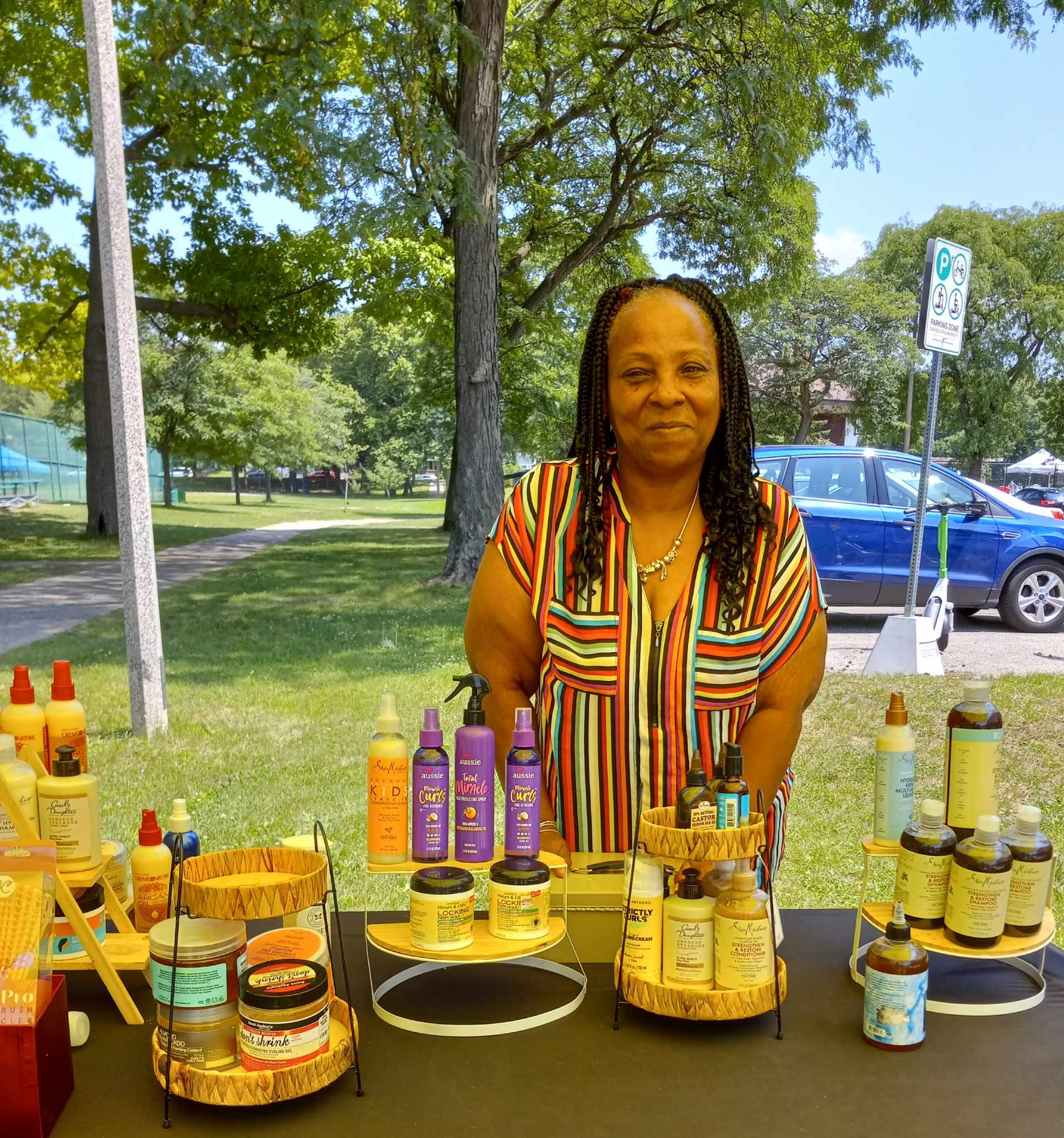
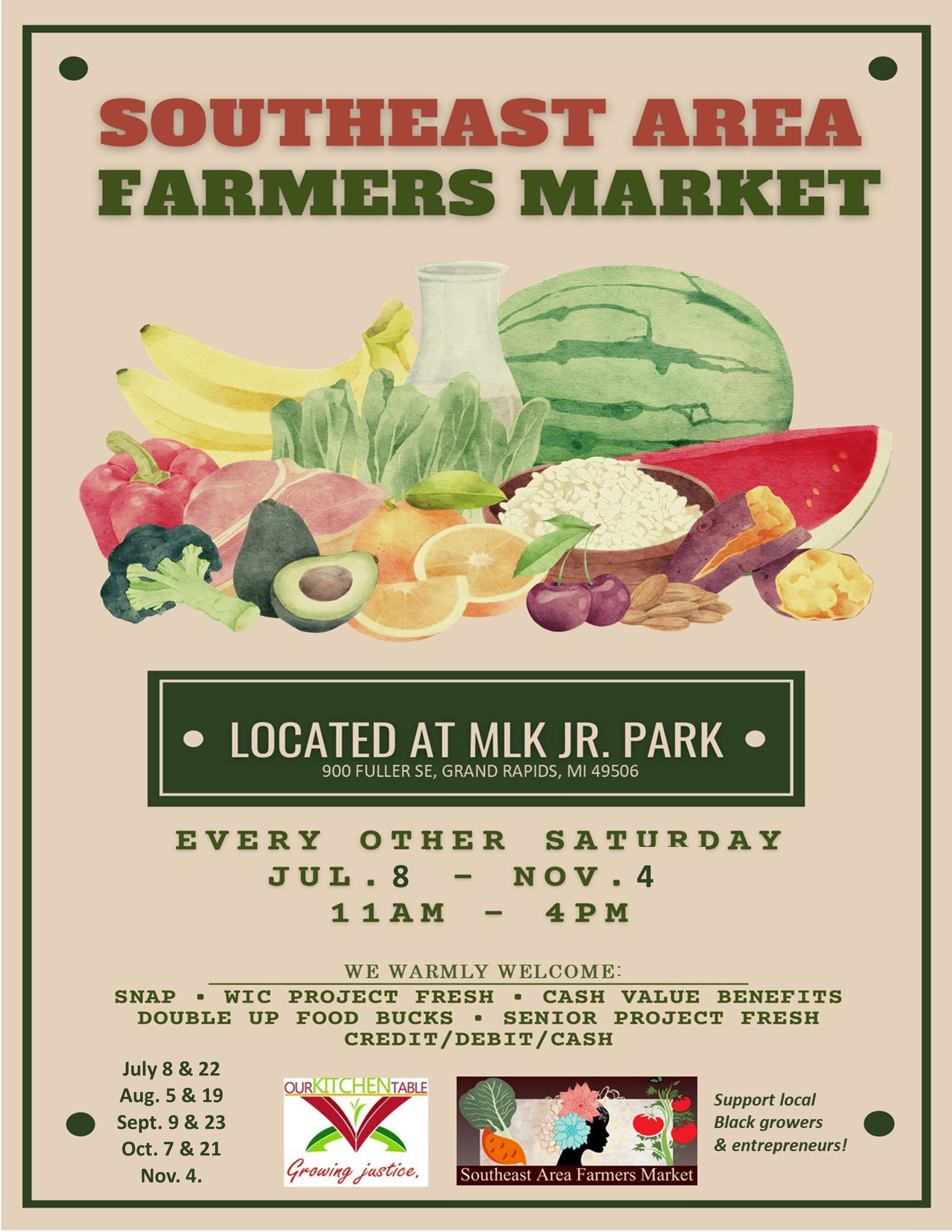
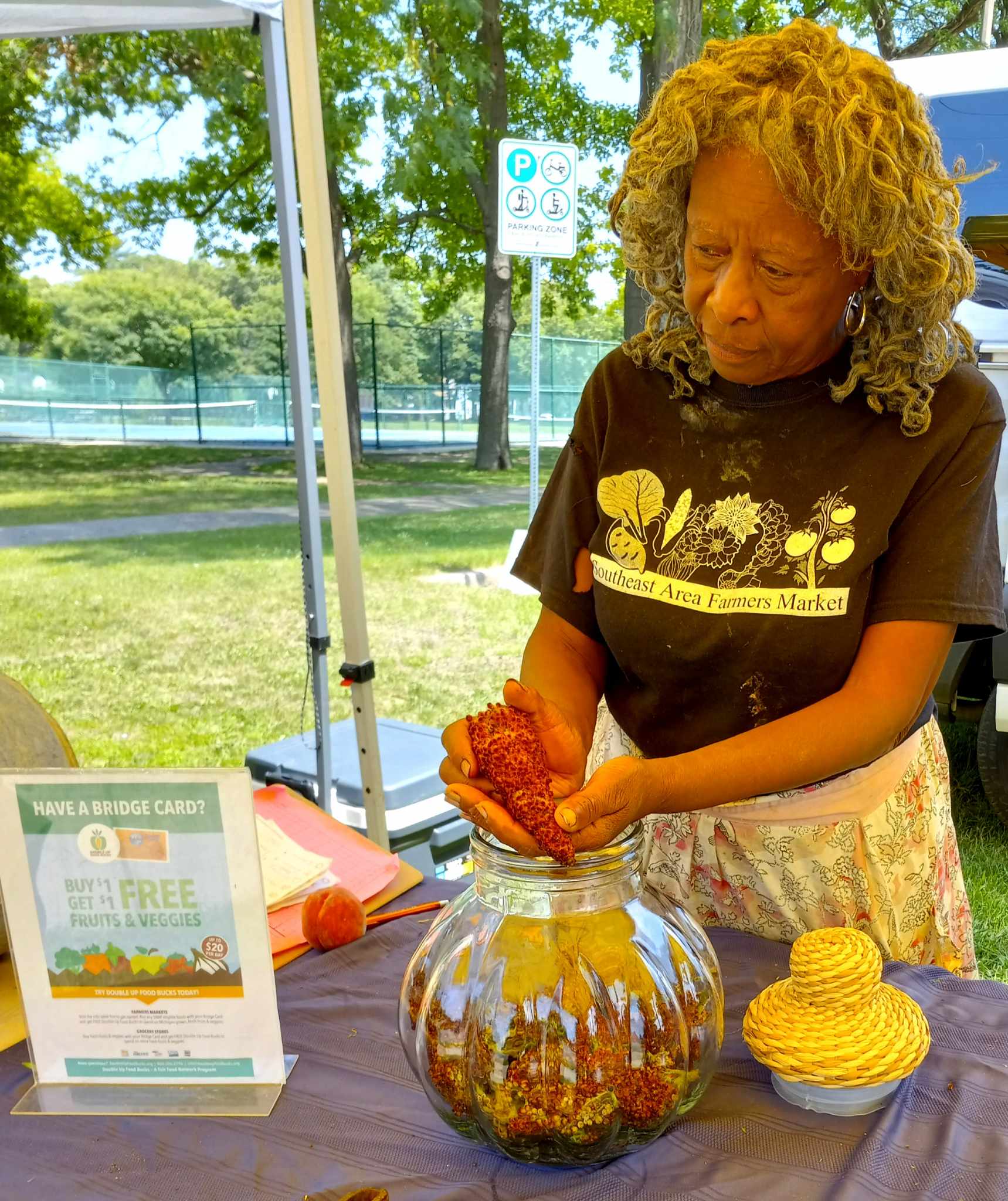
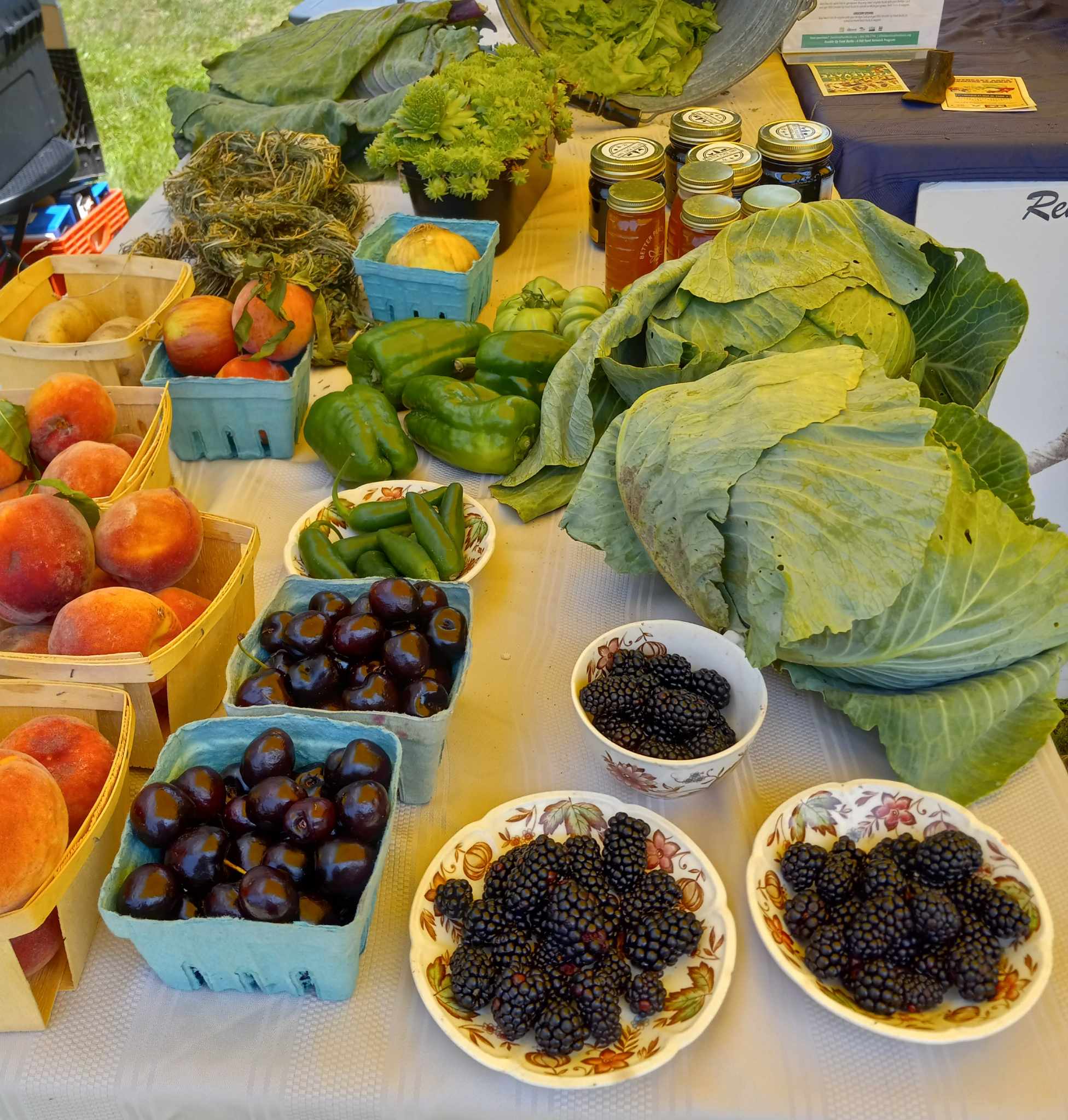
Thanks to our fabulous vendors, the Grand Rapids Fire Department, and our market manager Belinda Henderson, the first market of the season was a great success!
Public Health Watch and three partners today are launching FencelineData.org, a revolutionary tool that will make it easier for journalists, community advocates, researchers and members of the public to find information on companies that release harmful chemicals and contribute to climate change.
The tool will be of special interest to fenceline communities — neighborhoods situated near pollution sources that often experience the worst health effects from toxic emissions.
Instead of searching individual government databases that can be difficult to navigate and interpret, you can now access federal data on chemical and greenhouse-gas emissions and enforcement actions in one place. The database, assembled in collaboration with DataKind, Until Justice Data Partners and Material Research L3C, allows you to search for facilities by ZIP code, substance or parent company to see how industrial emissions affect your community and our planet.
See four examples of how the tool can be used. There’s a section at the bottom for analysts who want to dig even deeper into the data.
Toxic Chemicals
Question: There’s a factory down the street from my children’s high school in Chicago, and I’m worried that it might be affecting their health. How do I find out what chemicals it’s releasing? What are the potential health impacts of those chemicals? Has the facility violated the law?
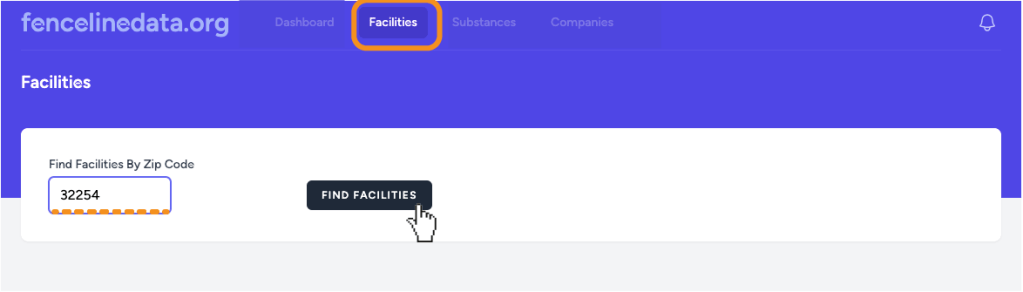
3. Type in the ZIP code and click “Find Facilities”.
4.Click on the facility with the address closest to the factory you’re interested in.
5. Use the map to confirm that you’ve chosen the correct facility.
Findings: The BWAY Corp facility in the Little Village neighborhood of Chicago released 43,095 pounds of chemicals into the air in 2022. Its biggest release was 16,880 pounds of glycol ethers, which can cause fatigue and nausea with long-term exposure. BWAY Corp also released 958 pounds of ethylbenzene, a possible carcinogen. The facility, also known as Mauser Packaging Solutions, transferred an additional 14,640 pounds of chemicals to another location. The Environmental Protection Agency most recently fined the BWAY Corp $140,000 on 09/30/2019 for having faulty equipment that leaked chemicals.
Climate Change
Question: I live in a part of Jacksonville, Florida, that’s prone to flooding, and I’m worried that climate change will make it worse. I pass a manufacturing plant on my way to work. Does it contribute to global warming?
1. Click on the “Facilities” tab. 2. Type in the ZIP code of the facility and hit “Find Facilities”.
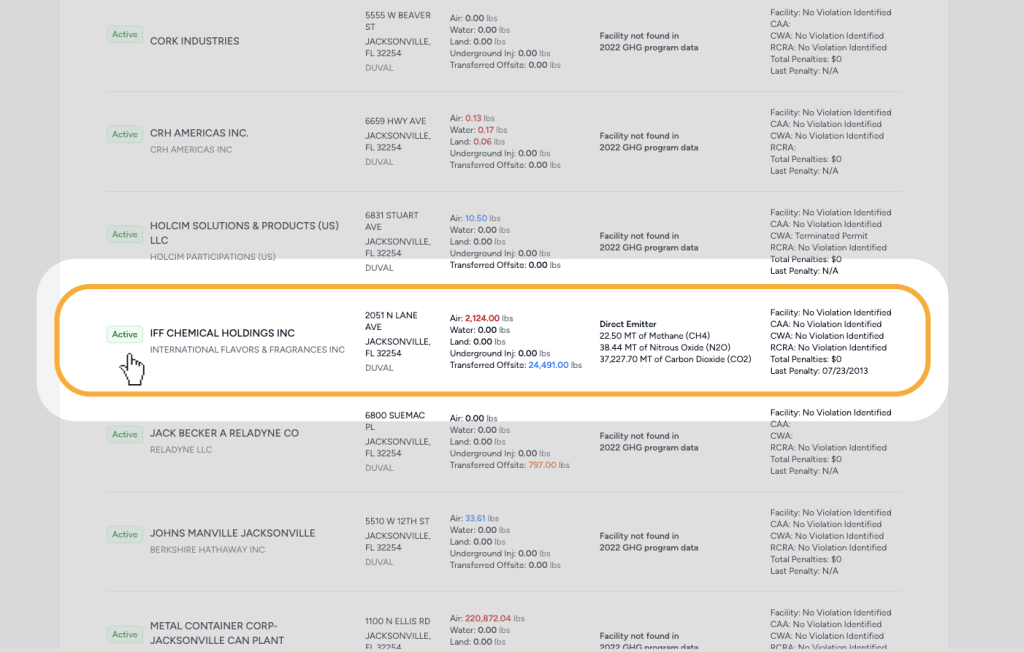
3. Click on the facility with the address closest to the manufacturer you’re interested in.
4. Use the map to confirm that you’ve chosen the correct facility.
Findings: IFF Chemical Holdings Inc in Jacksonville released nearly 37,600 metric tons of carbon dioxide, the primary cause of climate change. That’s equivalent to the combined tailpipe emissions of 8,949 cars in a year. It also released 41 metric tons of nitrous oxides and 24 metric tons of methane, two other greenhouse gases.
Substances
Question: Ammonia is a colorless gas with a sharp odor that is used to make plastics, pesticides and other products. High levels can burn the mouth, nose, eyes and throat, and chronic exposure can permanently damage the lungs. What’s the biggest ammonia polluter in the U.S.?
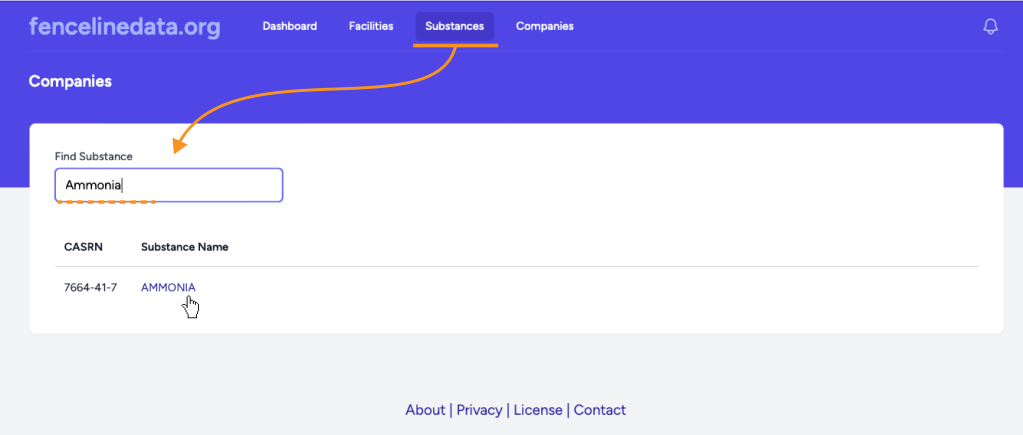
1. Search “ammonia” in the “Substances” tab.
Findings: Basin Electric, which operates a coal-fired power plant in North Dakota, released the most ammonia in 2022 — almost 18 million pounds.
Companies
Question: Which chemicals does my car manufacturer release, and in what amounts?
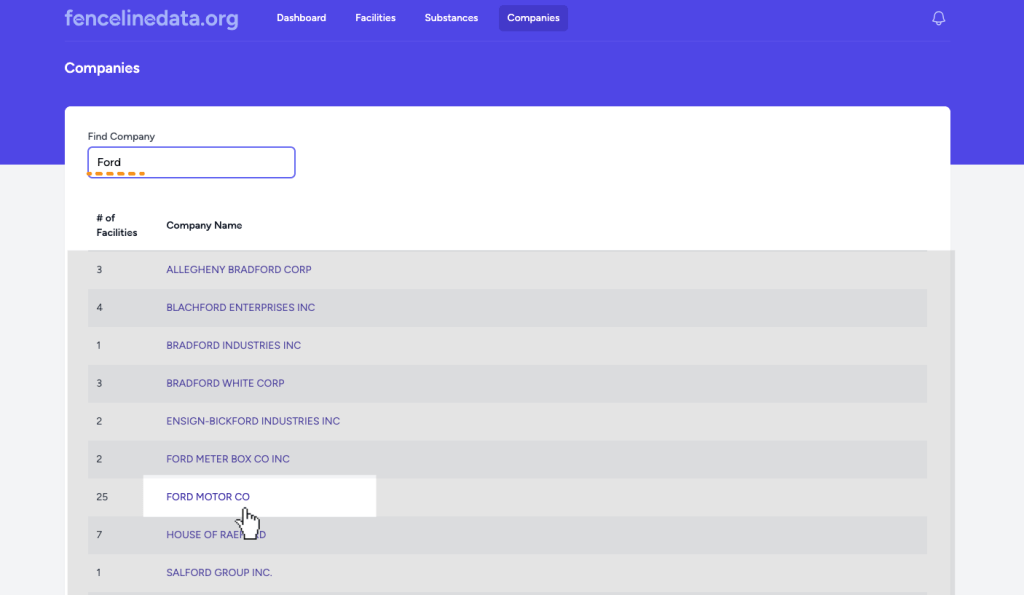
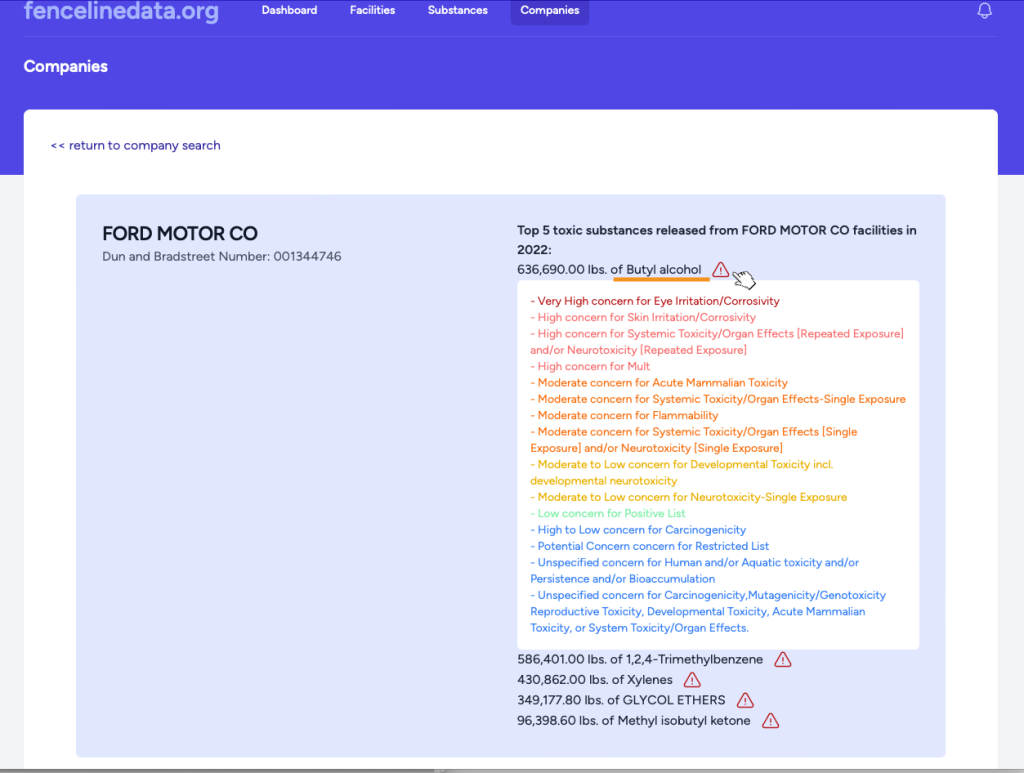
1. Search “Ford” in the “Companies” tab and select “Ford Motor Co”.
Findings: Ford facilities around the U.S. in 2022 collectively released more than 600,000 pounds of butyl alcohol, a sweet-smelling chemical that can irritate the eyes and cause headaches, dizziness, nausea and vomiting. Ford plants also released more than 586,000 pounds of 1,2,4-Trimethylbenzene, which can affect the eyes, skin and respiratory system, and almost 431,000 pounds of xylenes, which can attack the kidneys and the nervous, respiratory and cardiovascular systems with chronic exposure.
Want to Go Deeper?
Question: Which of the “Big 3” American car manufacturers contributed most to climate change and released the highest amount of chemicals in 2022?
1. Search “General Motors” in the “Companies” tab.
2. Click on the first GM facility that appears: DMAX LTD.
3. Download the Toxics Release Inventory data for DMAX LTD for 2022.
4. Click the back arrow on your web browser to return to the GM LLC page. 5. Download the 2022 data for each of GM’s 24 facilities. 6. Repeat steps 1 through 5 for Ford Motor Co’s 25 facilities and FCA US LLC’s (now known as Stellantis) 15 facilities. 7. Combine your CSV files by parent company. 8. To find which company released the most toxic chemicals, find the sum of the “Total toxic substance releases” column for each company. Then compare each company’s total. Do the same for CO2 releases and fines. 9. Now put the differently-sized companies on the same scale. Take the total toxic releases and divide it by the number of facilities for each company. This gives you an average amount of chemicals released per facility. Repeat with CO2 and penalties.
Findings:
Only GM reported polluting water and land in addition to air. (Because facilities calculate emissions data and self-report to the EPA’s Toxics Release Inventory, this may not reflect actual emissions).
Ford was the biggest CO2 polluter (439,636 metric tons). But Stellantis released the most CO2 per facility — 20,878 metric tons.
GM was the biggest chemical polluter (2,780,774 lbs.). It released 115,866 lbs. per facility.
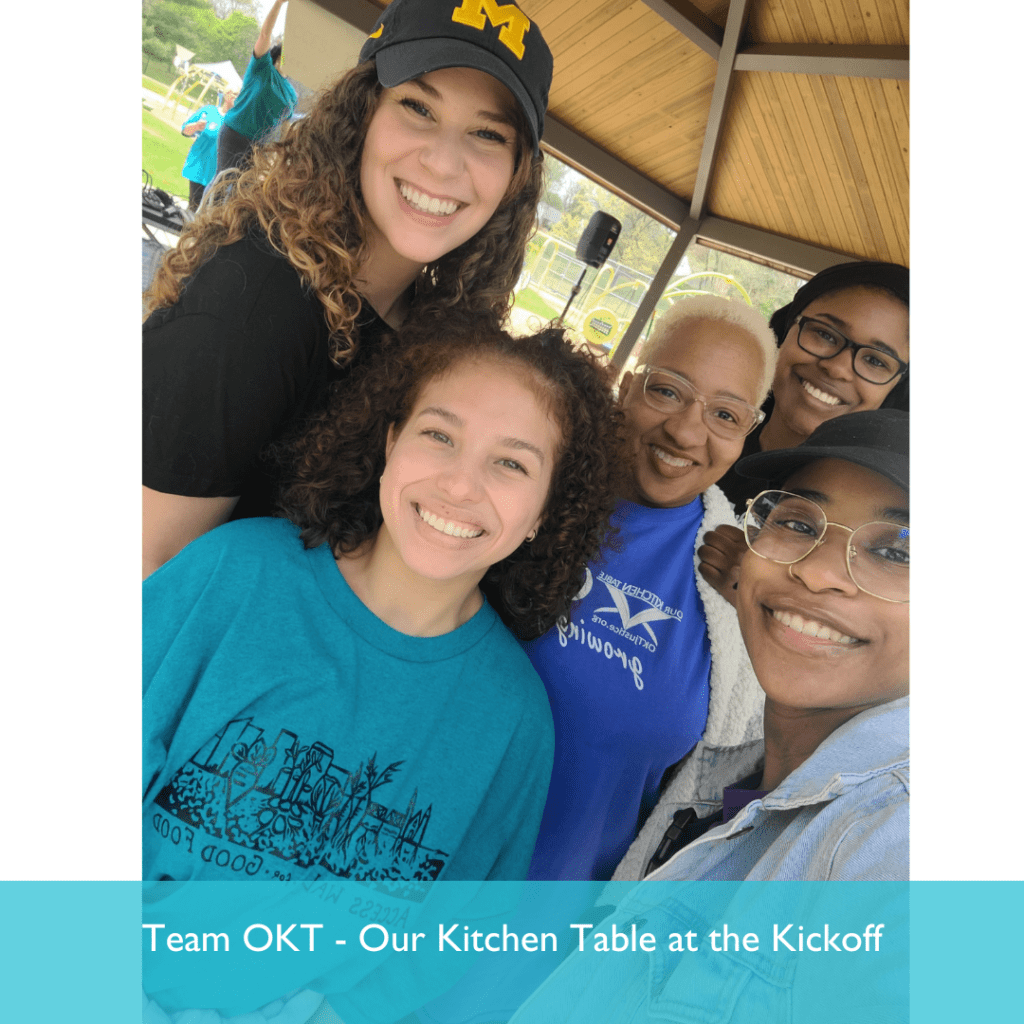
To join Team OKT, click here or email media@OKTjustice.org
We believe it’s possible. That’s why we walk. Share the vision. Walk with us.
The Access Walk for Good Food is an annual 5k walk in Grand Rapids. The goal of the Walk is to fund non-profit organizations that address issues of food access and poverty. Our Kitchen Table has been chosen as a recipient agency. Money OKT receives from the Walk will help fund the Southeast Area Farmers’ Market, a walkable neighborhood market in a Grand Rapids neighborhood with little access to healthy, fresh foods.
OKT’s work, and the work of the other 13 recipient organizations aligns with the definition of Good Food, which is food that is:
Healthy (provides nourishment and enables people to thrive)
Fair (no one along the production line was exploited during its creation)
Affordable (All people have access to it)
Green (produced in an environmentally sustainable manner)
The work of the recipient organizations ranges from community gardening and urban farming, nutrition programs, food pantries and meal programs, to food justice and community development initiatives. Our collaborative work has a vision of a thriving Good Food system for all people.
The Walk brings non-profit organizations, businesses, congregations, farms, and individuals together to bring awareness of the great work happening in our community to address food access and poverty. By walking together we unite in vision of a Good Food system for all and broaden our shared impact for social good. Over the last 42 years, the Walk has raised over millions of dollars for dozens of local and international non-profit organizations.
What if everyone in our community could have equal access to food that nourishes, creates good jobs, is affordable, and treats the earth well as it is produced? What if non-profit organizations, businesses, congregations, farms, and individuals could come together to achieve this vision?
Our Kitchen Table has many friends and supporters that make our work possible. A special shout out to Della Levi at Martin Luther King Leadership Academy for all of her hard work and advocacy for the food garden OKT maintains at the school to benefit students, families, and neighbors. A huge thank you to Belinda Henderson, our faithful farmers market manager, cooking, and garden coach. OKT also has great gratitude for its consulting registered dietitians Winona Bynum and Tracy Booth who bring such value to our online and in-person healthy eating workshops.
Our Kitchen Table relies on grants and donations to fund its programming. If you would like to contribute, please click on this link or email your check to:
Our Kitchen Table 334 Burton St. SE Grand Rapids MI 49507
Kent County Essential Needs Task Force campaign seeks to reduce stigma around utility assistance.
In 2020, utility assistance agencies in Kent County issued almost 11,000 payments, providing over $4 million in payments, to help households maintain electric, heat, and water services. The need for utility assistance is great. Some households, however, may not pursue help due to a lack of understanding of how or where to apply, or due to internal or external stigma associated with applying for assistance.
When people find themselves in need, especially for the first time, it is common to feel embarrassment, anxiety, shame, fear and even a sense of isolation; these emotions can be a barrier to asking for help. These emotions, coupled with lack of knowledge, government guidelines, income qualifications, long wait times and capped amounts of money, create barriers both real and perceived.
The reality is there is no shame in asking for assistance. Affordable utilities are a human right.
Client Stories
“Owing Consumers Energy much more than I could pay, I was going to bed at night not knowing if we were going to have electricity. Our household members included a child with autism and my spouse who is a stroke victim. It was a very scary time in our lives. We reached out to True North who assisted our family right away. They were able to get us on a program with Consumers Energy that made our payments reasonable and they are helping us pay off our past due amount. I am forever grateful for their help and kindness.”
“I received a shutoff because I fell behind on my bill due to a decrease in my income. It was an easy process to apply through DHHS on their website, and my worker reached out to me in a timely manner. If you’re in need of help it will really do you good to reach out to DHHS or apply for the SER online and someone will reach out to you.”
“A senior client came into North Kent Connect looking for assistance with their propane. Their social security was just not going to cover a fill of propane in their tank. North Kent Connect assisted the client in applying for funding through DHHS for a fill in their propane tank. The NKC case manager was able to get the client set up in the Michigan Energy Assistance Program as well.. The Case Manager also gave the client information about monthly payments they could set up with their propane company, so they don’t run the risk of running out of their heat source again. “
Next Steps
If you are an employer:
Needing assistance to make ends meet is not a personal failing. Many people do not have informal networks that can support them in hard times. Be considerate of employees who may need help.
Outside factors can impact an employee’s work performance. Consider having the resources below readily available in your workplace to assist your employees.
If you are a non-profit professional:
Understand what resources are available below and how to refer your clients to them.
Facilitate a discussion about how stigma impacts your clients at your next staff meeting.
Invite a member of the Reducing Stigma team to your next staff meeting. Email NDobkowski@hwmuw.org for additional information.
If you are an utility assistance provider, ensure your information in 211 is up-to-date by emailing John Mitchell at 211 at jmitchell@hwmuw.org.
If you yourself need utility assistance, please access the resources below.
Resources
-Call 2-1-1. They provide confidential guidance in the application process and can direct people to the appropriate resources.
-Apply for State Emergency Relief (SER) through MIBridges. Qualifying through SER will allow someone to access the Michigan Energy Assistance Program (MEAP). People who would like to fill out a paper copy can print one here or go to the MDHHS office at 121 Martin Luther King Boulevard, Grand Rapids, MI 49507 to fill one out.
-If qualified through MDHHS, other supplemental resources may be available. Agencies that provide this assistance include Kent County Community Action, The Salvation Army, North Kent Connect, True North, Kent County Veteran Services and Senior Neighbors.
-Enroll in an Affordable Payment Plans through Consumers (Consumers Affordable Resource for Energy, or CARE) and DTE (Low Income Self Sufficiency Program, or LSP). Both require applying for SER first.
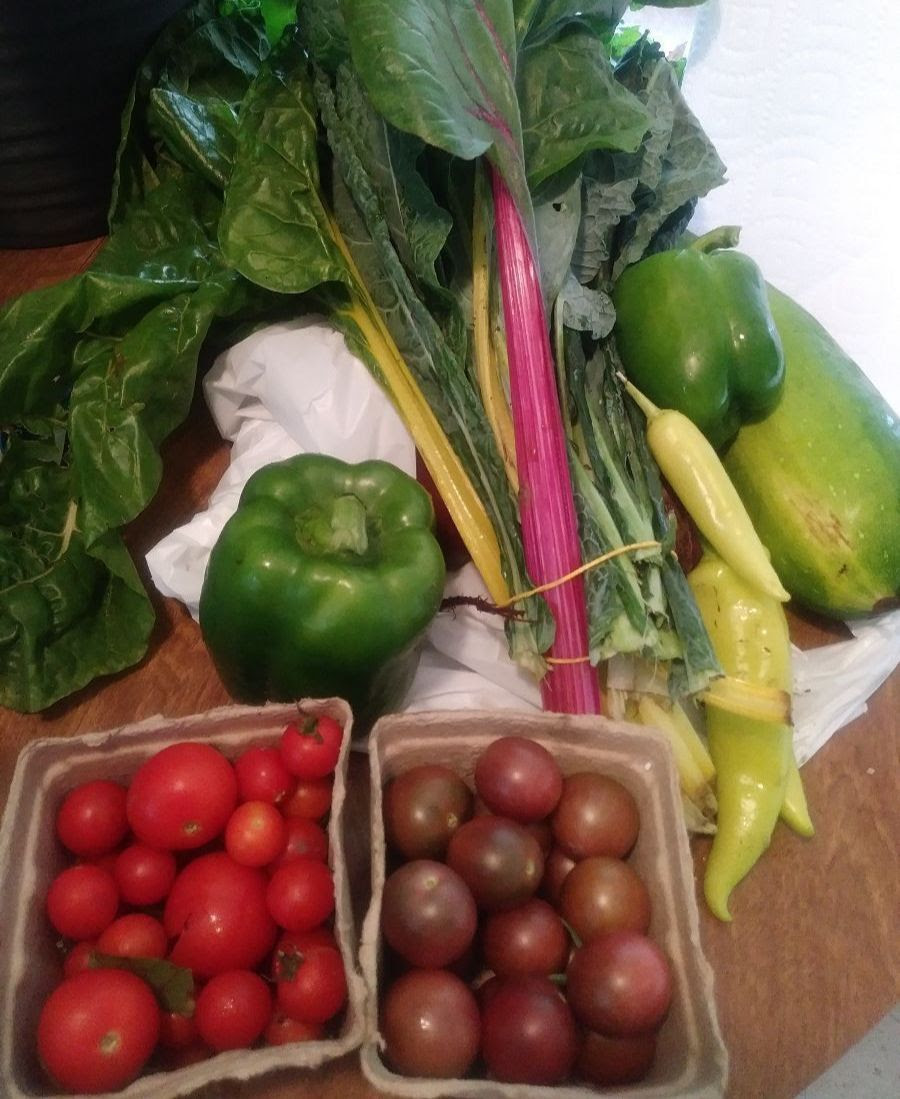
Join the free Virtual Cook, Eat & Talk with Winona Bynum RD and OKT cooking coach, Belinda Henderson. via Facebook Live on Saturday Aug. 19. Are you pregnant, breastfeeding, or the mom of a low-birth weight baby? Are you a mom diagnosed with overweight or obesity? Do you receive SNAP, WIC, or other food assistance? Then you are invited! Join Our Kitchen Table cooking coach Belinda Henderson for a cooking demo and registered dietitian Winona Bynum in conversation on you can make easy, healthy, affordable meals for your family.
• Ask Winona what foods work for you and your medical issues. • Grow a food garden in your window or on your porch. • Receive vouchers good at the Southeast Area Farmers Market and select retailers. • Learn how to stretch your food budget. • Find out how to maximize your SNAP and WIC dollars at grocery stores and farmers markets.


















 Our Kitchen Table