Archives

Well House on board as Southeast Area Farmer’ Market vendor

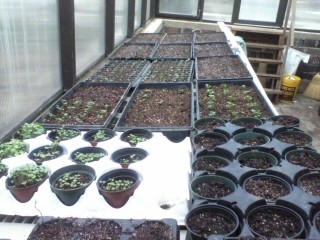
The Well House greenhouse is growing a wide variety of food plants

The Well House greenhouse is growing a wide variety of food plants

Well House, a group of homes on Grand Rapids’ southeast side that provide safe, affordable housing for people who have been homeless, is expanding its gardening program at 600 Cass Ave. SE and will sell produce at the 2013 Southeast Area Farmers’ Market. According to Jeff Smith and Camilla Voelkers, Well House’s urban farmers and food justice educators, the garden program continues the legacy of its founder, Miriam Clemens, to engage in self-sufficient practices such as growing food, saving seeds and canning. “These activities support Well House residents, the adjacent neighborhood and, to some degree, the community at large,” Smith says. (He is also an OKT collaborative partner.)

“Were working on creating a … closed loop garden where wastes are composted and put back into the garden,” Voelkers adds. “We’re planting fruit trees and berry bushes, too.”

The community that frequents the Southeast Area Farmers’ Market will benefit from a wide variety of Well House produce: greens, heirloom tomatoes, sweet and hot peppers, squash, cucumbers, carrots, beets, radishes, broccoli, cauliflower, herbs and two varieties of mushrooms—shiitake and oyster.

Profits from market sales will go back into the Well House garden program and its other projects. “Selling at this market in parts of the city where there is the least amount of access to fresh produce is a food justice matter,” Smith says. “(and it will) spread the word about what we’re doing here at Well House. Smith and Voelkers invite community members to join them for Well House garden activities. For information, call them at 616-245-3910.

Listen to OKT’s Lisa Oliver King talking up LadyfestGR 2013 on WYCE’s Catalyst Radio

Jean Grae is the LadyFest GR late-night performance Friday, March 22 at The Pyramid Scheme.

Reposted from The Rapidian

INTERVIEW

After a successful inaugural LadyfestGR in 2012, the now annual event is set to kick off next week, expanding to two days of women-only musical performances, a variety show and workshops. LadyfestGR, on March 22 and 23, again will pass along all proceeds from the festival to a local nonprofit, and this year’s beneficiary is Our Kitchen Table – the food and social justice organization, in part focused on teaching women and children about growing their own food.

In the Catalyst Radio studio are Jes Kramer, an organizer for LadyfestGr, and Lisa Oliver-King, executive director of Our Kitchen Table.

Catalyst Radio LadyfestGR interview with OKT’s Lisa Oliver-King


Weekend events: LadyfestGR and OKT Convenes

Ladyfest March 22 & 23

OKT will be presenting a container gardening workshop at Ladyfest, 4 p.m. Saturday March 23 at the 106) GALLERY, 106 S. Division Ave. Grand Rapids. Check out the full line-up of performers and workshops  at LadyfestGR.com Please support Ladyfest! OKT has been chosen to receive proceeds from the event this year.

OKT Community Convening March 23 & 30, April 20 & 27

Let’s discuss, reflect on and learn together about the topic “What Does Access to Food Look Like in Grand Rapids.” We will dialogue about local food access, food justice principles and food politics at Madison Square Church, 1441 Madison Ave. SE, Grand Rapids.

 9 a.m. to 1 p.m.  Saturday March 23 Access to Food – Local Efforts, Facilitated by Jeff Smith, GRIID
Jeff Smith has been involved in community organizing and social justice work for 30 years and has  been doing media and popular education work for nearly 25 years, most of it through the Grand Rapids Institute for Information Democracy (GRIID). He also is an urban food gardener of 25-plus years and serves as Urban Farmer / Food Justice Educator for Well House.

9 a.m. to 1 p.m.  Saturday March 30 Food Politics Facilitated by Cynthia Price*, Greater Grand Rapids Food Systems Council 

Cynthia Price is the chair and co-founder of the Greater Grand Rapids Food Systems Council, a food policy council which has been around since 2001. Her day job is as a newspaper editor, reporter and photographer for two papers, one in Muskegon and one in Grand Rapids.

Coming up in April!

Lila Cabbill, president emeritus of the Rosa Parks Institute, will facilitate the April 20 convening. La Donna Redmond*, nationally renown food justice activist, will facilitate the April 27 convening. Look for more information in your email and on the OKT website soon!


Do we really need industrial agriculture to feed the world?

Reposted from Don’t Protest Growtest

The biggest players in the food industry—from pesticide pushers to fertilizer makers to food processors and manufacturers—spend billions of dollars every year not selling food, but selling the idea that we need their products to feed the world. But, do we really need industrial agriculture to feed the world? Can sustainably grown food deliver the quantity and quality we need—today and in the future? This Food MythBusters episode takes on these questions in under seven minutes. So the next time you hear them, you can too.

Toxins in GR neighborhood yards a potential health threat

Biochemist Clinton Boyd PhD will teach about soil testing and other gardening topics during free OKT garden workshops March 2 and 9.

Did you know that high levels of toxic lead and arsenic are prevalent in Grand Rapids’ Baxter, SECA/Southtown, Garfield Park and Eastown neighborhoods? Their presence is a legacy issue. These areas once were home to fruit orchards. In those days, farmers sprayed their fruit trees with the pesticide lead arsenate. In addition, older housing stock was painted with lead based paints and, prior to the mandate for lead-free gasoline, vehicle emissions settling on the ground compounded the problem.

Biochemist Clinton Boyd PhD performs the soil testing for Our Kitchen Table’s farmers’ market vendors and yard gardeners involved in its food growing initiative. While agencies like Healthy Home Coalition provide resources for residents of lead contaminated homes to clean up their indoor environments, not much is available to clean up lead and arsenic based soils found in yards.

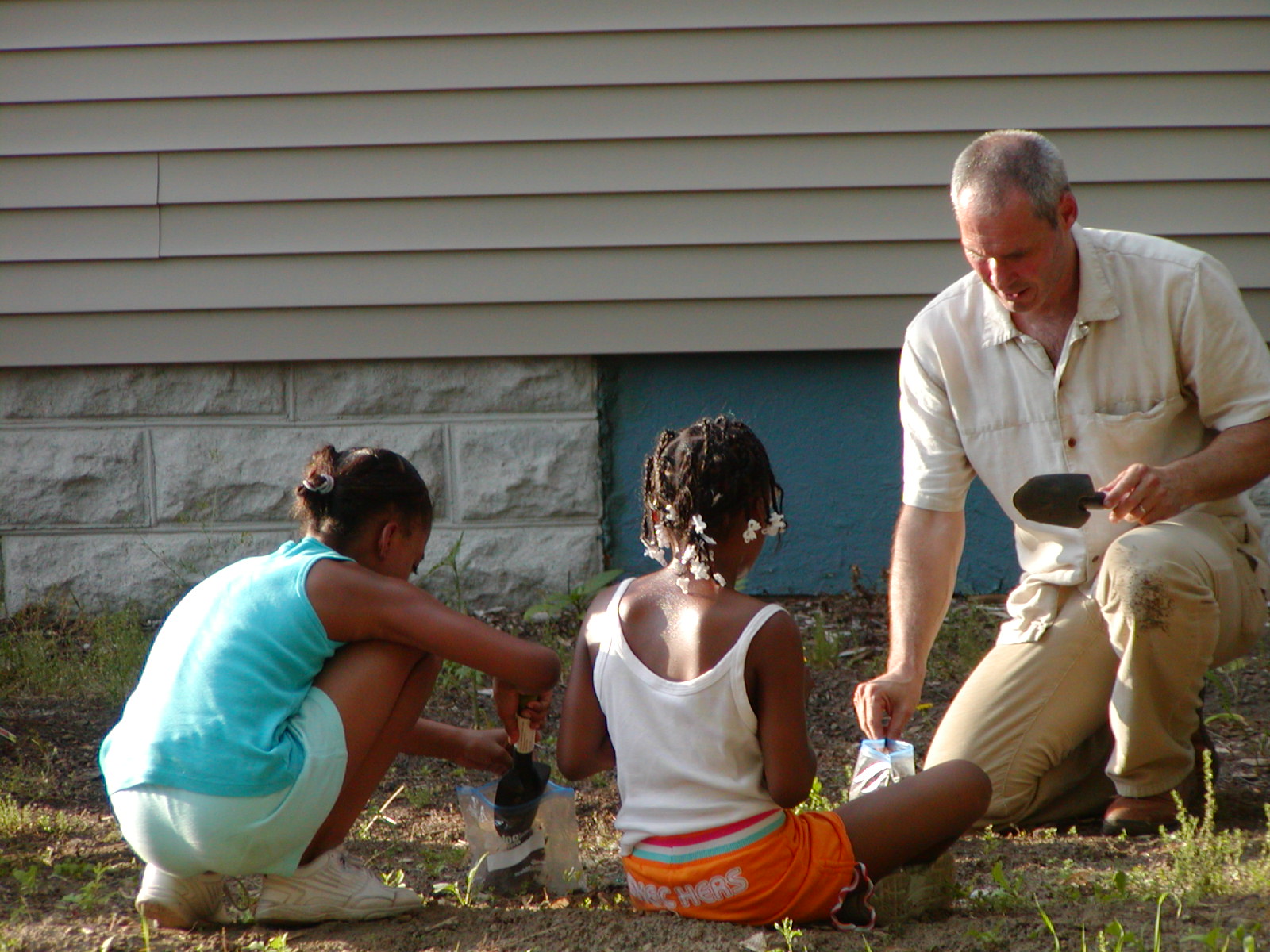
Boyd sees this as particularly dangerous to families with young children who are gardening. Digging in the dirt puts the hands in contact with the toxins. Even when container gardens are used, kneeling in or walking through the contaminated soil can track it back into the home where it may be ingested.

Lead poisoning causes a wide range of neurological problems especially in children: seizures, learning disabilities, behavior problems and more. Before you or your children dig or play in the dirt, consider having your yard professionally tested for lead and arsenic.

Environmental and organic farming groups want a change in the way federal agriculture subsidies are handed out.

Reposted from Michigan Radio  

By 

Anne Woiwode is the Sierra Club’s state director. She says a relatively small number of large animal feeding operations in Michigan have a big advantage over the state’s organic farmers.

Woiwode says the big producers have better access to federal subsidies, in particular the Environmental Quality Incentive Program.

The Environmental Quality Incentives Program is a voluntary program that provides financial and technical assistance to agricultural producers.   The financial assistancehelps agri-businesses plan and implement conservation practices that improve soil, water, plant, animal, air and related resources on agricultural land.

Woiwode says not having as much access to the program puts Michigan’s organic farmers at a disadvantage in the marketplace and forces consumers to pay more if they want organic products.

She says the aim of the campaign is to shift funding priorities away from polluting large animal feeding operations and towards organic Michigan farmers.

“There are 50,000 farmers in Michigan. 238 of them are these massive operations that are polluting and competing unfairly with the rest,” says Woiwode. “It’s about time we paid attention to the rest of the 50,000.”

A spokeswoman for the Michigan Farm Bureau says there is nothing new in the group’s complaints about the Environmental Quality Incentive Program.

Laura Campbell is the bureau’s Agricultural Ecology Manager.  She says the program’s limited funds are distributed as widely as possible.

LadyFestGR returns to Heartside on March 22 & 23!

This year’s event will include free workshops, a variety show, vendors and concerts featuring local,

regional, and national performers. All performers and presenters must self-identify as female. Anyone is welcome to attend.

Jean Grae

March 22 @The Pyramid Scheme (late show)
Jean Grae rose to prominence in the underground hip-hop scene in NYC and has since built an international fanbase.
Night Jewel

March 22 @The Pyramid Scheme (early show)
Despite its unpolished aesthetic and Ramona Gonzalez’s professed aversion to more conventional ideas about glamour, her music exists in the realm of gauzy fantasy: it is a dream world made reality.

Invincible

March 23 @The Pyramid Scheme:
From Detroit, Invincible‘s spitfire wordplay has received acclaim from fans all across the world.

LadyFest Workshops

Workshops of LadyfestGR 2013 will take place at 3 locations in the Heartside neighborhood near The Pyramid Scheme (where Ladyfest concerts are held). The Bloom Collective’s 5th Annual Empowered Womyn’s Health Workshop will be hosting its workshop series as part of the Ladyfest line-up. OKT will present workshops, as well.All workshops are FREE, open to the public and lead by women of Michigan!Workshops will be held at the following locations and will cover everything from women’s health to comic book hero(ines):
  • HEARTSIDE GALLERY AND STUDIO, 48 S. Division Ave.
  • (106) GALLERY, 106 S. Division Ave.
  • THE DAAC, 135 S. Division Ave.

Please visit LadyFestGR.com for a full schedule!LadyfestGR will be donating proceeds to Our Kitchen Table.

GVSU to screen documentary with Angela Davis and Tim Wise on January 28

Reposted from GRIID.org

Vocabulary of Change

FRONT COVER

  • Monday, January 28
  • 4:00PM
  • GVSU Allendale Campus
  • Kirkhof Center – Pere Marquette Rm

This event is free and open to the public.

The LGBT Resource Center at GVSU is hosting a screening of an important documentary that explores the intersectionality of today’s most pressing social justice issues.

Angela Davis and Tim Wise, two of this country’s leading racial and social justice scholar-activists, join moderator Rose Aguilar onstage for a rare, unscripted and free ranging conversation on the state of contemporary global politics.

They explore how our culture’s uncritical embrace of pervasive individualism, the myth of meritocracy and entrenched institutional inequality have led to racialized public policy, the privatization of education,health care and the environment, and the commodification of many of our basic needs, including water and food.

Through bold discourse, wit, and an optimism of the will, Angela and Tim call for new vocabularies – a different kind of fluency and a different quality of literacy. With a shared reverence for historical memory and today’s activism, they invoke the power of a new language to restore clarity and to unify global communities.

One comes away from this conversation with a sense of renewed faith in humanity and with the realization that ordinary people can, and do, and will achieve the extraordinary. As Angela notes in her commentary, “as isolated individuals we will always be powerless…but as communities we can achieve anything.”