How Walmart is Taking Over the Food System

Reposted from Eco-watch

Walmart now captures $1 of every $4 Americans spend on groceries. It’s on track to claim one-third of food sales within five years. Here’s a look at how Walmart has dramatically altered the food system—triggering massive consolidation, driving down prices to farmers and leaving more families struggling to afford healthy food.

Farmers’ Market partners review 2012 season

SEAFM logoSoutheast Area Farmers’ Market partners met Monday to review the 2012 market season and plan for 2013. Jill Myers, Kent County Health Department (KCHD), and Cynthia Price, Grand Rapids Food Systems Council (GGRFSC), sat down with the Our Kitchen Table (OKT) market staff for the discussion.

Challenges cited during 2012 were issues with the State-mandated iDevices used for Bridge card transactions; procuring enough vendors for Friday’s market; and road construction that necessitated moving the Garfield Park Saturday market to Gerald R Ford Middle School.

Successes included community engagement; great special events; being designated a Bundled Benefits site where residents register for government assistance; and relationships with G R Ford and MLK schools.

Vendor surveys indicated that one-third covered their expenses while two-thirds enjoyed a good profit. Their feedback is also influencing a change in the market structure. The partners are considering shifting to a Friday farm-stand at Garfield Park featuring one vendor and activities and, on Saturday, a full farmers’ market with several vendors at G R Ford.

OKT will continue to manage the market and provide staffing. GGRFSC will pay for insurance and the EBT back-up machine and bring in produce as needed. KCHD will continue to print flyers, distribute coupons and handle all governmental programs. All three partners will host monthly activities at the market.

Do you have suggestions for the 2013 Southeast Area Farmers’ Market? Email them to OKTjustice@gmail.org or mail them to OKT, 671 Davis NW, Grand Rapids, MI 49504.

Danny Glover speaking at rally opposed to Hantz land grab in Detroit

The battle for food justice heats up in Detroit with Danny Glover speaking at a meeting this Saturday organized by Detroiters opposed to the proposed sale of more than 1500 City owned lots to John Hantz. The meeting will be held Saturday, December 8, 2012, 6:00 – 8:00 p.m. at Timbuktu Academy of Science and Technology, 10800 E. Canfield, 1 block east of French Road, Detroit, 48214. Spread the word!!! We need a heavy turnout by those living on Detroit’s lower east side. We need more foot soldiers to go door-to-door to organize for this event and for the public hearing in front of City Council on Monday “The hotter the battle, the sweeter the victory!”

Some Background 

Eric Holt Gimenez wrote in Huffington Post,

 The Hantz Farms project to establish a 10,000 acre private farm in Detroit. The project hinges on a very large land deal offered by financial services magnate John Hantz to buy up over 2,000 empty lots from the city of Detroit. Hantz’s ostensible objective is to establish the world’s largest urban mega-farm.

I say “ostensible” because despite futuristic artists’ renderings of Hantz Farms’ urban greenhouses, presently John Hantz is actually growing trees rather than food. The project website invites us to imagine “high-value trees… in even-spaced rows” on a three-acre pilot site recently cleaned, cleared and planted to hardwood saplings. These trees, it seems, are just a first step in establishing a 200 acre forest and eventually — pending approval by the City Council — the full Hantz megafarm.

In the short run, the purchase by Hantz cleans things up, puts foreclosed lots back on the tax rolls and relieves the city of maintenance responsibilities. If the tree farm expands, it could provide a few jobs. In the long run, however, Hantz hopes his farm will create land scarcity in order to push up property values — property that he will own a lot of.

The Hantz Farms project openly prioritizes creating wealth by appreciating real estate rather than creating value through productive activities. If successful, the urban mega-farm will clearly lead to an impressive accumulation of private wealth on what was public land. It is less clear what this will mean for the low-income residents of Detroit.

Despite two years of glowing national press coverage, not all is going smoothly with the project. Under Michigan’s Right to Farm Act, the Hantz megafarm would pass from the jurisdiction of the city to that of the state. Many in the city are reluctant to lose control over such a big chunk of real estate. When friction on the issue developed between the Administration, city offices and the public, the Hantz negotiations moved quietly out of the public spotlight. But the wheels kept turning.

The potentially massive transfer of public assets to private ownership (at a cleanup cost of $2 million to the city) has led many residents to call the Hantz deal a “land grab.”

Though the scale is unprecedented, does this real estate project really have anything in common with the brutal, large-scale land acquisitions sweeping Sub-Saharan Africa and Latin America?

Land grabs in far-off places occur when governments allow outside investors to push subsistence farmers and pastoralists off massive swathes of tropical farm and range land to establish mega-plantations of palm oil or sugarcane for ethanol. Despite the hype, very few of these projects actually grow any food. Often the land grab is simply about investing in real estate. Researchers studying the global phenomena have not yet found any benefits for local communities resulting from these land grabs. On the contrary, uprooted from land and livelihoods, poor rural people are forced into the option of last resort: migration.

Notwithstanding, from Goldman Sacks and the Carlyle Group to university pension funds, holders of big money are anxious to put their wealth into land, at least until the global recession blows over. Cheap land, devalued by economic and post-industrial recessions, is literally up for grabs. Once acquired, the easiest and most effective, low-cost way for big financial dogs to quickly mark their newly-acquired territory has been to plant trees — trees require little maintenance and if global carbon markets ever really kick in, could pay dividends.

As Susan Payne, CEO of Emergent Asset Management has bluntly stated, “In South Africa and sub-Saharan Africa the cost of agriland, arable, good agriland that we’re buying is one-seventh of the price of similar land in Argentina, Brazil and America. That alone is an arbitrage opportunity. We could be moronic and not grow anything and we think we will make money over the next decade.”

Whether the objective is to safeguard wealth, speculate on real estate, accrue water rights, bet on carbon credits or actually plant food or fuel crops, the point of a land grab is to leverage financially-stressed governments in order to acquire large areas of public land under a convenient global pretense (e.g., cooling the planet, feeding the world or ending the world fuel crisis). This supposedly benefits the planet by enriching few and impoverishing many. Detroit’s 2,000 city-owned lots (now on sale at $300 each), coupled with a food security discourse, fits some of the land grab parameters.

But like most places around the world, there are people living in the land of Detroit, and not all residents are happy with Hantz’s plan — which is probably why he has worked behind the scenes, avoiding Detroit’s Urban Ag Work Group, the City Planning Commission, and the Detroit Food Policy Council. While some residents support the Hantz forest, others — like those working with D-town Farms, who are already very busy growing and distributing food — don’t believe the hype. They are opposing the Hantz deal on moral, political and economic grounds. Malik Yakini of theDetroit Black Food Security Network noted that he was anxious to participate in more active opposition to this land grab, and that given the Administration’s disregard for the work of the Urban Ag Work Group and the City Planning Commission, the sale of the land to Hantz undermines real democracy.

These are strong words coming from one of Detroit’s leading food security advocates. When one looks at the trajectory of D-Town Farms and the Detroit Black Community Food Security Network, what appears as indignant opposition is really a fundamentally different logic for addressing the health, education and general welfare concerns of Detroiters living in the underserved neighborhoods the city refers to as blighted neighborhoods.

The Detroit Black Community Food Security Network is a coalition of community groups that focus on urban agriculture, policy development and co-operative buying. They have been farming in Detroit since 2006, pioneered an 18-month effort to formulate a city-wide food policy adopted by the City Council in 2008, and researched and proposed the model for the current Detroit Food Policy Council. They have helped grow an extensive network of gardens and buying clubs to address fresh food access and employment challenges in Detroit’s underserved neighborhoods. Throughout, the Network held public meetings and worked extensively with city leaders, local business, churches and neighborhood organizations, as well with Wayne State and Michigan State University. The seven acre D-Town Farm is a hub in an extensive community-based effort to turn the local food system into an engine for local economic development, owned and operated by those who are most adversely impacted by the lack of fresh food access in Detroit’s underserved neighborhoods.

But recognizing that Hantz Farms follows a speculative and private real estate logic and seeks to concentrate wealth, while D-Town Farms follows a community livelihoods logic that seeks an equitable distribution of opportunities and resources, still barely touches the surface of the deep differences in demography, culture, socio-economic status and political orientation of the two urban farming projects.

At the center of this tale of two farms, lies a contentious global question just beginning to resurface in the United States these days: the land question.

Land — rural or urban — is more than just land; it is the space where social, economic and community decisions are made, and it is the place of neighborhood, culture and livelihoods. It is home. Therefore, it is more than just a “commodity.” While John Hantz’s stated objective is to produce scarcity of the land as a commodity, residents living in the lower-income homes of post-industrial Detroit deal daily with scarcity of health, education and basic public services to which they are entitled. The transformation of these public goods into private “commodities,” coupled with their scarcity has not resulted in any improvement for residents. Market demand and human needs are not the same, and one does not necessarily address the other. Driving up the price of land in underserved neighborhoods may well put the city on the road to gentrification, but it won’t help solve the challenges facing the majority of Detroit’s citizens.

There are many notable, socially and economically-integrated projects in Detroit that are already improving livelihoods, diet and incomes through urban farming. It is difficult to see how these can flourish in the shadow of a mega-project designed to price low-income people out of their own neighborhoods. While private sector initiatives need to be a part of any economic development strategy, unless the City’s democratic public institutions can find positive ways to address Detroit’s land question, it runs the risk of reproducing a classic land grab — with all its disastrous consequences.

Staggering Amount of Chemicals Entering Great Lakes—Do You Buy Products that Threaten Drinking Water?

This article by the Alliance for the Great Lakes is re-posted from Ecowatch via http://www.griid.org.

The Great Lakes are home to 20 percent of the world’s surface freshwater and, increasingly, host to a worrisome class of chemical compounds known as contaminants of emerging concern.
Often originating from everyday products ranging from shampoos and pharmaceuticals to textiles and home furnishings, as well as from common agricultural practices around the Midwest, these compounds can have impacts on people and wildlife that are far from benign and are raising concerns about their effects on the body’s endocrine system—the driver of key functions such as growth and development, metabolism and reproduction.

report released today by the Alliance for the Great Lakes notes that since the production of synthetic chemicals took off after World War II, the waters of Lake Michigan—which take a century to refresh—have yet to see a completeturnover.

Halfway through this cycle, scientists are beginning to see alarming trends of an increasing multitude of chemicals found in thewater. In southern Lake Michigan, one of the most urbanized and industrialized areas in the Great Lakes Basin and home to approximately a third of the Great Lakes population, these contaminants are a steady source of chemical exposure for aquatic species, and affect the quality of the waters we rely upon for drinking and look to for recreation.

“The number of chemicals entering the nation’s environment each year is staggering, as is the potential for them to degrade the water we drink and swim in,” says Alliance President and CEO Joel Brammeier. Upwards of 85,000 chemicals are in production and use in the U.S. today—more than 2,200 of them produced at a rate of 1 million-plus pounds a year. Beyond this, consumers can choose from more than 50,000 pharmaceutical products, and nearly 20,000 registered pesticide products have entered the market since registration began in 1947.

The report applies a published, peer-reviewed scientific framework to rank chemicals of highest concern found in national waters that are representative of those found in the Great Lakes. The methodology examines both surface water and treated drinking water—identifying the top 20 emerging contaminants for each based on occurrence, ecologic and human health impacts, and water treatment capabilities. The top-ranking chemicals include representatives from a broad range of categories: hormones, synthetic musks, antibiotics, pharmaceuticals, antimicrobials and preservatives, UV blockers, plasticizers, flame retardants and pesticides.

As the chemical presence around us expands, the potential for them to end up in the Great Lakes also grows—arriving there via atmospheric deposition, stormwater runoff and sewage overflows. Others are released into the Great Lakes at trace concentrations via treated wastewater discharges because conventional sewage treatment isn’t designed to remove them.

Lake Michigan’s surface waters are affected, with six of the top 20 chemicals detected—among them flame retardants, synthetic fragrances, bisphenol A (BPA), and a popular cholesterol-lowering drug—found in the open lake waters. Current data shows that, after processing in a treatment plant, drinking water drawn from Lake Michigan may not be significantly burdened with contaminants, with only one chemical—a flame retardant—detected of the top 20 identified in the report. The report cautions that the data collected thus far provides only a snapshot of what might be in the open waters of the Great Lakes, however, and doesn’t take into account the health risks that bioaccumulating chemicals in the water pose to people who eat Great Lakes fish. Also not known is the level of risk these trace levels of contaminants in the water actually pose for people and wildlife.

“With hundreds of mostly unregulated compounds detected in Great Lakes surface waters today, it’s critical to start identifying now those chemicals that pose the greatest threat to the health of the lakes, the wildlife and the 40 million people who depend on them for drinking water,” says Olga Lyandres, Alliance research manager and author of the report.

Some municipalities and public utilities already monitor or study emerging contaminants, among them Chicago, Milwaukee and the Central Lake County Joint Action Water Agency—which supplies drinking water to Lake Michigan communities in northern Illinois. But many smaller communities, such as Gary, Ind. and Racine, Wis., don’t monitor for them because of the absence of clear guidance on how to do so.

Although water treatment plays a key role in removing contaminants, the report emphasizes that water and wastewater utilities are not solely responsible for preventing and controlling contaminants in Great Lakes water. To that end, it calls for a comprehensive approach that involves not only technological solutions, but collaboration among utilities, regulatory agencies, public health officials, manufacturers and environmentalists to focus on pollution prevention.

“Together these entities must work to encourage policy, social and behavioral changes that propel businesses to evaluate chemicals before they enter the marketplace, and individuals to reduce their use of chemicals—thereby lessening the risks associated with the chemicals’ eventual release into the environment,” the report states. The report further calls for:

  • Funding development of consistent, uniform regional monitoring standards.
  • Encouraging the U.S. and Canada to draw on credible prioritization methods to set binational objectives for controlling high-priority Great Lakes contaminants, and to pursue these goals through domestic policy reforms.
  • Reforming the 36-year-old federal Toxic Substances Control Act to feature a framework that places pollution prevention at the forefront of new chemical design and production.


Healthier holidays begin with your fork and spoon

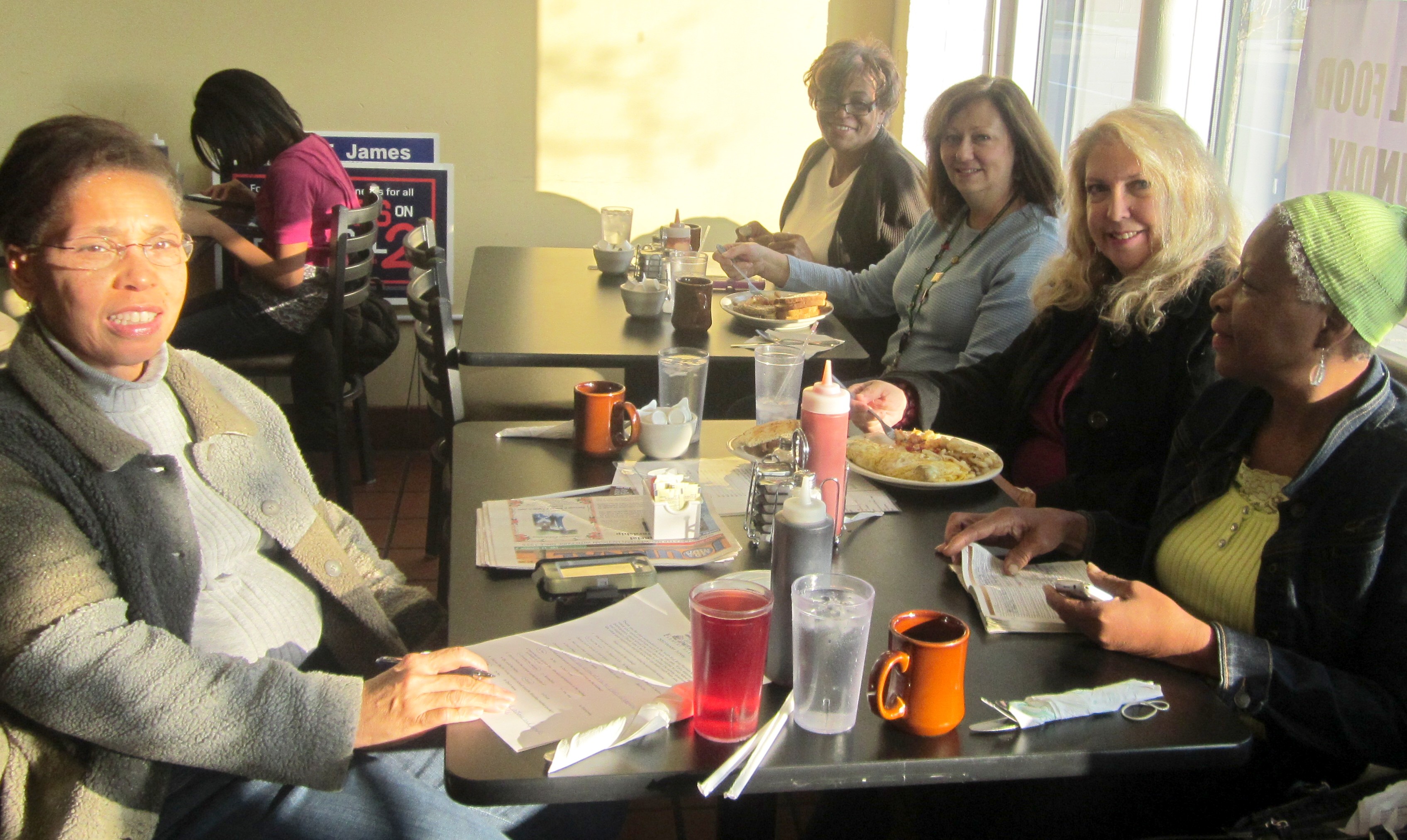
The Greater Grand Rapids Food Systems Council hosted Southeast Area Farmers’ Market vendors for an appreciation breakfast at Sanchel’s Breakfast Anytime last week. Left to right, Darlene Gibbons, vendor; Roni VanBuren, OKT; Jill Myer, KCHD; Cynthia Price, GGRFSC; and Yvonne Woodard, Vendor and OKT Vendor Liaison.

Last week, many of us kicked off the holiday season with a delicious Thanksgiving Day feast. At work and family gatherings, you may find ample opportunity to over-indulge in high-calorie, low-nutrient foods. Do your health a favor by limiting the amounts you let in your mouth.

Did you know that if you eat just 300 additional calories between now and New Year’s Day, you could gain five pounds of unwanted fat? In addition to added weight, indulging in sugary treats can also weaken your immune system, making you more likely to come down with winter colds and flu.

When tempting treats come your way, remember the following:

The banquet’s in the first bite. Did you ever notice that the first bite you take of a favorite food tastes the best? When it comes to high calorie treats, indulge in just one bite… or maybe two.

Portion patrol. Your stomach is about the size of your fist. Plan your portions accordingly. If you are served twice that much, save half for later.

Take your time. It takes your brain about 20 minutes to realize your stomach is full. Eat slowly, put your fork down in between bites and instead of reaching for seconds, wait 20 minutes to see if you are still hungry.

Get wet. Oftentimes, we confuse thirst with hunger. Make sure you are drinking at least 8 to 10 8-ounce glasses of water each day. Drink a full glass before meals so it takes less food to fill your stomach.

Just because the Southeast Area Farmers’ Market has closed for the season, keep on eating fresh fruits and veggies. While the grocery store variety may not compare to farmers’ market fare, choosing fresh produce rather than junk food snacks is always the healthier choice.

Help stop the unjust land-grab in Detroit

Lottie Spady, Eastern Michigan Environmental Action Council,  explains why the proposed sale of 1,800 lots of land to John Hantz is a case of preferential treatment and foregoes the rights of Detroit’s citizens. Share this with your Detroit area friends and contact  Detroit’s City Council about this unjust land-grab!

Still time to Double Up Food Bucks at Fulton Street Market

People shopping with a Bridge Card or with Double Up Food Bucks (DUFB) tokens left over from the Southeast Area Market can still take advantage of this program through the end of November locally at the Fulton Street Farmers’ Market. This is the only Grand Rapids area farmers’ market in the program that hasn’t closed for the season.

The Fulton Street Market is open Tuesdays, Wednesdays, Fridays and Saturdays from 8 a.m. -3 p.m. Simply stop by the Bridge Card booth in the brick building on Fulton and Fuller St. to get your DUFB tokens.

When a person eligible for SNAP (Supplemental Nutrition Assistance Program) uses their SNAP Bridge Card to shop for food at a farmers’ market, the amount of money spent is matched with Double Up Food Bucks bonus tokens. Shoppers earn up to $20 per market day in credits on their Market Card by using their Bridge Card to buy Michigan-grown fruits, vegetables and other approved farm foods with any participating vendor.

If you find it difficult to put healthy food on the table, USDA’s nutrition assistance programs may be able to help. Call 1-855-ASK-MICH. For information on emergency food assistance, visit the Food Bank Council of Michigan or call United Way’s 2-1-1 service (dial 211 on any phone). To apply for a Bridge Card, visit the website www.mibridges.gov on your home computer, at the library or at the Department of Human Services building.

New York Times article giddy over downtown GR market

Reposted from www.GRIID.org

Yesterday, the New York Times published a story about the market in downtown Grand Rapids, which is currently under construction.

The NYTs piece does what most local news coverage has done with this story so far, presented it as a wonderful thing. The Times piece talks about public/private partnerships, the benevolence of local philanthropists, the growing local food interest and how the market is one piece in the ongoing development of downtown Grand Rapids.

The only sources cited in the article are David Frey, a member of Grand Action, the entity that made the proposal; a representative from Rockford Construction, which is the primary construction company on this project; and the person who was hired to manage the market.

Excluded from the article are voices and perspectives that see this project through a much different lens.

For example, Our Kitchen Table, a local grassroots group working on food justice, had this to say about the New York Times article:

While it’s nice to see Grand Rapids receive national recognition, access to fresh, nutritious food in Grand Rapids’ neighborhoods remains a privilege reserved for those who can afford higher prices and transportation outside of the city’s food desserts. Our Kitchen Table works to address this injustice through food gardening programs and the Southeast Area Farmers’ Market. However, as government policies do not favor the small farmer, we have a hard time finding vendors who can afford the small returns our market brings them. In addition, existing philanthropic efforts to feed the hungry more often fill bellies with low-nutrient, high sugar, processed foods that only exacerbate medical issues caused by malnutrition: obesity, asthma, diabetes, heart disease and behavioral problems. While food industry donors get write offs, lower income families are written off. Furthermore, we do not believe the new Downtown Market will do anything to improve access to healthy foods for the Grand Rapids families who need it most.

Such a statement speaks to why this blog have been critical of the proposal from the beginning. We pointed out in an April 2010 article that the project was not just a farmers market, but a larger food complex that will serve an upscale population. InMay of 2010, we posted a second article that provided a summary from a meeting where area residents and food activists raised questions about the proposal, stating that many who live in the Heartside area and south and south east of the market site were not included in any discussions about the project.

The project was approved despite the lack of public input and since then has been receiving millions of dollars in public funding. Is this what is meant is meant by public private partnership? The private sector benefits, while the public foots the bill?

We reported in a December 2011 article that the amount of public funds for this project are substantial. The Michigan Economic Growth Authority (public money) gave the project a $4.5 million grant, the DEQ (public money) gave a $1 million grant for demolishing the previous building on site and the DDA (public money) has also provided the project with over $1 million and is committing an additional $75,000 annually for the next 20 years.

Imagine if that kind of monetary commitment was given to groups like Our Kitchen Table, we might actually be able to eliminate malnourishment in Grand Rapids. Too bad that is not anywhere near the goal of the soon to be open downtown market.

LadyfestGR 2013 selects OKT as beneficiary

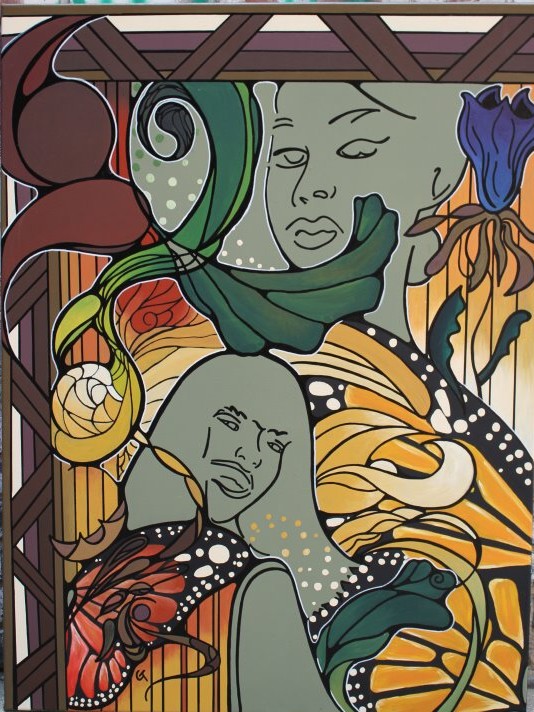
By Georgia Taylor (painted live at LadyfestGR 2012)

Our Kitchen is supremely happy to announce that  LadyfestGR 2013 has selected our organization to receive the funds raised by this year’s event. In a Facebook post, the group announced, “Our Kitchen Table will receive the proceeds from the event to help support their efforts to bring gardening and fresh produce to low income neighborhoods in Grand Rapids. We’re excited to partner with Our Kitchen Table!”

Taking place on Friday March 22 and Saturday 23, the event offers free workshops, a variety show, vendors and a concert featuring local, regional and national performers. While all performers and presenters must self-identify as female, everyone is welcome to attend.

The Pyramid Scheme Bar will serve as the concert venue for the event. Organizers are currently developing the musical line-up, which will most likely include concerts for both all-ages and 21 & over audiences.

They are securing two additional spaces for the free workshops. Our Kitchen Table will present workshops during the event and be on hand to provide information throughout.

The Bloom Collective will hold its 5th Annual Womyn’s Empowered Health Workshop as part of Ladyfest, as well.

For more information or to get involved,  email LadyfestGR@gmail.com.

Urgent Support for Detroit’s urban gardeners needed

Reposted from Food First 

Hello all national justice friends and allies in food and climate!!

We are facing a situation here in Detroit which many of you are familiar with, the #landgrab!

Please express your support for Detroit grassroots community in the form of a phone call or e-mail to City Council members. Share your insight and expertise as to how similar instances have affected your community. We would really appreciate it!

We attended today’s (Nov. 8) City Council Meeting and the matter was “tabled until next week for council members to gain more insight”, but we recognize this as a band-aid. We need a public hearing on this matter and a community- based strategy based on the following points. Feel free to reference this letter and/or modify it to suit your heartfelt response. A letter with some main points follows and a list of contact information for Detroit City Council follows. Appreciate any and all support!!!

In solidarity!!
Lottie

Some background

Detroit: A Tale of Two Farms.

Big food and land grabbing.

A video response from the Justice Communicators Team

Below is a letter expressing concerns about the proposed Detroit City Council action which would allow for an urban land grab by Hantz Woodlands.

Dear Council Member,

Understanding that land is the base of all power, as a Citizen of Detroit, I am writing to request that the proposed sale of land to Hantz Woodlands be on hold until such a time that a public hearing can be convened for full disclosure of proposed plans and any alternative plans are revealed.

There is concern about the way in which the proposed Hantz Woodlands (formerly known as Hantz Farm) sale has been navigated and the general transparency of the process and its timing as related to the proposed Urban Ag Ordinance.

There is concern about setting a precedent that impedes our ability master plan and govern our 140 mile land footprint in the future. What is the process by which this came to be and is this, in fact ,the same process that a citizen would be able to use to purchase parcels of land, in the same time frame and for the same price?

Governance is the issue at the heart of this land sale. Where are the “plans”? The development folder at Planning and Development should be made public in order to ascertain the scope and plan of this project.

What are the direct community benefits to such a deal for residents? How does this acquisition of 2,000 parcels coincide with the plans for this neighborhood in 20/30/50 years going forward?

What is the environmental impact of the proposed project and its alternatives with regard to pesticide use, fertilization, soil and compost acquisition, etc.

What is the process for investing in and encouraging the stability and expansion of existing urban agricultural sites in the city? Now and when/if such a sale were to take place?

The residents of the City must play an active role in the transformation of their neighborhood and community. We need to make sure that the promise of folks being notified about the sale of adjacent land still exists, there is supposed to be first right of refusal for people within the footprint. The value of the land in large tracts actually has greater value than the selling price.

Concerned citizens are speaking up for a fair, just, transparent process for the sale of city-owned land. Wealthy developers should not be extended favor that is not shown to the average Detroiter. Please e-mail Detroit City Council members to express concerns about how this sweetheart purchase of such a large tract of urban land will affect the ability of Detroit’s citizens to grow their own food.

COUNCIL PRESIDENT CHARLES PUGH
313.224.4510 (office)
CouncilPresidentPugh@detroitmi.gov

COUNCIL MEMBER BRENDA JONES
(313) 224-1245 (office)
bjones_mb@detroitmi.gov

COUNCIL MEMBER SAUNTEEL JENKINS
(313) 224-4248 (office)
councilmemberjenkins@detroitmi.gov

COUNCIL MEMBER KENNETH V. COCKREL, JR
(313) 224-4505 (office)
E-mail: Kenneth.Cockrel@detroitmi.gov

COUNCIL MEMBER BRENDA JONES
(313) 224-1245 (office)
E-mail: bjones_mb@detroitmi.gov

COUNCIL MEMBER ANDRÉ L. SPIVEY
(313) 224-4841;(office)
E-mail: CouncilmanSpivey@detroitmi.gov

COUNCIL MEMBER JAMES TATE
(313) 224-1027 (office)
E-mail: councilmembertate@detroitmi.gov

COUNCIL MEMBER KWAME KENYATTA
(313) 224-1198 (office)
E-mail: K-Kenyatta_MB@detroitmi.gov

COUNCIL MEMBER JOANN WATSON
(313) 224-4535 (office)
E-mail: WatsonJ@detroitmi.gov

This sample letter was drafted by:
East Michigan Environmental Action Council
4605 Cass Ave, Detroit, MI 48201
Contact: Lottie V. Spady, Associate Director
www.emeac.org