OKT offers Food History Class in October

The History of Food

  • Meeting four consecutive Tuesday evenings, 6 to 8 p.m.
    Oct. 9, 16, 23 and 30
  • Taught by anthropologist and GVSU adjunct professor, Christy Mello
  • Location TBA

Throughout history and today, food production has been a key component of how members of a society organize themselves and express their different cultural norms and identities. This class explores different types of sustenance economies as well as the history of food from before the rise of civilizations.

Topics will include the history of colonialism, the rise of agri-business and how these have destroyed cultural practices. Finally, we will learn about the relationship of cultures with food and the importance of biodiversity for preserving cultural heritage.

The class is free. Participants are asked to purchase a copy of The Earth Knows My Name: Food, Culture and Sustainability in the Gardens of Ethnic Americans, by Patricia Klindienst (2006, Beacon Press). The class will also include other readings, including selections from Food and Culture: A Reader, edited by Carole Counihan and Penny Esterik (2008, Routledge, second edition).

Preserving the Harvest: Canning Tomatoes

Our Kitchen Table hosted a skill share on canning tomatoes Saturday August 25. Just about everybody present had tips on making the process easier (not that it is difficult!)

This slideshow requires JavaScript.

To begin, we washed the jars, rings and lids in hot soapy water then rinsed. While most heirloom and organic tomatoes don’t need to be peeled before canning because they have thinner skins, we had a thicker skinned variety. To make peeling easier, participant Deirdre Cunningham shared that we should use a knife to score the bottoms of the tomatoes with an X. We then scalded them in boiling water for one minute and cooled in cold water for one minute–the skins practically popped right off.

Next, we sliced the tomatoes in quarters. We added a teaspoon of kosher salt and a teaspoon of lemon juice to each pint jar before packing to the bottom of the rim with fruit–yes, tomatoes are a fruit! The lemon juice adds acidity to help prevent spoiling.

After wiping the jar rim tops with a clean cloth to ensure a good seal, we put on the lids and rings. Then, we processed them in a pressure canner for ten minutes at 5 pounds pressure. If we had used a regular canning kettle, we would have processed them for 45 minutes. Every jar sealed!

We used canning tongs to remove the hot jars to the counter on top of a couple dish towels to cool, taking special care not to jostle the jars (which could interfere with the seal). It’s best not to move the jars until cool, if possible.

Tell President Obama to keep his promise to label GMO foods

Reposted from Organic Bytes

This week, OCA launched a SignOn petition asking Michelle Obama to tell the President it’s high time he honored his campaign promise to label GMOs. We don’t know if Mrs. Obama or the President will do the right thing, but we do know this: If we can get 200,000 signatures, we will hand deliver this petition to the White House. And we’ll make sure we have plenty of media on hand to record the event.

Why does this petition matter? We want to generate awareness of – and support for – Prop 37, the California Right to Know Genetically Engineered Food Act. We want to publicly remind President Obama of two things: First, that more than 90% of Americans – the people who elected him President – want GMOs labeled. Second, that in 2007, he made this promise:

“We’ll let folks know whether their food has been genetically modified, because Americans should know what they’re buying.”

We want voters in California to know that the whole country is behind them on this. And most of all, we want them to get out and vote!

Michelle Obama says she wants to end childhood obesity and she wants kids to eat more nutritious foods. GMOs have been linked to obesity, and there’s nothing nutritious about them. So we’re asking her to remind the President of his promise and to support Prop 37 which, if passed, will be this country’s first GMO labeling law.

Please help us reach 200,000 signatures by Oct. 1. Sign and share this petition today!

Sign the petition here

Gerald R Ford Middle School to host Saturday market remainder of season

Shop with a Bridge Card? Double your produce power! Spend up to $20 and go home with up to $40 worth of fresh, Michigan produce.

Due to the ongoing roadwork on Burton Street, the Southeast Area Farmers’ Market Saturday market will be held at Gerald R Ford Middle School. Our Kitchen Table, which manages the market, decided that trying to hold the market at Garfield Park was too much of an inconvenience to market patrons and vendors.

August 31 is the last Friday market at the school for the year as children will be returning to school. However, the Saturday farmers’ market will continue to operate from 10 a.m. to 3 p.m. through the end of October.

Yes you can can.

The last Saturday of the month, Our Kitchen Table has been presenting canning workshops as a Southeast Area Farmers Market activity. In June, participants made low-sugar strawberry jam and in July, garlic dill pickles. The next canning class is August 25. We will be canning and oven roasting tomatoes.


Canning at food used to be a regular summer activity for many families across the US. Some of us can remember going to granny’s house and seeing the basement shelves filled with canned peaches, tomatoes and pickles.


While few households do it food today, canning still has many advantages. One, you can buy fresh, local, nutritious produce in season at a lower price. Two, you don’t have to worry about toxic chemicals and high amounts of sugar or high fructose corn syrup being added. (Go to the grocery store and try to find pickles without chemical additives!) Three, it’s simply delicious!


The corporate food system has scared us away from canning. They’ve put a false message out there that canning is difficult to do, can result in food poisoning and requires all kinds of fancy equipment. Not true! Did you know that just about all reported food poisoning issues came from factory canned foods not home canned foods? Canning is simple. You can do small batches. And, you don’t need to invest a lot to get started.


Stop by the farmers’ market for fresh local produce 2 to 7 p.m. Friday at Gerald R Ford Middle School, and 10 a.m. to 3 p.m. Saturday at Garfield Park.

OKT featured in Kellogg Foundation “NightLight”

This is re-posted from NightLight

Our Kitchen Table

KELLE BARR
Our Kitchen Table - Photo by Adam Bird

PHOTO BY ADAM BIRD
With Farmers’ Markets, cooking classes, and home gardening instruction, Our Kitchen Table is turning the tide for people living in Grand Rapids neighborhoods that had limited options for buying fresh, healthy food. This compact nonprofit is also addressing other health and social justice issues, like lead poisoning and air quality.

Michigan Nightlight: In your view, what makes your program innovative, effective or remarkable?
Our Kitchen Table Communications Officer Stelle Slootmaker: Our Kitchen Table is addressing food insecurity through a justice lens. Our goal is to not only increase access to healthy foods, specifically fresh produce, but also to work side by side with the community to build power and capacity that results in the community creating their own alternative food system. We have four targeted neighborhoods in Grand Rapids that were chosen because of limited access to fresh foods. We’re working with those people so that they can grow their own foods – they are assigned garden coaches and garden buddies for this. We are growing the starter plants (about 7,000 of them) in a greenhouse right now. Most people plant container gardens because so many rent. They can take their gardens along with them if they move.

What was the best lesson learned in the past year?
People in our targeted neighborhoods are looking for ways to access healthier foods; they welcome the presence of the farmers’ markets we ran and the gardening opportunities we offer. It’s not that people don’t want to eat healthy – Our Kitchen Table recognizes that it’s not a matter of making poor choices. People in our targeted neighborhoods are looking for ways to access healthier foods; they welcome the presence of the farmers’ markets we ran and the gardening opportunities we offer. It’s not that people don’t want to eat healthy – Our Kitchen Table recognizes that it’s not a matter of making poor choices.But if you don’t have a car and you’re eating from the corner store, you are at risk for diabetes, heart problems, obesity, asthma and other diseases poor nutrition contributes to. We have two farmers’ markets in the heart of the targeted areas, within walking distance. They are open from the first week of June until the end of October.

What was the hardest lesson learned in the past year?
How to work with our Southeast Area Farmers’ Market partners when facing the realities of institutional racism.

What really differentiates this program?
We are not telling people how to eat – giving them a vegetable and telling them they should eat this. People want to eat healthy and they know about healthy food. We are working at increasing access through a model called “Popular education” and the urban foraging of fruit and nut trees is a part of the growing food system. There are apple trees and nut trees in the area that no one is picking and that’s important for people to know.

What are the keys to success for your program?
It’s about communication. Keeping it real. Working side by side with the neighborhood residents – not “us vs. them.” It’s about having team members that work extremely hard because they are totally invested in the work. We continue education all year long; for example, there are some plants, like herbs, that can come into the house after growing season ends. We hold events called “Cook, Eat and Talk,” where chefs come in and demonstrate recipes; we have fun with that and eat the meal. It is our hope that eventually we can turn this over to the neighborhoods because they won’t need us anymore. Success is also about political education. We are trying to influence the City of Grand Rapids to plant more fruit and nut trees as they plant trees and on the local level, we are going to address the local composting ordinance. Nationally, we are addressing the 2012 Farm Bill because the way it is written now, it will hurt people who get help from the government to buy food.

How does race or diversity affect the work of your program?
Environmental justice and food justice, rather the lack thereof, are rooted in institutional racism. Our neighborhoods are heavily populated with people of color, and if you look where many people of color live, it’s next to the incinerator, the industry spewing out pollution. Environmental justice and food justice, rather the lack thereof, are rooted in institutional racism. Our neighborhoods are heavily populated with people of color, and if you look where many people of color live, it’s next to the incinerator, the industry spewing out pollution.These areas are horrendously impacted by pollution and it’s not only the air, but the homes they live in. They tend to be older homes, lots of them with lead paint, so lead poisoning is a danger. The soil can be full of lead and arsenic, so that’s another reason for container gardens or raised gardens in those neighborhoods. So there’s lack of access to healthy foods, health problems caused by that and pollution – then you throw in the stress of having to wake up every day in a racist society. That’s difficult because we like to pretend that we are post-racism, but the truth is that racism is still everywhere you turn.


Lisa Oliver-King

Lisa Oliver-King - Photo by Adam Bird

 PHOTO BY ADAM BIRD

Michigan Nightlight: What does being a leader mean to you?
Lisa Oliver-King, Executive Director of Our Kitchen Table: I don’t really feel like a leader because we are not doing something that is brand new here. Food plants and seeds come from God and it is simply our responsibility to respond and connect with that to create the gardens that help people become more self-sustainable. We have a saying here called “seek to understand and then to be understood” and that is how I practice my leadership. I need to seek to understand how to best communicate so I can do what is best for OKT because what works for one group may not work for another. For instance, we talk about creating gardens and that’s working out great in our targeted neighborhoods, but we do more to educate, like taking bicycle tours around them to see fruit and nut trees and plants in their own areas. They are amazed to find out how many nut trees there are. And that those dark spots on the ground are actually mulberries that fell from a mulberry tree.

What is your dream for kids?
My dream for kids is that they are able to run down the street and grab a handful of mulberries or raspberries, eat them and to continue their play and have fun. My dream for kids is that they are able to run down the street and grab a handful of mulberries or raspberries, eat them and to continue their play and have fun.I just love watching them learn. When you can see in a child’s face what they have learned about nature from this program; their eyes are opened. Once they know what nature provides, they become much more respectful of the environment. They throw down less trash, they decide to play in a park just because raspberries grow there. When it rains, they say things like “Mom, God is watering our plants!” They form such an appreciation for nature.

What is one concrete thing that could be done to improve the environment for social sector work in Michigan?
One key thing that people need to know is – historically – how their land has been used. Every agricultural project should start with a review (we go back 40 years) but knowing what contaminants are present – like lead and arsenic – is good for everyone, everywhere to know, not just OKT gardeners. It’s about staying healthy and helping people learn different ways to stay healthy. For us, if we find out that the setting used to be an industrial site, we can find out what kind of industry it was to determine what kinds of contaminants to look for. For example, one of our Grand Rapids sites used to be fruit orchards, so we tested the soil for things like pesticides and fertilizers.

How do you know you are making progress?
People keep showing up! Around 85 percent of our growers come to OKT workshops consistently. And our Food Gardening Coaches visit the gardens at least once a week when it’s warm and once a month when it’s cold, after they bring their herbs inside. Those coaches are finding that growers are becoming much more comfortable with growing as time passes. We teach them how to stick their hands in the dirt to see if the plants need watering because it tells them much more than just brushing the top of the soil and finding it dry – it might not be dry underneath and it might not need the watering they were going to give it.

What are you most proud of?
I’m proud of the fact that I took a leap of faith when I got to OKT. I have a background in public health, and I was not a food grower then, and I wondered what kind of credibility I could offer the people we serve. So, I just shut up and I listened to the people who did know what they were doing. I listened, I touched the earth and now my daughters and I have our own raised bed gardens. We grow greens, lettuces, radishes, carrots, and fruits. I started experiencing that incredible feeling that I see our growers experience by learning how it happens to them. I have always eaten nutritious foods, such as produce from farmers in my family, but I had never seen a food plant. I didn’t know a broccoli plant from a carrot plant from a weed because I had never seen it grow. Now I do. Now I know that incredible feeling right alongside the people that OKT serves.

What keeps you awake at night?
Not being able to reach enough people and help everyone who wants our help. People call all the time [from outside targeted neighborhoods] because they have heard of our gardening project and they want our help to learn to grow their own food. It’s just not enough to send them to our website for instructions or tell them to read a book because food is very personal and a piece of paper is not a hand. I only have so many resources, but I don’t ever want to turn anyone down, no matter where they live. So many people need us. I only have so many resources, but I don’t ever want to turn anyone down, no matter where they live. So many people need us.

RELATED TAGS

Notes from Saturday’s urban foraging workshop

OKT hosted urban foraging workshops at the Southeast Area Farmers’ Market last Friday and Saturday. Market manager Yvonne Woodard presented on Friday. On Saturday, Kristin Tindall from Blandford Nature Center, shared her amazing expertise.

Laura Cassaletto attended Saturday’s workshop and sent along these notes.

Purslane

Lambsquarters

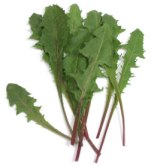
Kristin brought a variety of plants to the Urban Foraging training, but we were able to find virtually all of them by walking a few feet along the Gerald Ford school’s fenceline.  Even in the mowed grass, we found and nibbled on tangy sorrel and mustards and purslane.  There was an abundance of lamb’s quarters on the property, which might have been a good boiled green if it had not all been converted from meristem to fibrous tissues.  The leaves of still-tender plants are “stretchy,” not ligneous.  I was glad to see this demonstrated and explained in helpful scientific terms which translate to lunch.

Dandelion greens

We also discussed scouting out your territory for food plants as the seasons roll by, since some plants are easier to spot when not at their tastiest.  I agreed with the African American ladies present, who were most interested in cooking up a “mess” of greens whenever possible, not just a lone serving.  The useful technical term here would be a “stand” of one species.

Chicory and Queen Anne’s lace are two species which are easy to spot in their second year, when they send up

Queen Anne’s Lace

their tall flower stalks, but taste best in the first year.  There are more ways to eat these two pretty weeds than I knew!  We also talked about eating milkweed and mulberry leaves.  Two participants chewed up long narrow plantain leaves from the lawn and applied them to bug bites for instant relief.  Plantain (not the banana) can be found in abundance in both broad and narrow varieties, both a good poultice.

I took notes and I am glad I did.  We learned also about staghorn sumac, Japanese knotweed, amaranth,

Brew staghorn sumac fruit to make pink “lemonade”

elderberries, and daylilies.  In my foraging notebook I usually draw a picture of each plant I work with.  Just like the faces of your friends, every plant is uniquely distinctive and I never fear mistaking one for another once we become acquainted.

GRIID offers fall classes: Radical Sustainability and A History of Social Movements

OKT collaborative partner, The Grand Rapids Institute for Information Democracy (GRIID) offers two 8-week classes this fall; both are relevant to the environmental justice movement.

A History of US Social Movements explores the rich history of social justice movements in the US.

Using Howard Zinn’s book, A People’s History of the United States,it covers the Abolitionist movement, the Civil Rights movement, the US labor movement and many other movements over the past century. Virtually all of the social progress we have made in the US has been due to these powerful movements and not elections.

A History of US Social Movements will be held on Mondays from 6 – 8pm, starting September 17.

The second class, Radical Sustainability, looks at the current environmental crisis, critique the response by Green Capitalism and explore tactical and strategic ways to resist the destruction of species, forests, oceans and the crisis of global warming.

This class will also look at what is happening in West Michigan so as to put a local framework around how we respond to mountaintop coal mining, fracking, industrial pollution, transportation and agribusiness.

The Radical Sustainability class will be using the book Deep Green Resistance and meet on Wednesday nights from 6 – 8pm, starting September 19.

Both classes are $20 (not including the cost of the books), but we will not turn people away for lack of funds.

Classes will be held in one of the community rooms at the Steepletown Center at 671 Davis NW in Grand Rapids. To sign up for the class send an e-mail to jsmith@griid.org.