Food plants almost ready!

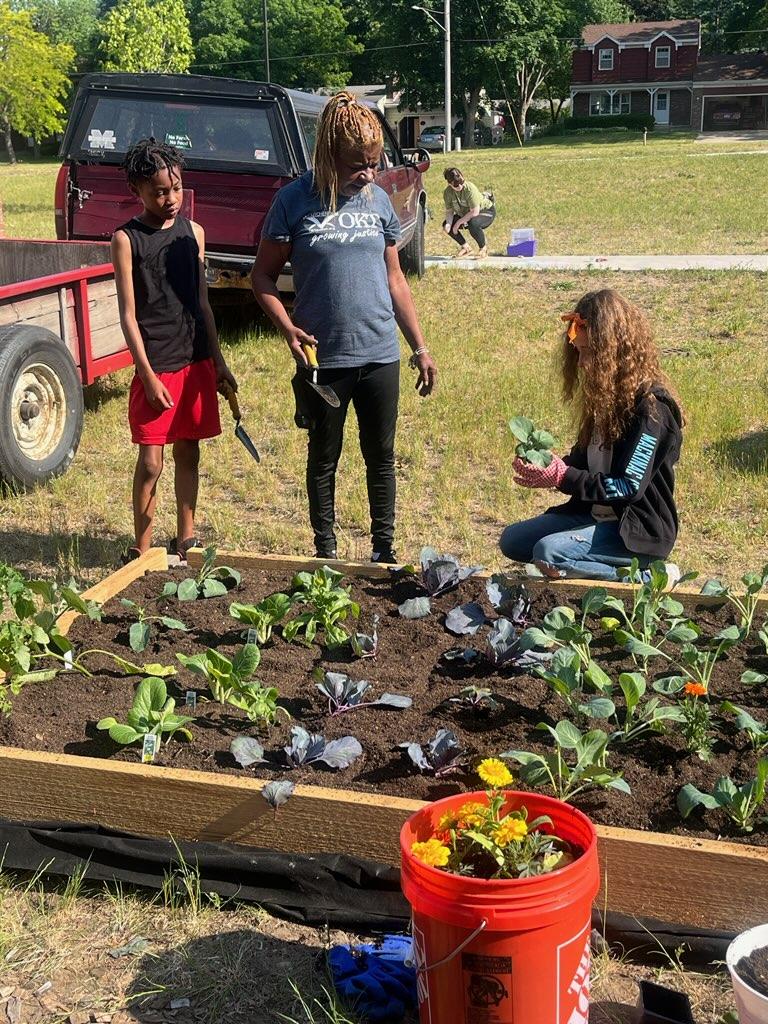
Blandford Farm timed the planting of OKT’s starter food plants so they’d be ready to go in the ground right around Memorial Day.

“We are right on track. We were able to get almost all the herbs to germinate as well,” says Elizabeth Visser, Blandford Farm Manager.  “I still need to pot up the mustard greens. They grow fairly quickly, so I seeded them later than some of the other greens. All the plants will be ready to pick up during the last week of May.”

OKT will be in touch with this year’s growers to let them know when and where they can pick up plants or expect delivery.

Urban League of West Michigan Statement on the Mistrial in the Case of Christopher Schurr

The Urban League of West Michigan calls on the Kent County Prosecutor to swiftly retry the
murder case against former officer Christopher Schurr without delay.

On April 4, 2022, our community experienced a tragedy that forever changed the lives of the Lyoya family, the Grand Rapids Police Department, and the collective spirit of Grand Rapids. That day became a defining moment—testing our values, our institutions, and our commitment to justice.

The recent mistrial in the case of former police officer Christopher Schurr has laid bare a deep
and painful divide in our community. This fissure runs through the very foundation of a city
striving to become a place where all people, regardless of race, background, or circumstance, can
truly thrive.


For those who have long carried the burden of a criminal justice system that too often fails to
serve them, this mistrial is a devastating reminder of that reality. It represents not just a legal
failure but a profound moral one. Communities repeatedly asked to place their trust in the system
are once again left reeling—disillusioned, hurt, and retraumatized.


This is a grave injustice the Lyoya family must now bear—not only today, but for the rest of
their lives. It is a wound that also marks the conscience of every Grand Rapidian who believes in
the promise of justice. Until every system—education, health, housing, economic, and criminal
justice—works for all, our community cannot and will not thrive.


Let us not forget the words of Dr. Martin Luther King Jr.: “Injustice anywhere is a threat to
justice everywhere.” An injustice to one is, indeed, an injustice to all.


The Urban League of West Michigan calls on the Kent County Prosecutor to swiftly retry the
murder case against former officer Christopher Schurr without delay.
Additionally, we invite the
City of Grand Rapids Office of Oversight and Public Accountability (OPA) to an immediate and
transparent dialogue with us and the broader community. This conversation should focus on a
thorough examination of the training, policies, practices, and procedures currently in place
within the Grand Rapids Police Department – particularly in instances where these actions result
in a loss of life.

Our city’s future depends on the courage to confront hard truths and the will to make meaningful
changes. Justice delayed is justice denied—not just for one family, but for all of us.

FAMILIES AT RISK IN FEDERAL BUDGET DEBATE, ADVOCATES WARN

 Advocates for immigrant families, health care, food security, and economic opportunity warned today that the federal budget debate in Congress threatens deep cuts to health care and social services for millions of Michigan residents in immigrant families. Spokespersons for the Michigan Immigrant Rights Center (MIRC), the Protecting Immigrant Families Coalition (PIF), Michigan Primary Care Association, Michigan League for Public Policy, and Food Bank Council of Michigan briefed Michigan journalists by teleconference.

“These cuts will impact immigrant families and communities across the state.” said Christine Sauvé, Policy, Engagement, and Communications Manager at the Michigan Immigrant Rights Center. “Immigrants are integral to Michigan’s social, cultural, and economic fabric and the proposed restrictions would hurt us all. We all benefit when more people have access to the care and support they need to thrive.”

“Policymakers need to understand that – in addition to the human consequences – these cuts will mean job losses, loss of needed services to keep folks well, and facility closures across our state, including areas already experiencing insufficient healthcare access,” said Jackie Chandler, Population Health Manager at the Michigan Primary Care Association.

“The Child Tax Credit and other anti-poverty measures drastically reduce child poverty, making for a more prosperous economic environment with lower public costs in the long term,” said Scott Preston, Senior Policy Analyst at the Michigan League for Public Policy. “Immigrants are important contributors to our state’s economy and the proposed cuts would simply make life harder for citizens who want to stay in Michigan and be part of our state’s future.”

“Denying SNAP to lawfully-present immigrants and U.S. citizens in immigrant families will drive up hunger across the state and undermine the economic stability of families, farms and other food producers, and neighborhood retailers across the state,” said Anna Almanza, Director of Public Policy & Government Relations, Food Bank Council of Michigan

“Congress should be looking for solutions to problems like unmet health care needs, hunger, and poverty, not making those problems worse,” said PIF Campaign Strategist Esther Reyes.

Community partners! Join us at the market!

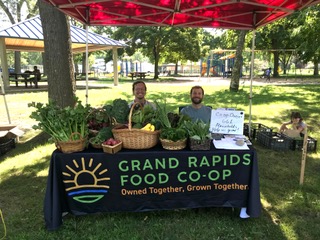
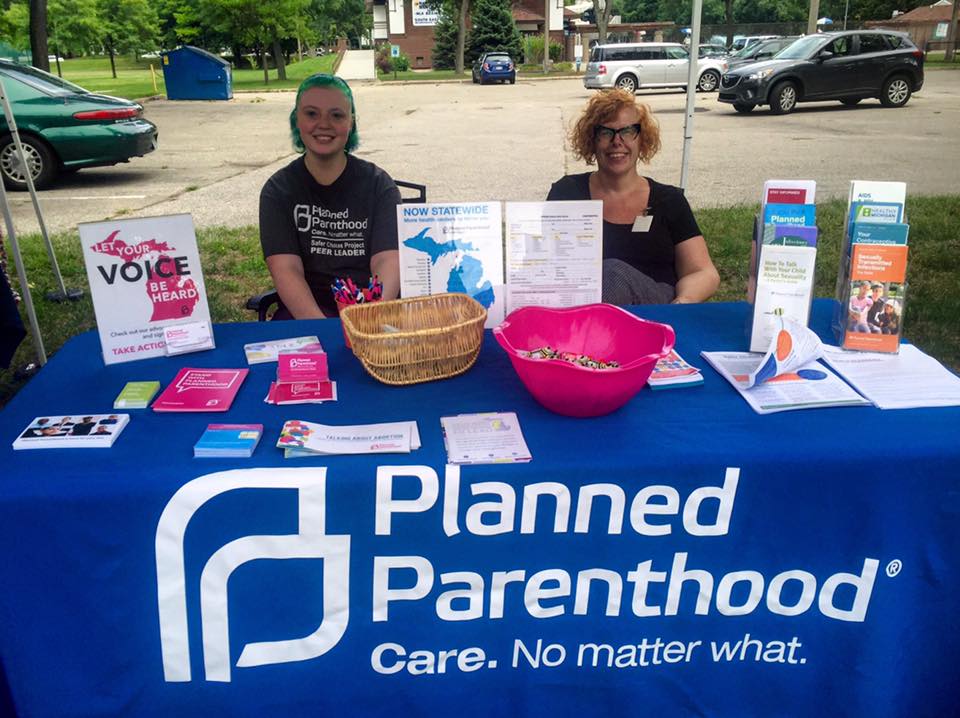
The Southeast Area Farmers Market not only provides our Grand Rapids neighbors with fresh local produce but also provides other community organizations an opportunity to share their resources.

We have been thrilled to have the participation of the City of Grand Rapids, the Grand Rapids Fire Department, Planned Parenthood, the Grand Rapids Public Library, Friends of Grand Rapids Parks, Grand Rapids Red Project and many others over the years.

If your community organization would like to share resources during the upcoming market season, email SEAFM@OKTjustice.org.

Think spring! Think food gardens!

Check out the free OKT food growing guide! Growing Food, Eating Healthy, Living Sustainably

Would you like to grow your own food? Yes, it takes some work but the results are worth the effort. Food harvested from your own garden plot, raised bed, or containers offers more nutrients, taste, and convenience.

OKT’s free food growing guide gives you lots of tips on planting, maintaining, harvesting, and eating from your garden — like this chart  that lays out when to plant what.

U.S. Senate Budget Plan Would Harm Millions of Michiganders and Deepen Wage Inequalities

The Michigan League for Public Policy is strongly denouncing the United States Senate’s new budget plan, which is predicted to pass this weekend and would create harmful consequences for Michiganders. Monique Stanton, MLPP president & CEO states:

“The Senate’s new budget plan is downright dangerous, and if passed this weekend as planned, will set the stage for a damaging tax and budget bill. It delivers massive tax breaks to millionaires, billionaires, and large corporations — and covers the cost in part by slashing essential programs like Medicaid and SNAP. In Michigan alone, 2.6 million residents rely on Medicaid — including over 1 million children — and more than 1.4 million Michiganders rely on SNAP. These cuts would lead to higher health care and food costs for families, increased financial hardship, and millions potentially losing health coverage. 

Even with deep cuts, the tax breaks are so expensive that they will lead to a significant rise in the national deficit, increasing economic risks tied to unsustainable debt — all to benefit the wealthiest households.

It doesn’t have to be this way. There’s still time for Congress to change course. Lawmakers must honor their commitments to ease the burdens families face, not reshape the budget to serve those at the very top. A responsible plan would lower health care and grocery costs, expand the Child Tax Credit, and invest in working families — and ask corporations and the wealthy to pay their fair share through a more balanced tax policy.

Senate Republicans are using misleading tactics to obscure the truth about this budget. They’ve downplayed the cost of these tax cuts and hidden the full scope of planned reductions to Medicaid, food assistance, student loans and other critical programs. In reality, the budget would make college more expensive and take away essential supports from families the President once vowed to protect — all while delivering an average annual tax cut of $62,000 to households earning over $1 million, according to the Tax Policy Center.

The plan includes at least $5.3 trillion in tax breaks over the next nine years — $1.5 trillion more than the cost of extending the 2017 tax cuts — and that number could climb even higher with additional program cuts under consideration by the Senate Finance Committee.

What does that mean for Michigan? According to the Institute on Taxation and Economic Policy, simply extending the 2017 tax cuts would give the richest 1% of Michiganders an average tax cut of $35,970 while the poorest 20%, who are already struggling to afford the basics, would receive an average tax cut of just $90. What’s worse is that we expect the plan to go beyond this — providing windfall tax breaks for wealthy Michiganders while making it harder for the rest of us to see a doctor, put food on our table and send our kids to school. 

It’s becoming clearer and clearer. Many in Congress are embracing an agenda that threatens public services and undermines democratic processes. Alongside the budget, Republicans are advancing executive actions that unlawfully withhold congressionally approved funding, politicize and weaken the civil service, and erode institutions like the Social Security Administration and the Treasury Department — putting the privacy and stability of millions at risk. On top of this, the administration is pushing new, unilateral tariffs that will raise everyday costs for working families by hundreds or even thousands of dollars — easily wiping out any modest tax relief they might receive.

This budget plan — like so much of the current agenda — is upside down. It breaks promises, deepens the already massive income gap, and puts the interests of the wealthy above the needs of the nation. The American people deserve a plan that builds shared prosperity — not one that leaves families behind.”

Educating Teens About Food and the Farm Through New City Neighbors

Note! New City Farm will be our produce anchor at this year’s Southeast Area Farmers Market! Reposted from Rapid Growth Media.

This article is part of Rapid Growth’s Voices of Youth series, which features content created by Kent County youth in partnership with Rapid Growth staff mentors, as well as feature stories by adult writers that examine issues of importance to local youth. 

Learning about nutrition, cooking, and food scarcity helps prepare youth for adult life and deepens their empathy. New City Neighbors, a Grand Rapids-based nonprofit, gives area teens that head start and connects them with impactful experiences. 

With three farms across the area and a cafe to serve the community, kids learn agricultural skills and make food alongside their peers. Helping urban youth learn about agricultural development and preservation is key to NCN, which recently secured a five-acre urban space on Ball Avenue NE to expand.

Ricardo Tavárez is in his sixth year as NCN executive director. He hopes more inner-city teens can learn about producing food from farm to table. 

“We take food for granted sometimes, and when our youth learn about food prep or about growing healthy food, they also learn about food scarcity in our community,” he says.

The work at NCN is not just about teaching about these real-world issues, it’s about supplying the community with food to eat — and healthy food, at that. Youth in the NCN program are helping families who need food get farm-to-table meals. 

Nate Engle, of the Michigan Department of Agriculture and Rural Development (MDARD), sees three main benefits to fresh food from the farm being supplied to neighborhoods: economic impact, health benefits, and social aspect. 

“We are what we eat, and if we eat more healthy foods, more often, chances are we’re comparatively healthier,” he says.  

Recognizing how economic impact and social aspects intersect is also important. 

“There’s a higher chance you know the person who delivers those fresh foods or knows the person that grows them, or you get them and then take them to your grandma or an elderly neighbor,” he says. “Food systems that are more local in nature strengthen local communities by building relationships.”

In essence, NCN empowers teens to create better relationships with their community. Tavárez agrees. 

“Being able to bring healthy food to someone helps them build a relationship with the farmers who are actually growing the food,” he said.” There’s not a third party that’s selling them the food. They actually get to interact with the people who grew it.” 

Why New City Neighbors is Youth-Oriented

Part of NCN’s mission is “empowering youth to reach their full potential.” 

“We intentionally focus on youth because we believe that they’re not just the leaders of tomorrow, but they’re the leaders of today,” Tavárez says.

With the right resources, he says, youth can enact change.

“We believe that youth in our neighborhood have ideas that are worth listening to; that they can shape the community for the better; and that they often know more about the social issues that need to be changed in our community than we do. So we want to empower them to have a good starting place to tackle some of those issues and shape our community for the better,” he says.

Engle elaborates on how programs like those NCN offers can help the younger generation later in life.

“Agriculture and food also represent a pathway for youth to grow careers,” he says. “Young people can get training and higher education to become chemists, biologists, veterinarians, plant pathologists, soil scientists, agronomists, supply chain and logistics managers, or any number of other professions.”

These are just a few of the career options that benefit from the training that NCN gives its employees, whether they be farm apprentices or cafe workers. These opportunities soon will expand, as the recent purchase of urban farmland allows the organization to reach more inner-city teens and serve more of the community. NCN has already worked with over 200 youth employees, a number that will grow with this new development.

The Future of New City Neighbors

The Ball Avenue farm was only acquired last fall, but the second phase of the organization’s plan is already in motion. 

The “On Solid Ground” campaign is now in its farm-development phase, where donations are used to buy agricultural equipment. By 2026, the goal is to have the space ready for the third phase, where a farm education center will be fully fitted to teach local youth about agriculture in an environmentally sustainable manner.

Tavárez hopes the community is ready for the space to be maintained as one of the last few urban green spaces in the Creston area. 

“We’re very excited to develop [it], keep it green, and use it to take our youth empowerment to the next level,” he says. “We’re hoping to get a lot of excitement and energy from our community to continue supporting us.” 

The benefits of this campaign don’t end there. Engle speaks to how important it is to conserve these spaces, and how Grand Rapids is at the forefront of urban agriculture development.

“Healthy urban places are symbiotic with healthy rural places,” he says. “If you have vibrant cities, you probably have vibrant rural communities outside them. We see challenges when we sprawl with our developments … We want dense urban cities in Michigan, and we want healthy rural cities and villages surrounded by productive farms and forestry land.”

Whether or not you are a teen, you can help NCN and preserve urban agriculture across the city. Engle recommends contacting the Urban Agriculture Committee and asking if you can attend a meeting. The Kent County Agricultural Preservation Board also holds meetings where you can get questions answered.

In addition to donating, you can volunteer at the New City Farm or become a shareholder and receive fresh, farm-grown vegetables. Current opportunities for youth include a farm apprentice program; applications are on NCN’s website

Luke Fann is a sophomore at City High Middle School, where he has been an editor since 2022 and a journalist since 2021 for the school newspaper, The City Voice. He writes about current events and technology. He also enjoys creative writing, especially fantasy and sci-fi. Luke has won several awards for his writing at MSU’s MIPA Summer Journalism Workshop for both Creative Storytelling and the Art of Storytelling.

OKT’s Program for Growth at four local schools

Our Kitchen Table is thrilled to announce that we will be growing healthy organic food with more schools this spring, summer and fall. In addition to Glenwood Elementary School in Kentwood and Campus Elementary School in Grand Rapids, we will be back at Grand Rapids Martin Luther King Jr. Leadership Academy and, for the first time, Grand Rapids Dickinson Elementary.

The Program for Growth not only enlists students in gardening. Their parents and caregivers are encouraged to volunteer in the garden and attend classes on healthy eating led by a registered dietitian. With direction from OKT peer garden coach Belinda Henderson, families who chose to are provided with organic food plants, soil, containers or raised beds, and coaching so they can grow their own food at home as well.

Michigan Public Health System is Not Ready to Combat Avian Flu

Dairy workers at risk of disease don’t have protective equipment when they need it

As H5N1, or avian flu, continues to spread among dairy and egg facilities across the state, Michigan farmworkers and outreach workers report that the personal protective equipment (PPE), testing, and vaccines needed to combat the disease are not readily available. Staff from the Michigan Immigrant Rights Center (MIRC) recently connected with 20 dairy workers in Michigan’s upper peninsula who were sick with flu-like symptoms. It took repeated communication from MIRC staff and partner organizations to determine who could provide testing, flu vaccines, and PPE for the affected workers. This experience highlights the wide gaps that exist in the current response to avian flu in Michigan to ensure workers at highest risk are protected, and the stark need for additional resources to stop the virus from gaining opportunities to mutate and spread person to person.

In 2024, two human cases of H5N1 were identified in Michigan, both among dairy workers who are at high risk of contracting the virus from cows. Currently the Michigan Department of Health and Human Services (MDHHS) directs affected workers to their local public health departments for H5N1 PPE, flu vaccines, testing, and treatment. However, the reality is that many public health departments are ill-equipped to serve in this role. Many do not have PPE, tests, treatment, or vaccines readily available, nor do they have the staff and language resources needed to communicate effectively with this vulnerable workforce.

On January 16, 2025, a group of 20 dairy workers in the northern peninsula reported being sick with flu-like symptoms. The illness spread quickly among the workers. On January 22, the local health department stated that they did not have  H5N1 PPE, testing, or flu vaccines on hand, but would try to locate some resources. On January 28, they provided paper masks and COVID testing for the workers. On January 29, MDHHS stated that they had run out of PPE kits but would also look for resources. Two weeks later, on February 14, the local health department was able to access about seven avian flu tests and arranged a testing site for workers, however due to miscommunication and confusion about whether their employer would allow them to attend, no workers attended. On February 17, after a month of advocacy efforts by MIRC staff, MDHHS obtained PPE to send to the local health department and the workers finally received H5N1 PPE. To date, the local health department is still working to arrange flu shots for these individuals. 

Public health experts assert that speed is essential in responding to potential avian flu outbreaks. As this timeline indicates, Michigan is not ready to respond with the swiftness necessary to mitigate the spread of H5N1. The Michigan Department of Agriculture and Rural Development (MDARD) tested either the farm’s cows or the milk within two weeks of the first reported illness and fortunately the tests came back negative. However, the response to test the animals was much swifter than the response for the human workers.

One of the sick workers provided a statement to MIRC in Spanish that was translated by our outreach workers:

“We hope that through this communication, there can be protective equipment for the other ranches, since we’ve already gotten PPE at the ranch where we are working. It arrived a little late, we hoped to get it sooner, but now we have it. We hope that the agencies that helped us can help other farms too. The agencies should be better prepared, so that when there is a request or someone is ill, the agency can respond quicker to those who need the protective equipment. If the protective equipment had arrived faster, we might not all have gotten sick.”

“The services that public health departments provide really vary by location,” said Rachelle Linsenmayer, MIRC staff attorney. “Some health departments have seasonal flu vaccines, flu testing, and H5N1 testing, but many do not. We’ve noticed that more remote health department locations are less likely to have the Spanish language resources that animal production workers need.”

In Barry County, a dairy worker noticed her co-workers were sick and wanted to avoid contracting the same illness. When she reached out to the local health clinic, she was told they didn’t have the avian flu vaccine. She then contacted her local health department but the staff did not speak Spanish and she could not explain in English what she needed. Fortunately, a few days later, an outreach worker from MDHHS assisted her with communication with the local health department. However, the worker was disappointed that she could not be vaccinated, because no vaccines were available. Dairy workers in Kent County also reported flu-like symptoms, but they didn’t go to the clinic due to a lack of information, and their busy work schedules did not allow them to miss work. 

Accessing medical care is especially hard for dairy workers who work extremely long shifts, at least 12 hours per day. Many dairy farms operate 24 hours a day, 7 days per week, with round the clock milking schedules. The farms are remote and may not have access to nearby health facilities. When workers do have time off, they need to be able to quickly find and access resources, and cannot waste time contacting multiple agencies to locate H5N1 resources. Many dairy workers also fear seeking health services because they cannot afford an expensive medical bill. Given the heightened climate of immigration enforcement, workers are also afraid to travel to nearby health agencies. Health departments, if given additional state and federal support, can lower some of the barriers that animal production workers face by offering mobile clinics and providing PPE, testing, and vaccines on-site at workers’ housing or workplace. With the recent passage of the Earned Sick Time Act, dairy workers should now have access to paid leave when they need to seek preventive care or are sick.

The experience of dairy workers around the state highlights a major disconnect between what animal production workers are advised to do if they have been exposed to avian flu and the actual resources available to them. State and federal recommendations underline the importance of workers having PPE, getting preventative flu shots, and getting tested for avian flu if they are symptomatic, yet many local health departments – particularly in more remote and rural areas of Michigan where workers are located – do not have testing, PPE, or flu shots readily available. This leads workers to lose trust in local health departments. Organizations like MIRC also fear losing trust with workers if we direct them to resources that are not actually available. 

Additionally, employers have a role to play in ensuring their workforce is protected. Employers are required to pay for PPE when a workplace hazard exists or is likely to exist. At a minimum, employers must provide gloves to protect animal production workers against avian flu and may be required to provide boots, bibs, respirators, and/or goggles, if animals have symptoms or have tested positive for avian flu. Dairy employers with affected herds can receive reimbursement from the U.S. Department of Agriculture for purchasing PPE for their employees.

While state and local health departments express a sincere willingness to help, miscommunication and difficulty finding resources persists. For example, health departments have had to request PPE or vaccines from other departments, and MDHHS had to ship PPE to health departments that did not have it. Last year MDHHS had promoted free resources but ran out of PPE in November 2024; unknowingly, other agencies continued making referrals to this service. Increased communication between state and local agencies is clearly needed to ensure services are available for animal production workers.

Simply put, Michigan’s public health departments, both state and local, are underresourced and not prepared or trained to sufficiently respond to avian flu. There is also a lack of support, funding, and resources from the Centers for Disease Control (CDC). Speed is critical to controlling the spread of H5N1 and public health agencies must have H5N1 tests and treatment medications like Tamiflu on hand, along with proper procedures to isolate the illness. Consistent supplies of PPE and vaccines are needed to help prevent the transfer of the illness from animal to human. COVID and flu vaccine access is also critical to reduce the risk of being infected with both avian flu and another virus at the same time, which can help prevent the formation of a hybrid virus that could be more severe or contagious. 

“The animal production industry frequently treats its workers as disposable, but the time has come for Michigan to prioritize the health of workers,” said Christine Sauvé, MIRC Policy and Communications Manager. “Not just for the workers’ sake, but to stop the spread of avian flu and protect the health of all Michiganders.”

Workers who have questions about their rights can call MIRC’s free confidential Farmworker and Immigrant Worker hotline at 800-968-4046.