Deirdre Courtney will present Climate Change and Marginalized Populations

ccl eventFree!
6 – 8 p.m. Thursday Feb. 21
ICCF Assembly Hall, 920 Cherry St SE, 49506 

As climate change makes more impact on our world, those with income challenges—most often people of color—suffer the most. Deirdre Courtney will present Climate Change and Marginalized Populations at ICCF Assembly Hall, 920 Cherry St SE, 49506 from 6 – 8 p.m. Thursday Feb. 21. The free event is co-sponsored by the Citizens Climate Lobby – Grand Rapids Chapter and Our Kitchen Table, as part of its  2019 Women of Color Convenings series.

Courtney, a doctoral teaching assistant in the Institute for Intercultural and Anthropological Studies at Western Michigan University, researches climate change adaptation and mitigation, climate change migration/displacement and cultural anthropology. While the real solution is to take steps to set our world’s climate back in the right direction, the next best plans include finding ways to minimize the harm that is already happening to our marginalized neighbors who are suffering the most.

“The margins are real and make a difference on how and who is affected by climate changes, even in Michigan,” says Jan Strait, co-lead of Grand Rapids Citizens Climate Lobby Chapter. “What do we need to increase our resilience and begin taking action to change the course for ourselves, our families, and our communities?”

OKT will open the event with a healthy cooking demo and tasting. Parking will be available around the building.

Citizens Climate Lobby supports the Bipartisan Climate Solution, HR 763, “Energy Innovation and Carbon Dividend Act”, to drive down carbon pollution and allocate the proceeds directly to the American citizens. All the indicators estimate that in 12 years such an energy policy would reduce carbon emissions by 40%, it’s good for economy to add 2.1 million jobs, saves lives and helps Americans
where it’s most needed.

Kent County Warming Centers

If you or someone you know needs a place to escape the cold …

Alano Club of Kent County Club: Open 8 a.m. – 9 p.m. daily 1020 College Ave NE, Grand Rapids, MI 49503

Dégagé Ministries: Open Monday through Saturday 7-11:30 a.m., 2-7:30 p.m., and Sunday from 7 a.m.- 2 p.m., and 4-7:30 p.m.  144 Division Ave S, Grand Rapids, MI 49503

Exodus Place(men only): Open Monday through Friday 7 a.m. – 5 p.m. 322 Front Ave SW, Grand Rapids, MI 49504

Gods Kitchen: Open Monday through Saturday 12:30-2 p.m., and Sunday from 2:30-4 p.m.  303 Division Ave S, Grand Rapids, MI 49503

HQ: M 6-8 p for ages 20-24, M-TH 3:30-5:30 for ages 14-19, T/TH 12:30-2:30 for ages 20-24 320 State St SE, Grand Rapids, MI 49503

Guiding Light Works: varies based on temps 255 Division Ave S, Grand Rapids, MI 49503

Heartside Ministry: Open Monday through Friday 1-4 p.m. 54 Division Ave S, Grand Rapids, MI 49503

Mel Trotter Ministries: Warming center open daily 7 a.m. – 4 p.m., shelter is open 4 pm – 7 am 225 Commerce Ave SW, Grand Rapids, MI 49503

Park Church: Open through Feb, Fridays, 10 a.m. -1:30 p.m. 10 E Park Pl NE, Grand Rapids, MI 49503

Westminster Presbyterian Church: Open Monday through Tuesday 9 a.m. – 4 p.m. 47 Jefferson Ave SE, Grand Rapids, MI 49503

Peace Lutheran Church | 1225 12 Mile Rd NW, | 5 p.m. Tuesday to 12 p.m. Thursday. For a ride, call 616-887-9417.


Symphony Scorecard grants DHHS clients free admission to concerts

unnamed

Do you receive assistance from DHHS? If yes, you are eligible for a Symphony Scorecard. Cardholders are entitled to four complimentary tickets to more than 20 different Symphony events.

To get your scorecard, email your name, case number (or DOB) and address to Colene Johnson, Community Resource Coordinator, Kent County DHHS at
MDHHS-Kent-Community-Resources@michigan.gov.

Farmers Market SNAP Programs Face Challenges from Gov’t Shutdown, Novo Dia Uncertainties

Posted On: January 16, 2019 By Farmers’ Markets Coalition

by Ben Feldman, FMC Executive Director | ben@farmersmarketcoalition.org

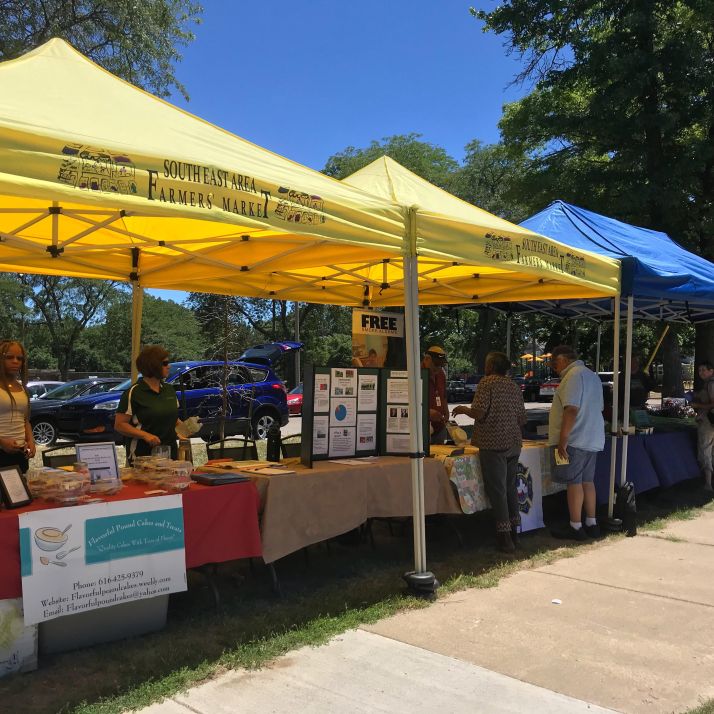
unnamed (2)Since its inception, FMC has prioritized advocating for support for SNAP EBT equipment and administrative funding to increase SNAP access at farmers markets. In 2012, the USDA Food and Nutrition Service (FNS) first began offering support using $4 million in funds from the President’s annual budget for the agency. Now, seven years later, a variety of avenues have been pursued and tested, with significant gains made: the share of SNAP dollars spent at farmers markets continues to rise, even as total SNAP dollars spent decreases across the country.

However, farmers markets will not be able to reach their full potential as fresh food access points for our low-income shoppers until markets have long-term access to no-cost, reliable, wireless SNAP processing systems at farmers markets.

July of 2018 highlighted the tenuous situation of equipment access at farmers markets, when one of the major equipment providers, Novo Dia Group, announced that they would be shutting down by the end of that month. Immediately after the announcement in July, FMC set up aninformation center where markets could find updates on the situation and information on alternative equipment options, and launched a mini-grant program to help out markets in dire need.

While temporary relief was found, farmers markets once again face uncertainty with regard to SNAP on a number of fronts. Although provisions were made to extend Novo Dia’s service through February 2019, the company has not provided clarity regarding their future. In responding to FMC’s request for additional information, Novo Dia representatives responded by saying “NDG never stated that a shutdown would occur at the end of February 2019,” and that future updates would be posted on their website.

Additionally, the unprecedented, partial government shutdown has further complicated the SNAP picture for farmers markets in the following ways:

  • Prior to the shutdown, USDA Food and Nutrition Services (FNS) was exploring options for avoiding a disruption in service by Novo Dia, should the company cease operations. Since the beginning of the shutdown, no further planning has occurred and it remains unclear what, if any, options are being pursued by FNS.
  • No new authorizations to accept SNAP are being processed by FNS. Farmers markets seeking authorization to accept SNAP will be forced to wait until the government reopens for there to be any progress on their application.
  • Implementation of the recently passed farm bill has not begun. Under normal circumstances, USDA would be moving quickly to review the final language that was signed into law and begin the implementation process. This includes language directing FNS to ensure markets are able to operate SNAP programs without needing multiple FNS numbers or terminals. Because the shutdown followed almost immediately after the passage of the farm bill, staff were unable to make any progress towards implementation of this or other provisions related to farmers markets.
  • Lastly the federal government is scrambling to ensure funding for SNAP recipients funding, resulting in the need for an early payout of billions of dollars for the month of February. The Trump administration is bankrolling $4.8 billion in benefits to SNAP redeeming outlets by January 20th. For SNAP redeeming farmers markets, this may result in an influx of SNAP dollars in the next two weeks while leaving future funding uncertain once the allocations are spent. FMC encourages markets to notify farmers and vendors accepting SNAP that there may be an increased demand for fresh foods through the program. Equally important is communicating to recipients the early funding implications, as there may be some confusions around the extra benefits received. A list of the dates each state will be releasing February SNAP funds has been compiled by USDA and can be found here.

In the meantime, FMC will continue its work to provide stability for markets offering SNAP. Throughout 2019, FMC will also continue to coordinate with markets, network leaders, elected officials and the USDA to compile and share information, assess the problem, and identify paths of action to help markets avoid a disruption in SNAP services.

Additionally, FMC will step up efforts to support the inclusion of free wireless EBT equipment for markets in state SNAP contracts through collaboration with state partners and policy leaders. We believe that such an approach is needed in order to ensure a long term solution that protects markets from the uncertainty they face today.

Government shutdown to kick SNAP recipients in their empty stomachs

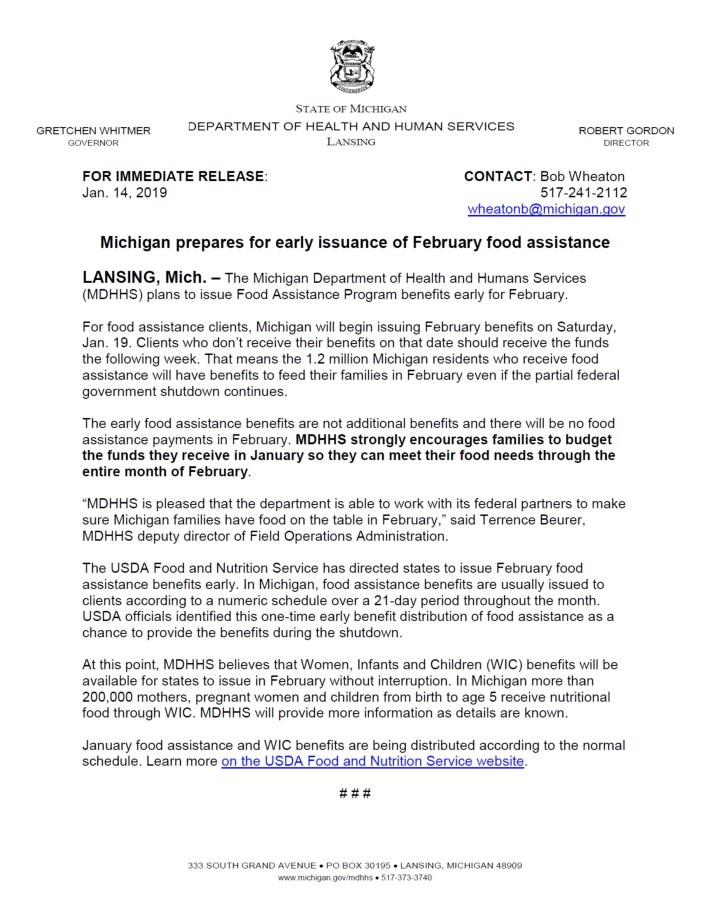
Our Kitchen Table received a copy of this press release from Michigan Department of Social Services this morning. While the president had fun feeding football players fast food in Washington DC, those relying on food assistance to feed their families are expected to simply fast.

The State of Michigan is trying to help SNAP recipients by providing February benefits early.

food


FMC Analysis: Why the 2018 Farm Bill is Good for Farmers Markets

FarmersCapHill

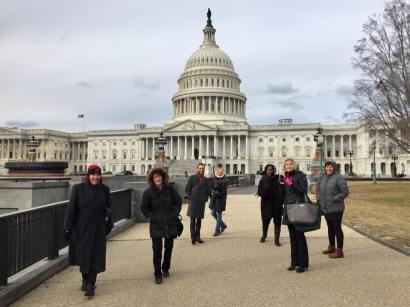
Farmers and market managers join FMC to visit lawmakers on Capitol Hill to advocate for farmers market programs in the farm bill.

Posted On: December 13, 2018 by Farmers’ Market Coalition

After months of inaction and political maneuvering, Congress has hit the gas on the farm bill, introducing the Farm Bill Conference Report late Monday night, and then holding votes in both the Senate and House on Tuesday and Wednesday.

The report represents the final compromise between the House and Senate versions of the bill, and includes important wins for farmers markets, farmers, and local food. In the end, the report leaned heavily on the Senate’s bill with regard to farmers markets; good news for our industry as the House proposal would have made massive cuts to key programs.

The bill now goes to the President, who is expected to sign it before the end of the week.

This achievement couldn’t have happened without the many calls, emails, and office visits that FMC members made over the last 18 months. This year, FMC engaged with 129 different legislative offices, while many of you met with and hosted your state and local officials at market.

Nine months ago, we were facing the very real prospect of the elimination of FMPP and the significant benefits that it brings our industry, but you stepped up to demonstrate the tremendous impact farmers, market managers, and local food leaders can make when we work together. The results speak for themselves, and we can’t thank you enough for standing shoulder to shoulder with FMC and advocates across the country to fight for the future of our local food systems.


So what are those wins for local food? Let’s take a look:

  • Permanent, baseline funding for the Local Agriculture Market Program (LAMP), a new program that combines the Farmers Market and Local Food Promotion Program(FMLFPP), and the Value-Added Producer Grant (VAPG) into a comprehensive local food program (see page 408).
    • The Program is to receive $50 million dollars per year (which gets the program to the permanent baseline level and ensures its continuation even if the farm bill expires) with 47% going to FMLFPP grants. While this represents a drop from funding specifically for FMLFPP as compared to the 2014 farm bill, the drop is offset by the security of baseline funding, as well as additional funding in LAMP for related activities.
    • One such example is the Grants to Support Partnerships, designed “to support partnerships to plan and develop a local or regional food system.”
    • FMLFPP applications also now require a 25% match from the applicant.
  • Language directing USDA Food and Nutrition Service to resolve its longstanding “one machine per location” policy, and allow farmers markets “to operate an individual electronic benefit transfer point of sale device at more than 1 location under the same supplemental nutrition assistance program authorization.” FMC members have, for years, expressed concern about the barrier this policy has presented to expanding SNAP access (you can read this language on page 149 of the report).
  • A big increase in funding for the Food Insecurity Nutrition Incentive (FINI) Program, which will also be renamed to honor local food pioneer and former FMC board member, Gus Schumacher.
    • Funding for the program will ramp up from $45 million in 2019, to $56 million in 2023. As with LAMP, this gets the program to permanent, baseline levels so that the program will continue even if the farm bill expires.
    • Evaluation requirements are simplified to eliminate redundant and sometimes burdensome reporting requirements, and increases training, technical support, and information sharing.
    • Includes funding for produce prescription grants through a seperate application process.
  • Continued funding for the Senior Farmers Market Nutrition Program.
  • The bill also contains what is known as “report language” that directs USDA “to take appropriate action to ensure that EBT service is not disrupted and SNAP customers maintain the ability to use their benefits at farmers markets.” While report language doesn’t carry the force of law, it still is an important signal to USDA that Congress is aware and keeping track of this issue, particularly given the ongoing questions surrounding the shutdown of Novo Dia, one of the largest wireless SNAP processors for farmers markets.

What Happens Next?

Once the bill is signed by the President, implementation of the various provisions of the bill will begin to be put into effect. This happens as the agencies tasked with each provision create regulations through the process of “rulemaking”. How rapidly the farmers market provisions listed above are implemented depends on a number of factors. Programs with only minor changes, like FMLFPP and VAPG, typically don’t require rulemaking and will likely only need small changes to the Request for Proposals. This would put them on track for a similar timetable of previous years.

At the opposite end of the spectrum, USDA Food and Nutrition Service could take some time to implement changes to the “one machine per location” policy. Given that there is no written guidance on the policy, the agencies’ previous concern about altering the policy, and its generally wary approach, it is likely that the changes will go through a rulemaking process, and may not be implemented quickly.


Stay Engaged!

Of course, FMC will continue to keep you all updated on implementation developments as they happen. Politics is always moving and changing and we must stay engaged and vigilant. Stay in touch with your members of Congress. Stay connected to the issues. Donate to FMC’s advocacy efforts. Get out to market each week and support family farmers. These ways and others are how we can transform our local food systems together.

In the meantime, take a moment to celebrate this victory for local food and farmers markets – you deserve it!

Access of West Michigan to benefit from holiday sale event

aaaaaa
443 Bridge St NW, Grand Rapids, Michigan

The Sovengard, a local restaurant & brewery on the West Side of GR, will be transforming their biergarten this year in the style of the traditional Christmas markets (Julmarknad) of Scandinavia.

Local artists and makers under heated tents, fireside snacks and hot drinks, live music and a tree lighting are all in store. Enjoy a little hygge this season and warm up with some giving. A portion of proceeds from the day will be going to Access! This is a free, all ages event. Tree lighting will be at 5:30pm. Check the event out on Facebook.