Our Kitchen Table is a charity that helps educate people about growing and storing food.
Easy access to fresh produce isn’t one size fits all. Our Kitchen Table, an organization devoted to giving families the tools they need to grow their own fruits and vegetables wants to change that.
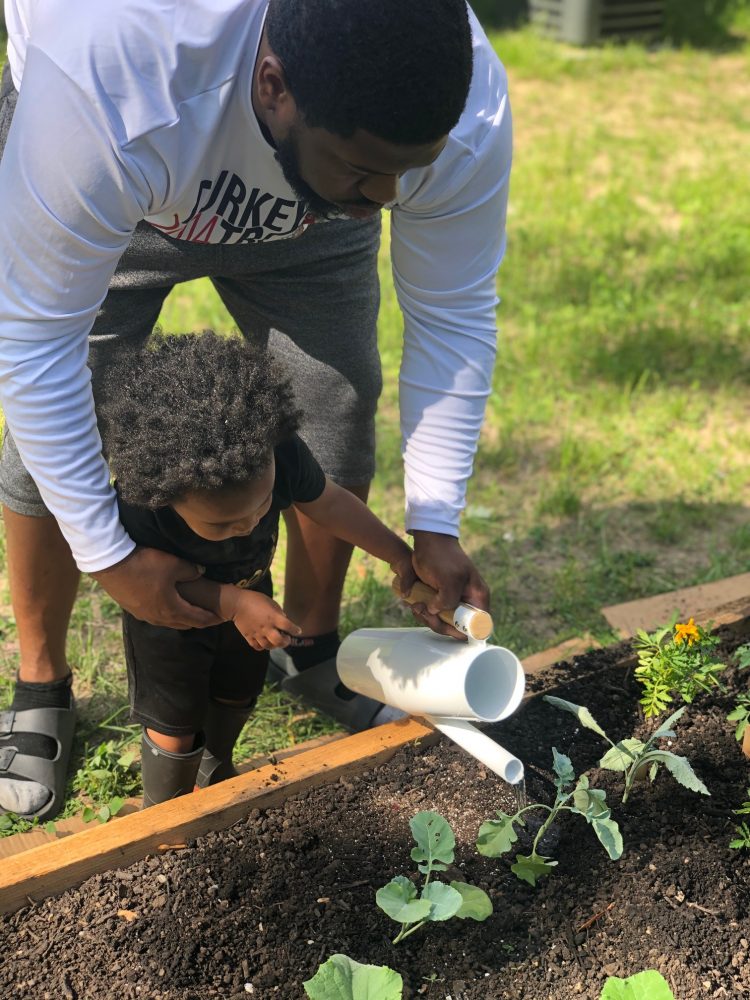
“Our primary program is called the Program for Growth,” said Lisa Oliver-King, executive director of Our Kitchen Table. “We work with school families to grow food onsite at Martin Luther King Junior Leadership Academy and Glenwood Elementary, as well as any school family that’s interested in growing food at home, we assist them with that by providing them with a container gardening system. They’re assigned a food garden coach who visits them on a weekly basis until they get really comfortable with their growing practices and visits them on a weekly basis to assist them with growing, harvesting food, watering, addressing insects, different things like that. They’re giving them different suggestions around meal planning and meal preparation.”
Lisa Oliver-King
The gardens may not be bustling with vegetables ripe for harvest, but winter doesn’t mean the end for Our Kitchen Table.
“Winter gives us an opportunity to talk about storage of your food,” Oliver-King said. “We talk about things you should be buying at the farmers market so you can store to get you through the winter. Baxter Community Center, they do a great job with canning. During that time, we’re doing some conversation around recipes and cooking, making a vegetable chili, particularly since meat is expensive, you may not be able to have ground beef to add it to your chili, so what does that look like?”
The growing and education programs at Our Kitchen Table are empowering neighbors to support their families with nutritious meals, and Oliver-King is proud to be part of it.
“We’re a small but mighty group trying to influence a just food system for all,” she said. “It is the team at Our Kitchen Table that allows us to do the community work that we do. It is collective; it is a strong belief that we have that every and anybody should have access and availability to good food, and we can make a difference around that together.”
OKT was listed among six Grand Rapids-area nonprofits that “our community could not do without.”
While the content is not available online, the magazine can be purchased at locations around the city. This is not the first time OKT has appeared in GRM’s pages. They also did this feature story on our programming in 2021 that gives a nice, brief overview of our programming. Thank you, GRM!
Our Kitchen Table works with parents and caregivers of students attending Grand Rapids Public Schools’ Martin Luther King Jr. Leadership Academy in food growing and healthy eating education. Courtesy Our Kitchen Table
Since 2003, Our Kitchen Table has worked with families on the southeast side of Grand Rapids to improve their access and knowledge around nutrition. Executive Director Lisa Oliver-King said while many would consider the southeast side a “food desert” due to its lack of a full-service grocery store like Meijer, the community does have several bodegas that carry fruits and vegetables as well as pantry systems that now are prioritizing nutritious food options over calories, and she believes many of the community’s residents are able to obtain healthy foods, so the issue her organization focuses on is helping them learn how to utilize these foods for optimal nutrition.
To achieve this, the organization concentrates on three key programs: Program for Growth; Educate to Elevate; and Sense of Place.
Program for Growth
Our Kitchen Table works with parents and caregivers of students attending Grand Rapids Public Schools’ Martin Luther King Jr. Leadership Academy in food growing and healthy eating education.
“We work primarily with pre-K through first grade. … We also work with their student council around the issue of food,” Oliver-King said.
Educate to Elevate
Our Kitchen Table works with pregnant women, nursing moms, and moms with low birthweight babies and children 3 years or younger, helping them to plan and prepare healthy foods.
“We started that strategy as a mechanism to get children’s first food to be the healthiest it can be while helping moms in those families to grow their own food and plan and prepare food,” Oliver-King said.
Sense of Place
Our Kitchen Table operates the Southeast Area Farmers Market. Oliver-King said that while the organization doesn’t consider the area a food desert it does acknowledge the importance of being as close to your food source as possible, and farmers markets are one step up from growing your own food.
“We have our seasonal market from July through November, and we have a year-round bulk-buying program,” she said.
Hands-on programming
Within these strategies, Our Kitchen Table offers its Food Diversity Project program and its Cook, Eat and Talk program.
“The first two strategies include a food growing piece called the Food Diversity Project, where we help families to grow their own food,” Oliver-King said. “They are assigned a food gardening coach who visits them like visiting nurses.
“Our first-year families grow from May-November, and each week, they receive a visit from the food garden coach who helps them to plant, grow, maintain, address challenges like pest management, things like that, harvesting food.”
The Cook, Eat and Talk program is an optional program focused on helping families with meal planning and preparation through food demos and assigning the family a cooking coach.
“So, they are growing food and learning how to incorporate that into their meal planning and preparation. It gives us the opportunity to help them create a food portfolio,” Oliver-King explained.
The programming also focuses on teaching the government’s nutritional recommended daily allowance and how to reach those percentages with the food available, including by understanding the dietary needs being met by school cafeteria menus for families with school-age children.
“They are matching that up to the school menu. I know I’m getting 10% of my calcium from the school menu; where am I getting my other 90%?” Oliver-King said.
Financial assistance
Even with the help families are receiving through programs like Our Kitchen Table there is a huge need for more help within the community, Oliver-King added.
“Ninety-five percent of our patrons coming to the farmers market are shopping with food subsidies, and the families with our Program for Growth and Educate to Elevate are on some sort of subsidies, and the Growth program, they are also on the free and reduced lunch program. … I would say food insecurity is a huge issue based on who we see our market sales with.”
She added, “Black families are dealing with a confluence of issues from food insecurity to lack of jobs, health care, educational attainment, social justice and more. All of these issues contribute to negative health and long-term illnesses.”
COVID-19 has only added to the day-to-day stress within Black communities, but Oliver-King is quick to note the problems have been ignored for far too long. “We are in this situation because we haven’t been dealing with the injustices pre-COVID.”
Oliver-King said she thinks the best strategy currently is to focus on food justice on multiple levels. “I hope your story will speak to diversification … you need all these different options for people.”


 Our Kitchen Table
