Tag Archive | Michigan League for Public Policy

U.S. Senate Budget Plan Would Harm Millions of Michiganders and Deepen Wage Inequalities

The Michigan League for Public Policy is strongly denouncing the United States Senate’s new budget plan, which is predicted to pass this weekend and would create harmful consequences for Michiganders. Monique Stanton, MLPP president & CEO states:

“The Senate’s new budget plan is downright dangerous, and if passed this weekend as planned, will set the stage for a damaging tax and budget bill. It delivers massive tax breaks to millionaires, billionaires, and large corporations — and covers the cost in part by slashing essential programs like Medicaid and SNAP. In Michigan alone, 2.6 million residents rely on Medicaid — including over 1 million children — and more than 1.4 million Michiganders rely on SNAP. These cuts would lead to higher health care and food costs for families, increased financial hardship, and millions potentially losing health coverage. 

Even with deep cuts, the tax breaks are so expensive that they will lead to a significant rise in the national deficit, increasing economic risks tied to unsustainable debt — all to benefit the wealthiest households.

It doesn’t have to be this way. There’s still time for Congress to change course. Lawmakers must honor their commitments to ease the burdens families face, not reshape the budget to serve those at the very top. A responsible plan would lower health care and grocery costs, expand the Child Tax Credit, and invest in working families — and ask corporations and the wealthy to pay their fair share through a more balanced tax policy.

Senate Republicans are using misleading tactics to obscure the truth about this budget. They’ve downplayed the cost of these tax cuts and hidden the full scope of planned reductions to Medicaid, food assistance, student loans and other critical programs. In reality, the budget would make college more expensive and take away essential supports from families the President once vowed to protect — all while delivering an average annual tax cut of $62,000 to households earning over $1 million, according to the Tax Policy Center.

The plan includes at least $5.3 trillion in tax breaks over the next nine years — $1.5 trillion more than the cost of extending the 2017 tax cuts — and that number could climb even higher with additional program cuts under consideration by the Senate Finance Committee.

What does that mean for Michigan? According to the Institute on Taxation and Economic Policy, simply extending the 2017 tax cuts would give the richest 1% of Michiganders an average tax cut of $35,970 while the poorest 20%, who are already struggling to afford the basics, would receive an average tax cut of just $90. What’s worse is that we expect the plan to go beyond this — providing windfall tax breaks for wealthy Michiganders while making it harder for the rest of us to see a doctor, put food on our table and send our kids to school. 

It’s becoming clearer and clearer. Many in Congress are embracing an agenda that threatens public services and undermines democratic processes. Alongside the budget, Republicans are advancing executive actions that unlawfully withhold congressionally approved funding, politicize and weaken the civil service, and erode institutions like the Social Security Administration and the Treasury Department — putting the privacy and stability of millions at risk. On top of this, the administration is pushing new, unilateral tariffs that will raise everyday costs for working families by hundreds or even thousands of dollars — easily wiping out any modest tax relief they might receive.

This budget plan — like so much of the current agenda — is upside down. It breaks promises, deepens the already massive income gap, and puts the interests of the wealthy above the needs of the nation. The American people deserve a plan that builds shared prosperity — not one that leaves families behind.”


MLPP calls for Michigan lawmakers to keep kitchen table issues at the forefront of budget and policy

The Michigan League for Public Policy (MLPP) issued the following statement on the State of Michigan’s Consensus Revenue Estimating Conference (CREC) held today. MLPP president and CEO Monique Stanton shares:

“While revenues are coming in higher than expected for both the state’s General Fund and School Aid Fund, we are urging state lawmakers to keep in mind that there is a lot of uncertainty around how federal programs and funding will be impacted by the incoming administration at the federal level. Over the past few years, federal funding has made up more than 40% of Michigan’s budget, leaving our state’s economic standing particularly vulnerable if future cuts to federal revenue sources are made.

In these uncertain times, it’s critically important to remain focused on the people of Michigan and the things they need most. That means keeping kitchen table issues like healthcare and prescription drug costs, access to healthy and affordable food, strong education systems, child care access and affordability, and housing and utility costs at the forefront of budget and policy discussions in the weeks and months ahead. 

These are the issues that remain top of mind for many Michigan families, especially the approximately 4 million Michigan households facing financial hardship and could be just one emergency or missed paycheck away from severe economic decline. These are also the issues that remain critically important for the more than 2.1 million children in Michigan—nearly 1 in 5 of whom are living in poverty. Each and every child growing up in our state today needs and deserves to have a safe place to live, healthy food on the table, a strong education, and the quality early child care and healthcare they need to get a good start in life and grow up healthy and strong.

Given this morning’s projections, we also want to caution our state lawmakers not to heed calls for tax cuts, which we know will largely benefit the wealthiest Michiganders. Now is not the time to slash state revenues that are vital to helping communities flourish and to lifting up and providing stability for families who are struggling to make ends meet.”

MLPP recently released an overview of its 2026 State Budget Priorities, which have been developed by pairing community input with the League’s own data and research. The priorities are centered around what a state’s budget should value most: its people. For this reason, it is called The People’s Budget. The League urges state lawmakers and leaders to use The People’s Budget as a roadmap for their budget and policy decisions in the year ahead.

Michigans’ for-profit colleges target low income students, fail to provide graduates high-quality outcomes

New report shows many for-profit colleges use deceptive practices to recruit students in order to gain access to federal aid

For-profit colleges in Michigan are overpriced, under-regulated and target students who have low incomes, according to a new report from the Michigan League for Public Policy. The report, For-profit colleges in Michigan: Path forward or dead end?, shows that most for-profit colleges in the state—there were 77 of them in 2018—cost more money than traditional public schools and don’t provide opportunities or degree value that aligns with that high price tag. The schools target students with low incomes, Black and Latinx students and veterans largely because those students are more likely to receive federal aid like Pell grants.

“We see predatory behavior when it comes to the way these for-profit institutions advertise. They’re aggressively recruiting folks earning low wages, nontraditional students trying to raise a family, our nation’s veterans, and Black and Latinx students. In fact, nearly three-quarters of students in for-profit schools in the United States had an income of $24,000 or less in 2016. Meanwhile, the students are graduating with massive debt and lower employment rates than their counterparts at traditional public and nonprofit private schools,” said Gilda Z. Jacobs, President and CEO of the Michigan League for Public Policy.

All told, Black students are overrepresented in for-profit schools when compared to the overall population of potential Black students in the state. In 2018, on average 30.6% of the student body at a Michigan for-profit school was Black. This percentage of Black enrollment was at least 20 points greater than that in other

types of institutions in the state. Systemic inequities in postsecondary education by race and targeted, aggressive marketing strategies likely compound, creating overrepresentation of Black students enrolled in for-profit institutions in the state.

Eighty-three percent of graduates from for-profit colleges in the U.S. took out student loans and graduated with an average of $39,000 in debt. That’s 41% higher than graduates from other types of four-year colleges. What’s more, 30% of students at for-profit colleges in Michigan defaulted on their federal student loans, compared with just 4% of students at public colleges. 


“By definition, for-profit colleges aim to make money for investors. So what incentive do they have to keep tuition and other costs down? They’re not only shortchanging students, they’re exploiting them in order to benefit from federal aid like Pell Grants.The influx of students receiving federal aid means taxpayer money is flowing right into these schools and helping them profit. These for-profit schools prey on students who are in need, promising a way forward to the ‘American Dream,’ but they’re not delivering on that promise,” Gilda Z. Jacobs said.

For-profit college recruiters have used misleading claims about cost, time commitment and job placement in order to attract students. This, along with other deceptive practices, has led to several for-profit colleges and their parent companies being prosecuted for consumer protection violations and other protection violations. Attorney General Dana Nessel has signed Michigan on to several multi-state lawsuits against for-profit educational companies that defrauded students.

The League recommends a variety of solutions that state and federal policymakers can adopt, including requiring institutions to disclose all federal funding, encouraging high school counseling offices to provide materials on how to weigh costs and benefits when choosing a college, and restoring student borrower protections that were enacted during the Obama administration and eliminated by the Trump administration. 

The higher education needs of all Michiganders, especially students of color and those with lower incomes, continues to be a focus of the League’s policy work. A report released in May 2020, Expanding the dream: Helping Michigan reach racial equity in Bachelor’s degree completion, found that Michigan ranks third-worst in the nation for the number of bachelor degrees earned by Black students. Another recent report looked at COVID-19’s impact on college students and their basic needs.

The Michigan League for Public Policy, www.mlpp.org, is a nonprofit policy institute focused on economic opportunity for all. It is the only state-level organization that addresses poverty in a comprehensive way.

Decades of state revenue sharing cuts have harmed communities, impeded racial equity

New report shows state funding for local governments has declined by up to one-third over 22 years, forcing budget cuts, diminished services and bad policies

LANSING—As local governments seek to address the COVID-19 crisis and address calls to reevaluate local spending and its impact on racial equity, a new report, Building Equitable Communities: More Funding Needed for Local Governments, looks at the role that revenue sharing declines are playing in these decisions. 

The research from the Michigan League for Public Policy shows that local revenue sharing payments—state funding that’s distributed to local governments—have declined 35.4% for cities, villages and townships and 25.4% for counties between 1997 and 2019. In addition to the report, related fact sheets offer an overview of the decline in state revenue sharing and a timeline of important policy decisions that have affected local government funding.

“I have served on the Huntington Woods City Commission and in the Michigan Legislature, so I have seen both sides of the revenue sharing equation and know how vital a fair deal from the state is to our local governments,” said Gilda Z. Jacobs, President and CEO of the Michigan League for Public Policy. “Local government spending touches our daily lives just as much as state spending, from the local health departments making important decisions right now, the emergency services we depend on in a crisis, the roads we drive on, the parks our kids play in and more, and for the past two decades, our state government’s commitment to our counties, cities, villages and townships has dwindled. COVID-19 has amplified the importance of our local governments and their funding needs, but equitable revenue sharing should be a part of every single state budget.”

The report reveals that local governments have been getting hit on both sides as far as their budget funding goes. In addition to state revenue sharing declines, property tax collections have also diminished. When adjusted for inflation, property tax collections in 2019 were 8.7% below collections in 2017 and only 11% above the trough in property tax collections brought on by the 2008-2009 foreclosure crisis. In 2019, real Michigan property tax collections were on par with collections in 2004. 

These trends in property tax collections are the product of two intertwined constitutional limitations: the Headlee Amendment and Proposal A. The passage of Proposal A had some unintended consequences when combined with the Headlee Amendment, and the report explores those policy changes and their impact in greater detail.

Increasing local revenues is a racial justice issue. To achieve the vision of racial equity, economic prosperity, and social justice, the people, organizations, and governments that support those goals need resources. With more flexible spending power, local units of government can target resources to programs and services as needed.

“Racial equity is an important concern in every policy decision, as they have both intended and unintended consequences, and revenue sharing is no different,” Jacobs said. “The continued fight against police brutality toward Black and Brown people has also raised important questions about local government spending, and with more resources from the state in revenue sharing, greater investments can be made in the areas that promote racial equity and economic security for all. And as state lawmakers tackle a variety of criminal justice reforms, including revisiting court fines and fees, they must also acknowledge that revenue sharing declines have pushed local governments to rely more on court fines and fees.”

The League’s analysis points out that local units of government are seeking to recoup declining revenues in increasingly inequitable and unpopular ways, including a growing reliance on fine and fee collection to pay for city services. The white supremacist system on which modern policing is built and longstanding racially biased policing in Michigan have created a system where Black and Brown people in Michigan are systematically targeted by police. As such, a heavy reliance on fines and fees is disproportionately affecting Black and Brown communities.

In addition, the movement to defund police is pushing for the reinvestment of revenues from policing into racially equitable systems that target and preempt the root causes of crime. To do this, local units of government are going to need funding to reinvigorate opportunities in communities of color to reduce income and wealth inequality. Funding a completely new vision of public safety will require injections of money from the state to help fund the mental health services, youth programs and social safety net that will achieve that vision.

The League’s report outlines the following recommendations to address local governments’ funding needs, improving racial equity in the process:

  • Significantly increasing statutory revenue sharing to counties and cities, villages and townships to at least match what is called for under the statutory formula from Public Act 532 of 1998;
  • Creating new formulas for the distribution of statutory revenue sharing to send more resources to communities with low housing wealth;
  • Expanding the Homestead Property Tax Credit; and
  • Authorizing more tax options for local units of government, including motor vehicle taxes and registration fees, and alcohol, tobacco and cannabis taxes, and taxes on entertainment and amusement.

###

The Michigan League for Public Policy, www.mlpp.org, is a nonprofit policy institute focused on economic opportunity for all. It is the only state-level organization that addresses poverty in a comprehensive way.

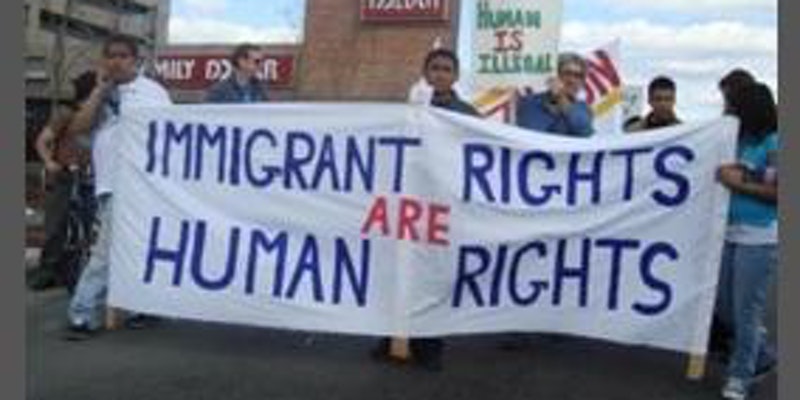
Coalition of immigrant rights groups urges communities to spread facts, not fear, on public charge rule change

FREAReposted news release from the Michigan League for Public Policy

On Monday, Jan. 27, the U.S. Supreme Court released a decision that allows the new public charge rule aimed at immigrant families to take effect while several cases challenging its legality make their way through the courts. United States Citizenship and Immigration Services intends to begin implementing the rule on Feb. 24, 2020. The Protecting Immigrant Families – Michigan Coalition issued the following statement in response to the U.S. Supreme Court’s decision. The statement may be attributed to Staff Attorney Tania Morris Diaz of the Michigan Immigrant Rights Center (MIRC).

“This new rule is essentially a wealth test that severely changes the face of family-based immigration in the United States, and threatens the health, nutrition, and housing of families all over the country. The rule is designed to disproportionately impact low-income communities of color, and undermines our nation’s core values.

We must ensure that families are equipped with accurate information about public charge so they can make decisions based on facts and not fear. Many immigrant families, including those with United States citizen children, have been unnecessarily disenrolling from public benefits as a precaution in light of the new rule. Right now, direct service organizations around the country are working hard to prevent this harmful chilling effect, and to address existing confusion about the public charge rule itself.

“Most families can continue to get benefits they’re eligible for without it affecting their immigration options.

“The ultimate fate of the final rule is currently unclear, as these lawsuits will still have to be decided on their merits, and the courts hearing these cases may still strike down the rule. If this rule is fully and permanently implemented, it will have a serious impact on our family-based immigration system. We have yet to know how this highly complicated new rule will be applied to future green card applicants, but every case is different and outcomes will depend on the circumstances of each applicant. We encourage individuals seeking to obtain a green card through a family member to educate themselves on the process and speak with an attorney to determine how to proceed.

“In this country, we don’t value people’s contributions to their community by the size of their bank account. We are hopeful that regardless of the Supreme Court’s ruling on the temporary injunction, this rule is ultimately struck down by the courts as unlawful.”

The Protecting Immigrant Families – Michigan campaign urges the media to put out the right information and help document the harmful impacts of this rule.

As an important reminder, the public charge rule does not affect individuals who already have their green card and want to renew it, remove conditions on it, or apply for citizenship. It does not apply to those who are not eligible to apply for a green card. The new rule does not apply to U.S. citizen family members of mixed-status families. It does not apply to those who have or are applying for asylum or refugee status, T-Visas, U-Visas, SIJS or VAWA. 


Immigrant families with questions about public charge should call the Michigan Immigrant Rights Center at 734-239-6863 for free and confidential information.

Jail task force offers up major improvements

Michigan League for Public Policy urges Legislature to follow through

downloadDiverse, bipartisan group seeks to improve jail system to better serve all, reduce burden on people with lower incomes
The Michigan League for Public Policy issued the following statement on the Michigan Joint Task Force on Jail and Pretrial Incarceration’s recommendations announced today. The statement can be attributed to Michigan League for Public Policy President and CEO Gilda Z. Jacobs.

“Our current jail system’s overemphasis on fines and fees—and severe imbalance and punishment for those who can’t afford them—is creating a modern-day debtors’ prison where people with lower incomes receive harsher penalties than people with money. This area of our justice system has sadly become more focused on public profits than public safety and the punishment often fits the pocketbook more than the crime. But the jail task force’s recommendations released today seek to change that, and the League wholeheartedly supports these recommendations.

“With the Legislature’s proven, bipartisan appetite for justice reform illustrated over the past year, we are optimistic that lawmakers will continue that momentum and take these suggestions to heart. This task force was conscientious of diversity in every regard, including experiences and perspectives, and with representatives from every angle of the jail system involved, this report stands to be a good area of common-sense reform and bipartisan agreement that is needed to start the new year off right.”

The Michigan Joint Task Force on Jail and Pretrial Incarceration’s policy recommendations are:

Traffic violations: Stop suspending and revoking licenses for actions unrelated to safe driving. Reclassify most traffic offenses and some other minor misdemeanors as civil rather than criminal infractions.

Arrest: Expand officer discretion to use appearance tickets as an alternative to arrest and jail. Reduce the use of arrest warrants to enforce court appearance and payments, and establish a statewide initiative to resolve new warrants and recall very old ones.

Behavioral health diversion: Provide crisis response training for law enforcement and incentivize programs and partnerships between law enforcement and treatment providers to divert people with behavioral health needs from the justice system pre- and post-arrest.

The first 24 hours after arrest: Release people jailed on certain charges pre-arraignment and guarantee appearance before a judicial officer within 24-48 hours for anyone still detained.

Pretrial release and detention: Strengthen the presumption of release on personal recognizance and set higher thresholds for imposing non-financial and financial conditions. Provide a detention hearing for all defendants still detained 48 hours after arraignment.

Speedy trial: Require defendants to be tried within 18 months of arrest and preserve speedy trial rights unless waived by the defendant.

Alternatives to jail sentences: Presumptively impose sentences other than jail for non-serious misdemeanors and for felonies marked for “intermediate sanctions” under the sentencing guidelines.

Probation and parole: Shorten maximum probation terms for most felonies, establish new caps on jail time for technical violations, and streamline the process for those in compliance to earn early discharge.

Financial barriers to compliance: Reduce fine amounts for civil infractions. Require criminal courts to determine ability to pay fines and fees at sentencing and to modify unaffordable obligations. Repeal the law authorizing sheriffs to bill people for their own incarceration.

Victim services: Invest significant resources in victim services and strengthen protection order practices.

Data collection: Standardize criminal justice data collection and reporting across the state.

Driver’s licenses for all would make health, economic, and community impacts

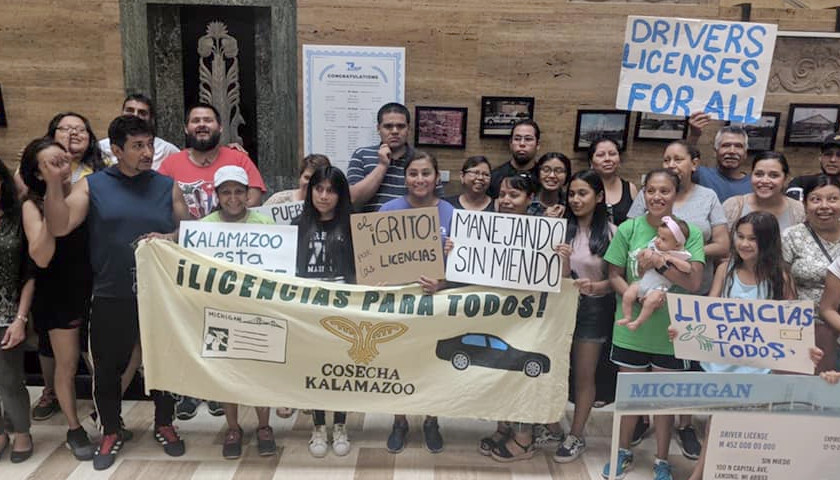
Michigan-Drivers-License-for-All_840x480Lack of transportation is a social determinant that directly impacts health by limiting access to healthy food and medical care.  It also makes it hard to keep a job. According to a report released today from the Michigan League for Public Policy restoring driver’s licenses for undocumented Michiganders would also bring the State $100 million in new revenue over 10 years. Here’s what a 12/19.2019 MLPP media release shared:
State law allowed undocumented residents to receive driver’s licenses until 2008, and the new information from the League reinforces the far-reaching benefits of renewing that policy. The Drive SAFE (Safety, Access, Freedom and the Economy) legislation would allow state driver’s licenses for all residents, and the bills were introduced in November by Sens. Stephanie Chang and Winnie Brinks and Reps. Alex Garza and Rachel Hood.

“The economic impact is important, but what we’re really talking about here is belonging. We’re talking about parents being able to take their kids to the doctor, to visit grandma, to get to school events. We’re talking about the fact that everyone living in Michigan should have an identity,” said Gilda Z. Jacobs, President and CEO of the Michigan League for Public Policy.

If the Drive SAFE bills pass, an estimated 55,000 Michigan residents would pass driver’s tests and become licensed, leading to 20,000 vehicle purchases. Fees, registration and taxes from those two factors alone would result in $12 million in annual recurring revenue for the state. This does not take into account the positive impacts on local economies.
“Access to a driver’s license affects the amount of money people earn and spend. It’s imperfect, but it’s a fact: Being a Michigander often means being dependent on cars. When people can get to and from their jobs, they’re able to work more hours and earn more money. They’re able to expand the number of places they can shop and increase the amount of money they spend,” Jacobs said.

With 20,000 more Michigan drivers becoming insured and passing driver’s tests, roads will be safer and accidents resolved more quickly. The Drive SAFE bills would also lead to reduced auto insurance premiums.

Dozens of statewide organizations including the Michigan Farm Bureau, the ACLU of Michigan, the Michigan Education Association and the Michigan Nurses Association support the Drive SAFE bills, and the Washtenaw, Oakland and Kalamazoo county commissions have passed resolutions in support of driver’s licenses for all. If the bills pass, Michigan will join 14 other states that provide access to a driver’s license or ID, along with Puerto Rico and the District of Columbia. A 15th state, New Jersey, passed legislation yesterday that will allow immigrants without legal status to get a driver’s license, which is expected to be signed into law.

Legal challenge signals Legislature to put brakes on Medicaid work requirements

Medicaid+work+requirements.jpgThe Michigan League for Public Policy issued the following statement on the announcement today of a legal challenge against the federal Department of Health and Human Services for its approval of Michigan’s Section 1115 Medicaid waiver project. The statement can be attributed to Michigan League for Public Policy President and CEO Gilda Z. Jacobs.

“All along we have said that the best remedy for Healthy Michigan enrollees is to stop work requirements before they start, and we appreciate the efforts of the Center for Civil Justice, the Michigan Poverty Law Program—and hopefully the courts—to intercede where the Legislature has failed to and to fight to protect the healthcare of Michigan residents. Medicaid is a supportive health program and should not be altered in such a way as to make it punitive and ineffective. We hope today spurs legislative action to put these work requirements on pause until this court case is settled. Affected Michigan residents shouldn’t have to wait on the courts—or experience unnecessary issues and coverage losses—for their elected officials to act.

Medicaid work requirements began as a partisan issue, with the Trump Administration approving them and Republican governors and Legislatures clamoring to adopt them, but increasingly—and rightfully so—there is near-universal hesitance to follow through with their implementation. Whether because of concerns over significant coverage losses, legal fights or the potential for legal fights, other states of all political leanings are pumping the brakes on their work requirements. Rather than charging ahead to implement potentially illegal and undoubtedly problematic Healthy Michigan work requirements, we urge the state to reconsider.”

###

The Michigan League for Public Policy, www.mlpp.org, is a nonprofit policy institute focused on economic opportunity for all. It is the only state-level organization that addresses poverty in a comprehensive way.