You can download our free 52-page guide “Growing Food. Eating Healthy. Living Sustainably.” here.

Reposted from Public Health Watch
Public Health Watch and three partners today are launching FencelineData.org, a revolutionary tool that will make it easier for journalists, community advocates, researchers and members of the public to find information on companies that release harmful chemicals and contribute to climate change.
The tool will be of special interest to fenceline communities — neighborhoods situated near pollution sources that often experience the worst health effects from toxic emissions.
Instead of searching individual government databases that can be difficult to navigate and interpret, you can now access federal data on chemical and greenhouse-gas emissions and enforcement actions in one place. The database, assembled in collaboration with DataKind, Until Justice Data Partners and Material Research L3C, allows you to search for facilities by ZIP code, substance or parent company to see how industrial emissions affect your community and our planet.
See four examples of how the tool can be used. There’s a section at the bottom for analysts who want to dig even deeper into the data.
Question: There’s a factory down the street from my children’s high school in Chicago, and I’m worried that it might be affecting their health. How do I find out what chemicals it’s releasing? What are the potential health impacts of those chemicals? Has the facility violated the law?
1. Go to FencelineData.org.
2. Click on the “Facilities” tab.

3. Type in the ZIP code and click “Find Facilities”.

4. Click on the facility with the address closest to the factory you’re interested in.

5. Use the map to confirm that you’ve chosen the correct facility.

Findings: The BWAY Corp facility in the Little Village neighborhood of Chicago released 43,095 pounds of chemicals into the air in 2022. Its biggest release was 16,880 pounds of glycol ethers, which can cause fatigue and nausea with long-term exposure. BWAY Corp also released 958 pounds of ethylbenzene, a possible carcinogen. The facility, also known as Mauser Packaging Solutions, transferred an additional 14,640 pounds of chemicals to another location. The Environmental Protection Agency most recently fined the BWAY Corp $140,000 on 09/30/2019 for having faulty equipment that leaked chemicals.

Question: I live in a part of Jacksonville, Florida, that’s prone to flooding, and I’m worried that climate change will make it worse. I pass a manufacturing plant on my way to work. Does it contribute to global warming?
1. Click on the “Facilities” tab.
2. Type in the ZIP code of the facility and hit “Find Facilities”.
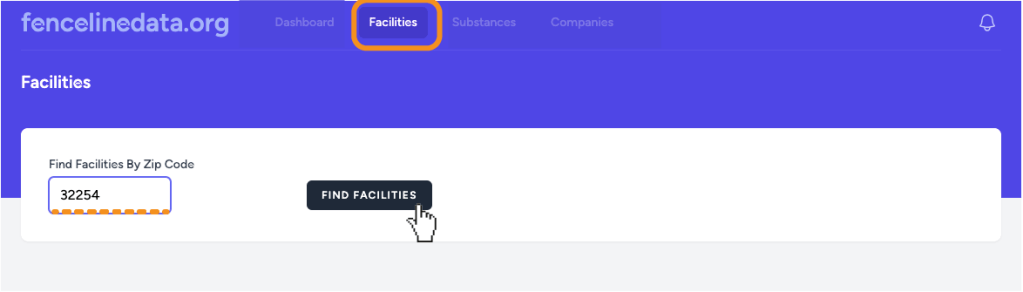
3. Click on the facility with the address closest to the manufacturer you’re interested in.
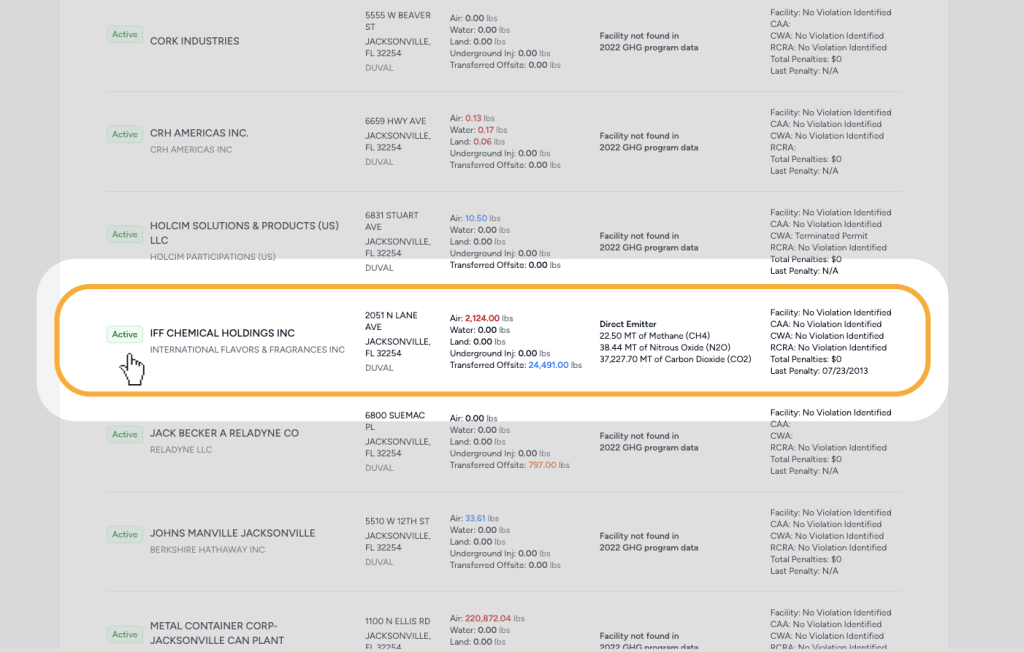
4. Use the map to confirm that you’ve chosen the correct facility.

Findings: IFF Chemical Holdings Inc in Jacksonville released nearly 37,600 metric tons of carbon dioxide, the primary cause of climate change. That’s equivalent to the combined tailpipe emissions of 8,949 cars in a year. It also released 41 metric tons of nitrous oxides and 24 metric tons of methane, two other greenhouse gases.
Question: Ammonia is a colorless gas with a sharp odor that is used to make plastics, pesticides and other products. High levels can burn the mouth, nose, eyes and throat, and chronic exposure can permanently damage the lungs. What’s the biggest ammonia polluter in the U.S.?
1. Search “ammonia” in the “Substances” tab.
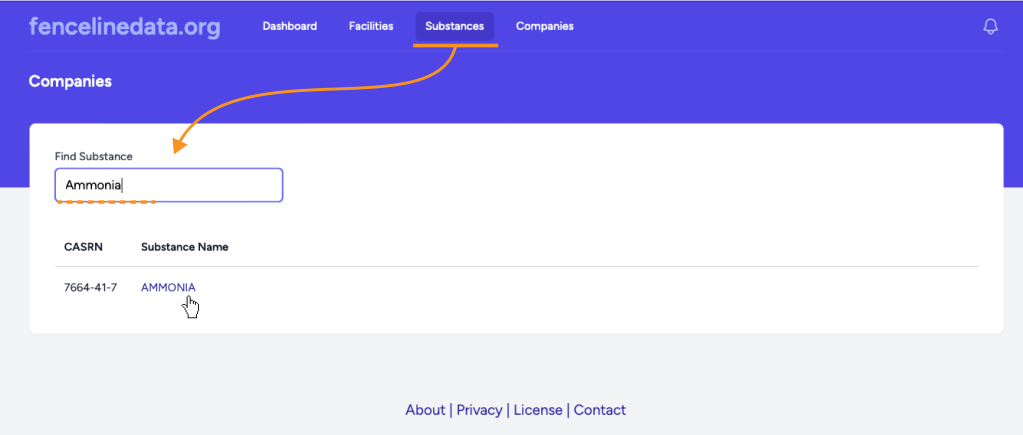
Findings: Basin Electric, which operates a coal-fired power plant in North Dakota, released the most ammonia in 2022 — almost 18 million pounds.

Question: Which chemicals does my car manufacturer release, and in what amounts?
1. Search “Ford” in the “Companies” tab and select “Ford Motor Co”.
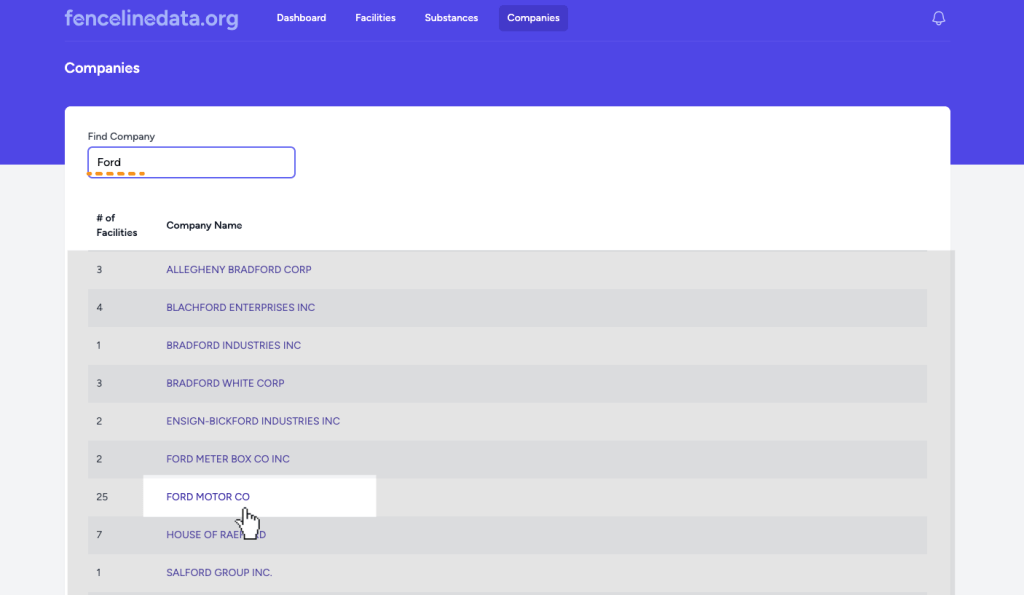
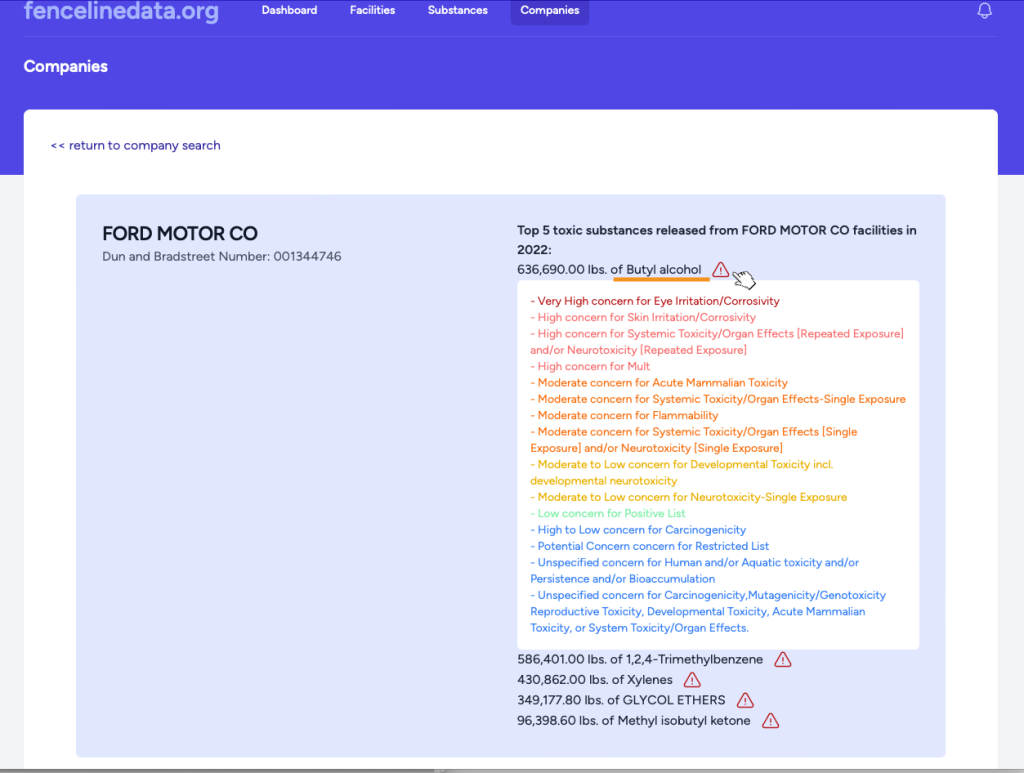
Findings: Ford facilities around the U.S. in 2022 collectively released more than 600,000 pounds of butyl alcohol, a sweet-smelling chemical that can irritate the eyes and cause headaches, dizziness, nausea and vomiting. Ford plants also released more than 586,000 pounds of 1,2,4-Trimethylbenzene, which can affect the eyes, skin and respiratory system, and almost 431,000 pounds of xylenes, which can attack the kidneys and the nervous, respiratory and cardiovascular systems with chronic exposure.
Question: Which of the “Big 3” American car manufacturers contributed most to climate change and released the highest amount of chemicals in 2022?
1. Search “General Motors” in the “Companies” tab.

2. Click on the first GM facility that appears: DMAX LTD.

3. Download the Toxics Release Inventory data for DMAX LTD for 2022.

4. Click the back arrow on your web browser to return to the GM LLC page.
5. Download the 2022 data for each of GM’s 24 facilities.
6. Repeat steps 1 through 5 for Ford Motor Co’s 25 facilities and FCA US LLC’s (now known as Stellantis) 15 facilities.
7. Combine your CSV files by parent company.
8. To find which company released the most toxic chemicals, find the sum of the “Total toxic substance releases” column for each company. Then compare each company’s total. Do the same for CO2 releases and fines.
9. Now put the differently-sized companies on the same scale. Take the total toxic releases and divide it by the number of facilities for each company. This gives you an average amount of chemicals released per facility. Repeat with CO2 and penalties.
Findings:
Isabel Simpson contributed to this story.
Public Health Watch is a nonprofit, nonpartisan investigative news organization that focuses on threats to America’s well-being.
2110 Ranch Road 620 South
#340762
Austin, TX 78734
Contact us: info@publichealthwatch.org
We believe it’s possible.
That’s why we walk.
Share the vision.
Walk with us.
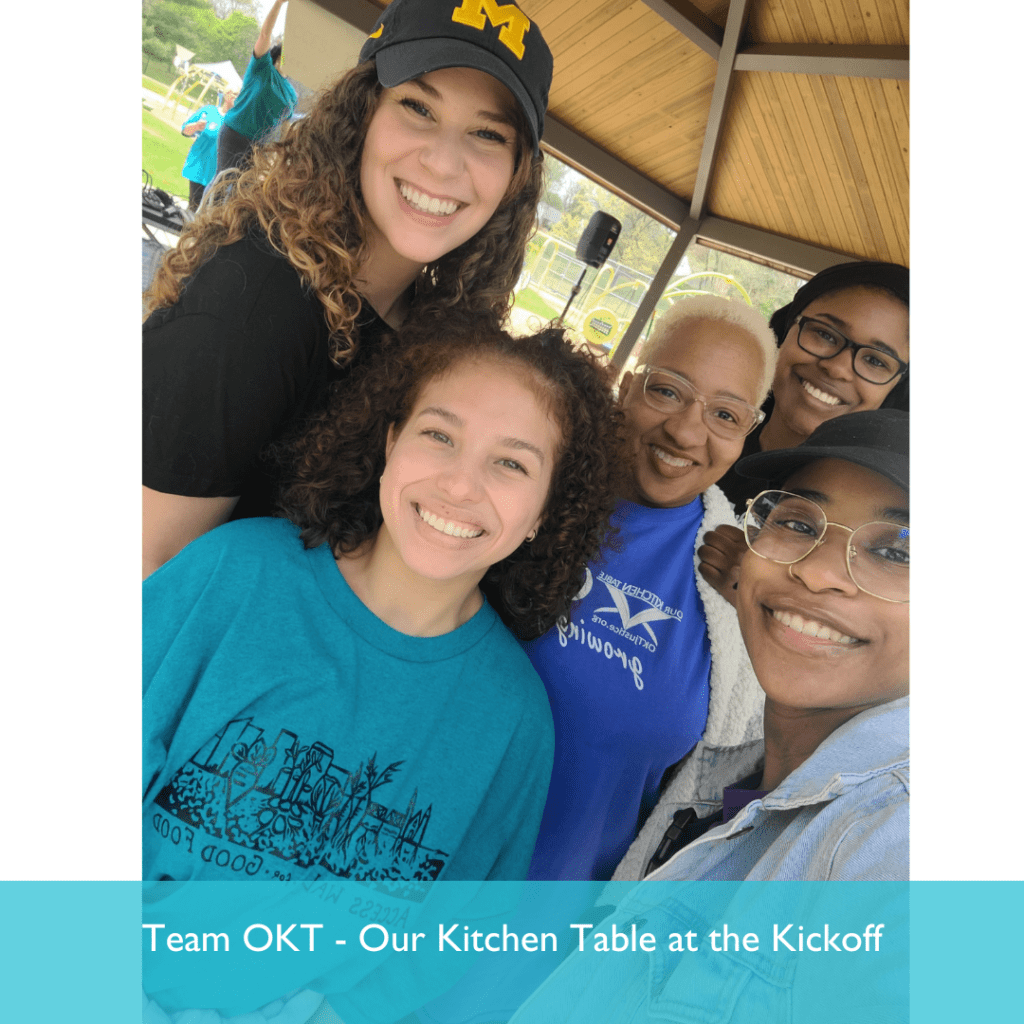
The Access Walk for Good Food is an annual 5k walk in Grand Rapids. The goal of the Walk is to fund non-profit organizations that address issues of food access and poverty. Our Kitchen Table has been chosen as a recipient agency. Money OKT receives from the Walk will help fund the Southeast Area Farmers’ Market, a walkable neighborhood market in a Grand Rapids neighborhood with little access to healthy, fresh foods.
OKT’s work, and the work of the other 13 recipient organizations aligns with the definition of Good Food, which is food that is:
The work of the recipient organizations ranges from community gardening and urban farming, nutrition programs, food pantries and meal programs, to food justice and community development initiatives. Our collaborative work has a vision of a thriving Good Food system for all people.

The Walk brings non-profit organizations, businesses, congregations, farms, and individuals together to bring awareness of the great work happening in our community to address food access and poverty. By walking together we unite in vision of a Good Food system for all and broaden our shared impact for social good. Over the last 42 years, the Walk has raised over millions of dollars for dozens of local and international non-profit organizations.
What if everyone in our community could have equal access to food that nourishes, creates good jobs, is affordable, and treats the earth well as it is produced? What if non-profit organizations, businesses, congregations, farms, and individuals could come together to achieve this vision?

Reposted from the MEJC newsletter.
Remembrance of anniversaries are typically made from a standpoint of progress, but Flint activists say that though the crisis was the shot heard around the world, rallying outrage against the worst of the country’s environmental injustices, the call for help is still ringing from inside the city.
The city’s administration marked its 10-year anniversary by offering tours of its water plant, showcasing the latest upgrades and renovations. It’s a dystopian contrast considering the 3 demands from Flint residents —affordable clean water, pipe replacement, and healthcare—have yet to be met. Many still wake up to leaded pipelines and are forced to buy bottled water while also paying steep water bills.
“We’re seeing other communities like Benton Harbor, and Newark New Jersey, and everything, you know actually get work done. We’re so happy that [they] did. And we were a part of that, and happy for them, we’re still looking around saying, ‘we still can’t drink our water’,” said Melissa Mays, activist with our coalitional partner Flint Rising and founder of Water Are You Fighting For
This wouldn’t seem to be the case given that the Flint Water Crisis helped fine-tune critical state and federal environmental laws like the Safe Drinking Water Act and the Lead and Copper rule. But the same week of the 10-year anniversary of its water crisis, Flint, Michigan, was not represented at the April 23 White House Water Summit and the city was not mentioned alongside Detroit, Milwaukee, and Chicago in the Great Lakes Lead Pipes Partnership, a plan meant to fast-track the replacement of an estimated 555,000 lead service lines in the “Great Lakes big cities.” It is a portion of the administration’s Bipartisan Infrastructure Law and American Rescue plan, to replace all lead service lines within the next decade. These initiatives and the funding were only possible because of the Flint Water Crisis and its activists, said Mays.
“We’re still sitting here 10 years later with the same rotting infrastructure. And everybody’s just looking the other way,” said Mays.
Mays feels that Flint is overlooked as a result of perpetual “political finger-pointing” where the issues are tossed around in a game of Democrat v. Republican ping pong and the solutions dissipate between mayoral terms. The core of the water crisis is a human issue, not a political one, said Mays but this and the other growing crises that are grasping for public attention leave Flint in the nation’s blindspot.
Progress inevitably grows in between the bitter sweet though. May’s son learn’s beside other rapt learners in the Flint Public Health Youth Academy, often coming home reciting information public health disparities. Overall, residents have been forced to become more educated and aware, making them more and more willing to make their voices heard, said Mays.
“We still have a lot of folks that don’t believe this is what we deserve. We deserve better. And that’s what we hang on to and reminding us that we’ve changed the world. Flint changed the world for the better. And it’s not over yet.”
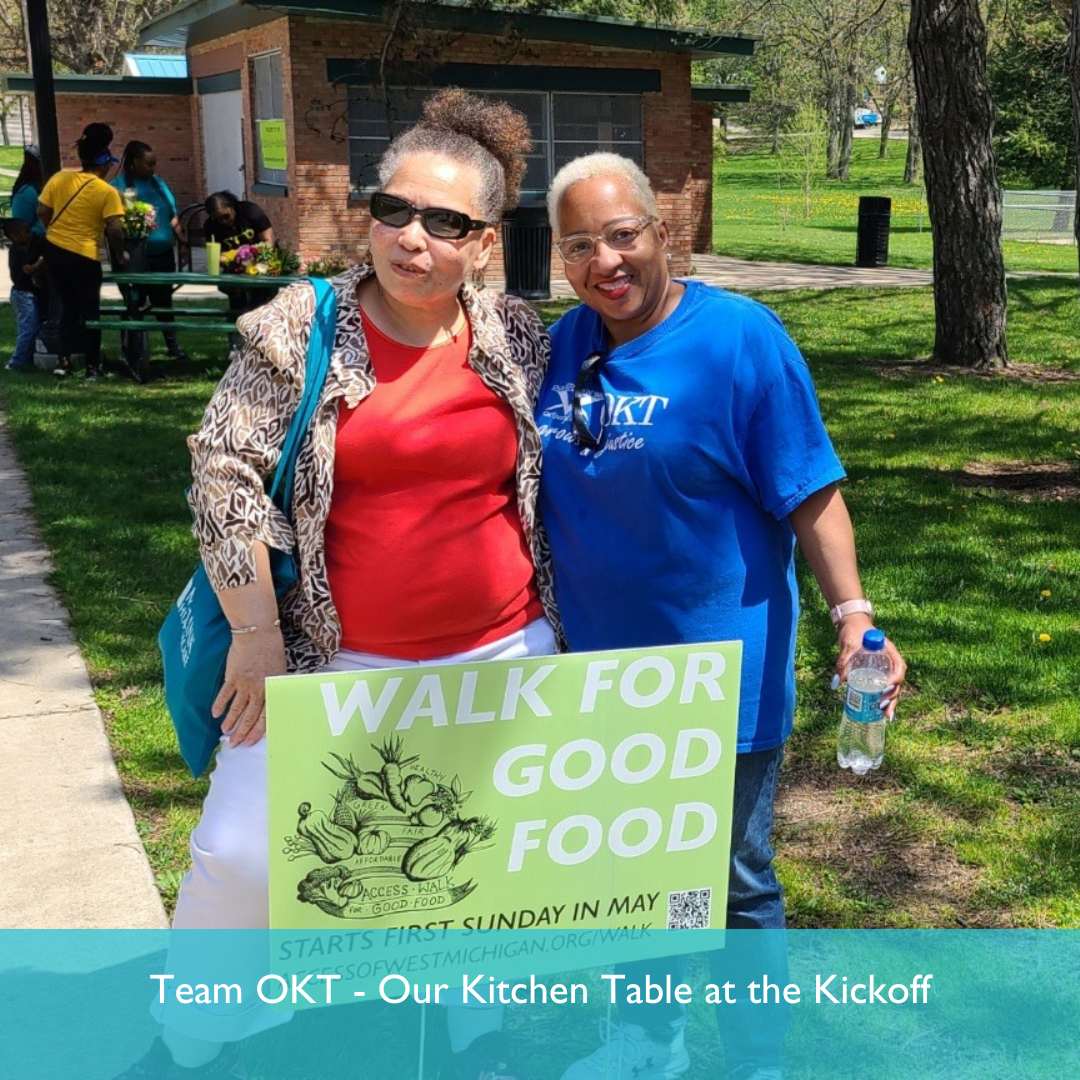
Please support the Walk for Good Food! The Southeast Area Farmers’ Market is one of the recipients of Walk funds — and OKT manages the market! Open from the July through November at Grand Rapids’ Martin Luther King Jr. Park, our market ‘s vendors are primarily women of color from Grand Rapids’ Southeast neighborhoods. Most of our sales are completed with food assistance dollars.
Because the market takes part in the Double Up Food Bucks program, our patrons using SNAP benefits can purchase twice as much fresh, local produce. This means that our neighbors with income challenges can feed their households even more nutritious food –even though they live in neighborhoods that otherwise have very limited access to healthy foods.

When you support the walk you support the market. You can join the OKT walk team or pledge your support through an online donation here. The donate button is near the top of the page on the left. The Join Team button is below the OKT photos. OKT also seeks corporate and business donors for the event. Download the corporate sponsor packet here.
SUNDAY, MAY 5th, 2PM TO 4PM: IN-PERSON KICK OFF AT Richmond Park!
This year’s event will include an in-person kick-off event at Richmond Park (1101 Richmond St NW, Grand Rapids, MI 49504). The event will include t-shirt pick-up, light refreshments, a walking route, and children’s activities. Stay tuned as more details will be shared such as maps and volunteer opportunities.
MAY 5 – MAY 15: WALK IN YOUR NEIGHBORHOOD
In the past three years we’ve found that many loved engaging in the Walk by gathering in their own community or walking on their own. You and/or your team do not have to attend the in-person event to participate.

Most of us know the story of Anne Frank. But have you seen this Palestinian girl’s story?
One of the most egregious forms of food injustice is the use starvation as a weapon of war. Throughout history, conquerors and colonialists have used this tactic. In the 1800s, the U.S. government encouraged the slaughter of buffalo in order to starve Native Americans off from from their lands. In Nazi Germany, Hitler used it against Germany’s Jewish citizens. In 2018, the use of starvation as a weapon of war was outlawed by the UN Security Council in Resolution 2417. But today, this weapon is being used against the infants, children, adults, and elders in Gaza.
Contact your senator and representative and ask them to vote for not only a ceasefire, but also aid and restoration of the supply chain in occupied Palestine.

Some years back, OKT created this booklet, “Growing Food, Eating Healthy, Living Sustainably.” We recently updated it a bit. Feel free to print, share, and use the information within. You’ll find growing tips, recipes, food justice information, and more.

| Our Kitchen Table is now recruiting walkers to join our 2024 #Walk4GoodFood team. You can walk with us the day of the event |
| To join OKT’s Walk Team, click here! Or email media@OKTjustice.org. West Michigan is brimming with food assistance organizations, but our community continues to acknowledge “hunger” as a constant threat to children, families, and seniors. We need a new approach — a thriving community where all residents have access to healthy and affordable local food. This is why we walk. |

Children in Flint and Port Huron, Michigan have filed two landmark civil rights lawsuits asserting their constitutional right to visit their jailed parents. Hundreds of counties across the United States have banned in-person jail visits for families, depriving children of the ability to see their parents face-to-face for months or years. Why? To make money.
The class action lawsuits allege that beginning over a decade ago, the largest jail telecommunications companies had an idea—if jails banned children and families from visiting each other for free, families would be forced to purchase more expensive phone and video calls. The market for prison and jail “technology services” is dominated by just two companies—Securus Technologies and the company popularly known as Global Tel*Link, or GTL. Each year, these companies extract over a billion dollars in revenue from families forced to pay high prices for low-quality phone and video calls.
Securus and GTL, sheriffs, and county officials across the country worked together to negotiate lucrative monopoly contracts that charge families hundreds of millions of dollars per year while the companies and counties split the profits. The bans on family visits now leave costly, faulty phone and video calls as the only way for children and parents to talk to their jailed loved ones. Taking away the ability of children to hold hands with their mom and dad, hug them, and look them in the eye has devastating effects on the mental and physical well-being of millions of children. And evidence shows it hurts public safety as well.

The plaintiffs have filed two lawsuits. In S.L. v. Swanson, children and parents of people detained at the Genesee County Jail (Flint) sued Sheriff Chris Swanson; Genesee County; GTL; and the company’s CEO, Deb Alderson. In M.M. v. King, family members of people confined at the St. Clair County Jail (Port Huron) sued Sheriff Mat King; St. Clair County; Securus; the company’s billionaire owner, Tom Gores; Platinum Equity, the private equity firm that manages it; and several other corporate executives.
The plaintiffs are seeking immediate preliminary injunctions against the bans on family visits so that they can be allowed to see and hug their parents. They are represented by Civil Rights Corps, Public Justice, and Pitt McGehee Palmer Bonnani & Rivers. Partner Alex Spiro and Quinn Emanuel Urquhart & Sullivan have entered an appearance for purposes of litigating the preliminary injunctions.
“Family connection is a foundation of our well-being and society,” said Leslie Bailey, Director of the Debtors’ Prison Project at Public Justice. “Separating parents and children to make money is not only morally reprehensible, it is illegal and violates the Michigan Constitution.”
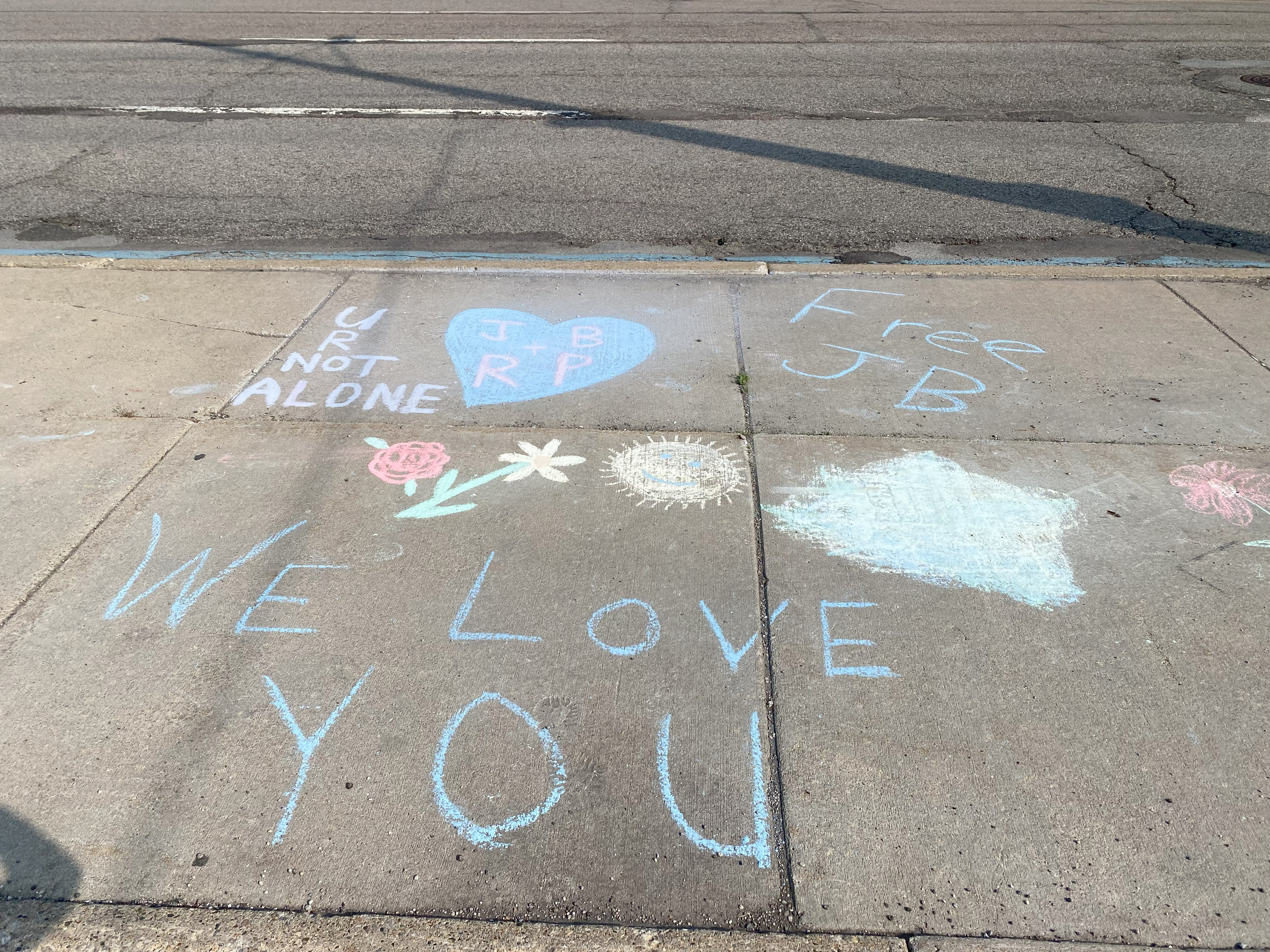
The complaints allege that by banning all in-person visits, defendants conspired to infringe on the parent-child relationship to make money. As one Genesee County official put it: “That video visitation is going to work…A lot of people are going to swipe that Mastercard and visit their grandkids.” “Well that is a nice increase in revenues!” said one St. Clair County employee. “Heck yes it is!” responded another. “Keeps getting bigger every month too .”
“These lawsuits allege that, for years now, Securus and GTL have essentially bribed counties to ban in-person visits so they can make more money hawking their expensive and drastically inferior forms of communication to families with no other options,” said Cody Cutting, Staff Attorney at Civil Rights Corps. “These companies and counties exploit the love between children and parents to make money, harming children and our communities in the process. We should be supporting children experiencing the pain of having a parent incarcerated, not punishing them.”
“After pandemic lockdowns in which we all felt the pain of being physically cut off from those closest to us, we can all appreciate that phone and video calls cannot compare to seeing and hugging our loved ones,” said Robin Wagner, Partner at Pitt McGehee Palmer Bonnani & Rivers. “For these children, there is simply no substitute for seeing and touching their parents.”
“When you’re talking to someone in person, you can actually feel them,” explained thirteen-year-old Plaintiff C.L. “On the phone, you’re so far away from each other.”
“I need to see my dad in person,” said twelve-year-old plaintiff M.M. “If I could visit my dad, I would give him a big hug.”
Want to take part in the Amnesty Program? Call 616.632.5525 or email contact@grcourt.org to discuss balances and make payments.

The 61st District Court in Grand Rapids has launched an Amnesty Program now through April 30. The program offers eligible community members a chance to avoid late fees, bench warrant fees and show cause fees.
Chief Judge Angela T. Ross said the program embodies the courts’ dedication to serving as pillars of support, fairness and compassion within the community.
“It helps people solve their legal issues. It also strengthens trust and connection between the courts and the people they serve,” she said. This reflects the courts’ deep commitment to the community. It helps people access justice and resolve legal issues. It does so in a supportive and affordable way. We understand life is hard. This program recognizes the challenges people face and waives fees they incurred as a result.”

Individuals who wish to take part in the Amnesty Program may call or email the court at 616.632.5525 or contact@grcourt.org to discuss balances and make payments. Once set, individuals must appear in person to address a bench warrant. People can get amnesty for all misdemeanors, traffic tickets and civil infractions. This includes cases with warrants for not paying and late fees, show cause fees and/or bench warrant fees.
During the amnesty period, if the original amount is paid in full the Court will waive late fees, show cause fees and warrant fees, and will cancel the warrant. An agreement to a wage assignment will result in fees being removed once the original costs are paid in full. Any default on a wage assignment will result in fees not being removed. For specifics and terms of the program, visit www.grcourt.org.
 Our Kitchen Table