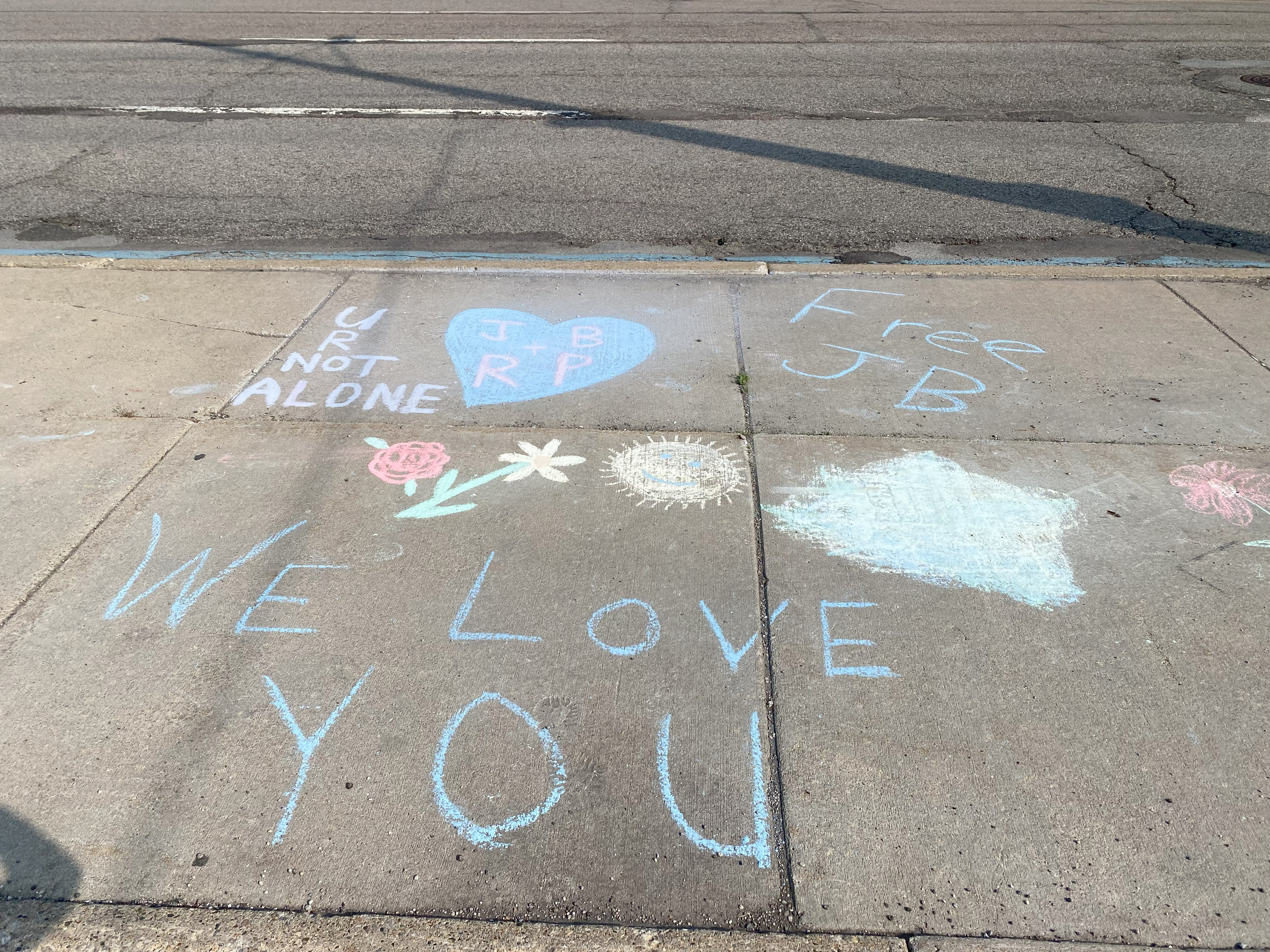
Children in Flint and Port Huron, Michigan have filed two landmark civil rights lawsuits asserting their constitutional right to visit their jailed parents. Hundreds of counties across the United States have banned in-person jail visits for families, depriving children of the ability to see their parents face-to-face for months or years. Why? To make money.
The class action lawsuits allege that beginning over a decade ago, the largest jail telecommunications companies had an idea—if jails banned children and families from visiting each other for free, families would be forced to purchase more expensive phone and video calls. The market for prison and jail “technology services” is dominated by just two companies—Securus Technologies and the company popularly known as Global Tel*Link, or GTL. Each year, these companies extract over a billion dollars in revenue from families forced to pay high prices for low-quality phone and video calls.
Securus and GTL, sheriffs, and county officials across the country worked together to negotiate lucrative monopoly contracts that charge families hundreds of millions of dollars per year while the companies and counties split the profits. The bans on family visits now leave costly, faulty phone and video calls as the only way for children and parents to talk to their jailed loved ones. Taking away the ability of children to hold hands with their mom and dad, hug them, and look them in the eye has devastating effects on the mental and physical well-being of millions of children. And evidence shows it hurts public safety as well.
The plaintiffs have filed two lawsuits. In S.L. v. Swanson, children and parents of people detained at the Genesee County Jail (Flint) sued Sheriff Chris Swanson; Genesee County; GTL; and the company’s CEO, Deb Alderson. In M.M. v. King, family members of people confined at the St. Clair County Jail (Port Huron) sued Sheriff Mat King; St. Clair County; Securus; the company’s billionaire owner, Tom Gores; Platinum Equity, the private equity firm that manages it; and several other corporate executives.
The plaintiffs are seeking immediate preliminaryinjunctions against the bans on family visits so that they can be allowed to see and hug their parents. They are represented by Civil Rights Corps, Public Justice, and Pitt McGehee Palmer Bonnani & Rivers. Partner Alex Spiro and Quinn Emanuel Urquhart & Sullivan have entered an appearance for purposes of litigating the preliminary injunctions.
“Family connection is a foundation of our well-being and society,” said Leslie Bailey, Director of the Debtors’ Prison Project at Public Justice. “Separating parents and children to make money is not only morally reprehensible, it is illegal and violates the Michigan Constitution.”
The complaints allege that by banning all in-person visits, defendants conspired to infringe on the parent-child relationship to make money. As one Genesee County official put it: “That video visitation is going to work…A lot of people are going to swipe that Mastercard and visit their grandkids.” “Well that is a nice increase in revenues!” said one St. Clair County employee. “Heck yes it is!” responded another. “Keeps getting bigger every month too .”
“These lawsuits allege that, for years now, Securus and GTL have essentially bribed counties to ban in-person visits so they can make more money hawking their expensive and drastically inferior forms of communication to families with no other options,” said Cody Cutting, Staff Attorney at Civil Rights Corps. “These companies and counties exploit the love between children and parents to make money, harming children and our communities in the process. We should be supporting children experiencing the pain of having a parent incarcerated, not punishing them.”
“After pandemic lockdowns in which we all felt the pain of being physically cut off from those closest to us, we can all appreciate that phone and video calls cannot compare to seeing and hugging our loved ones,” said Robin Wagner, Partner at Pitt McGehee Palmer Bonnani & Rivers. “For these children, there is simply no substitute for seeing and touching their parents.”
“When you’re talking to someone in person, you can actually feel them,” explained thirteen-year-old Plaintiff C.L. “On the phone, you’re so far away from each other.”
OKT’s executive director Lisa Oliver-King was part of a panel discussing environmental racism and food apartheid at an Access of West Michigan meeting for Walk recipient organizations in February. Considering the historical context of Black and Brown people’s deep connection with land and agriculture, OKT has noted several barriers to reconnection.
Black farmers have historically been driven off from their farms here in Michigan and elsewhere. The redlined neighborhoods where many Black and Brown people live now have lead contaminated soil, lack space for growing, and lack urban ag opportunities due to how the city controls use off vacant lots. And of course, these are the same neighborhoods impacted by food apartheid.
Indigenous Michiganders have likewise been driven off their lands and their native diets replaced with SAD, the standard American diet, resulting in obesity and disease. African Americans may feel torn about growing their own food as it can be a reminder of forced labor on plantations during enslavement. And of course, institutional racism serves to restrict opportunities for Black and Brown people, especially as huge agribusinesses buy out more and more farms.
We often hear the term “food desert,” which is used to refer to neighborhoods without a full service grocery store. Since 2010, OKT has not used the term food desert. A desert is a living ecosystem where plants and animals can thrive. Instead, OKT has defined food apartheid as “The intentional, systemic marketing and distribution of profitable, nutrient-poor, disease-causing foods to income-challenged neighborhoods, mainly, communities of color (i.e. communities receiving the most food assistance dollars).”
How can we utilize this reclamation of food sovereignty as a form of resistance against food apartheid? By looking to the ways our ancestors – maybe even our grandparents – grew food, preserved food, and prepared food and reclaiming the nutritionally rich foods of that not so distant past we too can grow food, learn to choose those healthy foods, and learn how to prepare them for our families. True soul food, traditional Latinx foods, and decolonized Indigenous foods are basically healthy foods.
We can “vote” with our food dollars. The extra time spent traveling to a farmers market can save time lost to disease and illness, but not all have transportation.
We can advocate for healthier foods in our neighborhoods, starting with the foods fed to children in public schools.
We can share the message with each other that the boxed, processed, fast and junk foods sold in our neighborhoods and promoted by slick media campaigns are killing us.
And we can advocate for media literacy that helps us and our children learn how to deconstruct advertising messages and decrease the impact they have on our food consumption.
We can also advocate for representation and acknowledgement of the Black, Latinx, and Indigenous American contribution to American cuisine. If we’ll buy it, they’ll sell it. The Foodies have swayed the industry to offer all kinds of healthy foods to white people who have extra money to spend on food. Maybe if Black and Brown people create a movement to eat healthy foods from our own cultures – and refuse to eat the crap that the industrial food system is currently selling us – they will begin to offer healthier, culturally relevant options.
Knowledge is power. Where are our kids getting their information about food? From Ronald McDonald? From their phones, computers, the billboards in their neighborhoods? Kids aren’t stupid. Let’s sit down at each of our kitchen tables and have a conversation. And set an example.
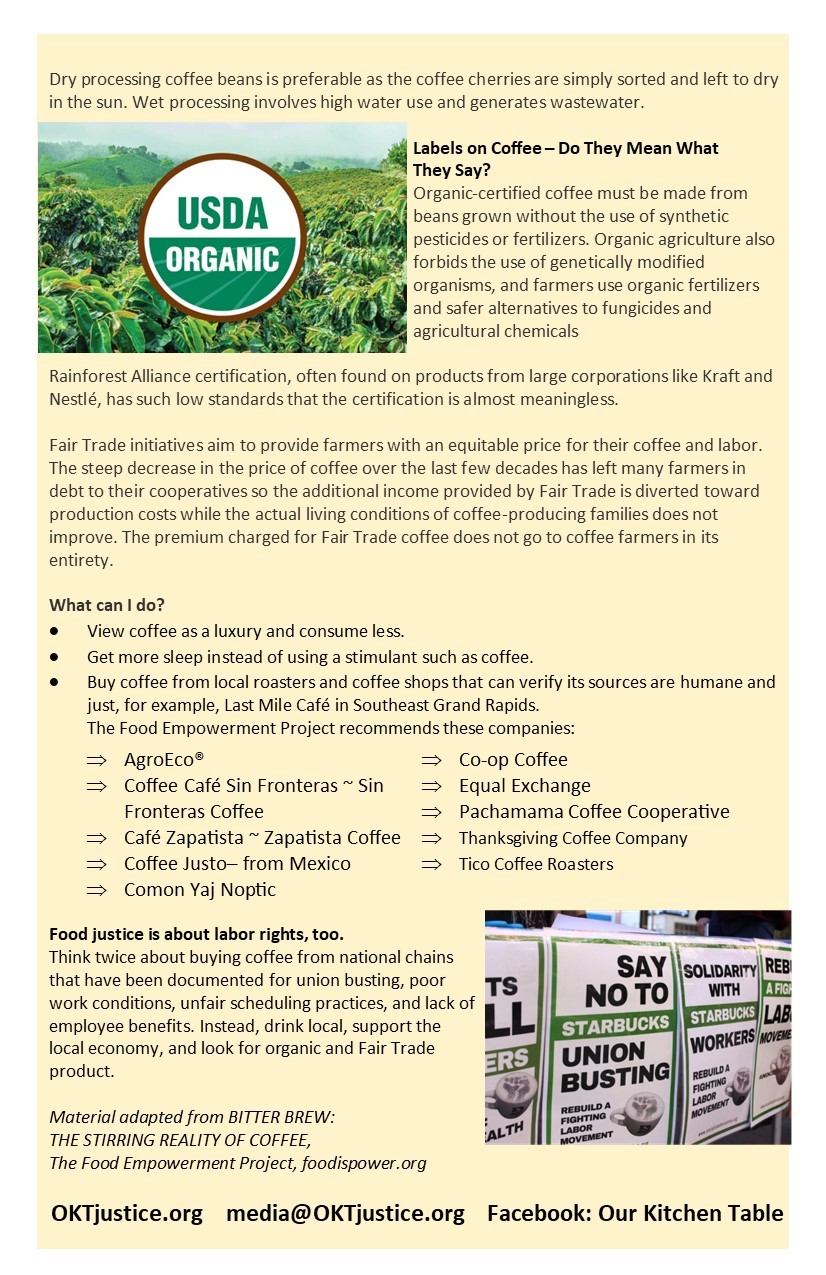
OKT’s executive editor, Lisa Oliver-King presented to the Michigan State University College of Human Medicine 9th Annual Reach Out to Youth Program (ROTY). ROTY is a college sponsored program that is free to all participants and their parents, with the assistance of the MSU Student National Medical Association (SNMA) serving as facilitators. As one of the activities the kids took part in was a recipe for food to go with coffee, she decided to address the topic of coffee in her presentation. So, OKT communications staff developed this new handout, based on the online article BITTER BREW: THE STIRRING REALITY OF COFFEE on The Food Empowerment Project website.
Citing the late poet June Jordan, political activist Angela Davis stresses the importance of Palestine for other social justice movements.
There has been a long history of solidarity between Palestinians and Black Americans, and these last few weeks have been no exception.
While Israel continues its bombardment of Gaza, numerous Black activists in the United States have come together to demonstrate their solidarity with Palestinians.
These two places are more than 6,000 miles away from each other, with very different histories. So what’s behind this common recognition of a shared struggle?
On UpFront, renowned political activist Angela Davis speaks with Marc Lamont Hill on the history and meaning of Black American solidarity with the Palestinian cause.
“This I believe to be the privilege and the burden of all of us who deem ourselves bound by allegiances and loyalties which are broader and deeper than nationalism and which go beyond our nation’s self-defined goals and positions. We are called to speak for the weak, for the voiceless, for the victims of our nation and for those it calls ‘enemy,’ for no document from human hands can make these humans any less our brothers.” Dr. Martin Luther King
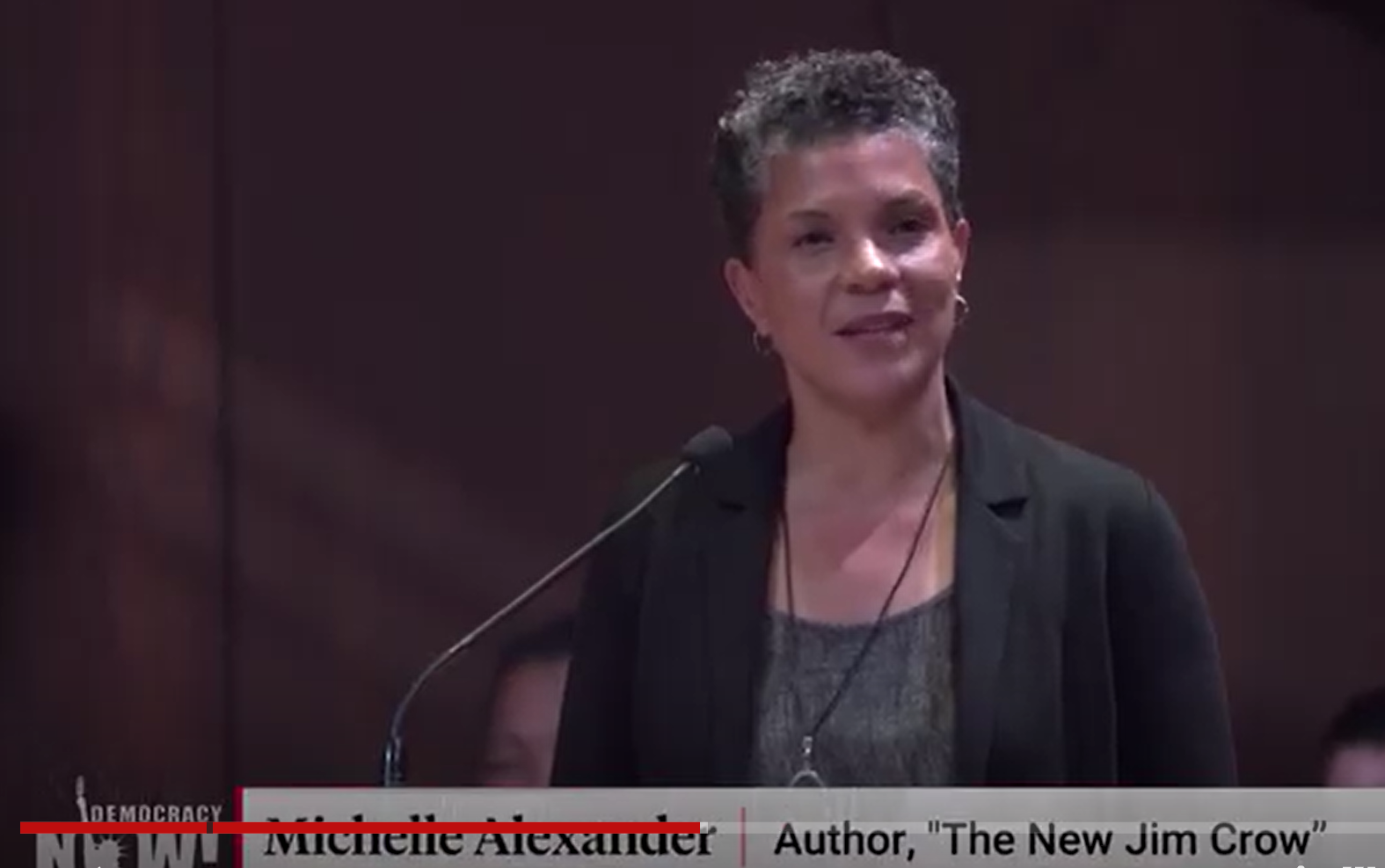
Dr. Martin Luther King’s 1967 speech about the Viet Nam war is not the one you’ll find on greeting cards. Those of us familiar with that speech wonder what Dr. King would have to say about the continuing genocide in Palestine. Civil rights attorney Michelle Alexander, author of The New Jim Crow: Mass Incarceration in the Age of Colorblindness had this to say on the subject during her presentation at “But We Must Speak: On Palestine and the Mandates of Conscience,” a November 2023 event organized by the Palestine Festival of Literature in New York
“The fact that so many people are here tonight, so many, from all different religions, races, genders, is itself a testament of hope. I know that so many of us are carrying a great deal of grief, fear, anger, internal conflict and despair into this room. I hope that we can breathe together, now that we have arrived, exhale, open our hearts to one another and listen deeply to each other. We are here. We are many. We are not alone.
…
It’s no secret that many people are closing their doors to these kinds of vital conversations right now, fearful of what others might say, think or do in response. And so I am enormously grateful that Serene said yes when I asked her if the Palestine Literary Festival could come to Union and use this sacred space. She said yes, knowing that her decision might invite criticism or rebuke. But she also knew that James Chapel has been a site of many, many difficult, courageous conversations, dialogues that are essential to our collective liberation and the creation of beloved community.
In fact, it was in this very space that Reverend Dr. Martin Luther King Jr. was originally scheduled to deliver his 1967 speech condemning the Vietnam War. The event was ultimately relocated to Riverside Church across the street due to the overwhelming number of people who wanted to hear what he had to say and our space limitations here.
At Riverside, Dr. King stepped to the podium and said, quote, “I come to this magnificent house of worship tonight because my conscience leaves me no other choice. A time comes when silence is betrayal. And that time has come for us in relation to Vietnam.”
Dr. King acknowledged how difficult it can be for people to speak out against their own government, especially in times of war, and that the temptations of conformity may lead us toward a paralyzed apathy. He did not deny that the issues present in Vietnam were complex with long histories. And he recognized that there were ambiguities and that North Vietnam and the National Liberation Front were not paragons of virtue. But he said that he was morally obligated to speak for the suffering and helpless and outcast children of Vietnam. He said, quote, “This I believe to be the privilege and the burden of all of us who deem ourselves bound by allegiances and loyalties which are broader and deeper than nationalism and which go beyond our nation’s self-defined goals and positions. We are called to speak for the weak, for the voiceless, for the victims of our nation and for those it calls ‘enemy,’ for no document from human hands can make these humans any less our brothers.
He condemned the Vietnam War in unsparing terms. He decried the moral bankruptcy of a nation that does not hesitate to invest in bombs and warfare around the world but can never seem to find the dollars to eradicate poverty at home. He called for a radical revolution of values. He said, quote, “We must rapidly begin the shift from a thing-oriented society to a person-oriented society. When machines and computers, profit motives and property rights are considered more important than people, the giant triplets of racism, extreme materialism and militarism are incapable of being conquered,” end-quote.
Dr. King was condemned by virtually every major media outlet in America for taking this stand. And even within the civil rights community, many imagined that he was a traitor to the cause. And yet we now know — deep within us we know — that he was right. He is right. He is right today as he was back then about the corrupting forces of capitalism, militarism and racism and how they lead inexorably toward war.
And he was right that our conscience must leave us no other choice: We must speak. When the oppressed, the poor, the weak are under attack, when their homes are stolen or demolished, when they are forced to migrate and to live in unspeakable conditions, in open-air prisons, concentration camps, perpetually as refugees under occupation, we must speak. We must speak when Jewish children are brutally killed in the name of liberation, when antisemitism and Islamophobia slip in through the back door of supposedly progressive spaces. When Palestinian children in refugee camps are bombed and killed, when schools and hospitals and entire neighborhoods are laid waste, we must speak. When international law is treated like a naive suggestion, we must speak. Yes, it may be difficult. Yes, we will make mistakes. We are human. And yes, we may be afraid. But we must speak. Countless lives and the liberation of all of us depend on us breaking our silences.
And what’s required in these times, as I see it, is not only activism and politics, but also deeply personal spiritual work. As Grace Lee Boggs once said, quote, “These are the times to grow our souls.”
All of us have a conscience that whispers to us, sometimes in the dark. The mandates of conscience that arise within each of us arise not out of loyalty to abstract principles or doctrines, but from a place of deep knowing, a deep knowing that we owe something to each other as human beings, that we belong to each other, and that our freedom and liberation depends on one another. If I do not stand and speak up when the bombs are raining down on you, then who will speak up for me, for my loved ones, when the tables are turned? As James Baldwin wrote to Angela Davis more than 50 years ago when she sat in a prison cell ‘For, if they take you in the morning, they will be coming for us that night.’”
Corporate, investor-owned utility influence in the Michigan Legislature was on full display this year, as Governor Whitmer signed energy legislation that was passed without the input of environmental justice communities and allows fossil fuel companies to continue to endanger our lives with pollution under the guise of ‘clean energy.’Our communities know better. And from the beginning, MEJC and allies were front and center, in open letters, press releases, interviews, and online with a clear message: There can be no win on climate without environmental justice.As we look to 2024 we will continue to organize and advocate as we hold our elected representatives accountable to the communities they serve, not the corporations that fund their campaigns.Here were key moments where we took our voices straight to power in 2023:
Our Open Letters
Our September 2023 open letter to Governor Gretchen Whitmer where we advocated for policies that prioritized: Fair Outage Compensation:Electricity AffordabilityCampaign Finance ReformCumulative Impact Analysis Our April 2023open letter to Michigan legislature where we advocated for: Prioritizing communities most impacted by climate change and pollution.Combatting environmental injustice and ensure healthy lives for all. Averting climate and environmental catastrophe.Stopping all fossil fuel and polluter handouts.Creating millions of good, safe, union jobs.
Bill Analysis: No Climate Win Without Environmental Justice! SB271 allows industries to continue to pollute our communities with fossil fuel energy sources. It sets up a clean energy standard that is totally inadequate to meet the needs of a rapidly changing climate. It also fails to include any environmental justice priority such as outage compensation, cumulative impact analysis, or any move towards breaking the monopoly of DTE and Consumers Energy. Read our full analysis on the climate bills the Michigan legislature passed this year and why we must demand our representatives do better!MEJC policy associate, Roshan Krishnan, provides an in depth walk through of our analysis of the “MI Clean Energy Future” bills.
The most recent food insecurity statistics in Ottawa were reported in 2019 from the interim CCHS survey data. This data indicates that: One in seven households (13.9 per cent) in Ottawa is food insecure. Despite that fact, the new Ottawa County Board of Commissioners has turned on its own health department with the result that funding has been cut to the county’s food program.
OKT received this media release from Ottawa Food this morning:
Statement From the Ottawa Food Advisory Board
Following cuts to the Ottawa County Department of Public Health
November, 13, 2023
The model of Ottawa Food as a collaborative is unique, with the Ottawa County Department of Public Health employing the full-time coordinator, who works across the private and public sectors towards goals identified county-wide. Ottawa Food’s model is one that has been recognized and celebrated across the state as both highly effective and successful within the Michigan Local Food Council Network.
On Tuesday September, 26 the Ottawa County Board of Commissioners voted to cut the Ottawa County Department of Public Health Education team by 48%, but fund the Ottawa Food operating budget of about $8,950 which covers materials and supplies. Ottawa Food’s coordinator position was a 0.9 FTE Health Educator on this team, and with the cuts, this position no longer exists.
During budget negotiations it was brought up repeatedly that the Board of Commissioners didn’t want to see Ottawa Food operations reduced or eliminated. However, they also knew that by reducing the Health Education budget, this was a highly probable outcome.
Ottawa Food fully supports the Ottawa County Department of Public Health and its leadership team as they determine how to allocate a decreased budget while faced with impossible decisions. The complexity of the full situation is detailed in this Washington Post article from late October.
Prior to the final budget vote on September 26, listening sessions were held with Ottawa Food members to determine possible paths forward. Following the cuts made in late September, 76% of Ottawa Food members voted to pause the model of Ottawa Food as it’s been operating, rather than continue without a full-time coordinator.
As of now, the collaborative still exists but all regular monthly and quarterly meetings and other activities are on pause. Without a full-time coordinator, certain programs will not continue, including Senior Project Fresh, which distributes farmers market coupons to local seniors through federal funding that the Ottawa Food Coordinator facilitated and coordinated through local agencies. Another impacted program is gleaning and produce donations from local farmers markets, specifically in Hudsonville, Spring Lake and Georgetown which just started this past year, coordinated and launched by the Ottawa Food Coordinator.
Of course, all of the member agencies across the county continue their own individual impactful work, although outside of the collaborative infrastructure. At this time, the Ottawa Food Advisory Board continues to meet and discuss the best course of action for the continued success and viability of the collaborative and its initiatives and programs.
Thank you for the continued support of our shared vision to eliminate hunger in Ottawa County, encourage healthy eating for all, and support local farmers.
About Ottawa Food Ottawa Food is a collaboration of over 45 agencies and individuals working to ensure that community members have access to healthy, local and affordable food choices. Our members come from a variety of backgrounds and sectors, including local public health, food pantries, human service organizations, food security advocates, farmers, local businesses, community members, MSU Extension, Feeding America West Michigan and many others. Since founding in 2011, our vision is to have an available supply of well-balanced meals for all, and we work to eliminate hunger in Ottawa County, promote healthy eating for all, and increase sourcing of local food.
This article is part of State of Health, a series about how Michigan communities are rising to address health challenges. It is made possible with funding from theMichigan Health Endowment Fund.
Black Michiganders were among the hardest hit in the early months of the COVID-19 pandemic, representing 29% of COVID-19 cases and 41% of COVID-19 deaths despite being only 15% of the state’s population. In April 2020, Michigan Gov. Gretchen Whitmer established the Michigan Coronavirus Task Force on Racial Disparities. By the end of September 2020, Michigan’s Black residents made up only 8% of cases and 10% of deaths.
“When that change happened, we were able to flatten the curve,” says task force member Renee Canady, CEO of the Michigan Public Health Institute (MPHI). “But more importantly, we were able to build and strengthen community voice and how government responds to the needs of individuals, needs they face all the time.”
This dramatic reduction in disparities involved creating more opportunities for testing within communities, connecting people of color with primary care providers, improving contact tracing and isolation strategies, promoting safe reengagement, and utilizing trusted community leaders in the broadcast of reliable COVID-19 information. Now, as the task force prepares to disband, its members are looking back on the work they’ve accomplished and the groundwork they’ve laid for continued progress toward dismantling health disparities in Michigan.
“Collectively as a task force, I was amazed at the level of commitment and dedication. … We had to problem solve and think deeply,” Canady says. “As a public health professional my entire career, seeing community engage and build partnerships at this deeply authentic level was absolutely inspiring and motivating for me. It really was about execution and action and change.”
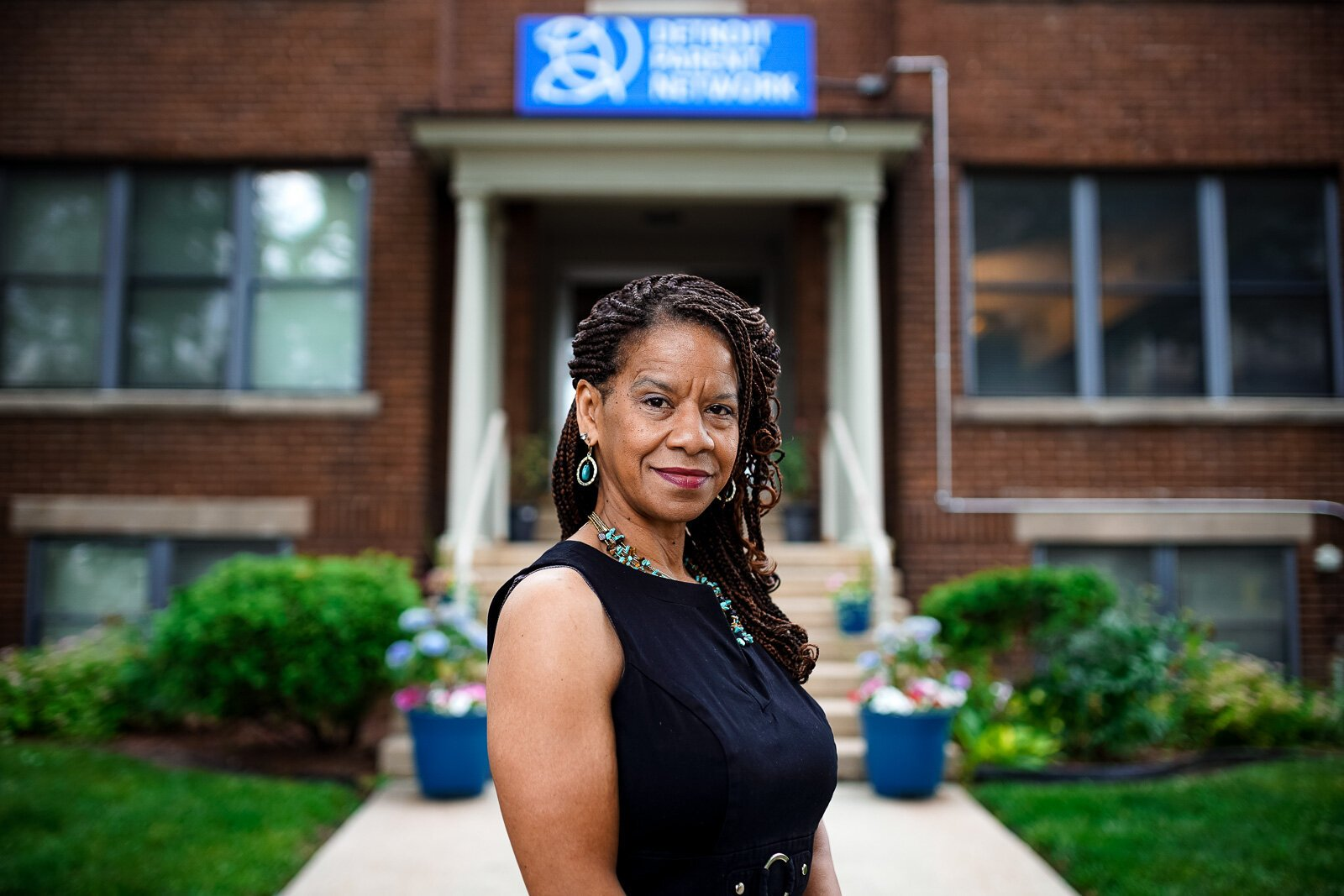
Comprised of 23 Michiganders from diverse locations, backgrounds, sectors, and ethnicities, the task force was directed to increase transparency in reporting COVID’s racial and ethnic impacts, remove barriers to accessing health care, reduce medical bias in testing and treatment, mitigate environmental and infrastructure factors that exacerbated mortality, and improve systems for physical and mental health care as well as long-term economic recovery. To accomplish these directives, members of the task force joined other community leaders in workgroups focused on strategic testing infrastructure, primary provider connections, centering equity, telehealth access, and environmental justice. Task force member Jametta Lilly, CEO of the Detroit Parent Network, says the task force’s reports in November 2020 and February 2022 show that the workgroups became “fast-moving entities” that identified goals at the community and statewide levels.
“We brought together people who don’t necessarily plan together — community-based organizations, faith-based organizations, hospital administrators, academic administrators,” she says.
Overcoming roadblocks to telehealth
Lilly sat on both the Primary Provider Connections and Telehealth Access work groups. While increasing telehealth opportunities enabled people across the state to receive medical and mental health care during COVID shutdowns, the modality also underscored the reality of the digital divide.
“An accomplishment is the work that’s been done to recognize how the digital divide exacerbated the death and mayhem that we saw, whether that was in health, in education, in all of our social services, in access to food, and in the employment market,” Lilly says. “There was a recognition that the digital divide had to be addressed if we were going to create structural change not only to address COVID but also to move the state of Michigan forward.”
The Telehealth workgroup’s efforts were in part responsible for a subsequent gubernatorial executive order that called for expanded high-speed internet access for all Michiganders, and an ensuing state investment of $3.3 million to realize that goal.
“It takes a level of courage and investment to start the journey, to say, ‘This is not acceptable,’” Canady says. “We do have evidence of bias, experiences of community members, partners, and patients. We’re not willing, as Michiganders, to look the other way on this. A one-hour training is not going to disrupt decades of socialization. But our hope, and certainly my hope as a member of the task force, is that it will whet the appetites of clinicians, employers, and civil servants in Michigan to say, ‘Wow, I didn’t realize this. I need to learn more. I need to think about what we should be doing differently.’”
Task force member Denise Brooks-Williams, senior vice president and CEO of market operations at Henry Ford Health (Henry Ford), acknowledges that Henry Ford was invited to the table because of its long history of trying to eliminate health disparities, in part by requiring its staff to complete implicit bias training.
“Amongst the task force’s many accomplishments was putting a culturally diverse lens around marketing and how we try to attract people to health services,” Brooks-Williams says. “As we moved into having vaccines available but seeing a low response among those wanting to have them, [it] really did take time to invest in some multicultural marketing resources. They did a really good job. That will pay dividends for a long time.”
Canady hopes that, in addition to requiring implicit bias training, the state will be able to measure significant changes and greater awareness, knowledge, and understanding of the unresolved consequences of bias and discrimination.
“We need to think differently about systemic inequities and how to maintain relationships across disciplines,” Canady says. “It’s not just the Department of Health and Human Services’ responsibility. It’s not just LARA pushing on people’s licenses to practice. It really is all of us in partnership together.”
Health care in community
The Primary Provider Connections workgroup sought to remove barriers to care by making health care more accessible. Strategies for doing so included creating test and vaccination sites within trusted neighborhood locations like churches and schools, developing mobile clinics, and involving trusted community leaders as ambassadors of reliable pandemic health information. Brooks-Williams reports that Henry Ford’s mobile clinics will continue post-pandemic as a much-needed resource for communities that lack primary care locations. Another plus is that various community stakeholders are now connected in conversation.
“We’ve now got community agencies talking with health systems, talking with the health departments, talking with the state, in a way that we probably didn’t before,” Brooks-Williams says. “If we keep those conversations going in our communities, that will help.”
Lilly says one key area for improvement is in quality care coordination – creating a primary care system where primary care providers, Federally Qualified Health Centers, community health workers, and hospitals are integrated into an accessible continuum of health and well-being for all.
“That’s our nirvana,” she says. “But that’s not the system we have in the United States.”
Funding will be a priority
Much of the task force’s work was funded with COVID relief dollars. Task force members hope that when those funds dry up, those making budgetary decisions at the federal and state levels will continue to fund successful developments like telehealth, mobile clinics, implicit bias training, and culturally competent messaging.
“We are all saying that we need to have a more robust public health system that gets funded adequately, not just because we suddenly find ourselves in a pandemic,” Lilly says. “Now that our public health systems have readiness, I think we are in a much better place. The Federally Qualified Health Centers are in a much better place. There are mobile clinics and electronic health systems that have the capability of talking to each other.”
While the task force will disband in the near future, members hope that their legacy and work will continue to reduce racial disparities in health care and on other fronts such as education, employment, and economic opportunity.
“Relationships don’t end when a committee ends or when a conference is over. They’re fortunately transportable,” Canady says. “I believe that those relationships will continue as we all, in our individual areas of responsibility, continue to try to execute on the things we learned on the task force.”
Lilly adds that now it’s time to assess the lessons learned from the task force’s work.
“What are the gaps? What are we doing about them?” she asks. “What is so encouraging is that [the Whitmer] administration understands that we have to look very closely at what are the policies that either enable or perpetuate [disparities], or can possibly be a vehicle to create the systemic change we need.”
Estelle Slootmaker is a working writer focusing on journalism, book editing, communications, poetry, and children’s books. You can contact her at Estelle.Slootmaker@gmail.com or www.constellations.biz.
Renee Canady photo by Roxanne Frith. Jametta Lilly photo by Nick Hagen. Denise Brooks-Williams photo courtesy of Denise Brooks-Williams.
The State of Michigan Court of Claims issued a ruling that the Michigan legislature’s 2018 decision to reverse state law mandating a $12 minimum wage for all workers, including tipped workers earning the subminimum wage, was unconstitutional.
In reaction to the Court’s announcement, Saru Jayaraman, President of One Fair Wage, a national nonprofit advocating on behalf of restaurant workers earning the subminimum wage for tipped workers, issued the following statement:
“The subminimum wage for tipped workers has existed since Emancipation in 1863, when restaurant owners sought to hire newly freed slaves and pay them nothing, making them live on tips alone. Workers have been fighting this subminimum wage, which has been a source of sexual harassment and racial inequity, for decades – including in 2018, when we collected 400,000 signatures to put the issue on the ballot.
“Today, the courts in Michigan vindicated the rights of these millions of workers, and millions of voters, to demand that workers in Michigan be paid a full, livable wage with tips on top. So many states are about to follow – given the Great Resignation. And Michigan’s minimum wage will continue to go up, because we at One Fair Wage have collected enough signatures to force the wage up to $15 an hour in 2024. Today we made history!”
Mark Brewer, election attorney, added:
“This is a great victory for all Michigan workers and for all Michigan voters whose constitutional right to initiative has been protected by the court.”
In 2018, the Republican-controlled legislature passed as law two ballot measures approved to be on the November 2018 ballot – a minimum wage increase and required paid sick leave – specifically stating that they were doing so in order to take these measures off the ballot and thus prevent low-wage workers and workers of color from going to the polls in large numbers. After the November 2020 election, Republicans then gutted the law with a simple majority vote, returning the proposed $12 per hour minimum wage for tipped workers down to a little over $3 per hour.
The Court’s decision was in response to a lawsuit, filed by One Fair Wage and a coalition of Michigan organizations, which argued that the Republican legislature’s attempt to subvert the will of the people through manipulative legislative practices should be deemed unconstitutional per the state constitution and demands that the law requiring a minimum wage increase and One Fair Wage – a full minimum wage for tipped workers, as originally passed, be enforced. The law would guarantee hundreds of thousands of Michigan workers a raise, including hundreds of thousands of tipped Michigan workers currently earning a subminimum wage, the full minimum wage with tips on top, as well as earned paid sick leave.
“It is a moment of severe restaurant industry crisis, when over half of restaurant workers are saying they’re leaving the restaurant industry due to low wages and tips, and Michigan restaurant owners cannot re-open due to a lack of workers,” added Jayaraman. “Over three quarters of Michigan workers say the number one reason they’d consider coming back to work in the restaurant industry, allowing restaurants to reopen, is a raise.”
Global capitalists wield philanthropy to monopolize and privatize land use, food production, and the public health sector. Join a conversation with Vandana Shiva and CAGJ’s Heather Day to learn about this dangerous trend—and how global citizens are fighting back. The conversation will be moderated by Breanna Draxler, senior editor at YES! Media.
Vandana Shiva has edited a new book, “Philanthrocapitalism and the Erosion of Democracy”, to which AGRA Watch contributed our research on how the Cornell Alliance for Science Fellowship program creates propaganda to prop up the Gates Foundation’s misguided agricultural development schemes in Africa.











 Our Kitchen Table