Archives

Blandford Nature Center holding foraging classes each season

Blandford Nature Center is hosting forgaing classes each season starting Thursday, May 10 with “Wild Foraging in May.” The class will take place at the visitor’s center and on the trails from 5 to 6:30 p.m.  According to Blandford’s website, “We will discuss healthy and responsible ways to harvest nature’s bounty and experience the delicious flavors of spring.”

A summer foraging class is slated for June 28. This adult-level class is open to people ages 12+ and costs $10 for members, and $12 for non-members. Enrollment is limited to 30 so call to register, (616)735-6240.

Blandford’s Kristin Tindall helped out at an urban foraging workshop sponsored by OKT and The Bloom Collective last year. She will be back again August 12 to lead our free 2012 urban foraging workshop.

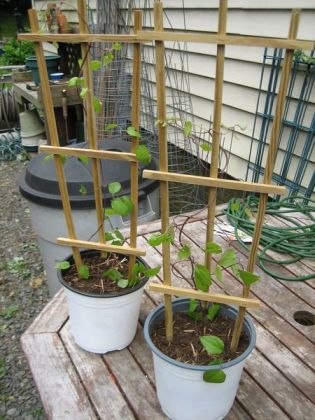
Free Trellis Gardening Class Wednesday!

Trellis Gardening: Growing Up!

Short on space?
Learn to grow food vertically
with Farmer Jennifer Bongiorno

6 to 7:30 p.m. Wednesday May 9

Gerald R Ford Middle School, Madison & Franklin SE

Oasis in the Food Desert

While farmers’ markets are a popular trend across the nation, studies show that most of them serve our affluent citizens. Yes, eating local healthy fruits and vegetables is all the rage. Sad to say, studies show that urban neighborhoods classified as food deserts are less likely to have farmer’s markets.

Across the US, 803 counties have been classified as food deserts–areas where the average resident of the county lives 10 or more miles from a full-service grocery store (a grocery store that sells fresh
produce, meats and the kinds of foods needed to cook healthy, home-made meals).

Another study concluded that more than 23 million Americans living in low-income neighborhoods are
more than a mile from a full-service grocery store—a long ways to walk with bags of groceries (and
public transportation seldom makes it any easier). People who do not have access to fresh whole foods are stuck eating convenience store foods and fast foods that cause obesity, diabetes, asthma, heart disease and a host of other ailments.

Researchers have determined that Grand Rapids does indeed have food deserts, as classified above–our Southeast neighborhoods included. However, when the women of OKT polled these neighborhoods a couple years ago hey discovered something else. Many neighbors were growing food in their own gardens. OKT’s yard gardening program supports both new and existing food gardeners so even more people can grow and share food.

2012 will be the second year that the community women of Our Kitchen Table manage a farmers’
market—your farmers’ market–within “food desert” neighborhoods. Please come out and support your
farmers’ market. Making the market a success can mean better health for you and your neighbors.

New Jim Crow Museum in Big Rapids Now Open to the Public

The new Jim Crow Museum is now open to the public. The Museum features six exhibit areas — Who and What is Jim Crow, Jim Crow Violence, Jim Crow and Anti-Black Imagery, Battling Jim Crow Imagery, Attacking Jim Crow Segregation, and Beyond Jim Crow.

The Museum also offers a comprehensive timeline of the African American experience in the United States. The timeline is divided into six sections: Africa Before Slavery, Slavery in America, Reconstruction, Jim Crow, Civil Rights and Post Civil Rights.

The Jim Crow Museum at Ferris State University strives to become a leader in social activism and in the discussion of race and race relations. This new facility will provide increased opportunities for education and research. Please join us as we embark on this mission.

Regular hours are Monday thru Friday 12-5 p.m. and by appointment. To schedule a tour, please contact the museum at (231) 591-5873 or atjimcrowmuseum@ferris.edu. Please refer to the calendar of events for availability.

For more insight into the museum’s mision, read this 2010 GRIID.org post, Race, Race Relations, and Racism: Stories from the Jim Crow Museum.

People’s Assembly for Radical Sustainability Saturday

ImageMutual Aid GR is hosting a People’s Assembly on Radical Sustainability this Saturday as an alternative Earth Day event. The People’s Assembly will be a forum to discuss tactics, strategies and actions to take that call for systemic change and resistance to ecologically devastating effects of global capitalism.

People’s Assembly for Radical Sustainability

Saturday, April 21

11:00 AM – 3:00 PM

Trinity United Methodist Church

1100 Lake Dr. SE, Grand Rapids

The event is free and open to anyone who believes we need to take bold action against the current destruction of this planet and anyone who isn’t being duped by green capitalism.

Lunch and childcare is also being offered. For more information go tohttp://www.facebook.com/events/214450608656865/.

iDevice program streamlines farmers’ market purchases

This year, it will be even easier to shop at the Southeast Area Farmers’ Market with EBT, WIC and Double Up Food Bucks. Market customers will be able to make these purchases directly from the market vendors rather than wait in line for tokens at the market welcome table.

Farmers’ market vendors throughout the state will use iDevices for processing WIC, WIC Project FRESH, Summer EBT for Children, SNAP and Double Up Food Bucks transactions for their customers. The Our Kitchen Table (OKT) market management team and our local vendors are undergoing training in May to prepare for this change.

The state is providing the devices free of charge to all market vendors throughout the state accepting Bridge/EBT cards. The question comes to mind as to whether this is the wisest way to spend monies budgeted for providing food insecure Michigan residents with access to much needed fresh produce.

During the 2011 market season, the Garfield Gerald R Ford Middle School market locations processed a large number of EBT and Double UP Food Bucks transactions. With Double Up Food Bucks, market patrons can double their buying power. For every dollar they spend on fresh Michigan produce with their EBT/SNAP card at the markets, they receive two dollars’ worth, up to $20 ($40 in food).

Other local farmers’ markets accepting EBT, WIC and Double Up Food Bucks are Fulton Street Farmers’ Market, Plainfield Township Farmers’ Market, Sparta Farmers’ Market and the YMCA of Greater Grand Rapids Farmers’ Market. This year, OKT also hopes to offer market patrons the opportunity to sign up for other government assistance programs when they visit the market.

The Southeast Area Farmers’ Market is committed to improving access to fresh healthy foods in our urban neighborhoods. Market season begins June 2 at the Garfield Park location and June 15 at the Gerald R Ford location. Please spread the word!

New greenhouse intern helping to grow food plants for community

OKT's greenhouse intern, Liseia Woodard.

After job postings at Grand Valley State University and Calvin College failed to draw an available, qualified applicant for the position of greenhouse intern, the women of Our Kitchen Table began asking friends and community members to send applicants our way. Sure enough, the perfect person for the job was right under our noses.

Miss Liseia Woodard grew up gardening in her own back yard from the time she was a small child. She participated as a peer educator in the Blandford Farm school garden program during middle school and was a vendor during last season’s Southeast Area Farmers’ Market, where her mother, Ms. Yvonne Woodard, serves as market manager.

Liseia garnered near perfect scores during an intensive interview with three OKT representatives—she scored extra points for enthusiasm. Ms. Leslie Huffman, greenhouse supervisor, is happy to have found a candidate that brings both extensive gardening experience and a passion for growing food.

Liseia earns her high school diploma this June and, in addition to working in the greenhouse 20 a week, will begin her higher education at Grand Rapids Community College. Liseia, Ms. Huffman and the OKT team are already busy in the former Molesta Greenhouse, planting flats of vegetables and herbs that will grow into healthy food for our neighborhoods. These food plants will be distributed to yard gardeners and OKT’s demonstration gardens in June and again in July. Food harvested from the demo gardens will be put into baskets and distributed to pre-selected food insecure families each week at the farmers’ market. OKT yard gardeners have the option of selling excess produce at the market.

Would you like to be an OKT yard gardener? Email us today at OKTable1@gmail.com or call 616-570-0218.

Women led historical movement for farmers’ markets in Grand Rapids

This story also appears on www.GRIID.org

On Thursday March 8, anthropologist Jayson Otto shared the history of Grand Rapids’ farmers’ markets as part of the Greater Grand Rapids Women’s History Council “Grand Rapids Women and the Politics of Agriculture” series. From 1800 through 1946, the number of farmers’ markets steadily rose throughout the US. Grand Rapids was very much a part of this trend, especially from 1914 through 1928, when food costs soared due to the rising dominance of industrialized food production and distribution.

While industry leaders heavily influenced city government to quash the rise of farmers’ markets here, two forces prevented this from happening: farmers resisting through civil disobedience and women working together in a local movement to keep the markets open. As the women of OKT are working for food security in Grand Rapids neighborhoods through the Southeast Area Farmers’ Market and food gardening programs today, we found this information extremely interesting.

The other sources for food in the city were the many neighborhood grocers as well as the hucksters, underclass folks who sold produce from their carts. The grocers had the power to approve which hucksters could sell this food–and often it was not very fresh.

Around the turn of the century, grocers and food brokers influenced City Hall to outlaw farmers from retailing their wares along stretches of downtown streets, as was their custom. Retailing was discouraged at the wholesale market, which was a food distribution hub to all of Michigan and beyond. However, the small farmers continued to set up their illegal retail stalls–and people continued to go to them for fresh produce for some time. A woman vegetable grower from Wyoming, Mrs. Stall, was among those who resisted.was

According to history that Otto was able to unearth, one tough market advocate who made the press of that day, August Raditz, a white working class woman living on South Division Avenue. She was known for being handy with a scythe and standing up to city hall.

However, upper class white “club” women, Eleanor Nickleson, Helen Russell, Eva Hamilton and Emily Chamberlain were the identified leaders of the woman-led movement. They gathered momentum to establish retail farmers’ markets through a “High Cost of Living” campaign that eventually garnered support from the local Cabinetmakers union, businessman, Charles Leonard, of refrigerator fame, and the mayor of Grand Rapids. (Hamilton went on to be Michigan’s first woman senator). I n spite a strong opposition by male civic leaders, the result was three permanent farmers’ markets in the city: Leonard Street Market, South Division Market (at Cottage Grove) and Fulton Street Market.

When the farmers’ markets were met with threats of being closed in 1934 and 1955, women-led initiatives kept them open. While Otto was able to find photos and information about the Leonard Street Market up to its destruction in the 60s by urban renewal, the demise of the South Division market s seems to be undocumented. He guessed that the 1968 racial uprising may have been the cause.

The encouraging part of Otto’s presentation was the radical role that women have taken in establishing food security in Grand Rapids in the past. The discouraging piece was the lack of historical data around the role that people of color played in Grand Rapids farmers’ market history.

Do you have any recollections of the South Division Market or other farmers’ markets serving Grand Rapids people of color? If yes, please contact us at OKTable1@gmail.com. Knowing this history could bring another lost bit of important Black history to well deserved light.