Artist/musician Derrick Hollowell to share tunes and art at Southeast Area Farmers’ Market grand opening Friday & Saturday

This weekend is the Southeast Area Farmers’ Market’s grand opening celebration. In addition to more produce and more vendors, both market locations will groove to the beats of Derrick “Vito” Hollowell and the Vegtible Brothers. Vito will also exhibit his artwork.

In addition, the grand opening will also feature children’s take-home crafts, face painting, card table games, jump rope, 2012 Farm Bill information, used book give-
away, United Way 2-1-1 Bundled Benefits, free iced tea and cold water–as well as these scheduled events:

Gerald R Ford Middle School, Friday 2 – 7 p.m.

    • 3 p.m. Water Balloons & Kids Games
    • 4 p.m. Healthy food cooking demo
    • 5 p.m. Fashion show
  • 6 p.m. Dancer-cise with DJ

Garfield Park, Saturday 10 a.m. to 3 p.m.

  • 11 a.m. Pet care activity
  • 12 p.m. Healthy food cooking demo
  • 1 p.m. Fashion show
  • 2 p.m.  Dancer-cise with DJ

Shoppers purchasing produce with EBT/SNAP/Bridge Cards will receive a free kitchen utensil. Both market locations accept cash, debit cards, EBT/SNAP, Double Up Food Bucks, WIC Project Fresh and Kent County Health Department coupons.

Eating Our Way to a Better World? A Plea to Local, Fair-Trade, and Organic Food Enthusiasts

This article by Andrea Brower is re-posted from ZNetThank you to GRIID for bringing this post to our attention.

My belly is full. It seems no matter how hard I try to “eat my way to a better world”, that world never materializes. The organic and fair-trade industries are booming, Farmers Markets are the new norm, the word “locavore” was added to the Oxford Dictionary, and Michelle Obama even planted a White House garden. But agribusiness continues to consolidate power and profit, small farmers worldwide are being dispossessed in an unprecedented global land grab, over a billion people are going hungry, and agriculture’s contributions to climate change are increasing. It’s not just that change is slow, but we actually seem to be moving in the opposite direction than alternative food movements are trying to take us.

What is going on? How are we to understand this apparent paradox, and the seeming failure of our food activism? While the answers are not clear or easy, we can start by considering the main form our political action is taking, and where it is (and isn’t) getting us.

The slogan “vote with your fork” has become the hallmark of food movements. From Michael Pollan and Food Inc. to the vast majority of non-profit materials circulating on the internet and in grocery stores, we are empowered by the belief that we can change the world every time we take a bite. This idea of “ethical consumption” stems from classical market fundamentalism, which tells us that the market is a democracy where every dollar gives the right to vote. According to this logic, the social makeup is a result of interactions between billions of individual decisions, where markets simply respond to consumer desires and consumption is the primary arena of citizenship. Thus, to consume is to be political — to be good, participatory citizens.

Yet, buying “ethical” food does nothing to address the basic political economic structures that underly the destructive global food system. It doesn’t challenge corporate power, just re-orients it towards new niche markets. It doesn’t address the trade and subsidy policies that create inequality and hunger, or the privitization of our common genetic wealth, or the massive wave of farmland enclosures. While it may be an attempt to opt-out of supporting that food system, our vote of no confidence doesn’t do much to actually change that system. To illustrate further — even if we tripled the purchase of organics overnight, we will have done nothing to address the industrialization and corporatization of organics, or the erosion of standards to allow for all sorts of ecologically destructive practices in what is supposed to be a sustainable form of agriculture. Further, the majority of farmworkers will still be exposed to agricultural chemicals that we know are sentencing them to cancer, as we all continue to drink those chemicals in our water.

The logic of market fundamentalism that underlies much food activism essentially obscures socioeconomic structures and deflects responsibility away from the state and other regulatory institutions. Furthermore, it individualizes activism by making it about personal consumer choices. This can have the dangerous effect of starving collective political action and identities built upon common struggle.

In its worst forms, the idea of ethical consumption renders the unjustifiable gluttony of developed-world consumerism justifiable. It’s OK that we drive hummers, because we are driving to the farmers market! People can continue to consume with pleasure from a “guilt-free menu”, leaving untouched uncomfortable questions about how our lifestyles contribute more broadly to vast inequalities. In some instances, the idea of ethical consumerism does more to comfort and accommodate the individual eater, and thus solidify the structures of the current food system, than to actually challenge it.

Most of us are aware that alternative food movements have created a plethora of niche marketing opportunities that have been skillfully capitalized on by corporate food giants — that organics and fair trade have been largely coopted (often to the determinant of more pure organic farming and small-scale direct fair-trade schemes), and that even Wal-Mart is profiting from “local” branding. But we still seem to be relying on the mechanisms and logics that are implicated in the problems we are trying to correct — namely, markets and capitalism.

Capitalism prevents corporations from prioritizing anything above profit. Capitalism always tends towards the concentration of wealth and power. It requires dispossession and ever-expanding markets, and the subordination of all aspects of life to capital. While our efforts to develop local economy alternatives may be based on a desire to re-embed economies in systems of social and moral relations, we need to remember that exploitation is the prevailing logic of capitalism. Until we start actually talking about capitalism, and defining and creating alternatives that directly confront its logics, our alternatives will always be constrained and shaped by it. Let me re-state this a little differently — while we need to imagine and build alternative ways of producing and distributing food, if they do not subvert the logics of capitalism, they will be subsumed by them.

This necessarily means challenging structures and forces that do not reside at the local level. The local has become the predominant space of action in alternative food movements largely because it is seen as the site to try alternatives, and to counter trends towards globalized, industrialized, commodity-trade oriented agriculture. While this is an important aspect of resistance, we also need to be mindful of tendencies to use questions of scale to sidestep the more fundamental matters of power and capital. Further, if we confine our action to the small-scale, the most we can hope to achieve is small isolated ponds of fresh food for privileged consumers in an ocean of food injustices.

On the topic of capitalist exploitation, something needs to be said about food system workers — the people who grow, process, transport, sell and serve our food — and their striking invisibility in alternative food movements. While we talk a lot about “supporting farmers”, we rarely ask questions about farmworkers, and much less about the people working in dangerous and sweat-shop like food processing factories or the underpaid grocery clerks. It’s estimated that 86 percent of food system workers in the US don’t make enough to live, and that they use food stamps at double the rate of the rest of the country’s workforce. By failing to put food system workers at the center of the conversation about sustainability and justice in the food system, the movement effectively marginalizes working-class, non-white and immigrant groups, as well as the half of humanity that produces 70 percent of the world’s food through “peasant agriculture”.

Of course, there are strands of the food movement that are clearly challenging the logics of capitalism, and that have put workers, justice and equality at the forefront of the political struggle. Some excellent examples include Via Campesina’s articulation of the connection between food sovereignty and land rights, trade regimes, and gender relations; consumer-labor alliances based in struggles for worker justice like the Immokalee Workers Coalition; Food Not Bombs example that large networks of people can work cooperatively by consensus and without leadership to provide essential needs; and the occupation of Gill Tract in Berkeley, which is calling attention to the need for direct action to reclaim space for urban agriculture. Even “ethical consumption” is a response to feeling implicated in ecosystem crisis and networks of exploitation, and more importantly, a desire to contribute to something different. In a culture that preaches self-interest, this in itself is hopeful. Furthermore, there is a tremendous amount of creativity and energy behind the countless emerging experiments to “re-embed” agriculture, and the movement has done a lot to present positive and pleasurable alternative visions of the future. Along with other social movements, we are part of a re-orientation of values that sees joy and satisfaction in greater connection to both other people and the non-human world, implicitly or explicitly questioning the fulfillment of consumption-driven lifestyles.

But we can’t stop here. When we fail to position our strategies in a larger project of transforming the capitalist food system, we risk erecting new barriers of privilege and inequality. If justice and sustainability are truly our priorities, then we need to start having conversations about capital, individual rights and property relations that challenge our very core beliefs. We need to de-naturalize and cease to tolerate extreme power and wealth inequities. We need to get beyond the idea that politics is what we choose to put in our mouths. And we need collective action for a collective world. Our reality is not made in an individual bubble contained within the market — we are shaped by our social relations, and must change them in order to change the world.

Do I still buy local and have a garden — absolutely! I’m just not under the illusion that these actions alone will change the food system. And I am not disheartened by this either, because the hope for me lies in what we have so far failed to imagine — in the possibilities of a radically fairer, more democratic and truly sustainable world.

Woman Sues City of Tulsa For Cutting Down Her Edible Garden

Reposted from Oklahoma News 6 on 6

TULSA, Oklahoma –

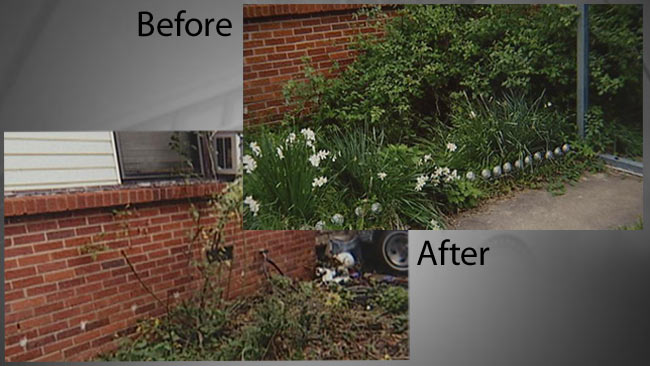
A Tulsa woman is suing the city’s code enforcement officers after she said they cut down her garden with no cause.

Denise Morrison said she has more than 100 plant varieties in her front and back yards and all of them are edible and have a purpose.

She knows which ones will treat arthritis, which will make your food spicy, which ones keep mosquitoes away and treat bug bites, but she said none of that matter to city inspectors.

Last August, Morrison’s front and back yards were filled with flowers in bloom, lemon, stevia, garlic chives, grapes, strawberries, apple mint, spearmint, peppermint, an apple tree, walnut tree, pecan trees and much more.

She got a letter from the city saying there had been a complaint about her yard.

She said she took pictures to meet with city inspectors, but they wouldn’t listen, so she invited them to her home so they could point out the problem areas.

“Everything, everything needs to go,” Morrison said they told her.

When she heard they wanted to cut it all down, she called police. The officer issued her a citation so it could be worked out in court.

She said she went to court on August 15, and the judge told them to come back in October. But the very next day, men were cutting down most of her plants.

They even cut down some of her trees -– ones that bore fruit and nuts -– and went up next to her house and basically removed everything in her front flower bed.

“I came back three days later, sat in my driveway, cried and left,” Morrison said.

Morrison said she had a problem at her last property with code enforcement, so this time, she read the ordinance, which says plants can’t be over 12-inches tall unless they’re used for human consumption. She made sure everything she grew could be eaten, which she told the inspectors.

“Every word out of their mouth was, ‘we don’t care,'” Morrison said.

Morrison said she used many of the plants that were destroyed to treat her diabetes, high-blood pressure and arthritis.

“Not only are the plants my livelihood, they’re my food and I was unemployed at the time and had no food left, no medicine left, and I didn’t have insurance,” Morrison said. “They took away my life and livelihood.”

Morrison finally went to court last week for the citation she got last August at another property. The garden portion of the citation was dismissed and she pleaded no contest to having an inoperable truck in her driveway.

She filed a civil rights lawsuit this week, accusing the inspectors of overstepping their authority.

The City of Tulsa said it hasn’t received the lawsuit yet, so it couldn’t comment.

Creating a Local Food System

This is re-posted from www.GRIID.org

In recent years there has been a growing interest amongst the general population to eat healthy and eat local. This interest has sparked more individuals to grow some of their own food, join a CSA (community supported agriculture), eat at restaurants that serve locally grown food, even learn how to preserve food.

However, these types of individual or market-drive responses are both inadequate and in some ways unsustainable. Individual actions are inadequate in that they tend to ignore the power of the existing agribusiness system and it is unsustainable, because much of the focus has been put on operating within the for-profit, market economy. Until eating healthy food is seen as a right and not as a commodity, we can never have a truly sustainable and just food system.

Once we have a principled framework, we need to then think about creating a local food system. Creating such a system means we need to do a local food assessment, do a food audit and create a food charter.

Assessing Our Food System

Assessing our food system involves two main components, coming to terms with what the capitalist agribusiness system looks like and an analysis of the local food realities. Our current food system is based on making money, growing mono-crops, using pesticides, government subsidies, contaminating the soil, the production of genetically modified crops and the exploitation of labor. Food in the current system means that food can be wasted and used as a tax write-off. Food in the current capitalist system is even used as a weapon, a theme that is explored in detail in Raj Patel’s book, Stuffed and Starved.

The current for-profit food system causes environmental destruction, causes poor health, contributes to global warming and is one of the main perpetrators of hunger.

Assessing the local food system requires a very similar understanding, but it also requires an assessment of the capacity to create a truly sustainable local system. Agribusiness dominates the food system in West Michigan, with the bulk of the food consumed here coming from far away. Most of the food consumed locally is also highly processed, coming from food brokers who have nothing to do with growing real food or the fast food industry, which does tremendous ecological and human health damage.

The capacity for a sustainable and just food system on the other hand is tremendous in West Michigan. We have great climate and lots of land for growing food. We have the benefit of living in the Great Lakes Water Basin, so access to water is not an issue. We have a significant amount of family owned farms and cities that can also be integral to food production. There are some good online resources for doing local food assessments, such as the Oakland Food System as well as an interesting document written by Kami Pothukuchi. 

Auditing the local food system

A food policy audit is a tool to help assess a community’s existing local food policy infrastructure. It helps facilitate a process to assess the strengths, gaps and opportunities in community food policies and identify priorities to improve the local food system.

Several communities have already developed their own auditing tools, one from the University of Virginia, which directly addressed food production, distribution, and access, as well as community activities that might help improve the food system.

Lastly, it might be useful to create a community food charter. A food charter is a statement of values and principles to guide a community’s food policies. In a charter, community members come together to develop a common mission for their food and agriculture systems. Each community’s charter would be unique to its area, thus what works for West Michigan may not work in other areas.

Here is an example of a food charter from Detroit   and another one from Toronto.

Making fruit wine with Jim & Tom

Last Saturday morning, Jim Glenn and Tom Grubb presented at OKT’s free wine making workshop and shared what is needed to make great wine. After the presentation, participants enjoyed a wine tasting of six different wines that Glenn and Grubb make.

This slideshow requires JavaScript.

Medical research has shown that, for most adults, drinking one glass of wine is good for the heart. Learning to make it yourself saves money, can produce a product that is chemical free and provides a way of preserving fruits and foraged dandelion and mulberries, which are both plentiful in our neighborhoods.

Free Wine Making Workshop headlines OKT Saturday events

Please come out ans support these OKT events Saturday June 9. You’ll be glad you did!

Make Your Own Fruit Wine 

9 a.m. – 12 p.m. ◊ Wine tasting, too! Jim Glenn and Tom Grubb will lead this session at 
Uptown Kitchen, 423 Norwood SE in Eastown.

South East Area Farmers’ Market

10 a.m. and 3 p.m. at Garfield Park  This small but satisfying market features chemical free produce that has been locally grown. South East Area Farmers’ Market Gerald R Ford Middle School market will commence after school gets out, Friday June 15 from 2 to 7 p.m.

No-hose Watering Options Your Food Garden

10 a.m. to noon at Garfield Park  during the farmers’ market

Crucial 2012 Farm Bill in the Senate this week

This is re-posted from GRIID.org

Editors NoteWe have been tracking Michigan Senator Stabenow’s role on this issue, since she is the Chair of the Senate Agriculture Committee. Food & Water Watch began a campaign last year to target Stabenow, but despite the thousands of letters and signatures Stabenow has not taken the position they had hoped. Below is the most recent update from Food & Water Watch on the 2012 Farm Bill.

This week, the Senate will start debating the next Farm Bill.

This is a critical moment for our food. The Farm Bill is a massive, far-reaching bill that touches almost every aspect of our food, from research funding to agricultural policy to farm subsidies. It is only renewed about once every 5 years. We need to make sure the 2012 Farm Bill moves our food system in the right direction.

In this new Farm Bill, we need to protect what we gained in the 2008 bill, and on that foundation, we need to begin building a food system where consumers have access to safe, healthy food and small farmers can compete in the market. But giant corporate interests are ready to block us every step of the way, using the Farm Bill to win bigger profits for themselves. That’s why we need our Senators to use the 2012 Farm Bill to fix our broken food system.

We have a choice: will this Farm Bill get our broken food system back on track, or if it will continue to favor corporate agriculture over small farmers and consumers? Every Senator will be key in making this choice, and they need to hear from you. Will you ask your Senator to help craft a Fair Farm Bill?

There are two key amendments you should urge your Senator to support:

  • Help small farmers compete in the marketplace with the packer ban amendment. Every day, family farms are going out of business, largely because they can’t compete against large corporations that control most aspects of our food supply. One damaging tactic that corporations use is holding onto their livestock, manipulating the price of meat in the markets and selling when it benefits them most. But small farmers can’t afford to wait for the right market conditions to sell their livestock. We need to ban meatpackers from owning livestock, to level the playing field for family farmers.
  • Protect the future of non-GE crops with the Tester amendment on seeds and breeds. More and more, agriculture research is controlled by corporations who are focused on expanding their genetically engineered crops. Every year farmers are left with fewer choices of seeds that are not genetically engineered. This amendment would guarantee that non-GE crops get a fair share of the research funds. At least 5% of research funding would have to go toward something other than genetically engineered crops.

Big corporations will be pushing for policies in the new Farm Bill that help their profit margin. Make sure your Senator knows that’s not what our country needs. 

It’s up to us to urge our Senators to protect small farmers, and consumers like you, in the Farm Bill, not pave the way for more industrialization of our food. If these policies are put in place, we could make progress toward a more equitable food system. Tell your Senators that you demand their strong leadership for a Fair Farm Bill.

ACT NOW: Farm Bill to the Senate Floor this Week!

Re-posted fron Healthy Food Action

Keep up the fight for a healthier Farm Bill, Senators need to hear from the health community as floor debate begins!

Any day now the Senate will begin floor debate of the Agriculture, Reform, Food and Jobs Act of 2012.

In a recent national poll, 78 percent of Americans said that making nutritious and healthy foods more affordable and accessible should be a top priority in the Farm Bill. Unfortunately, the current Senate version of the bill does not go far enough in achieving that goal and they need to hear from the health community before it’s too late!

Please contact your Senator today by sending the letter below and ask them to:

Resist any further cuts to conservation programs that support the clean air, water and soil in which our food is grown.

Restore funding for SNAP (current proposed cut is $4.49 billion) and support Hunger-Free Community Incentive Grants to increase purchases by SNAP customers at farmers markets and other healthy food retailers.

Vote for the Packer Ban (Grassley/Conrad amendment) to limit consolidation in the meat industry

Support farm to school initiatives that would make the purchasing of local foods easier.

Increase funding for the Community Food Projects Program and the Farmers Market and Local Food Promotion Program to include development of food hubs.

Support farmers of color, 20 percent of whom grow fruits and vegetables, by voting for the Udall Amendment to increase funding for the Outreach Assistance Program for Socially Disadvantaged Farmers and Ranchers, which will also now benefit Veteran farmers and ranchers.

In order to address your message to the appropriate recipient, we need to identify where you are.
Please enter your zip/postal code:

Opening day!

Southeast Area Farmers’ Market, June 2 at Garfield Park

This slideshow requires JavaScript.


Grand Rapids Press covers South East Area Farmers’ Market opening day

Food grower Robert Tolbert, Jr. plans to bring his produce back to the South East Area Farmers’ Market this year. The market’s new season is set to start June 2.

Grand Rapids farm market returns Saturday with focus on ‘food justice’

Published: Thursday, May 31, 2012, 11:33 AM

GRAND RAPIDS, MI – An annual effort to combat the “food deserts” of southeast Grand Rapids resumes Saturday. A new season for the South East Area Farmers’ Market is scheduled to begin 10 a.m. to 3 p.m. at Garfield Park, 2006 Jefferson St. SE.

A second weekly site will open 2-7 p.m. Fridays starting June 15 at Gerald R. Ford Middle School, 851 Madison Ave. SE.

About a handful of vendors are expected to sell chemical-free fruits and vegetables at each site, said Stelle Slootmaker, spokeswoman for the non-profit Our Kitchen Table, which will begin its second year of running the market in partnership with the Kent County Health Department and Greater Grand Rapids Food Systems Council.

“The goal is to bring the food into the neighborhoods that some have defined as ‘food deserts,’” she said. “We’re not about entrepreneurship or making profits. We’re about food justice.

“We believe food is a right, so we’re working to make that right accessible to the people of Grand Rapids. The industrial food system has let urban neighborhoods down.”

About 90 percent of the vendors are people who grow food in home gardens, and “we’re going to have a small start in June until our yard gardeners have some more produce growing,” Slootmaker said. The market tests the yards of home growers for lead and arsenic.

Farmers from Allendale, Sparta and Wayland also are expected to sell produce. The weekly vendor fee is $10.

More than 1,400 people visited the market last year. This year’s market will run at the Garfield site through Oct. 27, and at the Ford site until school resumes in September.

“We like the fact that we are a neighborhood-based market,” said Lisa Oliver-King, Our Kitchen Table’s executive director. “We’re smaller (than some other markets), which allows us to be more intimate with the customers.”

The market participates in WIC Project FRESH, Market FRESH and the Kent County WIC Pilot Project. Shoppers also can pay with cash, check, debit card or the Michigan Bridge Card. Customers using Bridge cards can take advantage of Double Up Food Bucks.

This entry was posted on June 2, 2012, in Press.