Industrial food system is the major cause of global warming

This article is from the Organic Consumers Association 12-22-2011 newsletter.

Voting with Our Farms and Forks Against Climate Catastrophe

Industrial agriculture, factory farms, genetically engineered crops and biofuels are now the leading cause of global warming and climate chaos.

To fully understand how corporate agribusiness is destroying climate stability, what this means for continued life on the planet, and why organic food and farming is the solution, read Will Allen and Ronnie Cummins’ new essay, “Voting with Our Farms and Forks Against Climate Catastrophe.”

OKT and market vendors ready to set course for next season

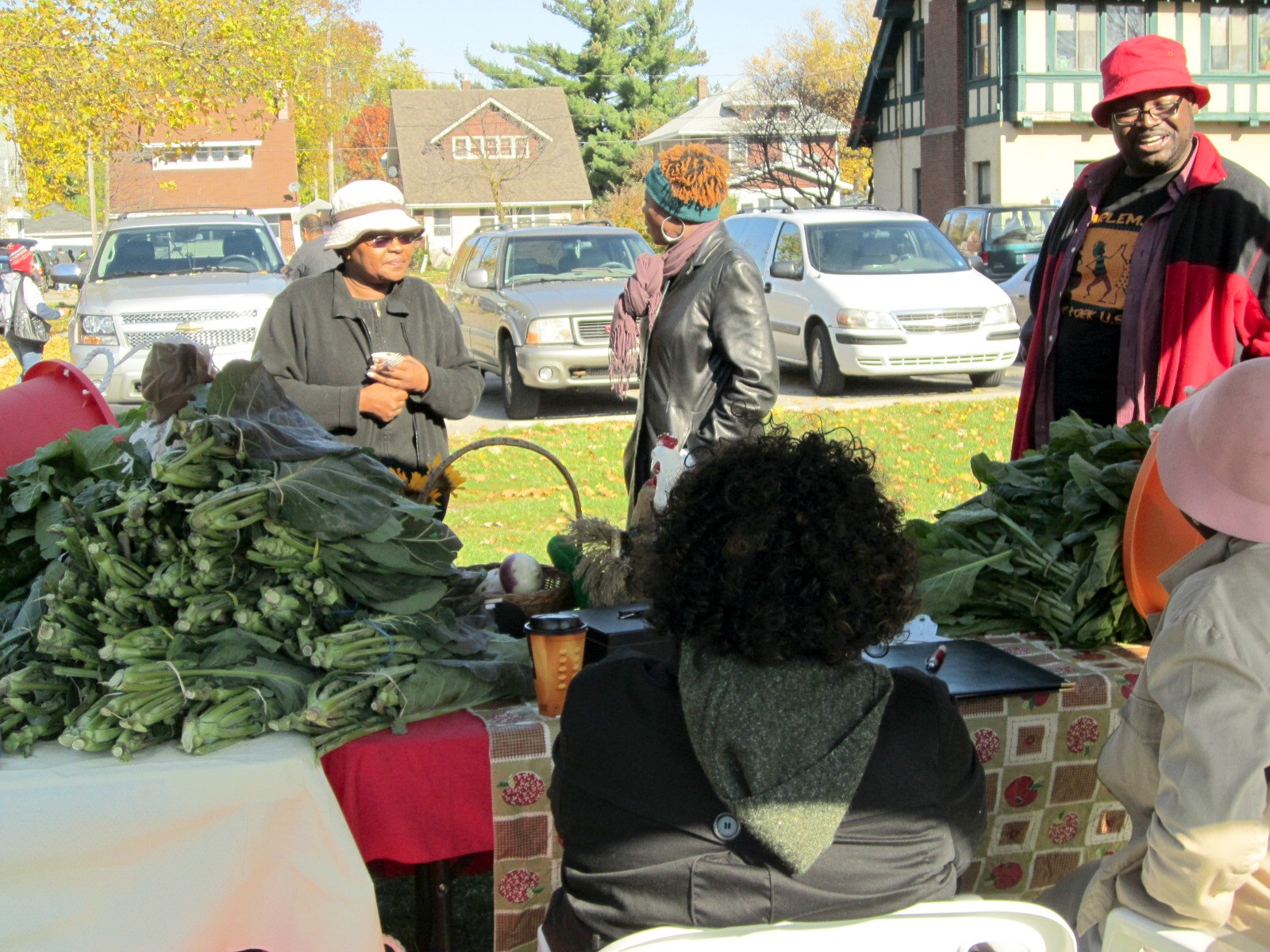
Last Friday, Our Kitchen Table hosted the vendors serving the Southeast Area Farmers’ Market for a 2011 market season review and 2012 season preview. At the beginning of last season, about a dozen farmers and growers indicated interest in selling at our two market locations. However, throughout the season, only a faithful three or four kept coming back regularly.

As managers of the markets, OKT hopes to attract more vendors who will commit to being at the markets week in and week out. Even though the Southeast Area Farmers’ Market has been running for quite a few years, roadblocks along the way have forced quite a few location changes. This has made it difficult for the market to gain momentum. The 2011 market season brought yet another location change. Growers expecting larger profits pulled out early on.

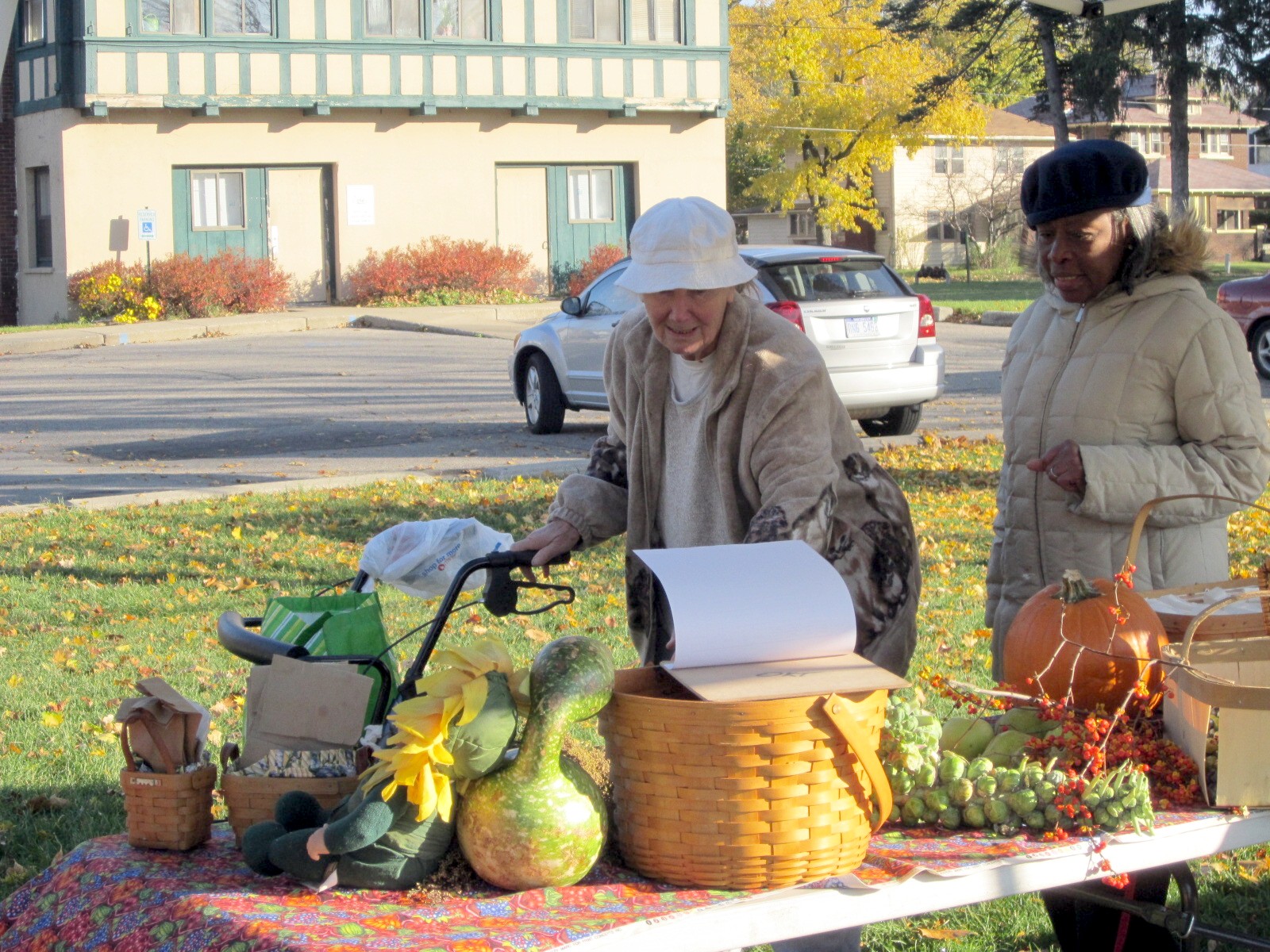
On the bright side, both the Garfield Park and Gerald R Ford School locations built a good community of customers by the end of the 2011 season. Even though vendor numbers were low, each week our customers found the produce they wanted to buy. The markets never sold out! These customers kept our faithful vendors coming back―and committed to returning next season. In fact, our vendors are now planning next year’s gardens to grow more of the specific foods that market customers will enjoy.

Would you like to see more variety and more vendors at the Southeast Area Farmers’ Market? The best way to make that happen is to shop more at the market. Our vendors are good folks who enjoy doing a good turn—but they also need to go home with a little money in their pockets!

What would you like vendors to sell at the Southeast Area Farmers’ Market next year? Contact OKT and let us know! OKTable1@gmail.com.

Indian tribe turns to tradition to fight diabetes

Arizona’s Tohono Nation hopes indigenous foods can help stop skyrocketing disease rate.

This post from MSNBC.com is By Robert Bazell and Linda Carroll, NBC News

The Tohono Indian Nation in south central Arizona is turning to old tribal ways to solve a modern health problem.

Over the past several decades, Type 2 diabeteshas exploded on the Tohono O’odham reservation, striking half of the adults living there. That’s compared to an 8.3 percent rate among adults in the U.S. overall, according to government estimates.

“The biggest health crisis here on the Nation is diabetes,” Jennie Becenti, manager of Healthy O’odham People Promotion, told NBC’s Robert Bazell. “We have the highest rate in the nation.”

The diabetes rate among the Tohono O’odham tribe has skyrocketed along with with changes in their diet, Becenti and others suspect. Instead of a traditional menu of tepary beans, cholla buds, prickly pear cactus, saguaro fruit, squash and corn — all native to the southwestern U.S. — Tohonos now tend to eat a typical American diet: processed and junk foods laden with carbohydrates, salt and fat.

While that kind of eating has led to bulging waistlines on many Americans, its impact seems to be magnified in a people who for generations lived on a parched land that had to be worked with vigor to just to produce a sparse harvest.

Becenti and others hope that by stirring interest in the indigenous diet that once powered the Tohono Nation, they might be able to beat this new metabolic enemy.

“I think as a tribal community, if we start to re-educate ourselves about the nutritional value of those foods that are natural and that grow naturally around here, then we’re going to make much greater headway in addressing diabetes and heart issues that are so prevalent with our people today,” said Ned Norris, chairman of the Tohono O’odham Nation.

Thrifty metabolism
There is research to suggest that the Tohonos might be on the right track. Studies looking at another Indian Nation, the Pimas, have compared the health and lifestyles of tribal members living in Arizona to those dwelling in Mexico.

Indian Nation looks to the past for healthier future. The hope is that by comparing people with roughly the same genetic make-up but greatly differing lifestyles, researchers will be able to figure out why the Pimas in Mexico suffer from fewer health problems, especially obesity, than those residing in the U.S.

Researchers suspect that the Pimas, like other desert-dwelling Indians may have developed genes that make their systems more “thrifty” when it comes to metabolizing food. A 2010 study in the Pimas underscored the impact of lifestyle on people with a thrifty metabolism. The study, published in the Journal of Clinical Endocrinology & Metabolism, found that Pimas living in the U.S. were more than six times as likely to develop insulin resistance as those living in Mexico. And that was true even after the researchers accounted for obesity, age and sex.

The researchers concluded that lifestyle differences were probably to blame for the higher incidence in Pimas dwelling in the U.S.

“These foods have meaning.” That’s something Terrol Dew Johnson can understand. He founded Tohono O’odham Community Action, (http://www.tocaonline.org/www.tocaonline.org/Home.html ) a group dedicated to bringing back the tribe’s traditions. “These foods have meaning,” Johnson told Bazell. “These foods are medicine to our bodies. These foods will keep us healthy.”

Perhaps just as important are the lifestyle changes that have led to more sedentary habits among the Tohono Nation. “We’ve gotten to the point where we don’t have to work hard to get our food,” he said. “In my parents’ and even in my grand parents’ time, they had to work literally every day and night to actually get food to eat. They were moving. They were exercising. Nowadays you can just drive up to a window and get food, medicine, anything.”

Even with scientific evidence in hand, those pushing for a change will still have obstacles to overcome – the biggest of which may be that many on the reservation seem to have lost a taste for the traditional foods.

“I’m 55 and in my whole lifetime, have not eaten much traditional food,” Norris told NBC. “And so, when I start eating it, I haven’t really acquired a taste for it. It’s not the regular pinto beans that you buy off the shelf or the baloney you buy in the grocery store. It’s going to take some time for people to re-acquire a taste for those traditional foods.”

One way to change people’s tastes is to put a new spin on the old foods. That’s what’s happening at the Desert Rain Café in Sells, Ariz., where chefs have found ways to make the traditional foods more interesting and appealing

Another way to combat the problem is to teach young people about the traditions that go with the foods, said Michael Enis, food and fitness coordinator for Tohono O’odham Community Action. Enis is in charge of a program that brings traditional foods into the local school once a week.

That approach has worked for Zade Arnold, a teen who has started a farm of his own.

“I like working with traditional farming foods and culture,” Arnold said. “You get to touch the same seeds that people got to touch thousands of years ago. We get to work with the same prayers and songs that people got to do hundreds and thousands of years ago.”

Robert Bazell is NBC’s chief science correspondent; Linda Carroll is a health and science contributor for msnbc.com

Want to grow a food garden? Come out to “Cook, Eat & Talk”

  • Who: Current and prospective food gardeners
  • What: Review 2011 and preview 2012 OKT garden program
  • When: 6 p.m. Tuesday Dec. 12
  • Where: Madison Square CRC
  • Why: Participate in OKT’s 2012 food garden program

With the holidays right around the corner, most people are not thinking about gardening. However, the women of Our Kitchen Table have been busy these past weeks setting things in motion for next year’s Southeast Area Farmers’ Market.

Our farmers’ market vendors include home gardeners as well as farmers. Next season, we hope to have even more home gardeners selling their produce at the markets.  On Tuesday Dec. 13, OKT is hosting a “Cook, Eat and Talk” session for both gardeners who participated in OKTs gardening program last growing season and neighbors who are interested in participating in 2012.

The OKT Food Diversity Project gardening program is open to residents living within the SECA, Baxter, Eastown and Garfield Park neighborhoods who are pregnant or have children under age six; have economic challenges; or have health challenges that can be addressed by growing their own food, for example, diabetes, lead poisoning, asthma or high blood pressure.

OKT resources include starter plants, compost, soil testing, containers and/or raised beds for growing and garden coaches as well as a host of educational opportunities. And, when the harvest comes in, these home growers can share their surplus with neighbors or sell their surplus at the Southeast Area Farmers’ Market. For more information, come to the “Cook, Eat and Talk” session or contact OKT, OKTable1@ gmail.com or 616-570-0218.

What’s your role in the Farmers’ Market?

Did you have a chance to get out and support your community farmers’ market? This past season, the Southeast Area Farmers’ Market locations tallied more than 1,400 residents in attendance. These market patrons did more than go home with healthy produce, they created two vibrant community spaces where neighbors got to know each other, children discovered “real” food, hundreds attended educational activities and all ages joined in for a little exercise via the Cupid Shuffle.

You see, the Southeast Area Farmers’ Market is about more than doing business. While it is important that our local farmers and growers go home with money in their pockets, it’s even more important that community comes out and grows their own food power.

Food power is waking up healthier in the morning so you can do better at work and school. Food power is knowing that eating certain fresh fruits and vegetables can mean fewer asthma attacks or less arthritis pain. Food power is a pregnant mother providing her unborn child nourishment that keeps her baby in the womb until term while building his or her highly intelligent brain. Food power is saying no to the unhealthy foods that make you overweight, damage your heart or cause diabetes. Food power is saying yes to whole foods that empower you to live life on your own terms―without the burden of added medical expenses.

Dancercise at the Gerald R Ford market location -- The Cupid Shuffle!

Please support your Southeast Area Farmers Market. Do you have suggestions for how Our Kitchen Table can make the market a better experience? Tell us! Are there any whole foods that you would like us to make available next season? Let us know! You can email us at OKTable1@gmail.com or call 616-570-0218. Or, stop by a Community Potluck and Cook-in. The Southeast Area Farmer’s Market is sponsoring these one Friday evening each month at Gerald R Ford Middle School. (Check back for dates and times.)

High Arsenic Levels In Apple Juice, Grape Juice Samples, Consumer Reports Finds

Note from OKT: Here’s is another good reason to buy organic or consume your fruit and vegetable servings as fresh produce rather than as commercial products (juice). The healthy beverage of choice for children and adults is water!

This article is reposted from The Huffington Post

Arsenic levels in some apple juice and grape juice samples tested higher than what’s considered safe, according to a study by Consumer Reports.

The study found that 10 percent of the sampled juices contained arsenic levels higher than the 10 parts per billion regulation for drinking water set by the Food and Drug Administration, according to a FOX News analysis of the results. Researchers measured 88 samples of apple and grape juices from New York, New Jersey and Connecticut.

A majority of the arsenic found in the samples was the inorganic or “harmful” kind.

Several apple juice brands had at least one sample with harmful arsenic levels, including Apple & Eve, Walmart’s Great Value, and Mott’s. Walgreens brand and Welch’s grape juices both contained more than the standard amount, according toConsumer Reports.

The concern lies in the harmful, chronic effects that high arsenic levels can have on younger children, many of whom already drink more juice than is recommended by doctors.

“The fear is that over time arsenic will accumulate in children’s bodies and raise their risk of cancerand other serious illnesses,” Dr. Urvashi Rangan told NBC’s “Today.”

Dr. Mehmet Oz came under fire from the FDA in September after he aired results of a similar study on his show. The FDA pointed out that Oz did not differentiate between organic (good) and inorganic (bad) arsenic, according to MSNBC.

In a recent letter, the FDA said it would consider adding guidelines for “an appropriate level” for inorganic arsenic in apple juice, but stopped short of setting a firm “tolerance level,” by saying that setting such levels “requires formal rulemaking and is a lengthy process” and that “tolerance levels are difficult to change in the future, in the event that our scientific understanding of an issue changes.”

15 food companies that serve you wood pulp

Reposted from The Street

The recent class-action lawsuit brought against Taco Bell raised questions about the quality of food many Americans eat each day.

Chief among those concerns is the use of cellulose (read: wood pulp), an extender whose use in a roster of food products, from crackers and ice creams to puddings and baked goods, is now being exposed. What you’re actually paying for — and consuming — may be surprising.

Cellulose is virgin wood pulp that has been processed and manufactured to different lengths for functionality, though use of it and its variant forms (cellulose gum, powdered cellulose, microcrystalline cellulose, etc.) is deemed safe for human consumption, according to the FDA, which regulates most food industry products. The government agency sets no limit on the amount of cellulose that can be used in food products meant for human consumption. The USDA, which regulates meats, has set a limit of 3.5% on the use of cellulose, since fiber in meat products cannot be recognized nutritionally.

“As commodity prices continue to rally and the cost of imported materials impacts earnings, we expect to see increasing use of surrogate products within food items. Cellulose is certainly in higher demand and we expect this to continue,” Michael A. Yoshikami, chief investment strategist at YCMNet Advisors, told TheStreet.

Manufacturers use cellulose in food as an extender, providing structure and reducing breakage, said Dan Inman, director of research and development at J. Rettenmaier USA, a company that supplies “organic” cellulose fibers for use in a variety of processed foods and meats meant for human and pet consumption, as well as for plastics, cleaning detergents, welding electrodes, pet litter, automotive brake pads, glue and reinforcing compounds, construction materials, roof coating, asphalt and even emulsion paints, among many other products.

Cellulose adds fiber to the food, which is good for people who do not get the recommended daily intake of fiber in their diets, Inman said. It also extends the shelf life of processed foods. Plus, cellulose’s water-absorbing properties can mimic fat, he said, allowing consumers to reduce their fat intake.

Perhaps most important to food processors is that cellulose is cheaper, he added, because “the fiber and water combination is less expensive than most other ingredients in the [food] product.”

Indeed, food producers save as much as 30% in ingredient costs by opting for cellulose as a filler or binder in processed foods, according to a source close to the processed food industry who spoke with TheStreet on the condition of anonymity.

Inman said that in his 30 years in the food science business, he’s seen “an amazing leap in terms of the applications of cellulose fiber and what you can do with it.” He said powdered cellulose has a bad reputation but that more of his customers are converting from things like oat or sugar cane fibers to cellulose because it is “snow white in color, bland and easy to work with.”

Most surprising, said Inman, is that he’s been able to remove as much as 50% of the fat from some cookies, biscuits, cakes and brownies by replacing it with powdered cellulose — but still end up with a very similar product in terms of taste and appearance.

“We’re only limited by our own imagination,” Inman toldTheStreet. “I would never have dreamed I could successfully put 18% fiber in a loaf of bread two years ago.”

He said cellulose is common in processed foods, often labeled as reduced-fat or high-fiber — products like breads, pancakes, crackers, pizza crusts, muffins, scrambled eggs, mashed potato mixes, and even cheesecake. Inman himself keeps a box of Wheat Thins Fiber Selects crackers, manufactured by Kraft Foods(KFT)’ Nabisco brand, at his desk, and snacks on them daily, clearly unmoved by the use of wood pulp in its ingredients.

“Most consumers would be shocked to find these types of filler products are used as substitutes for items that they believe are more pure,” Yoshikami said. “We would expect increased disclosure to follow increased use of cellulose and other filler products as the practice increases in frequency.”

To that end, TheStreet rounded up a list of popular foods that use cellulose. It’s by no means an exhaustive list, and we suggest consumers read food labels carefully. Still, click through the slideshow to find out if your favorite foods contain the “all-natural” wood pulp…


School food politics: What’s missing from the pizza-as-vegetable reporting

This article has been re-posted from the Friday, November 18, 2011edition of the Campaign for a Commercial Free Childhoods’ website.

Over the last couple of days, news outlets have been having a field day with a proposal from Congress that pizza sauce be considered a vegetable to qualify for the National School Lunch program. Headlines like this one were typical: “Is Pizza Sauce a Vegetable? Congress says Yes.” (The blogs were a tad more childish; for example LA Weekly: Congress to USDA: Pizza is So a Vegetable, Nah Nah Nah Nah Nah Nah.)

Most reporters, pressed for time and resources, tend to simplify complex stories and this was no exception. In one camp, so the stories went, are nutrition advocates who want healthier school meals, while Republicans are saying the feds shouldn’t be making such decisions. Here is one example of this framing of the story:

Conservatives in Congress say the federal government shouldn’t be telling children what to eat. They say requirements proposed by the President went too far, costing budget strapped schools too much. Local schools are caught in the middle.

Meanwhile, a few other reports did a better job of explaining the massive industry lobbying at play. (See, for example, Mother Jones’ Tom Philpottand Ed Bruske aka The Slow Cook, a hero in school food reporting.)

And while it was easy to compare this current craziness to the Reagan-era infamous “ketchup-is-a-vegetable” school lunch proposal (which did not pass), a bit more history, common sense, and political context is needed.

History: As much as the GOP would like to hang this on Obama, the effort to improve the quality of school meals dates back decades. In the mid 1990′s a huge battle was finally won to bring school nutrition in line with federal government’s own dietary advice. Since that time, science evolved and the standards needed updating. We also had the increasing problem of school vending loaded with soft drinks and candy. Then in 2004, (yes, during Bush) Congress authorized USDA to improve nutrition standards for school food. Finally at the request of USDA, the Institute of Medicine released a report in 2009 with very specific recommendations for USDA to follow – based on science.  So this process has been going on long before the current budget crisis and before Obama could get blamed for everything since the dawn of time. 

Common sense: If you stop and think about it, shouldn’t all food assistance programs (i.e., paid for with taxpayer dollars), at the very least, comply with the Dietary Guidelines for Americans, which is supposed to be based on the latest nutrition science? Recall the feds’ new MyPlate, released to much fanfare earlier this year, which recommends half the meal be comprised of fresh fruits and vegetables, not tater tots and pizza. 

Politics: As I said, a few reports did mention the lobbying by, for example, the American Frozen Food Institute. (Yes, there’s a trade group for frozen pizza, fries, and other school food abominations; and surprise, they arethrilled with this outcome.) But almost everyone missed the industry front group,”The Coalition for Sustainable Meal Programs.” (I could not make that one up.) And once again, we need more context.

This issue isn’t just that the processed food industry is upset with proposed improvements to school meals, it’s how they are flexing their political muscle to get their way. The critical (and most under-reported) part of this story is how Congress has hijacked the USDA regulatory process to do the food industry’s bidding.

Congress is putting language to undercut the USDA rules into its agriculture appropriations bill, a sneaky move used when you want something to pass outside of the usual legislative (and in this case regulatory) process.

You know things are bad politically when even USDA (seeming a tad shell-shocked) defended its proposed rules, telling the Washington Post that keeping pizza in schools won’t save any money, as the GOP claimed.

Let’s recap: Congress authorized USDA to improve the nutritional quality of school meals seven years ago. USDA commissioned a report from the IOM to help the agency do exactly that, based on the best available science. USDA subsequently proposed regulations, has taken public comment, and should then come out with final regulations. Civics 101 folks: Congress makes the laws and the executive branch carries them out. Agencies such as USDA are the experts, not Congress. That is why the legislature delegates authority to the agency in charge. But here, the food industry didn’t get what it wanted through the normal channels, so it went to Congress, which usurped the entire process. I’d love to see reporters asking: how the hell did that happen?

And let’s not forget this is supposed to be about our nation’s kids. Which raises one more interesting question: Where exactly is Michelle Obama and her Let’s Move campaign now? The First Lady has been a champion for improving school meals but of course she has no real power. The food industry has plenty. And while politicians curry favor with lobbyists, schoolchildren will pay the ultimate price, with their health.

Posted by Michele Simon at 10:38 AM