Brief Fox News coverage of Southeast Area Farmers’ Market

FOX 17 News stopped by the market Saturday. They showed a brief clip on their nightly news and posted this article on their website.

Farmers Market Season Almost Over

FOX 17 News10:49 p.m. EDT, October 22, 2011

 
Grand Rapids—

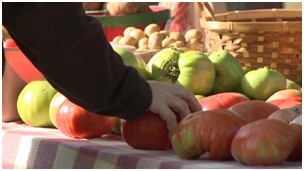
It’s about bringing the farmers market to the neighborhoods.  The Southeast Area Farmers Market was held out in Garfield Park, Saturday.

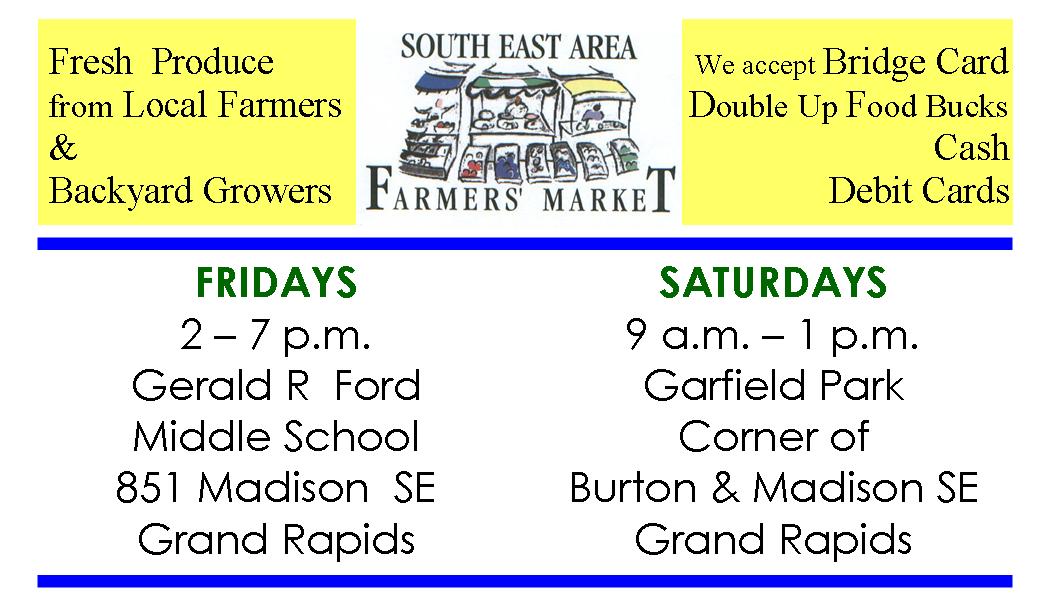
The small group of gardeners and growers is out in the community every week to sell produce and educate people on eating and growing fruits and veggies.  On Fridays, they are at Gerald Ford Middle School in Grand Rapids.  Then on Saturdays, they move to Garfield Park.

The season is coming to an end soon though. the last day will be Novemeber 12th.

This entry was posted on October 24, 2011, in Press.

Southeast Area Farmers’ Market Open ‘til Nov 12

The antioxidants that give fresh fruits and vegetables their brilliant colors protect the aging memory.

During the past few weeks, both Southeast Area Farmers’ Market locations have enjoyed heavy traffic. In fact, Market Manager, Yvonne Woodard, has had a real challenge closing the market on time—there are simply too many customers stopping by to shop for fresh, chemical free produce.

In addition, Our Kitchen Table, the group in charge of the market locations this year, just found out that that Senior Project Fresh Coupons do not expire until November 12. So, the markets will stay open an extra week to honor those coupons.

So often, we hear the message that children need to eat their vegetables. However, eating healthy is just as important for senior citizens. Your body’s basic nutrition requirements do not decrease as you get older. In fact, you may require even larger amounts of certain nutrients as you grow older.

The antioxidants that give fresh fruits and vegetables their brilliant colors protect the aging memory and may help prevent Alzheimer’s. The vitamins in found in fresh produce protect the heart. You’ve heard the joke about rabbits not needing glasses because they eat carrots. Well, it’s true! The vitamin A found in carrots helps protect your eyesight.  Other nutrients found in a wide range of produce also help prevent vision problems in older folks.

Asthma, diabetes, kidney disease and cancer can all be addressed through eating a diet that includes fresh fruits and vegetables. It may seem confusing to figure out how much you need of each fruit or vegetable to prevent each specific ailment that comes with aging. So, don’t. Just be sure to include many servings of fruits and vegetables in your diet every day.

Where’s the best place to get your fresh produce? The Southeast Area Farmers’ Market, of course!

  • Gerald R. Ford Middle School, Fridays 5 to 7 p.m.
  • Garfield Park, Saturdays 9 a.m. to 1 p.m.

“We are feeding our landfills as much as we are feeding our country.”

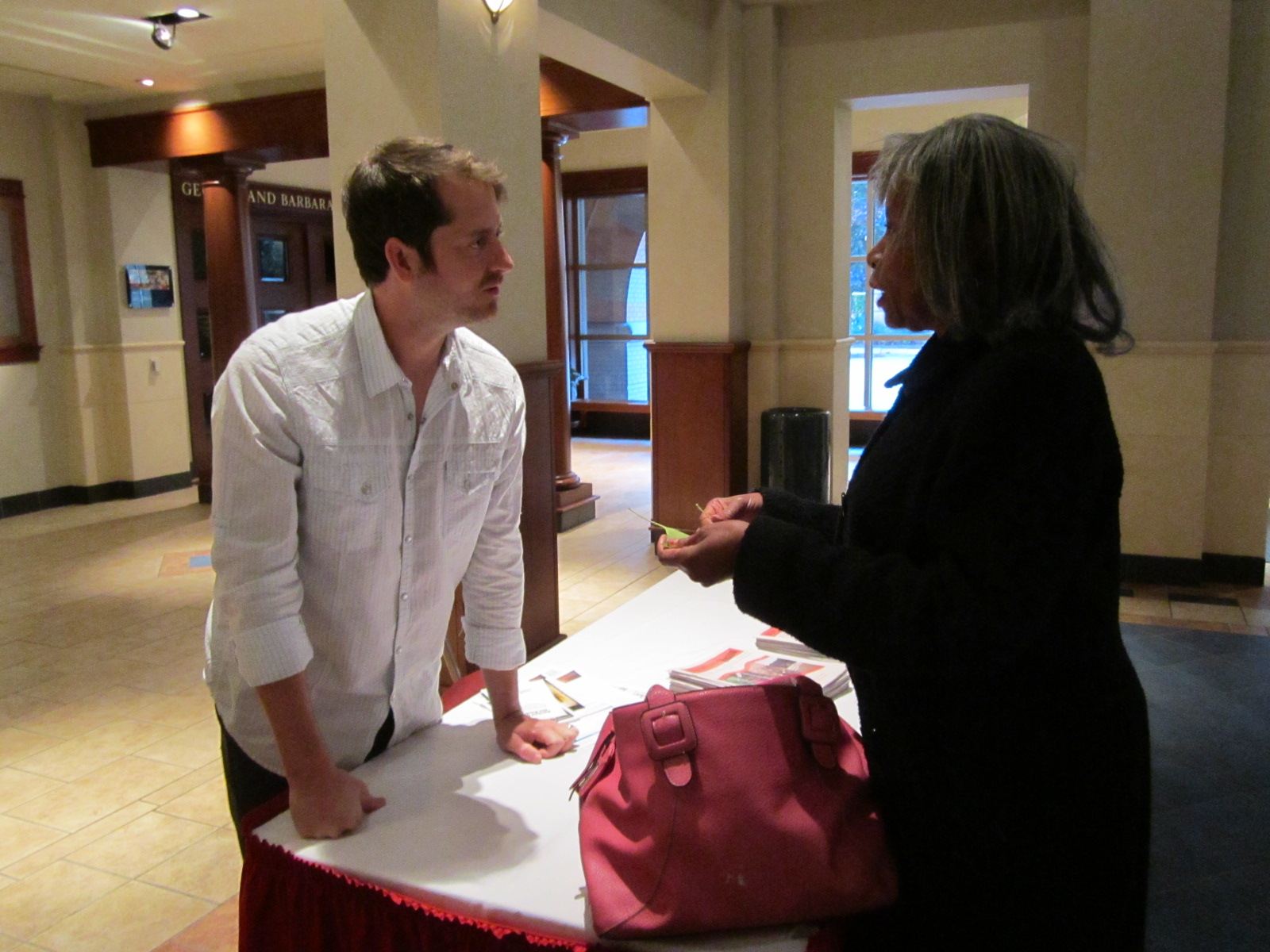
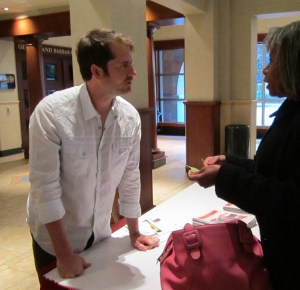
Timmy Vatterott of the film DIVE! talks to OKT's Yvonne Woodard about her work before the film

On Monday Oct. 17, Grand Valley State University screened the documentary film Dive! Living Off America’s Waste as part of its Sustainability Week activities. The film opens with a group of young adults helping themselves to gourmet cheeses, choice meat cuts, organic produce and brown eggs from their local Trader Joe’s dumpster. One dumpster diver quipped, “We have so much food that it’s a chore to take care of it the next day.”

In fact, with the help of a donated chest freezer, one family featured was able to amass enough meat to last a year within one week of dumpster diving.

The documentary goes on to illustrate just how much food is wasted by the current agriculture and food distribution systems. Here are some fast facts shared during the film:

  • Food makes up 20% of landfill waste.
  • 50% of food harvested never makes it into anyone’s stomach
  • 96 billion pounds of food is wasted in the US annually… enough to fill 453,257 box cars (a train that would stretch from LA to New York City and back again).
  • The US wastes 40 million acres of wheat every year – enough wheat to cover the whole state of Oklahoma.
  • The food wasted in the US could feed all of Haiti for five years
  • 35.5 million people in the US don’t know where their next meals coming from. 11 million are hungry. They simply aren’t going to eat today.

The film narrates the tale of the dumpster divers’ efforts to get Trader Joe’s to donate edible food waste to local food pantries. After Trader Joe’s refuses to engage in conversation about the matter, the dumpster divers organize to deliver truckloads of dumpstered food to a very appreciative LA food pantry on New Year’s Eve.

While Trader Joe’s and other chain supermarkets do donate some “waste” foods to food pantries, it seems these items are usually breads or packaged dry goods that are simply past their stamped expiration dates. Most produce, meat, eggs and the other nutritious components of a healthy diet are simply trashed. Reasons cited were logistics and cost.

Our current system of food delivery lives for profits, not people – wasting food is simply more profitable than feeding the hungry. One of the dumpster divers in the film made the astute observation, “We weren’t always like this. There was a time when food was much more than a commodity. Food was life itself. Food was community.”
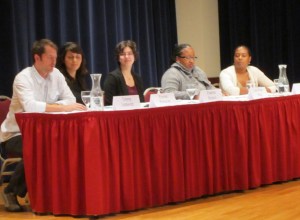
When Vatterott heard Grand Rapids prohibited laying hens, he exclaimed, "There's an ordinance against chickens here? Down with the chicken laws!"

In conclusion, the film asks its audience to join its Eat Trash Campaign, a project aimed at convincing more supermarkets to donate edible foods to pantries rather than dumping them.

Panel reacts
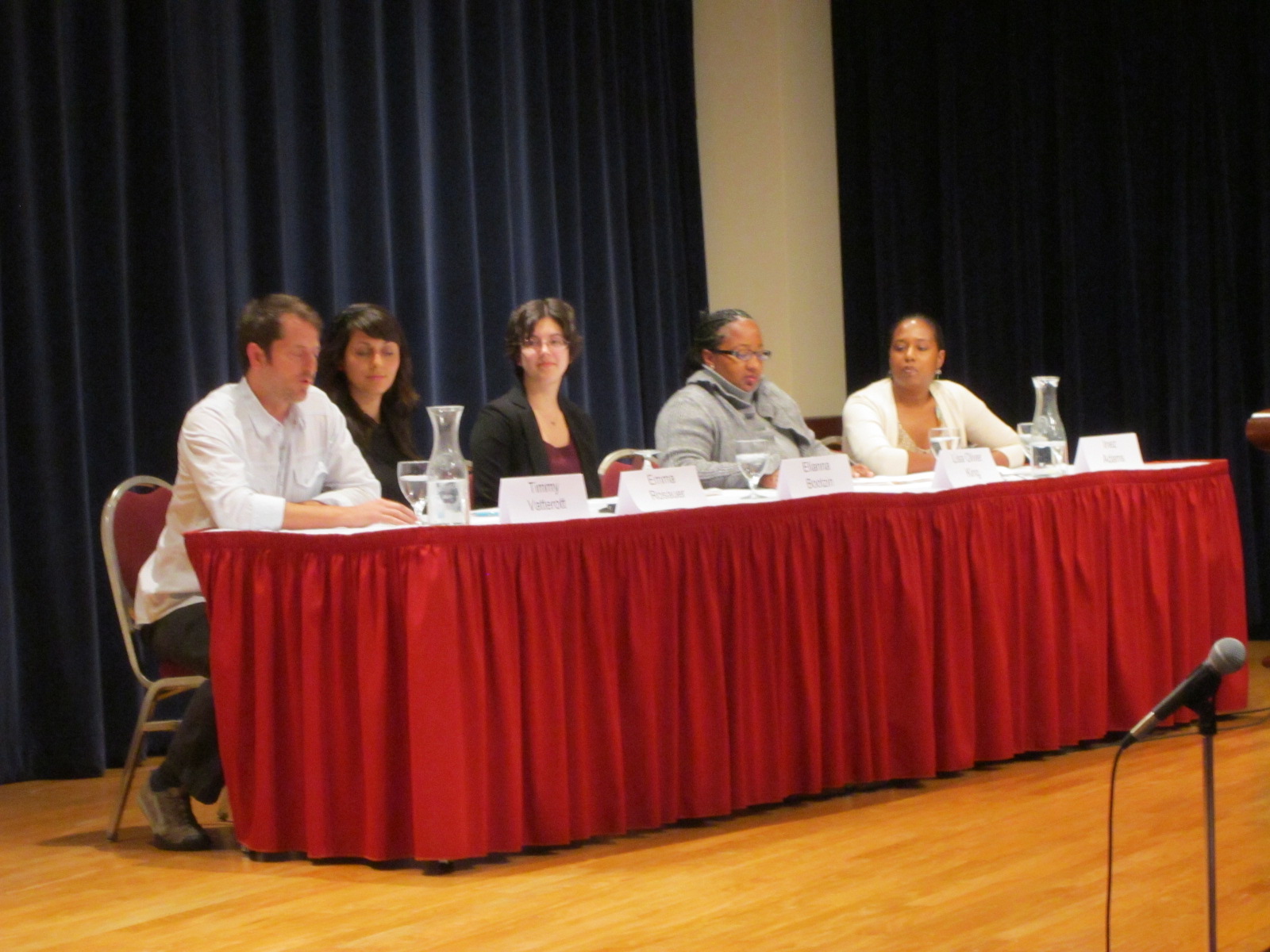
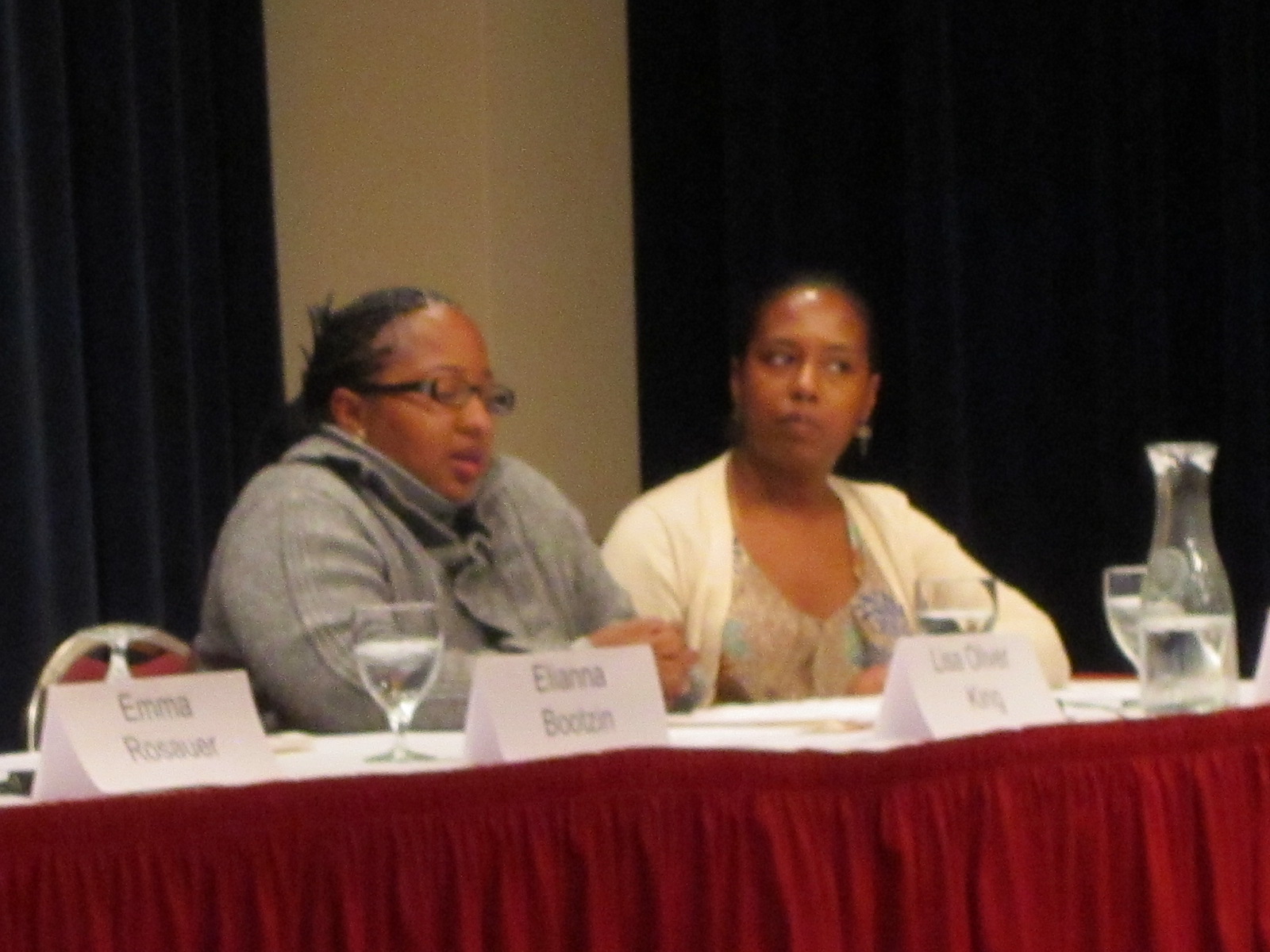
After the film, two women from Our Kitchen Table, executive director Lisa Oliver King and evaluater Inez Adams, were part of a panel that discussed the film. The panel also included Elianna Bootzin of Feeding America West Michigan,Emma Rosauer of Access of West Michigan and Timothy Vatterott, Dive’s producer and composer. Cynthia Price, the panel moderator, asked the panel about their reactions to the film and their thoughts on our “insane, corporate controlled food system.”

Rosauer shared that the film resonated with her and her agency’s work, especially these days in West Michigan when more and more families are turning to food pantries to stave off hunger. She shared that one in four Kent County children experiences hunger,  “People who used to give to food pantries now they are receiving from them.”

Good Samaritan legislation initiated under the Clinton administration legally protects businesses that donate food, but that many in the food industry are not aware of the legislation. Rosauer made a call out for volunteers to build relationships with their local grocer and arrange pick up and distribution of dumpster-destined food to local food pantries.

Bootzin explained the work of Feeding America and went on to say that the amount of food waste is increasing, raising from 30% in 1974 to 40% 2009.

In her reaction to the film, Inez Adams, OKT, commented, “The movie said we don’t value food. I think we do value it but we value it as a commodity and not as a right. Lots of Americans think only certain people are entitled to food. ‘They don’t have a job so they don’t deserve food.’ ‘I work hard so I can feed my family.’ The discussion needs to change from ‘food is an entitlement if you are a productive citizen’ to food is a human right.”
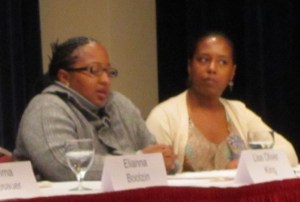
Lisa Oliver King talked about OKT’s work in providing resources to people who wanted to build their own food system and food security through growing and sharing food and foraging within their own neighborhoods.  She encouraged the audience to approach the city and demand that fruit and nut trees be planted ion the parks and greenways.

“We are talking about preserving nature so that it not only pleases us aesthetically but provides for us nutritionally,” she said.  She also asked, “How do people define hunger?” Much emphasis is put on feeding belies rather than preventing malnutrition through providing people nutritious foods. “ People in Grand Rapids have access to food pantries that provide substandard, high calorie, high fat, high sugar, high sodium and nutrient deficient food.”

Oliver King also mentioned the media-driven mindset that makes people crave meat at every meal when a vegetable and grain based diet could feed them just as adequately, at a lower cost and with less impact upon the environment. She called for citizens to demand local policy changes that would not only encourage sharing dumpster-destined foods but also make it easier for people to grow their own food, compost food scraps and keep laying hens.

Vatterott agreed heartily. “That really empowers people to understand where food comes from. That places a value on it and strengthens community bonds,” he said. “I really admire the work you do. That kinds of thing really needs to happen, people taking ownership of their food.”

In all, the message of the film Dive! and the campaign that it promotes are good steps towards recognizing the prevalence of food waste here in the US and in other wealthy nations. However, there was no critical conversation about the economic system that perpetuates this kind of waste and injustice—the same economic system that fails working class and lower class people when it comes to health care, housing, education and in the courts.
Bicycle Tour of Fruit and Nut Trees a fun and informative ride

Though far from perfect in appearance, apples foraged from untended urban trees have a delightful flavor unmatched by most store-bought fruit.

Last Saturday, a dozen or so folks met in Eastown for OKT’s Bicycle Tour of Fruit and Nut Trees. Sunny skies, comfortable temperatures and a brisk breeze made for a lively, enjoyable ride.

Seasoned cyclist, Josh McBryde, planned the route and led the tour across Wealthy Street and over to Cherry Park. On the way there, tree expert, Laura Cassaletto, pointed out various trees and their edible uses, bringing the group to its first stop alongside an old apple tree, full of ripe fruit, outside of a two-flat apartment house.

After assuring us that she had gotten permission from the property’s owner, Laura invited everyone in the group to pick and enjoy an apple. She mentioned that the tree’s owner had told her that the apples were not good for eating as they had not been sprayed with pesticides. The group broke into laughter. And, with a close eye for worms,we took bites of the “imperfect” fruit. All were amazed at the incredible flavor these small, old fashioned, untended apples offered.

Laura recommended foraging such untended apple trees around the city. She likes to use them for applesauce. When the apples are put through the food mill, it’s easy to pick out any critters that might have eaten their way inside the fruit.

In Cherry Park, the group identified different varieties of nut trees, scavenged nuts from off the ground and even cracked and ate a few. Heading back across the neighborhood, a stop near Diamond and Cherry yielded a look at mulberry trees (already done fruiting) as well as locust trees. Seasoned urban forager, Richa, shared that the spring flowers from the locust tree are delicious. (At the conclusion of the tour, he shared a loaf of his homemade acorn bread).

Crab apples, yes.

Along the route, Laura pointed out that ornamental crab apple trees have edible fruit. She explained that crab apple trees are related to the rose, and like the rose, are edible. High in vitamin C, their edible fruit can be identified by the “crown” at the bottom of the fruit. While fruit with a crown is edible, she warned not to forage white fruit and berries, “White is the color of death.”

She also advised us to try new foraged fruits and nuts in small quantities to see how our own body reacts to it. Because trees, like people, are individuals, the fruits and berries eaten from them have differences in flavor and in how they align with each individual person’s digestive system.

Bittersweet, no.

In Wilcox Park, the group snacked on plump wild grapes and tried edible, though bitter, viburnum berries. We also learned that the colorful bittersweet nearby was just for decoration and not an edible.  The group ended its tour at Aquinas College, where Josh handed out tree identification maps the college provides to visitors. We stopped to gather, crack and snack on beech nuts beneath an elephantine beech tree.

A 16-year-old on the tour remarked, “It was so cool to learn that if I had to, I could get enough to eat from nature.” Cool indeed. Food is growing all around us. Let’s learn to appreciate it!

OKT to join panel after DIVE screening Monday

DIVE! Living Off America’s Waste Screening and Panel Discussion
Monday, Oct 17 at 6pm
Loosemore Auditorium, Downtown Pew Campus , GVSU
 Grand Valley State University is screening the documentary, Dive! Living off America’s Waste as part of the GVSU Campus Sustainability Week activities.
         Two OKT team members, Lisa Oliver King and Inez Adams, will take part in the panel discussion after the screening. Other panelists include:
  • Timothy Vatterott of the film DIVE! Living Off of America’s Waste
  • Elianna Bootzin of Feeding America West Michigan
  • Emma Rosauer of Access of West Michigan
        The screening is free and open to the public.

“Greens Cook-off and Fried Green Tomato Festival” to showcase best greens and green tomato dishes

The first weekend of November, both Southeast Area Farmer’s Market locations will host a “Greens Cook-off and Fried Green Tomato Festival” Do you have a family collard or turnip greens recipe that beats all? Are your fried green tomatoes to die for? Then come on down and get the recognition you deserve.

The event sponsor, Our Kitchen Table, will take place: either November during regular market hours:

  • 5 – 7 p.m. Friday November 4 at Gerald R. Ford Middle School market.
  •  9 a.m. to 1 p.m.Saturday November 5 at Garfield Park market.

Chef Nancy Rutledge will be our volunteer in charge. You may have met Nancy last summer at the Gerald R. Ford Middle School market when she shared samples of a tasty, healthy veggie stir fry, coleslaw and fruit.

OKT will ask all Greens Cook-off entries to bring along their recipes so we can compile and share them with our neighbors who shop at the Southeast Area Farmers Markets next season. For information on registering the Greens’ Cook-off, email oktable1@gmail.com or call 616-570-0218.

Are the recent cuts to welfare and food stamps impacting your family, friends or neighbors? You can still use up your Project Fresh, Senior Project Fresh, WIC or Kent County Health Department coupons for produce at either Southeast Area Farmers’ Market location. We also accept EBT/Bridge Cards and participate in the Double Up Food Bucks program.

If you grow your own food or would like to learn how, talk to one of the women from OKT at the market. We are recruiting home growers to sell their produce at both market locations. And, we have resources for neighbors who want to start growing their own food.

Both markets are open through November 12, so come on down!

Slavery: A 21st Century Evil: Food chain slaves

This post is from Aljazeera. You can watch the 25-minute video episode here.

In the opening episode of Slavery: A 21st Century Evil, Al Jazeera’s Rageh Omaar investigates food chain slavery, considered the easiest form of slavery to stamp out, in the US.

The US has been leading the global fight against modern slavery. But, according to conservative estimates, there are between 40,000 and 50,000 slaves in the US today.

So in this episode, Rageh questions why a nation built on the abolition of slavery – a country that had to go through a painful civil war to formally bring an end to slavery – is failing to address the problem inside its own borders.

The investigation begins in the poor villages of Thailand, where agents for the US slave masters trick desperate peasants with promises of well-paid jobs abroad.

But far from fulfilling their American dream, many end up in slave labour farms in Hawaii, California and Florida – unable to return home and working to pay off the debts they incurred in the pursuit of a better life for themselves and their families.

Produce means more than Fruits and Vegetables

In addition to providing Vitamins A, C, K and folate, parsley is a chemoprotective food that can help neutralize some carcinogens.

When shoppers come to the Southeast Area Farmer’s Market, they love stocking up on in-season fruits and vegetables. Tomatoes, squash, collards, kale are still in season while Michigan apples and peaches are making a popular appearance. But that’s not all! At least two of the markets’ regular vendors sell herbs every week.

While many people think of herbs as simply an added dash of flavor, fresh, chemical free herbs, like those sold at the market, actually offer health benefits as well. 

Cut salt without cutting flavor

Folks with high blood pressure, heart trouble or edema often have trouble saying no to salty foods. Most of the salt we eat comes from fast food, packaged foods and canned foods, like soup. The first step to controlling salt in the diet is to eat more foods that you prepare for yourself from scratch. The next step is to use tasty herbs to add flavor to your dishes. Add a little fresh basil, rosemary, chives or dill!

Add vitamins, minerals and antioxidants to your diet

Basil gives you Vitamins A and K, calcium and iron. Peppermint leaves not only aid digestion, but, as shown in new studies, help protect against cancer and fight off bacteria. Dill is a another source of calcium that also helps protect you from cancer-causing  benzopyrene found in cigarette smoke, charcoal grill smoke and the smoke produced by trash incinerators. The list goes on! Chances are scientists haven’t even discovered all the benefits that fresh herbs bring your way.

While fresh herbs may be out of season soon, you can stock up on these and the other herbs our vendors sell two ways.

  • Dry the herbs by hanging then upside down in a place away from fresh sunlight. Package in an airtight container or freezer bag.
  • Chop fresh herbs and mix them with olive oil. Freeze the mixture in an ice cube tray. Remove the cubes to a freezer bag for individual use as needed.

Both Southeast Area Farmers’ Market locations are open through Nov. 6.

  • Fridays 5 to 7 p.m.  At Gerald R. Ford Middle School.
  • Saturdays 9 a.m. to 1 p.m. at Garfield Park.

You can use your Project Fresh, Senior Project Fresh, WIC or Kent County Health Department coupons for produce at either Southeast Area Farmers’ Market location. We also accept EBT/Bridge Cards and participate in the Double Up Food Bucks program.

Hoophouse and Greenhouse Workshop shared practical, DIY instruction

The OKT Team and friends with workshop presenter, Taylor Voss

On Saturday October 1, Our Kitchen Table held a DIY Greenhouse and Hoop house workshop in the Eastown neighborhood, one of the four target neighborhoods of our Food Diversity Project. Urban gardener, Taylor Voss, led the workshop in his own backyard, where he has a small greenhouse, hoophouse and cold frame unit extending his growing season.

The greenhouse was constructed of cast-off storm windows that Voss foraged from area garage sales. He used hinges to fasten them together and calked the seams between the windows. In the rear, an open space keeps the greenhouse ventilated. He fashioned the front window of the unit as a sliding door so he has easy access inside and out.

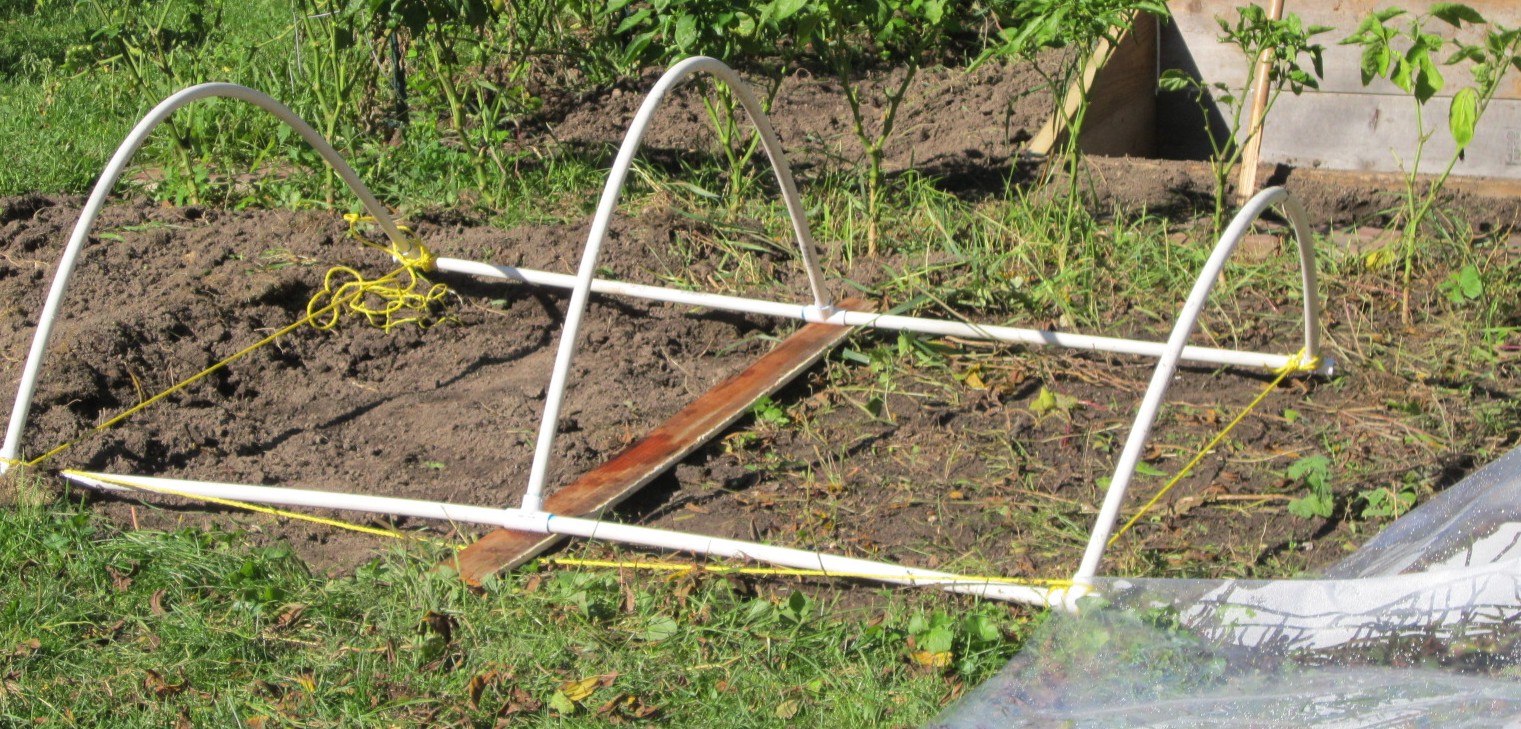
Approximately six feet long, three feet high and four feet wide, the hoophouse was of even simpler construction. Voss used PVC plumbing pipe to form a frame, which he bowed by tying cords to hold the tension. Over this, he laid plastic sheeting, they type used to cover windows in winter. Both of these inexpensive materials were from the big-box hardware store. Because of its light weight and simple construction, Voss can move it on and off the garden bed when he needs to water or pick produce. He did say that once it snows, this small hoop house would cave in. He plans on using it to extend the fall growing season for his collards. In the spring, he will set it back up to get starter plants going earlier.

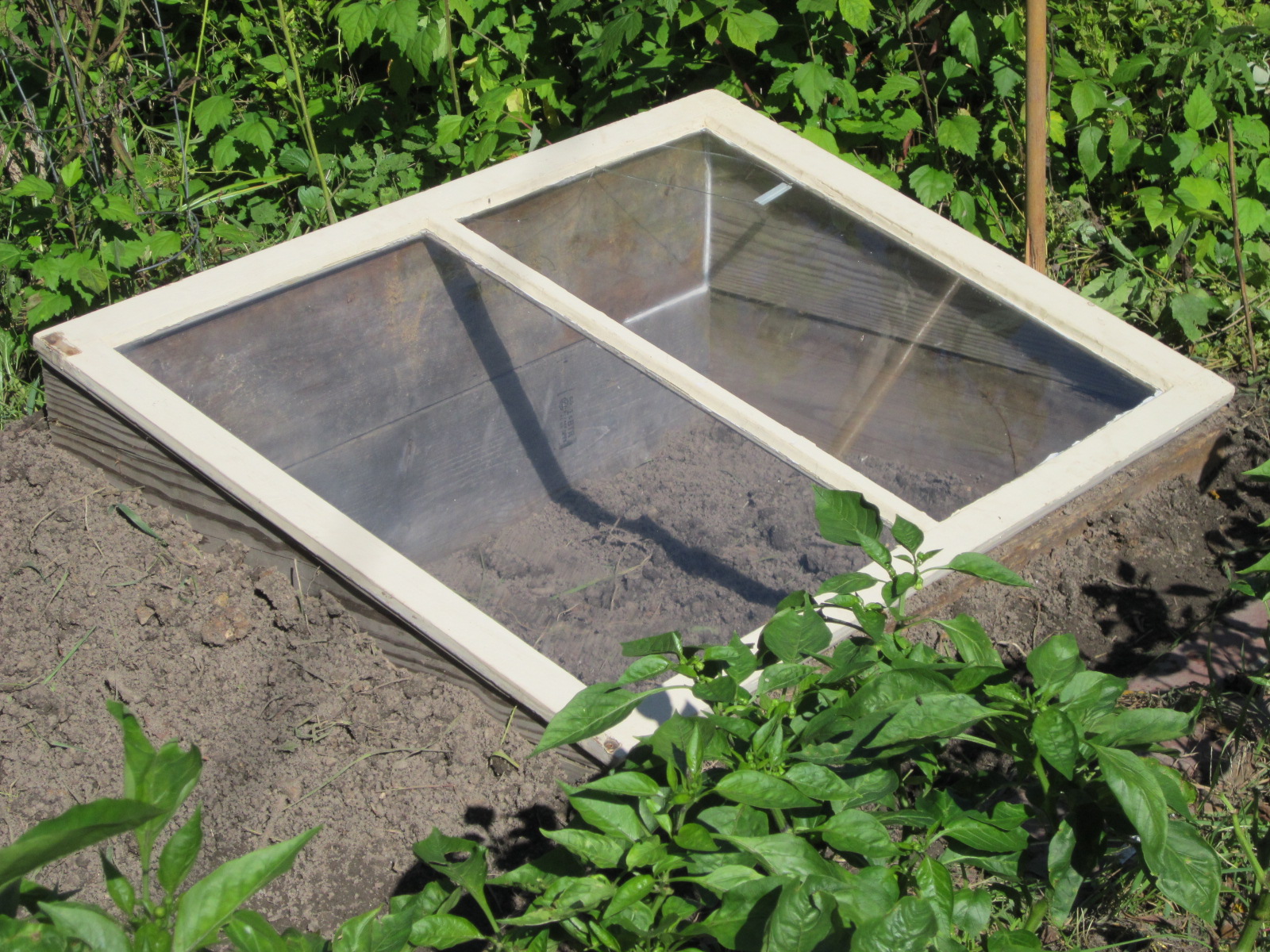
Voss’ cold frame was also built from a cast-off storm window. He attached the window with hinges to a wood board base with slanted sides that welcomed in more sunlight. His cold frame is sunk about six inches in the ground. Cold frames can also be easily placed atop raised beds.

To prevent plants from freezing when temperatures drop, Voss places plastic jugs filled with water in particularly sunny spots within the cold frame and greenhouse. These absorb heat during the day and keep the structures warmer through the night.

With a few tools, a wee bit of instruction and very little cost, any urban gardeners can construct similar greenhouses, hoophouses and cold frames to extend their food growing season. Even so, these projects might seem a bit intimidating. The OKT team hopes to provide the resources and support to encourage qualified urban gardeners in our target areas to engage in these types of projects. If you live in Eastown, SECA, Baxter or Garfield Park neighborhood or if you have small children, are pregnant, have economic or health challenges that can be addressed by growing your own food, drop OKT an email, oktable1@gmail.com, or give us a call, 616-570-0218!

Southeast Area Farmers’ Market Vendor Spotlight

One of the challenged of getting the new  Southeast Area Farmer’s Market locations off the ground has been recruiting vendors to sell chemical free produce. Several vendors have stepped forward to make these markets a success this past summer.  Let’s shine the spotlight on two of them today.

Robert Tolbert Jr. perfects his display of fresh, family grown produce.

Robert Tolbert Sr. has come to both market locations all season long. Mr. Tolbert grows his produce in a plot in the Hillcrest Community Garden and at a garden on his own property. Last Saturday at Garfield Park, his wife, Jeannie, and son, Robert Jr. were on hand selling the bountiful turnips, collard greens, tomatoes, peppers, giant green beans, corn and peppers.

Jeannie stays out of the garden but helps out by washing, bundling and displaying the crop at market—and she does a beautiful job. “My husband, he loves to see things grow,” Mrs. Tolbert says.

“Fresh grown produce is hearty and yummy,” says Mrs. Kass.

The Kasses bring produce from their half-acre, chemical free garden in Kent City. Bob Kass grew up in the Garfield Park neighborhood so enjoys getting back to his roots, so to speak. “We got more than we can eat so we’ve been giving produce away to the food pantry. If we sell some, too, then we can replant next year,” Mr. Kass says.

Last week, the Kasses brought several varieties of Kale, tomatoes, sweet corn, apples and herbs to market. “Fresh grown produce is hearty and yummy,” says Mrs. Kass. “I can eat as much of it as I want and it doesn’t matter—I  lost 80 pounds by eating fruits and vegetables instead of other fattening foods!“

Just a reminder

You can use your Project Fresh, Senior Project Fresh, WIC or Kent County Health Department coupons for produce at either Southeast Area Farmers’ Market location. We also accept EBT/Bridge Cards and participate in the Double Up Food Bucks program. The market locations are:

  • Fridays 5 to 7 p.m.  At Gerald R. Ford Middle School.
  • Saturdays 9 a.m. to 1 p.m. at Garfield Park.

Both Southeast Area Farmers’ Market locations are open through Nov. 6.