Southeast Area Farmers’ Market: The harvest is truly bountiful!

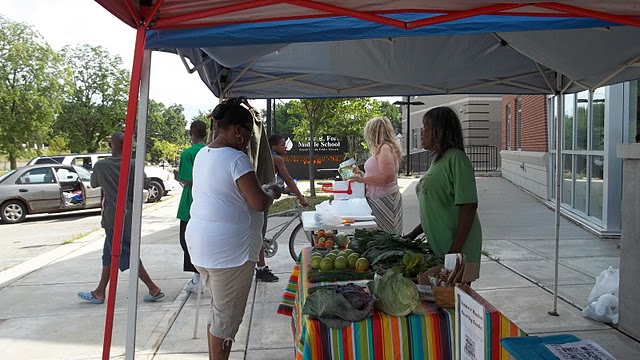
Summer’s almost over but that doesn’t mean you can’t find nutritious locally grown produce in your neighborhood. Both Southeast Area Farmers Market locations will be open through the end of October. Our backyard growers and farmers are at that point in their growing season when the harvest is truly bountiful.

If you and your family live in theGerald R FordMiddle School neighborhood, back to school can mean back to healthy eating. Now open from5to7 p.m.on Fridays, the market will provide the kinds of foods our kids need to be healthy, study hard and do well in school.

Did you know eating nutritious foods, including fresh fruits and vegetables, improves kids’ academic performance at school? On the other hand, fast food, junk food and highly processed convenience foods (think anything that comes  in a colorful factory-made package) can contribute to attention deficit disorder, poor sleep habits, being overweight and a sluggish immune system–more allergies, colds and flu!

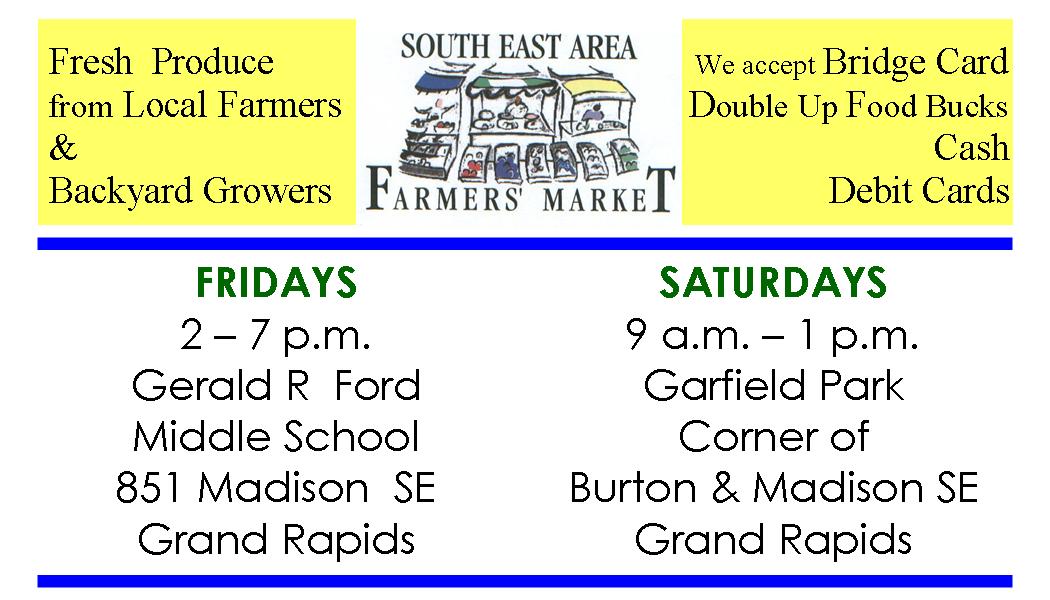
The Southeast Area Farmers’ Market has two locations to serve you!

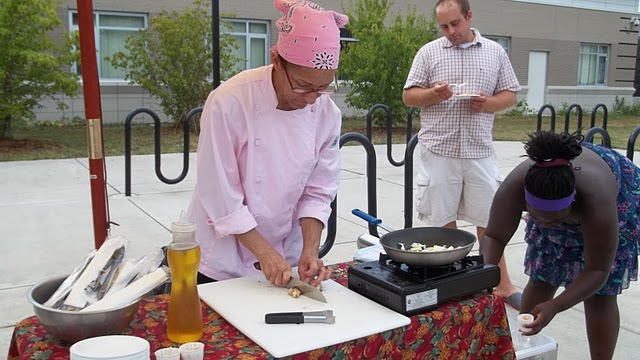
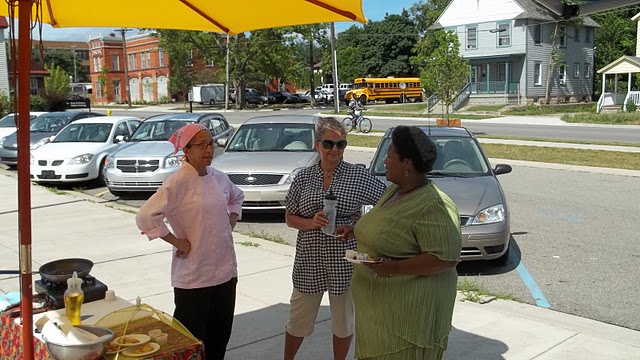
  • Gerald R.Ford Middle School, 851 Madison, SE, Fridays, 5 – 7 p.m. Our Kitchen Table will be hosting a free workshop in how to mix your own inexpensive, non-toxic garden fertilizers and insect repellants.
  • Garfield Park, corner of Madison Avenue andBurtonStreet SE, Saturdays 9 a.m. to 2 p.m.

Both of our market locations accept cash, debit cards, EBT, Project Fresh and Kent County Health Department coupons. If you buy with your EBT card, you receive $2 in free Double Up Food Bucks for every $2 you spend, up to $20 each time you visit!

Food Charity or Food Justice? Reporting on Hunger in Grand Rapids

This is a re-post from the 9-7-2011 edition of GRIID

Food Charity or Food Justice? Reporting on Hunger in Grand Rapids

SEPTEMBER 7, 2011
by Jeff Smith (GRIID)


Yesterday, a new project between the Grand Rapids Press and The Rapidian began in what they are calling the Grand Rapids Hunger Challenge.

Hunger Challenge Week is September 14 – 20, a these two local news entities decided that as a way of making people aware of hunger and food insecurity they would have a writer from each news outlet try to live off of a $30.59 a week food budget.

The Day 1 article on MLive talks about how both of the writers went shopping for food with their limited budget. The Press writer talked about being at a birthday party and not being able to eat ice cream and cake, while The Rapidian writer talks about how she was once herself on food assistance.

The Rapidian also has an opinion piece that has some useful statistics on hunger and the number of people who rely on food stamps, but the article, like the ones by the writers taking the “hunger challenge” do little to really address hunger and poverty in West Michigan.

Having people who have a certain level of class privilege try to follow a budget of people who are truly poor is a bit disingenuous. These kinds of exercises are like the “poverty simulations” that charity groups put on or the Planned Famines that high school church groups organize so that privileged kids can somehow understand what starving and malnourished children feel like. However, these attempts to sensitize people do not ask the fundamental and important reasons for why people in the richest nation in the world are going hungry.

Both the Press article and the Rapidian pieces never address the causes of hunger in the US. Having their writers try to live on a fixed food budget tends to put the emphasis on personal responsibility instead of systemic factors.

One of the oldest anti-hunger education organizations in the US is Food First. Food First has been working on both dispelling the myths about hunger and providing analysis of both food insecurity and how to actively organize against it. Food First looks at Food Deserts and how large monopoly grocery chains are buying up land in urban areas with little access to real food with their claim to “serving” poor communities.

Food First also addresses issues of economic and racial inequality and how that impacts who has access to food and what kind of food people have access to. In an excellentreport on youth and food justice, the report looks at how there is a relationship to Jim Crow policies and the kind of food system we have in the US.

There is also a growing movement in the US that is advocating food justice, not food pantries. Food justice involves more urban food production, access to land for people to grow more of their own food, limitations on fast food restaurants being built in poor communities, community kitchens, Community Supported Agriculture and the efforts to challenge the grossly unjust food system we have in the US that is publicly funded through the Farm Bill.

In fact, Food and Water Watch is doing a national campaign to address the failed food system we have in the US and is even organizing in Grand Rapids. Their first meeting on this project to reform the Farm Bill will be held on September 21st at 7pm in the WMEAC building in Grand Rapids.

This kind of information and local analysis would not only address systemic reasons why people go hunger in West Michigan, it would challenge the charity-based food efforts that drive too much of hunger awareness in this community.


What’s in season at the Southeast Area Farmer’s Market

August is here and we have a bountiful harvest from our Southeast Area Farmer’s Market vendors. Take a pick from what’s in season:

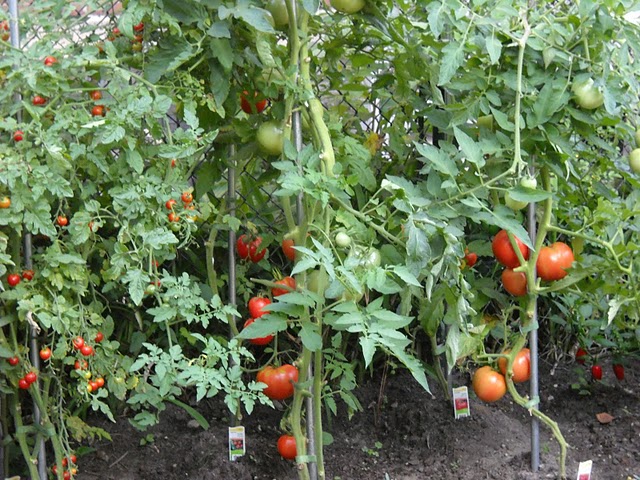
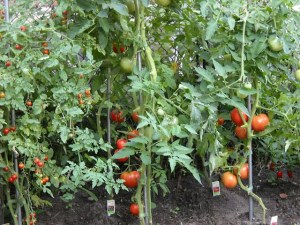
  • Tomatoes – Red or green, tomatoes are full of vitamin C and healthy antioxidants, this summer classic is a versatile way to prevent heart disease. Not sure what to do with the green ones? You’re in luck, as we are giving away a free cookbook of green tomato recipes at the market.
  • Greens (mustard, turnip, collard) Proven to lower cholesterol, greens are a simple way to obtain high concentrations of vitamins A and C.
  • Summer squash – An excellent source of manganese and vitamin C, summer squash provides a great combination of conventional antioxidant nutrients.
  • Green beans – An often overlooked side dish, especially when steamed, provides tasty cardiovascular health.
  • One of our vendors, Mrs. Woodard, has peaches and other fruit from a local organic orchard.

You can always find chemical free produce at the Southeast Area Farmers Market, the majority of which is grown in our vendors’ backyards. Don’t forget the market has two locations: Gerald R. Ford Middle School on Fridays 2 p.m. to 7 p.m. and Garfield Park on Saturdays 9 a.m. to 1 p.m.

Both locations accept cash, debit, EBT, and Double Up Food Bucks. With Double Up Food Bucks, receive up to $20 of free produce when using your EBT card ($2 free for every $2 you spend).

Food garden tour part of justice program to build urban food security

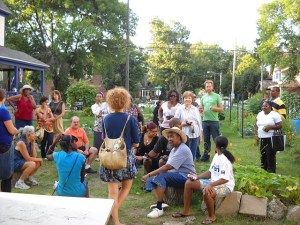
Garden tour stop at the Barefoot Victory Garden

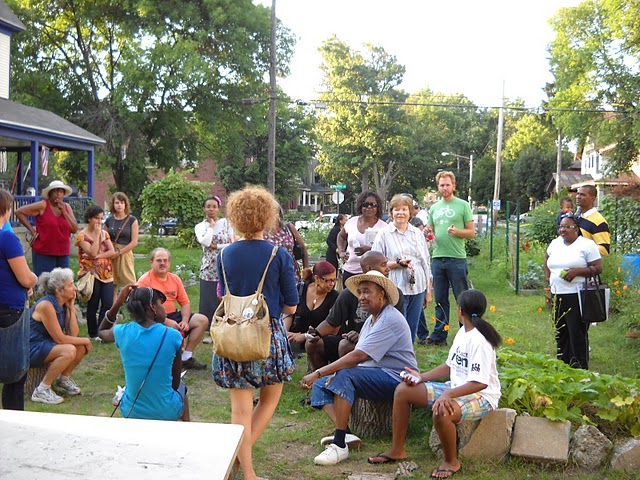
More than 30 people joined Our Kitchen Table(OKT) for the 4th Annual Eastown Food Garden Tour the evening of Tuesday August 16. After OKT’s Lisa Oliver King introduced OKT’s Food Diversity Program and community partner, Dr. Clinton Boyd, spoke to resolving lead and arsenic contamination in urban soil, the group began the one and one-half mile trek with stops planned at 14 Eastown neighborhood food gardens.

Many on the tour were amazed to discover the abundance of foods growing in the small front, side and back yards of neighbor’s homes.  Bountiful garden plots, raised beds and recycled containers yield everything from the common tomatoes, herbs, beans and peppers to hops for homebrewed beers, exotics, like figs and kiwi, and berries—strawberries, blueberries, raspberries and even huckleberries.

Many of the gardeners on tour were beginners—though you wouldn’t know it from looking at their gardens. And, many of the gardens showed off plants received as seedlings raised from seed by OKT staff and volunteers.
However, the point of this garden tour was not to showcase local gardeners’ green thumbs. OKT is supporting their efforts as food, i.e. food security and access to healthy foods, is a justice issue. OKT believes access to nutritious whole, organic and fresh foods is every person’s right—not a privilege for those who can afford to shop in upscale grocery stores or eat at trendy restaurants.

Specifically, OKT’s Food Diversity Program targets Grand Rapids neighborhoods hardest hit by asthma and lead poisoning, both of which can be ameliorated by eating fresh, organic fruits and vegetables. Too much of the affordable food widely available in these neighborhoods is over-processed, high in fat, high in sugar and low in nutrients. OKT believes people in need should have more than a full belly—they should have regular access to the whole foods that prevent expensive illnesses like diabetes and heart disease.

The gardens on the tour prove that people can easily and inexpensively grow their own nutritious foods in the urban environment—a fact that the food industry obfuscates with media messages that make growing, canning and preparing food from scratch seem like difficult, time consuming and insurmountable tasks.

In addition to touring gardens at private residences, the tour also made stops at the Eastown Neighborhood Association community garden and  the Barefoot Victory Garden Barefoot Victory Garden. At the latter, any neighborhood resident can pitch in according to ability and take home abundant produce according to need. Instead of personal plots, like those found at traditional community gardens, each raised bed is dedicated to a specific “crop.”

The Barefoot Victory Garden boasts organic, heirloom plant varieties. Heirloom plants are fertile, that is, you can collect seeds from them at the end of the growing season for the next year’s sowing. Most food plants and seeds sold at commercial retail nurseries are “terminator” varieties that are sterile and cannot produce seed (but can increase the seed companies’ profits).

As another part of its justice piece, OKT encourages growers within its program to save their own seeds—a practice deemed illegal by the World Trade Organization (WTO).

As part of its Food Diversity Program, OKT also manages both locations of the Southeast Area Farmers’ Market. The market at the Gerald R. Ford Middle School is open Fridays 2 to 7 p.m.; the market at Garfield Park, Saturdays 9 a.m. to 1 p.m. These smaller markets feature mainly backyard chemical-free growers as vendors and provide ample opportunity for socializing with neighbors.

OKT is sponsoring an Urban Foraging Workshop with The Bloom Collective on September 10 as well as  a fall bicycle tour of urban nut trees and October workshops on building hoop houses to extend the growing season.


See more photos from the tour here.

Come on down and get twice as much healthy food for your money!

The Southeast Farmers Market is one of five Grand Rapids area farmers’ markets participating in the Double Up Food Bucks program. Double Up Food Bucks is sort of like a having a $20 BOGO―buy one get one free—coupon. When shoppers use their SNAP Bridge Cards to shop for food at the farmers’ market, the amount of money that they spend is matched with Double Up Food Bucks bonus tokens—up to $20 each time they visit the market.
The women of Our Kitchen Table are ready and waiting to provide farmers’ market shoppers with the Double Up Food Bucks tokens. In fact, we are hoping more shoppers will start taking advantage of the program. We have hundreds of tokens left and it’s already half way through the farmers’ market season. Please! Come on down and get twice as much healthy food for your money!

The tokens are good for purchasing any Michigan-grown fruits and vegetables. Since all of the food sold at the Southeast Area Farmer’s’ Market is locally grown, you can buy any of the produce that our vendors are selling.

Eating more fruits and vegetables can help you lose weight, stay fit and reduce your risk for many chronic diseases. Did you know that eating fruits and vegetables may even lessen the frequency and severity of asthma attacks?

Besides, fruits and vegetables taste great – especially when you get them fresh and in season. Best of all, our neighbors can now stretch their food dollars and get even more fresh Michigan-grown produce when they shop either Southeast Area Farmers’ market location:

Double Up Food Bucks are also available at the Fulton Street Farmers’ Market, Plainfield Farmers’ Market, Douglas D. Hunting YMCA Farmers’ Market and the Sparta Farmers’ Market.

SEAFM Outdoor Food Gardening Classes

Aug. 12 Backyard Edibles

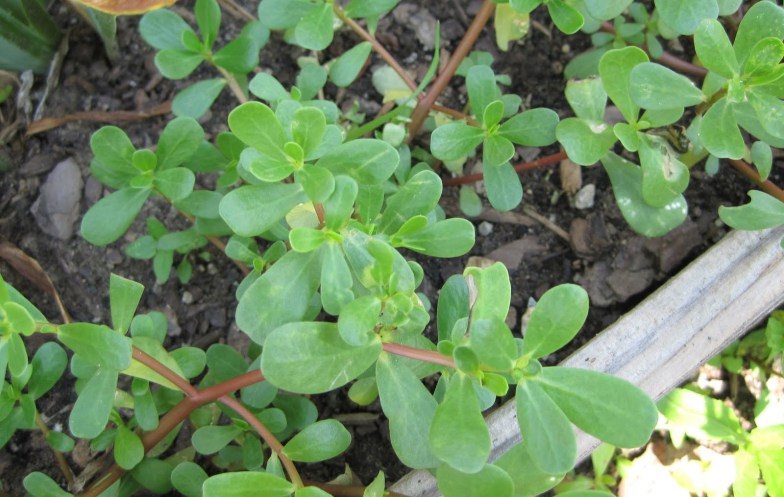
Is it a weed—or something for supper? Master Gardener Roberta  Roberta Rossi  and market manager Yvonne Woodard will teach about the edible plants growing all around us.

Aug. 26 DIY Organic fertilizers and pest control

Learn how to brew compost tea and mix up other non-toxic alternatives to fertilizer and pesticides for your garden (also available at www.369bugs.com). Bring your own spray bottles so you can bring some home.

Classes take place from 5:30 to 6:30 p.m. at the Southeast Area Farmers’ Market /Gerald R Ford Middle School market location, 851 Madison Ave. SE, south of Franklin Street.

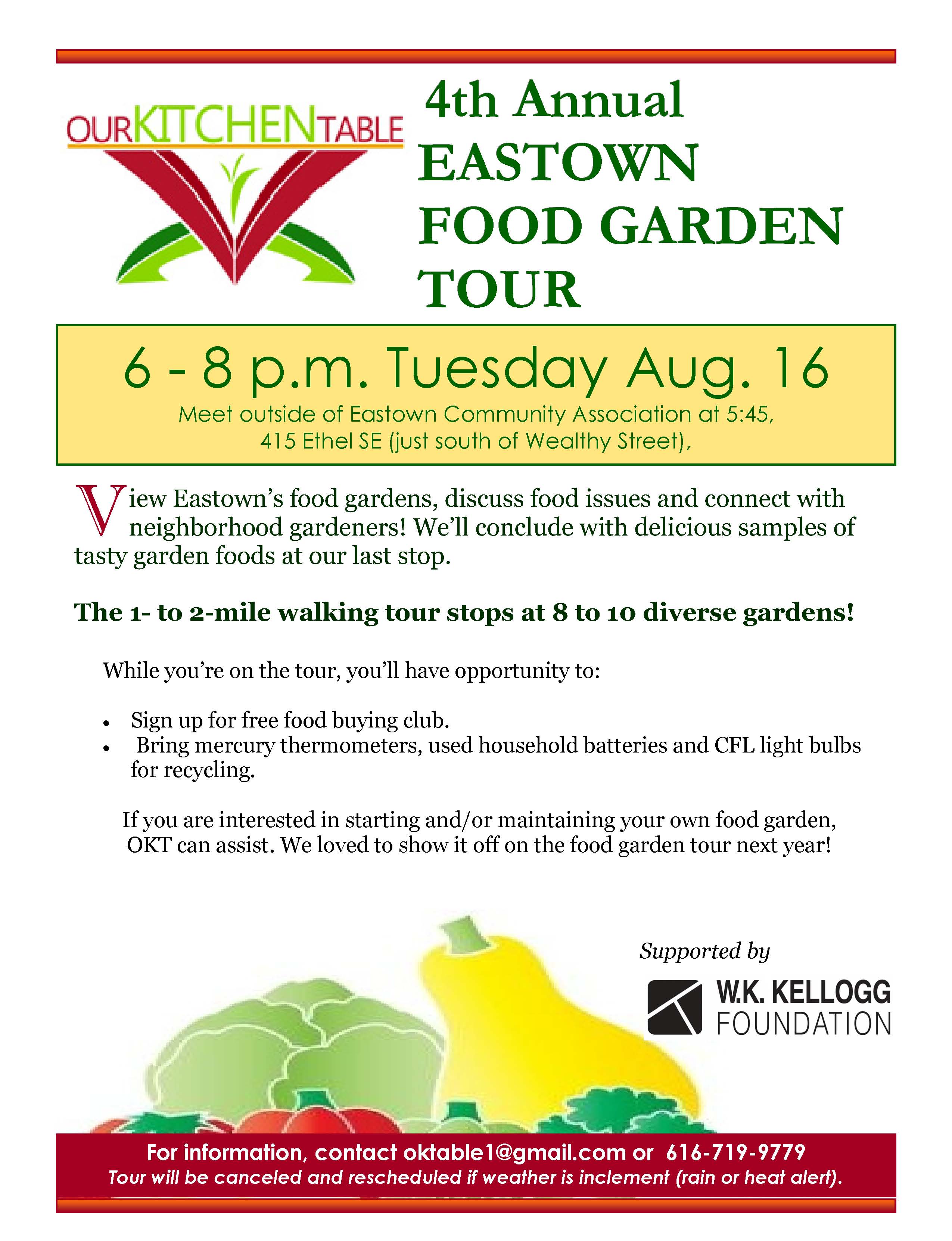
4th Annual EASTOWNFOOD GARDEN TOUR

4th Annual EASTOWNFOOD GARDEN TOUR
6 – 8 p.m. Tuesday Aug. 16 Meet outside of Eastown Community Association at 5:45,
415 Ethel SE (just south of Wealthy Street),

View Eastown’s food gardens, discuss food issues and connect with neighborhood gardeners! We’ll conclude with delicious samples of tasty garden foods at our last stop.

The 1- to 2-mile walking tour stops at 8 to 10 diverse gardens!

While you’re on the tour, you’ll have opportunity to:

• Sign up for free food buying club.
• Bring mercury thermometers, used household batteries and CFL light bulbs
for recycling.

If you are interested in starting and/or maintaining your own food garden, OKT can assist. We loved to show it off on the food garden tour next year!

For information, contact oktable1@gmail.com or 616-719-9779
Tour will be canceled and rescheduled if weather is inclement (rain or heat alert).

flyer attached

Supported by W.K. Kellogg Foundation
——————————————————————

OKT_Garden_Tours_2011_2OKT_Garden_Tours_2011_2

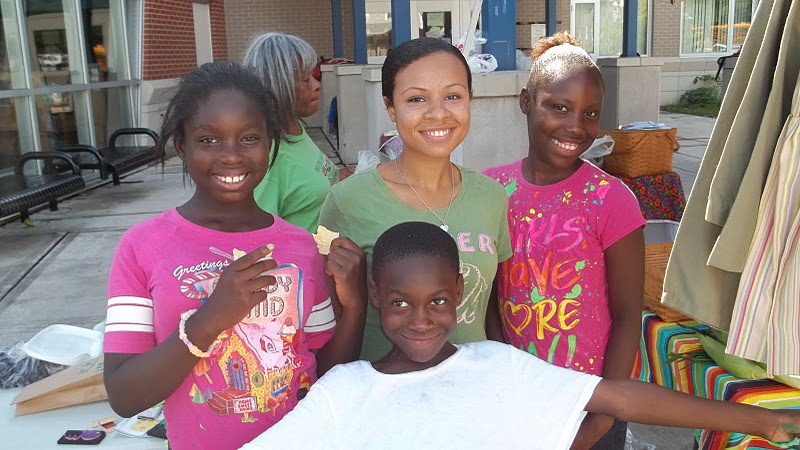
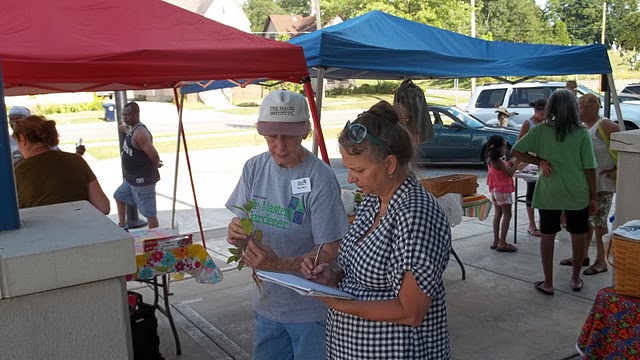
Southeast Area Farmers’ Market Grand Opening (Pictures)

At Gerald R Ford Middle School