City’s Urban Agriculture Committee seeks community input

urban-ag-webPublished on June 27, 2019
by the City of Grand Rapids

The City of Grand Rapids’ Urban Agriculture Committee is inviting the community to provide input on current and desired urban agriculture opportunities. The committee is hosting a community open house before its bimonthly meeting Wednesday, July 10 at Garfield Park Neighborhood Association, 334 Burton St. SE. Residents are invited to submit comments or ask questions related to urban agriculture activities and priorities from 5 to 6 p.m.

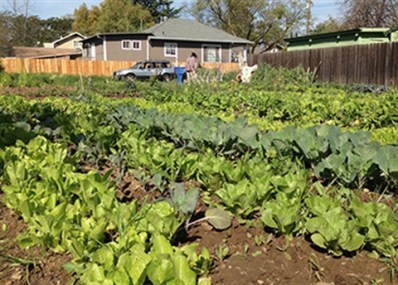
Urban agriculture covers a wide span of activities but can be simplified as producing food to eat or sell in the city by growing plants and/or raising animals.

The committee meeting, which is open to the public, will begin at 6 p.m. City Manager Mark Washington will open the meeting with a brief overview of the City’s strategic priorities and how they can support urban agriculture goals.

“We’re glad to see how much the City’s strategic plan focuses on equity,” said Joan Huyser-Honig, chair of the Urban Agriculture Committee. “Our committee’s recommendations include ways to expand green spaces and improve health equity. Other cities are leading the way by reducing policy barriers so more people can grow, raise and harvest healthy food.”

Mayor Rosalynn Bliss formed the Urban Agriculture Committee in 2017 to provide guidance to the City on policies and zoning around the growing trend of urban agriculture. As the committee reviews current city ordinances related to urban agriculture, it is looking at national best practices in urban agriculture rules and ordinances. The committee plans to provide recommendations to the City’s Planning Commission after the July 10 meeting.

The Urban Agriculture Committee has held several previous community engagement sessions and distributed a survey to stakeholders – all of which are providing guidance in its recommendations. The community sessions and survey results indicated more education was needed on urban agriculture and how it might impact future planning for the city. To provide feedback online, CLICK HERE.

For more information about the Urban Agriculture Committee, CLICK HERE.
Program for Growth workshop emphasizes eating to prevent lead poisoning

june4

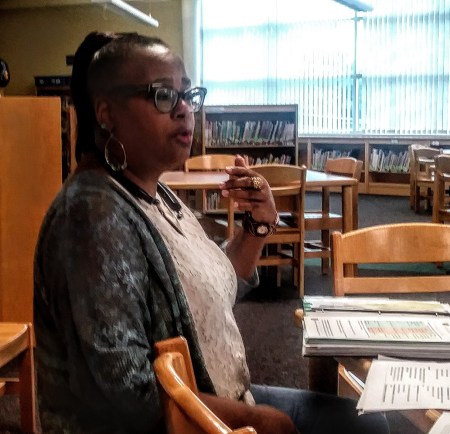
Tracy Booth, RD, leads Program for Growth workshop on foods that address lead poisoning

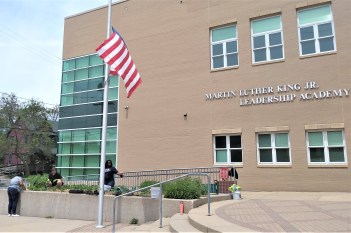
OKT’s Program for Growth at Martin Luther King Leadership Academy is growing more than food in the gardens out front of the school. Workshops continuing with Tracy Booth RD are inspiring participants to grow, purchase, and prepare healthier foods for their families. Because the MLK school neighborhood is in one of Grand Rapids’ lead poisoning hot-spots, last Monday’s workshop focused on three key nutrients that help rid the body of lead: calcium, iron and Vitamin C.

june1Lead poisoning especially impacts infants and children’s growing bodies and brains, causing developmental delays and behavioral problems, including aggression. Lead comes to the 49503 and 49507 neighborhoods via the soil, housing with lead paint, and possibly via the water supply, when old lead pipes are still in service. Here’s a breakdown of foods that can help:

  • Iron-rich foods: Deep green leafy vegetables like collards, mustard greens, kale, spinach; legumes (pinto, navy, black, and adzuki beans etc. and red lentils); raisins and dried prunes; meat.
  • Calcium rich foods: In addition to dairy, tuna, salmon, seeds (poppy, celery, chia and sesame), almonds, beans and lentils (legumes), and dark leafy greens (see above).
  • Vitamin C-rich foods: Citrus fruits, bell peppers, Brussels sprouts, broccoli, strawberries, kiwi fruit, kale, and mustard greens.

june2.jpgCooking in an iron skillet and eating a vitamin C food along with an iron rich food helps the body absorb even more iron.

Miss Tracy also emphasized that we all need to eat more fruit and vegetables, especially fresh ones like those growing in the Program for Growth garden. “Make meat your side dish not your main dish,” she says.

Forum with three Chief of GRPD finalists Thursday June 12

screen-shot-2019-06-04-at-8.33.50-am

Lansing Police Chief Michael Yankowski (l), retired Pittsburgh Assistant Police Chief Larry Scirotto (c) and Grand Rapids Deputy Police Chief Eric Payne (r). Image from City of Grand Rapids

Your voice is important in our community! Make it heard! City Manager, Mark Washington will be holding a forum with the three finalists that are in the running to be the next Chief of the Grand Rapids Police Department at Cesar Chavez Elementary, 1205 Grandville Ave SW, from 6:30pm–8:30pm on Thursday June 12th.

Use your voice to help ensure that the final choice for Police Chief will increase transparency,  make changes to increase police accountability, further implement opportunities for civilian oversight, and foster a culture within the GRPD that understands the needs and concerns of ALL members of our community.
Please come out tomorrow and make your voice and concerns heard.

MLK school food garden’s lookin’ good!

20190528_132008Families and neighbors of Martin Luther King Leadership Academy are finding good food at the school’s front door. On Tuesday, OKT’s urban farmer, Kelsey Hakim, worked with Program for Growth peer garden coaches to add warm weather crops to the luscious gardens that are already brimming with lettuces, greens, strawberries and herbs. School families will also take home food plants for their own container gardens.

This slideshow requires JavaScript.

COMMUNITY COMMENT SOUGHT ON KENT COUNTY COMMISSION PUBLIC COMMENT POLICY

20525877_1344883558962780_2259528948883654991_nThe Latino Community Coalition (LCC) has expressed serious concerns regarding the Kent County Commission’s decision not to provide interpretation and translation services for all public comments made in languages besides English at public commission meetings.

During their April 25th session, the Kent County Commission made changes to their rules which were clearly in response to the actions of Movimiento Cosecha GR, an immigrant rights movement who held multiple demonstrations at their commission meetings. Among those changes was the requirement that commissioners remain seated and not join the public or sit with them, or use the microphone designated for public use to make comments. Most alarming was the commission’s vote to leave the decision to translate public comments made in other languages to the discretion of the current commission chairperson.

Commissioner Jim Talen made a motion to change the policy language to require that all public comments be translated and not at the discretion of the board chair, but the commission discussed this option and ultimately voted against it. Although the board chair expressed her intention to grant all requests for translation of statements made in other languages, her comments during the discussion and subsequent vote against putting that intent in writing is a complete contradiction. This decision is a clear attempt by the commission to silence county residents from immigrant communities, and to reserve the right to continue to do so as they see fit. The option to create barriers for any residents to be heard should never be available to a publicly elected decision-making body.

During the course of the discussion, Commissioner Jim Saalfeld objected to the cost of interpretation and translation, saying that doing so was an option to save money because “There may be times where there are things that are not consequential to what’s being presented.” Commissioner Tom Antor stated, “Since all of us, I think, speak English in this room, I think it’s reasonable that they have someone that could help them with, you know, translating for them if need be.” Comments like these are extremely offensive.

The LCC urges the community to contact their county commissioner to demand that they open up the conversation for an amendment requiring all public comments made in other languages be translated into English so that they may be reflected in the public record and so that commissioners are able to understand all resident comments. The county commission does not have to wait two years to make the changes. The LCC also invites concerned community members to attend the upcoming Kent County Commission meeting on Thursday, May 23 at 8:30 a.m. in the County Administration Building at 300 Monroe Ave or subsequent meetings which are held at the same time and place every other Thursday.

Finally, the LCC thanks the 7 commissioners who spoke up for the right of all county residents to be heard, regardless of the language that they speak. Residents can view news coverage here, and a video of the conversation here.  LCC invites you to contact your commissioner (click here to see a map if you aren’t sure who your commissioner is).

Water Justice

OKT is updating the handouts in our 12-part Food Justice Series. We are going to share them here, one a week, over the next three months. If you can’t wait, feel free to view, download, share and print them from our Resources page.

Water Justice #10 o 19

Download a color pdf of this handout here or a printable version here.