The following comprises OKT’s newest Food Justice Series handout. Click the link to download Water Justice
 As the media hype around the Flint Water Crisis wound down, the focus shifted to the safety of public drinking water throughout Michigan and lauding charities for collecting and distributing bottled water to Flint residents. A lot of effort is being put into band-aid approaches that do not solve the root cause of the problem. Meanwhile, Flint’s children continue to be poisoned every time they drink, bathe or brush their teeth with tap water.
Although a better alternative than drinking poisoned tap water, flooding the City of Flint with bottled water causes other problems. For one, the city is now awash with millions of empty plastic bottles. For another, bottled water is a product. Charities and individuals are purchasing this product from corporations like Nestle, which takes water from Michigan’s ground water stores. According to a Feb. 2016 Democracy Now broadcast, “Nestlé, the largest water bottling company in the world, (is allowed) to pump up to 400 gallons of water per minute from aquifers that feed Lake Michigan … in Mecosta County, Nestlé is not required to pay anything to extract the water, besides a small permitting fee to the state and the cost of leases to a private landowner. In fact, the company received $13 million in tax breaks from the state to locate the plant in Michigan.”
 While our state and city governments cannot find money to repair our failing water infrastructures, they can afford to give away millions, if not billions, of dollars to private corporations that have convinced us to buy bottled water. Many communities across the country and around the world have sold their municipal water works to private corporations – with disastrous results. In 2011, the City of Grand Rapidsconsidered privatizing its water. Thankfully, then-Mayor Heartwell declined.
According to Food and Water Watch, water privatization “undermines the human right to water … When private corporations buy or operate public water utilities, which is often suggested as a solution to municipal budget problems and aging water systems, it more often backfires, leaving communities with higher rates, worse service, job losses, and more.”
Food & Water Watch has documented these, among other, problems with
privatizing water:
- Loss of Control. Local government officials abdicate control over a vital public resource.
- Loss of public input. Citizens don’t vote in the corporate boardroom.
- Loss of transparency. Private operators usually restrict public access to information.
- The objectives of a profit-extracting water company can conflict with the public interest.
- Cherry picking service areas. Private water companies are prone to cherry-picking service areas to avoid serving low-income communities.
- Rate Increases. Investor owned utilities typically charge 63 percent more for sewer service than local government utilities.
- Higher Operating Costs. Private operation is not more efficient and can increase the cost of financing a water project by 50 to 150 %.
- Service Problems. This is the primary reason that local governments
reverse the decision to privatize.
- Jobs. Privatization typically leads to a loss of one in three water jobs.
- Privatization can allow systems to deteriorate.
In its handouts, OKT often includes the words, “Healthy food is your family’s right.” We also proclaim, “Clean, harmless water is your family’s right.” Therefore, OKT asks you to join with us in demanding that the City of Grand Rapids, City of Wyoming and all Michigan municipalities:
 Ensure that our tap water is safe to drink and bathe in. This includes employing more reliable testing measures for lead content.
- Reconsider fluoridating our water supply as fluoride has been associated with health risks. Let people choose for themselves whether or not to ingest fluoride.
- Do not consider privatizing our municipal water supplies.
- Stop giving Michigan’s water away to Nestle and other bottled water corporations.
- Stop cutting off water service to households with delinquent water bills and cease from using liens from unpaid water bills as a means of seizing property from homeowners.
 A new month, a new week begins. Still, the people of Flint face what is becoming an “old” reality: their water is poisoning them. According to the Mayo Clinic, in babies and children lead poisoning causes slowed growth, developmental delay, learning difficulties, irritability, loss of appetite and weight loss, sluggishness and fatigue, abdominal pain, vomiting and constipation and hearing loss. Studies have shown that lead poisoned children may be more likely to become involved in criminal behaviors as adults.
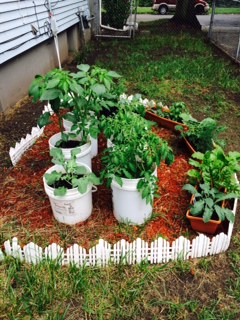 While OKT has been thinking about food gardens all winter — and started growing organic food starter plants in February — now is the time for the rest of us to start planning, plotting and conspiring to grow our own alternative to the industrial food system. For starters, OKT is now recruiting residential food gardeners for the 2016 growing season. OKT has free gardening resources for you if you:
 How? Sign Up to Walk or Be a Sponsor!



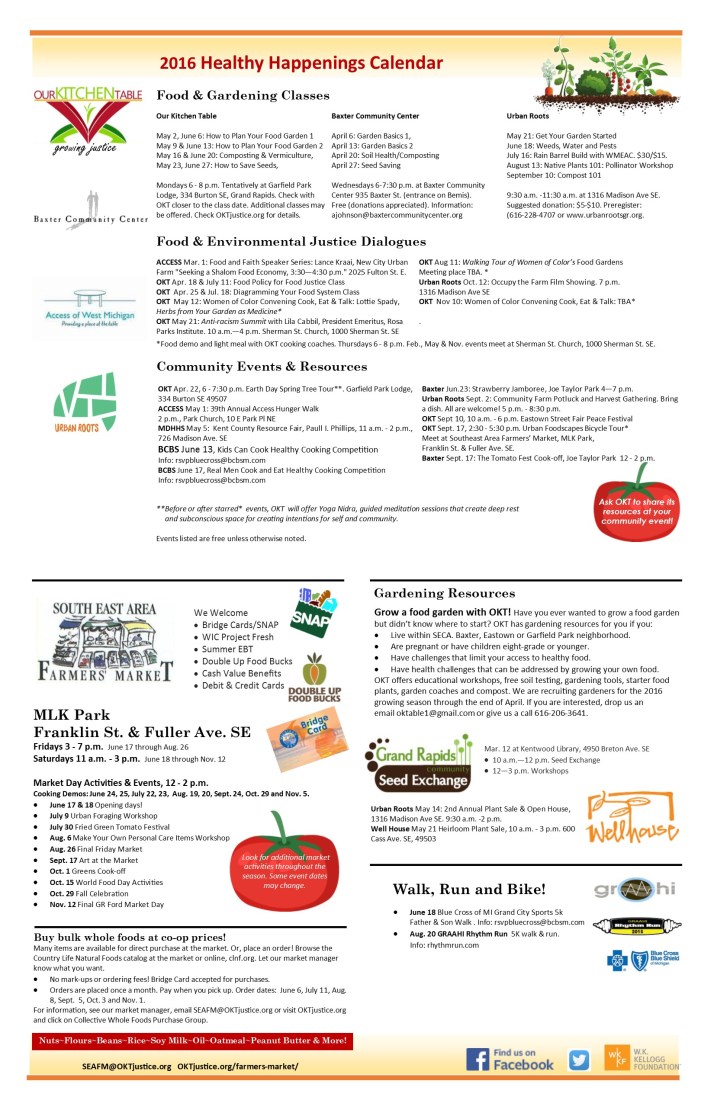
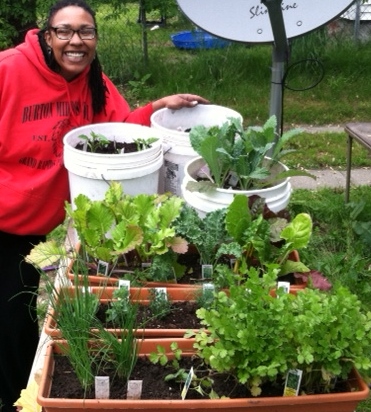 Have you ever wanted to grow a food garden but didn’t know where to start?
 Our Kitchen Table