Looks like it’s going to be a great year!
Looks like it’s going to be a great year!
 Danielle Atkinson of Mothering Justice joined OKT staff members and spokesperson, board member Anita Moore, to share the rationale of paid sick days with local media. Moore was also acting on behalf of Black Lives Matter-GR. Representatives from WOOD TV-8 and WGVU were among media attending. The press conference also launched a strategic relationship between OKT, Black Lives Matter-GR and Mothering Justice. OKT looks forward to continuing to address policy issues with these two organizations. You can review the Michigan House Paid Sick Days Bill 4167 here.
Paid Sick Days: The Facts
 Parents without paid sick days are more than twice as likely as parents with paid sick days to send a sick child to school or day care (28 percent vs. 13 percent). 7
1 Miller, K., Williams, C., & Yi, Y. (2011, October 31). Paid Sick Days and Health: Cost Savings from Reduced Emergency Department Visits.Institute for Women’s Policy Research publication. Retrieved 10 October 2012, from http://www.iwpr.org/publications/ pubs/paid-sick-days-and-health-cost-savings-from-reduced-emergency-department-visits 2 Stewart, W., et al. (2003, December). Lost Productive Health Time Costs from Health Conditions in the United States: Results from the American Productivity Audit. Journal of Occupational and Environmental Medicine, 45(12), 1234-1246. Retrieved 10 October 2012, fromhttp://www.workhealth.org/whatsnew/whnewrap/Stewart%20etal_lost%20productive%20work%20time%20costs%20health%20conditions%20in%20the%20US_%20Results%20from%20the%20American%20Productivity%20Audit%202003.pdf 3 National Partnership for Women & Families Press Release (November 2014) http://www.nationalpartnership.org/news-room/press-releases/massachusetts-voters-approve-nations-third-paid-sick-days-law.html 4 Williams, C. et al. (2010). Access to Paid Sick Days in the States, 2010. Institute for Women’s Policy Research publication. Retrieved 17May 2012, from http://www.iwpr.org/publications/pubs/access-to-paid-sick-days-in-the-states-2010 5 National Partnership for Women & Families Press Release (November 2014) http://www.nationalpartnership.org/news-room/press-releases/massachusetts-voters-approve-nations-third-paid-sick-days-law.html 6 See footnote #5 7 http://www.nationalpartnership.org/research-library/work-family/psd/paid-sick-days-improve-our-public-health.pdf 8 http://www.dol.gov/dol/topic/workhours/sickleave.htm 9 http://www.nationalpartnership.org/research-library/work-family/lake-research-and-tarrance-group-2014-midterm-election-omnibus-poll-results.pdf 10 http://www.nationalpartnership.org/research-library/work-family/psd/working-women-need-paid-sick-days.pdf
 When: 10:30 a.m. Monday March 2
Where: Garfield Park Lodge, 334 Burton St. SE 49507
On Monday, along with several other organizations from across the state, Our Kitchen Table will hold a press conference to support the Michigan’s Paid Sick Days campaign in conjunction with Mothering Justice and Progress Michigan.
The campaign specifically addresses Michigan workers’ need for paid sick days. According to the Institute for Women’s Policy Research, more than 1.5 million Michigan workers — about 46 percent of the state’s private-sector workforce — are not allowed to take a paid sick day when they are ill.
Legislation was introduced earlier this month in both the State House and Senate. The organizations represented at the press conference are among those fighting for this basic worker right. Our Kitchen Table sees this issue as directly connected to its work with Food Justice, since the lack of paid sick days impacts the health of working class families and their ability to resist poverty. OKT has written about how workers within the food system are some of the lowest paid in the country.
Our Kitchen Table joins this fight as one more step in the battle for worker rights and economic justice. We know that standing in solidarity with others fighting for justice is essential, as laid out in our principles of Food Justice, where we state that need for an intersectional analysis of all justice issues.
As Dr. Martin Luther King Jr. noted, “no one is free while others are oppressed.”
 No GMOs for Michigan is hosting an informational event on seed saving, gardening, bees and more from 10 a.m. to 3 p.m. March 07, 2015 at the Kentwood Library (Richard L. Root) Branch, 4950 Breton SE, 49508.For more information, contact Tanya Hawley at thawley780@gmail.com or 616-560-0073.

|
 On January 22, OKT executive director Lisa Oliver-King was Coach TMB’s featured guest on the In Life Now blog-radio talk show. Listen to the archived program here.
 I still remember the shock when Kanye West blurted “George Bush don’t like Black people” during the nationwide Red Cross fundraiser. Even more, images of Black people stranded, swimming, struggling on roofs are still branded onto my memory. I remember how our people were packed into the Superdome and labelled refugees. Churches and organizations as far away as Detroit opened up their doors for survivors.
Later, I heard stories of Black survivors being turned away from majority white Gulf towns. I learned later about previous flooding incidents, that many folks to this day think were intentional. Years later I found out how the Katrina super storm was influenced by human impact on weather patterns — “global warming” is not just higher temperatures but erratic extremes in a variety of climate conditions. Furthermore, unsustainable development along the gulf stripped away the natural buffer zones and made the storm’s damage much worse than it had to be.
Hurricane Katrina was the “perfect storm” for climate injustice: extreme weather patterns made worse by development and pollution. Climate injustice affects folks disproportionately based on socio-economic status and value within society. For Black folk in the United States, that usually means we face the blunt end. For working class and poor folks that don’t have the money to pay their way to safety, it’s the rough side of the blunt end.
Climate injustice is more than one-time events and calamities. The same development pressures that add greenhouse gases to our environment which cause chaotic weather patterns have stripped away protective wetlands and naturally occurring barriers. These economic trends and political rationales place polluting, dirty facilities too often in our neighborhoods.
“Environmental racism” is the term describing the fact that communities of color are disproportionately chosen as sites for toxic facilities — even considering income. This aggravates health conditions in our communities from allergies and asthma to cardiovascular disease and cancer.
Detroit does not fight climate change in the abstract. It’s a daily struggle because the oil refinery and trash incinerator are literally in our backyards. Climate injustice is not just a “one day it will happen” event; we feel it when we bury and mourn our sons and daughters. Detroit’s asthma deaths are three to five times higher than Michigan’s average.
The East Michigan Environmental Action Council (EMEAC) has joined with Climate Justice Alliance, a nationwide coalition that seeks to advance leadership of communities of color and other communities that have been historically dumped upon. Frontline communities such as Detroit have been located in the proximity of environmental pollution, industrial waste, toxic spills, explosions, and other harmful byproducts of the energy, waste, and production system we live under.
CJA’s Just Transition framework acknowledges that there are economic and political incentives beyond environmental racism that must be restructured. We must transition from being frontline communities and dumping grounds to leaders in this 21st century movement towards economic, environmental, and social justice. Each community will have to decide what institutions it will need to destroy, what must be transformed, and what should be built up in the future. From what I see in Detroit, our Just Transition must include:
In this land where our individual survival is not a given, we assert our highest self. We work towards collective well-being, respect for this planet that has birthed us, and our own ways of being full of dignity and self-awareness. No, we aren’t there yet but we are making this Transition with our arms wide open for our allies and our eyes wide open for any obstacles in our path.
This essay is dedicated to my friend David Blair, poet, activist, artist, and a local casualty of climate injustice who passed in the heat wave of 2011 when his home did not have air conditioning. This essay is also dedicated to Nicole Cannon, a water warrior who recently passed from health related conditions from her water being shut off at home. Her children are fundraising burial expenses here.
This post is part of the “Black Future Month” series produced by The Huffington Post and Black Lives Matter for Black History Month. Each day in February, this series will look at one of 28 different cultural and political issues affecting Black lives, from education to criminal-justice reform. To follow the conversation on Twitter, view #BlackFutureMonth — and to see all the posts as part of our Black History Month coverage, read here.
 Superbowl commercials get lots of attention. This is in part because of the amount of money it costs to air one during the big game, but also because of all the “creative energy” invested in tapping into public sentiment. One commercial caught our eye this year, a commercial that focused on current food system and how hard it is to resist all the bad food that is available to us.
The Weighwatchers 2015 Superbowl commercial used a series of images that reflected the unhealthy nature of the current food system, with an emphasis on fast food, junk food and highly processed foods. The voiceover even empresses sympathy for how hard it is to resist eating foods that are unhealthy for us. https://www.youtube.com/watch?v=yvUO_jU8XlI
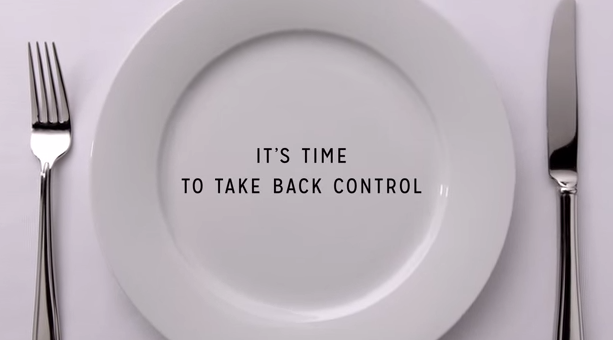
The weightwatchers commercial then transitions to an empty plate with the text that states, “It’s time to take back control.”
Up until this point, the Superbowl spot had potential to get us all to think about the forces behind the food system which both imposes an unhealthy food system on all of us, but also profits from it. However, instead of giving viewers some clarity about what we can do, we are all admonished to join the largest diet-driven company on the planet.
Lets face it, Weightwatchers International is a huge multinational corporation that is not really about promoting public health, rather a company that uses our collective dietary struggle to promote their own products.
Weightwatchers has dozens of its own products and promotes other brands they endorse. The company does not encourage us to think about the food system in any substantial way, instead they prey on our dietary insecurities and convince us that WE CAN BE IN CONTROL.
While OKT certainly acknowledges that personal responsibility is necessary to practice a healthy food system, we also recognize that we cannot resist it by ourselves–and many simply do not have access to healthy foods. More importantly, we cannot change the current food system by simply purchasing slightly less unhealthy food products.
We believe that there has to be a radical transformation of the current food system, where food justice and food sovereignty are central to how we relate to food. https://oktjustice.org/wp-content/uploads/2014/08/what-is-food-justice-o.pdf We cannot continue to have a food system that is controlled by a small percentage of people, where exploitation of people and the land is the norm and where the public subsidizes this unhealthy food system to the tune of billions of dollars in public tax dollars supporting the Farm Bill. https://oktjustice.org/wp-content/uploads/2014/08/the-farm-bill-o.pdf.
For our Kitchen Table it is important that we not only understand how unhealthy and unjust the current food system is, we want to promote and practice food justice in the West Michigan community. We provide information and resources to work with people wanting to grow some of their own food. We work with people living in food insecure communities and offer opportunities for people to become more food independent with workshops, garden coaches, a small farmers market and opportunities for people to share food with others wanting to eat healthy and promote a just food system.
Don’t be seduced by companies who can pay millions to run a 30-second ad during the Superbowl. We invite you to join us and be part of a movement that values food justice over food brands.
.
‘The tremendous amount of money spent speaks to depth of public unease about GMOs,’ says lead author

“Since 2012, the agrichemical and food industries have mounted a complex, multifaceted public relations, advertising, lobbying and political campaign in the United States, costing more than $100 million, to defend genetically engineered food and crops and the pesticides that accompany them,” states the report. (Photo courtesy of report)
What exactly is the agrichemical industry hiding with its high-cost public relations and lobbying efforts to convince the U.S. public that genetically modified organisms and pesticides are safe?
According to a just-released study by the newly-formed nonprofit organization U.S. Right to Know, the answer is: A great deal.
Entitled Seedy Business: What Big Food is hiding with its slick PR campaign on GMOs, and authored by Gary Ruskin, the study aims to expose the “sleazy tactics” of corporations like Monsanto and Dow Chemical.
“Since 2012, the agrichemical and food industries have mounted a complex, multifaceted public relations, advertising, lobbying and political campaign in the United States, costing more than $100 million, to defend genetically engineered food and crops and the pesticides that accompany them,” states the report. “The purpose of this campaign is to deceive the public, to deflect efforts to win the right to know what is in our food via labeling that is already required in 64 countries, and ultimately, to extend their profit stream for as long as possible.”
In fact, according to Ruskin’s calculations, the industry spent more than $103 million since 2012 on defeating state initiatives to mandate GMO labeling in California, Colorado, Oregon, and Washington, with Monsanto alone spending over $22 million.
“The tremendous amount of money spent speaks to depth of public unease about GMOs,” Ruskin told Common Dreams.
The biotechnology industry—whose tactics include attacking scientists and journalists—switches its message depending on the regulatory environment, notes the report. For example, St. Louis-based Monsanto backs GMO labeling in the UK, where such labeling is mandatory, but strongly opposes it in the U.S. “Half of the Big Six agrichemical firms can’t even grow their GMOs in their own home countries,” states the report, due to health and environmental concerns in European countries.
Industry PR firms such as Ketchum—whose clients include tobacco corporations and the Russian government—have had considerable success in manipulating public opinion about GMOs. However, beneath the spin are a number of red flags about the environmental and human health impacts of agrichemical products.
According to the report, “big agrichemical companies have a well-documented record of hiding the truth about the health risks of their products and operations,” from the cancer-causing danger of polychlorinated biphenyls produced by Monsanto to the tragic human impacts of the chemical weapon Agent Orange, which was primarily manufactured by Dow Chemical and Monsanto.
Despite this track record, U.S. oversight of the industry is inadequate, according to the study, thanks largely to the anti-regulatory structures put in place by former Vice President Dan Quayle. The Food and Drug Administration, in fact, does not directly test whether GMOs are safe.
“This report presents a new argument for why the FDA regulatory process doesn’t work,” Ruskin told Common Dreams. “The FDA trusts agrichemical companies and the science they pay for, but the industry has repeatedly hidden health risks from the public so there is no reason to trust them.”
According to Ruskin, this is analogous to the pharmaceutical industry, where positive results get published over negative ones. “What we know is that agrichemical companies have repeatedly hidden health risks, repeatedly suppressed scientific results adverse to the industry,” Ruskin continued. “There is no registry of studies, no way to know. There are are no epidemiological studies on the health impacts of GMOs.”

 Our Kitchen Table