History of Food Class open to all, begins Jan. 11

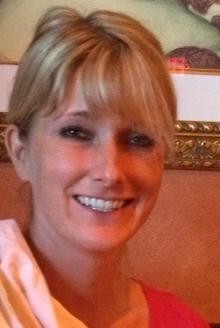
Christina Mello received her Ph.D. in Anthropology at the University of New Mexico. She is a cultural/applied anthropologist whose research addresses the anthropology of food and social justice issues.

Christina Mello received her Ph.D. in Anthropology at the University of New Mexico. She is a cultural/applied anthropologist whose research addresses the anthropology of food and social justice issues.

THE HISTORY OF FOOD

  • Facilitated by anthropologist, Dr. Christina Mello.
  • Free and open to all. Cost underwritten by the W.K. Kellogg Foundation. Meeting five consecutive Saturday mornings, 10 a.m. to 12 p.m. Jan. 11, 18, 25, Feb. 1 & 8. 
  • Location: Garfield Park Lodge, 334 Burton St. SE.
  • Please let us know if you plan on attending, oktable1@gmail.com.

Throughout history and today, food production has been a key component of how members of a society organize themselves and express their different cultural norms and identities. This class explores different types of sustenance economies as well as the history of food from before the rise of civilizations.

Topics will include the history of colonialism, the rise of agri-business and how these have destroyed cultural practices. Finally, we will learn about the relationship of cultures with food and the importance of biodiversity for preserving cultural heritage.

Participants are asked to purchase a copy of The Earth Knows My Name: Food, Culture and Sustainability in the Gardens of Ethnic Americans, by Patricia Klindienst (2006, Beacon Press). The class will also include other readings, including selections from Food and Culture: A Reader, edited by Carole Counihan and Penny Esterik (2008, Routledge, second edition).


Seeds of Love: End of the year message from seed-warrior Vandana Shiva

Published on Dec 18, 2013

At a time where mega corporations want to control our food, it is imperative that we stand together to protect our food, the planet and each other. Listen to Vandan Shiva’s end-of-year message, Seeds of Love.

https://www.youtube.com/watch?v=YEdpE0Aspf0&feature=youtu.be

in this earth
in this earth
in this immaculate field
we shall not plant any seeds
except for compassion
except for love
-Rumi

Anthropologist, Dr. Christina Mello, to teach free food history class beginning January

The History of Food

  • Meeting five consecutive Saturday mornings, 10 a.m. to 12 p.m.
    Jan. 11, 18, 25, Feb. 1 & 8 
  • Location: Garfield Park Lodge, 334 Burton St. SE
  • Please let us know if you plan on attending, oktable1@gmail.com

Throughout history and today, food production has been a key component of how members of a society organize themselves and express their different cultural norms and identities. This class explores different types of sustenance economies as well as the history of food from before the rise of civilizations.

Topics will include the history of colonialism, the rise of agri-business and how these have destroyed cultural practices. Finally, we will learn about the relationship of cultures with food and the importance of biodiversity for preserving cultural heritage.

The class is free. Participants are asked to purchase a copy of The Earth Knows My Name: Food, Culture and Sustainability in the Gardens of Ethnic Americans, by Patricia Klindienst (2006, Beacon Press). The class will also include other readings, including selections from Food and Culture: A Reader, edited by Carole Counihan and Penny Esterik (2008, Routledge, second edition).

christyChristina Mello received her Ph.D. in Anthropology at the University of New Mexico. She is a cultural/applied anthropologist whose research addresses the anthropology of food and social justice issues. Her dissertation is entitled, “Local Food and Power Dynamics in Southeast Grand Rapids.” Other research interests include ethnographic film methods, urban anthropology, studies of power, public and environmental health disparities, the anthropology of food, food justice/social movements, and applied anthropology.

Grand Rapids Climate Resiliency Report views environment through “triple bottom line” lens that obscures honest analysis

On December 3,  West Michigan Environmental Action Council released the Grand Rapids Climate Resiliency Reportpresenting its findings to the Grand Rapids City Commission. The WMEAC December 5 newsletter reports, “The report, generously funded last year with half of Mayor George Heartwell’s prize money for his Climate Protection Award, forecasts the changing climate in Grand Rapids and outlines a comprehensive strategy for the city to prepare for the unknown future impact of climate change.

The report is unique in the sense that we actually cover 22 different areas in which climate resiliency touches Grand Rapids as a municipality,” said WMEAC Policy Director Nick Occhipinti. “Many climate reports around the city do not cover such a broad range.”

WMEAC had asked for Our Kitchen Table’s response to the report prior to its release. We responded with the following.

Our Kitchen Table Responds to Grand Rapids Climate Resiliency Report, Nov. 7, 2013

Problem #1 – The report operates from the Triple Bottom Line framework (pg VI), which believes that

one can have sustainable ecosystems and operate within the for‐profit/constant growth world of

capitalism. We reject such a notion, not on ideological grounds, but based on the climate data and the

historical record of industrial capitalism and now Neoliberal Capitalism that is at the root of the current

climate disaster. More and more climate scientists are arguing that we cannot avert ongoing climate

disaster and keep the current Neoliberal model intact, a theme recently addressed by author and

activist Naomi Klein http://www.naomiklein.org/articles/2013/10/science‐says‐revolt.

What Climate scientists have been saying for over a decade now is that humanity must reduce its

current levels of carbon emissions by 80% by 2050 or we will get to a point of no return. This should be

the framework in which we operate, which might be compared to the Indigenous notion of the 7th

generation principle……how will what we do impact 7 generations from now. The early sections in the

report on Climate impact in the Midwest and Grand Rapids seem to concur on the growing danger.

Problem #2 – The report seems to be a cheerleader for what Grand Rapids has done so far to address 

climate change. While it may be true that there are lots of LEED certified buildings, such impacts are

miniscule in the grand scheme of things. We believe that highlighting such actions ignores the more

structural problems, such as the continued burning of fossil fuels, a food system that is unsustainable, a

transportation system that is unsustainable and the insane amount of the federal budget spent on

militarism, which is one of the largest contributors to climate change. Focusing on Grand Rapids as a silo

is also problematic. If Grand Rapids actually embraced a plan to reduce carbon emissions by 80% by

2050, but the rest of the state did not, it would be an inadequate response. Such an assessment

acknowledges that the problem is systemic and global and cannot be solely addressed at the local level.

Problem #3  If the Agribusiness system remains intact, so does climate disaster. As an organization that

looks at the current food system through a lens of food justice, we known that the current food system

is unsustainable and marginalizes the most vulnerable populations in our community. Even with the

push for more local food in the past decade, those that are the beneficiaries are primarily communities

with both economic and racial privilege. So, despite the sometime euphoric praise of local food, it does

really benefit those most marginalized by the global food system. We see the current food system as a

system of oppression that must be dismantled, not reformed. Such an analysis is not part of the current

local food push and will only result in privileged communities feeling good about what they eat while

leaving the system intact and ignoring those most deeply affected.

Problem #4 – The report does not include the voices of those most impacted by the climate crisis. Our

organization does consist of some of those voices, but we reach only a fraction of the poor communities

of color that are most negatively impacted  communities of color, those living in poverty, those without

health insurance, Indigenous populations and immigrants. We believe for such a report to be honest it

must be inclusive and not solely rely on “experts.”

The section which mentions food deserts and food justice is a case in point of the reliance on experts.

Food Justice is mentioned as provide food assistance at farmers markets, when this practice is food

charity. We do not object in principle to people being provided food in a charitable context, but as long

as food assistance doesn’t address the root causes of food injustice it will only perpetuate the problem.

We believe that food justice is rooted in the right of everyone to actually consume healthy food on a

daily basis, the dismantling of the current food system, work most closely with the most marginalized

communities and providing skills and resource for more food autonomy. We agree with the

international movement Via Campesina that Food Justice must move to Food Sovereignty if true justice is to be obtained.
Free webinar this Wednesday: “Building the Chemical Dimension of a Sustainable Civilization”

TERRENCE J. COLLINS
Teresa Heinz Professor of Green Chemistry
Director, Institute for Green Science
Carnegie Mellon University

Presented by Great Lakes Green Chemistry NetworkMichigan Green Chemistry ClearinghouseWebinar Dec. 11, 3:00 p.m. 

“How can we negotiate with the future?”  Dr. Terrence Collins poses this as a key question in this special webinar that looks at the ethical challenges advances in sustainability technology have propelled to center stage in the quest for safer chemicals and a civilization predicated on sustainability. Many environmental indicators now show the dangers civilization is facing due to the technology choices that we have made and continue to make. The chemical dimension and current trends in how the principles of Green Chemistry are being applied demonstrate these challenges in an immediate way. While the Brundtland Commission definition of “sustainable development” remains the cornerstone for the way forward, Dr. Collins proposes that sustainability has a compass which can be used to guide the ethical use of sustainability technology in the future. Other important tools include the “Framework for Strategic Sustainable Development” which formulates approaches to sustainability challenges across disciplines, sectors and cultures. Yet, the question still remains: what set of ideas will guide future leaders to be effective in the pursuit of sustainability? A “Code of Sustainability Ethics” will be decisive in answering that question.
Space is limited.
Reserve your Webinar seat now at:
https://www1.gotomeeting.com/register/687712745
This entry was posted on December 9, 2013, in Policy.

Nelson Mandela, July 18, 1918 ~ December 5, 2013

The corporate media will have much to say about Nelson Mandela over the next days. They may not mention that Mandela was a revolutionary, political prisoner and member of the African National Congress (ANC), which the US identified as a “terrorist” organization. Mandela was arrested for engaging in acts of sabotage against the White Supremacist South African Apartheid government. Read a tribute by Bishop Tutu in honor of Mandela .
One aspect of Mandela’s history is that while President of South Africa, he and the ANC did cave to the pressure of international finance and adopted neoliberal economic policies, which is the theme of Patrick Bond’s great piece. http://www.counterpunch.org/2013/12/06/the-mandela-years-in-power/

Jeff Smith, GRIID, contributed to this post.

While Obama Talks Poverty, Stabenow Agrees to $8 Billion More in SNAP Cuts

Published on Friday, December 6, 2013 by The Nation

by Greg Kaufmann

A large portion of purchases at the Southeast Area Farmers market are made ith SNAP benefits.

A large portion of purchases at the Southeast Area Farmers market are made ith SNAP benefits.

On the same day that President Obama eloquently described his vision of an economy defined by economic mobility and opportunity for all, Senate Agriculture Committee Chairwoman Debbie Stabenow was busy cutting a deal with House Agriculture Committee Chairman Frank Lucas to slice another $8 to $9 billion from food stamps (SNAP), according to a source close to the negotiations.(Photo: Associated Press)

“One study shows that more than half of Americans will experience poverty at some point during their adult lives,” said President Obama.  “Think about that.  This is not an isolated situation… That’s why we have nutrition assistance or the program known as SNAP, because it makes a difference for a mother who’s working, but is just having a hard time putting food on the table for her kids.”

Indeed it does, but the Chairwoman consistently fails to get the memo.

There are currently 47 million Americans who turn to food stamps to help make ends meet.  According to the Center on Budget and Policy Priorities, nearly 72 percent are in families with children; and one-quarter of SNAP participants are in households with seniors or people with disabilities.  Further, 91 percent of SNAP benefits go to households with incomes below the poverty line, and 55 percent to households below half of the poverty line (about $9,500 annually for a family of three).

Despite the fact that the Institute of Medicine demonstrated the inadequacy of the SNAP benefit allotment, and that a child’s access to food stamps has a positive impact on adult outcomes, the program was just cut by $5 billion on November 1.  The average benefit dropped from $1.50 to $1.40 per meal.  The Senate Agriculture Committee’s previous proposal to cut yet another $4 billion from SNAP would have led to 500,000 losing $90 per month in benefits, the equivalent of one week’s worth of meals.

“That was the first time in history that a Democratic-controlled Senate had even proposed cutting the SNAP program,” said Joel Berg, executive director of the New York City Coalition Against Hunger.  “The willingness of some Senate Democrats to double new cuts to the program… is unthinkable.”

The President recognized in a very personal way the need for a SNAP program that protects families from severe hardship.

“When my father left and my mom hit hard times trying to raise my sister and me while she was going to school, this country helped make sure we didn’t go hungry,” he said.

In contrast, Berg tells of a mother he recently met who now sees this country turning away from her and her children.

“I recently met a mother of two, trying to advance herself and her family, by working her way through college,” said Berg.  “After November 1st, she lost $46 worth of groceries a month, which equals at least 30 fewer meals for her family.”

It seems she and her kids are about to absorb another hit.

“These SNAP cuts will be devastating to families across the nation,” said Dr. Mariana Chilton, co-principal investigator of Children’s HealthWatch, a research organization analyzing the effects of economic conditions and public policy on children in emergency rooms and clinics around the country.  “Not only will families lose significant SNAP dollars—which will make it harder for them to feed their kids and also reduce their children’s nutrient intakes—but it will also cause major health problems for children, increased hospitalizations for very young kids, and greater need for psychosocial and mental health services for school aged kids.”

President Obama perfectly captured what it means for this country to turn its back on children.

“The idea that a child may never be able to escape poverty because she lacks a decent education or health care, or a community that views her future as their own, that should offend all of us and it should compel us to action,” said President Obama.

We are the community, and it is offensive.  Now is the time to tell the President: if these cuts land on his desk, he must veto the bill.

© 2013 The Nation


How Well House Planted an Orchard

Reposted from Grand Rapids Urban Forest Project

By Camilla Voelker

On November 9th the Well House gardeners and 27 others planted a 15-tree orchard of apples and pears on the property of one of the newest additions to the Well House homes and gardens, 239 Sycamore SE.

WELL HOUSE IS A NEIGHBORHOOD NON-PROFIT nested in the southeast side of Grand Rapids. South of Wealthy and east of Division, we offer safe and affordable housing to people experiencing homelessness. It is not a shelter, but permanent housing. Currently, we have four houses occupied by people who were living in shelters or on the streets.

Aside from the housing component of Well House, we also grow, prepare, and preserve food primarily for and with our tenants, but also for and with our neighbors and community. With a food justice lens, we are working towards growing as much food as we can in an urban setting and sharing knowledge on preparing and preserving our own food to counter the unhealthy options provided to us. . We believe our current food system inadequately provides healthy, nutritious food options for people, especially those in our neighborhood. So working with the folks who are most marginalized by our current food system is important to us in creating change.

Finding out about the mini grants offered through the Urban Forest Project of Friends of Grand Rapids Parks, which supplies materials, support and trees for reforestation projects within the city, was a natural next step for continuing Well House’s vision for food growing. An Urban Orchard had been envisioned for the 239 Sycamore lot–which we had acquired from the Land Bank of Kent County–and it also hosts a home to be rehabilitated to house families that have been experiencing homelessness.

Expecting about 15 volunteers on this day, we were pleasantly surprised and thankful for the 27 that showed up – quite the opposite turn out than what most volunteer coordinators anticipate! With all of the fabulous volunteers, we managed to prepare the site quite quickly: trash was picked up, sod was dug up and hauled away, and holes were prepared.

Two Citizen Foresters who offered demonstrations on proper planting techniques and fruit tree care guided us into planting, adding fresh soil and mulching in the trees. Another volunteer watered them in, leaving a job well done. And as one volunteer noted, “Many hands make light work.” It surely did; the community support left a tremendous imprint on Well House’s project and spirit. We are so grateful.