Tag Archive | Food

Educating Teens About Food and the Farm Through New City Neighbors

Note! New City Farm will be our produce anchor at this year’s Southeast Area Farmers Market! Reposted from Rapid Growth Media.
This article is part of Rapid Growth’s Voices of Youth series, which features content created by Kent County youth in partnership with Rapid Growth staff mentors, as well as feature stories by adult writers that examine issues of importance to local youth. 

Learning about nutrition, cooking, and food scarcity helps prepare youth for adult life and deepens their empathy. New City Neighbors, a Grand Rapids-based nonprofit, gives area teens that head start and connects them with impactful experiences. 

With three farms across the area and a cafe to serve the community, kids learn agricultural skills and make food alongside their peers. Helping urban youth learn about agricultural development and preservation is key to NCN, which recently secured a five-acre urban space on Ball Avenue NE to expand.

Ricardo Tavárez is in his sixth year as NCN executive director. He hopes more inner-city teens can learn about producing food from farm to table. 

“We take food for granted sometimes, and when our youth learn about food prep or about growing healthy food, they also learn about food scarcity in our community,” he says.

The work at NCN is not just about teaching about these real-world issues, it’s about supplying the community with food to eat — and healthy food, at that. Youth in the NCN program are helping families who need food get farm-to-table meals. 

Nate Engle, of the Michigan Department of Agriculture and Rural Development (MDARD), sees three main benefits to fresh food from the farm being supplied to neighborhoods: economic impact, health benefits, and social aspect. 

“We are what we eat, and if we eat more healthy foods, more often, chances are we’re comparatively healthier,” he says.  

Recognizing how economic impact and social aspects intersect is also important. 

“There’s a higher chance you know the person who delivers those fresh foods or knows the person that grows them, or you get them and then take them to your grandma or an elderly neighbor,” he says. “Food systems that are more local in nature strengthen local communities by building relationships.”

In essence, NCN empowers teens to create better relationships with their community. Tavárez agrees. 

“Being able to bring healthy food to someone helps them build a relationship with the farmers who are actually growing the food,” he said.” There’s not a third party that’s selling them the food. They actually get to interact with the people who grew it.” 

Why New City Neighbors is Youth-Oriented

Part of NCN’s mission is “empowering youth to reach their full potential.” 

“We intentionally focus on youth because we believe that they’re not just the leaders of tomorrow, but they’re the leaders of today,” Tavárez says.

With the right resources, he says, youth can enact change.

“We believe that youth in our neighborhood have ideas that are worth listening to; that they can shape the community for the better; and that they often know more about the social issues that need to be changed in our community than we do. So we want to empower them to have a good starting place to tackle some of those issues and shape our community for the better,” he says.

Engle elaborates on how programs like those NCN offers can help the younger generation later in life.

“Agriculture and food also represent a pathway for youth to grow careers,” he says. “Young people can get training and higher education to become chemists, biologists, veterinarians, plant pathologists, soil scientists, agronomists, supply chain and logistics managers, or any number of other professions.”

These are just a few of the career options that benefit from the training that NCN gives its employees, whether they be farm apprentices or cafe workers. These opportunities soon will expand, as the recent purchase of urban farmland allows the organization to reach more inner-city teens and serve more of the community. NCN has already worked with over 200 youth employees, a number that will grow with this new development.

The Future of New City Neighbors

The Ball Avenue farm was only acquired last fall, but the second phase of the organization’s plan is already in motion. 

The “On Solid Ground” campaign is now in its farm-development phase, where donations are used to buy agricultural equipment. By 2026, the goal is to have the space ready for the third phase, where a farm education center will be fully fitted to teach local youth about agriculture in an environmentally sustainable manner.

Tavárez hopes the community is ready for the space to be maintained as one of the last few urban green spaces in the Creston area. 

“We’re very excited to develop [it], keep it green, and use it to take our youth empowerment to the next level,” he says. “We’re hoping to get a lot of excitement and energy from our community to continue supporting us.” 

The benefits of this campaign don’t end there. Engle speaks to how important it is to conserve these spaces, and how Grand Rapids is at the forefront of urban agriculture development.

“Healthy urban places are symbiotic with healthy rural places,” he says. “If you have vibrant cities, you probably have vibrant rural communities outside them. We see challenges when we sprawl with our developments … We want dense urban cities in Michigan, and we want healthy rural cities and villages surrounded by productive farms and forestry land.”

Whether or not you are a teen, you can help NCN and preserve urban agriculture across the city. Engle recommends contacting the Urban Agriculture Committee and asking if you can attend a meeting. The Kent County Agricultural Preservation Board also holds meetings where you can get questions answered.

In addition to donating, you can volunteer at the New City Farm or become a shareholder and receive fresh, farm-grown vegetables. Current opportunities for youth include a farm apprentice program; applications are on NCN’s website

Luke Fann is a sophomore at City High Middle School, where he has been an editor since 2022 and a journalist since 2021 for the school newspaper, The City Voice. He writes about current events and technology. He also enjoys creative writing, especially fantasy and sci-fi. Luke has won several awards for his writing at MSU’s MIPA Summer Journalism Workshop for both Creative Storytelling and the Art of Storytelling.

House Passes Legislation to Protect Kids from Lead Exposure 

The Michigan House of Representatives passed legislation to protect children from lead exposure. The three-bill package updates the law to allow for more children exposed to lead to receive the proper treatment and help they need.

Lead poisoning especially impacts infants and children’s growing bodies and brains, causing developmental delays and behavioral problems, including aggression. Lead comes to the 49503 and 49507 neighborhoods via the soil, housing with lead paint, and possibly via the water supply, when old lead pipes are still in service. Here’s a breakdown of foods that can help:

  • Iron-rich foods: Deep green leafy vegetables like collards, mustard greens, kale, spinach; legumes (pinto, navy, black, and adzuki beans etc. and red lentils); raisins and dried prunes; meat.
  • Calcium rich foods: In addition to dairy, tuna, salmon, seeds (poppy, celery, chia and sesame), almonds, beans and lentils (legumes), and dark leafy greens (see above).
  • Vitamin C-rich foods: Citrus fruits, bell peppers, Brussels sprouts, broccoli, strawberries, kiwi fruit, kale, and mustard greens.

Cooking in an iron skillet and eating a vitamin C food along with an iron rich food helps the body absorb even more iron.

HB 5368, sponsored by state Rep. Julie M. Rogers (D-Kalamazoo), revises the definition of “elevated blood lead level” to the lowest number of micrograms per deciliter recognized by experts.

“As a practicing physical therapist, I have firsthand knowledge of the dangers that lead exposure can cause and have personally rehabilitated patients with balance and cognitive impairments traced to lead poisoning,” Rogers said. “There is no lead level in blood which can be considered safe … House Bill 5368 would bring Michigan in line with the new blood lead reference value by adopting the 3.5 micrograms per deciliter standard. All three bills are crucial to preventing lead poisoning, and if exposure does occur, the policy ensures that Michigan’s residents are connected with the resources they need as soon as possible.”

House Bill 4532, sponsored by state Rep. Rachel Hood (D-Grand Rapids), updates various lead provisions in statute and allows Michigan to administer and enforce the federal regulations on lead abatement.

“Michigan families deserve a safe and healthy home, and our legislation is a major victory for families across our state who lack one,” Hood said. “This legislation will protect our kids from the dangers of lead poisoning by providing funds to remove lead from homes, ensuring every child has a fair chance at a healthy future.”

House Bill 5369, sponsored by state Rep. Karen Whitsett (D-Detroit), requires a local health department or physician who is notified of a child less than 3 years old with an elevated blood lead level to refer that child to the Early On program, an early intervention program for children who need extra support and help because they have a development delay or pre-existing health issues that could slow their development

“Lead exposure continues to be a silent threat to the health and development of our children. By ensuring that children with elevated blood lead levels are connected to critical early intervention services like the Early On program, we are taking important steps toward protecting their future,” Whitsett said. “This package will help ensure that Michigan’s youngest residents get the support they need to thrive and prevent lifelong health consequences.”

Farmers Market Saturday July 27!

11 a.m. – 4 p.m. at MLK Jr. Park
900 Fuller Ave SE 49506

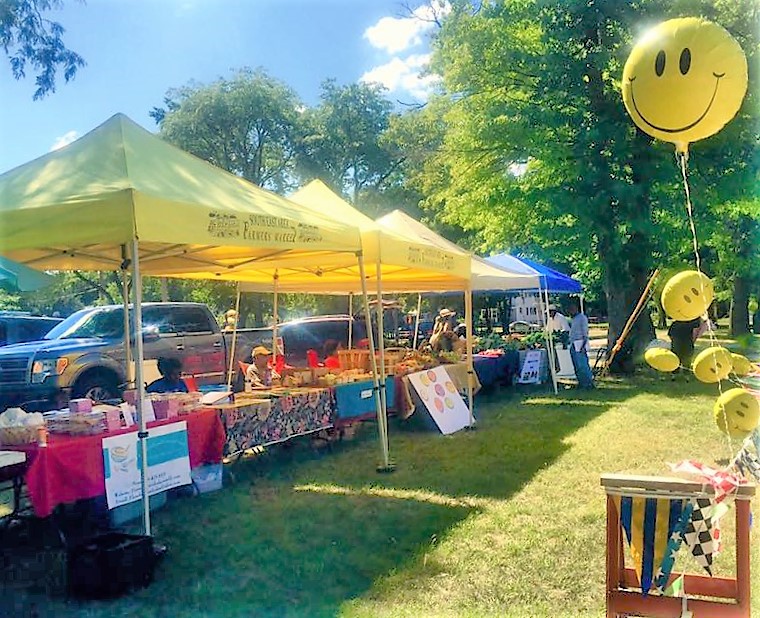
Look for the yellow market tents!

Did you miss our opening day on July 13? Well, that’s too bad because our market manager Ms. Belinda reports that it was a great time for vendors and patrons. This Saturday, we hope to host a Greens Cook-off demo featuring greens prepares many different ways by Ms. Belinda herself. We say hope as vandals have damaged electrical wires at MLK Jr. Park. Hopefully, we will be cooking Saturday. Power to the people! We do have some yummy greens recipes printed for you all.

We’re also excited to welcome back our new anchor farm, Moore Garden and Farm @mooregardenfarm. This small Muskegon family farm is run by Lynette Moore, a Black woman farmer determined to serve our farmer’s market this year.

Ms. Yvonne is back with local produce and craft items!

The Fresh Market at UMCH and the GR Food Coop will also have fresh local produce for you. #TheFreshMarket #UMCH #GoodFoodClub #GRFoodCoop. Four or five other vendors will have fresh produce, handcrafted fashion accessories, candles, and more.

Come on down and do community with us!

We welcome Bridge Card, SNAP, Double Up Food Bucks, and many other assistance and coupon programs. How the Double Up Food Bucks Program Works 

Southeast Area Farmers Market opening day Saturday July 13

  • 11 a.m. – 4 p.m. at MLK Jr. Park,
  • 900 Fuller SE, 49506

Our Kitchen Table’s mission for the Southeast Area Farmers Market is to increase access to healthy foods in Grand Rapids’ southeast neighborhoods, where food apartheid is apparent. To accomplish that goal, we have brought on a new farmer as a vendor and, and we’re partnering with both New City Farm and The Grand Rapids Food Co-op.

To help us celebrate our opening day, the Grand Rapids Fire Department is deploying a firetruck to MLK Jr. Park during the market. Youngsters (and the rest of us) will be able to look inside and see it up close!

In addition to vending fresh produce, the Food Co-op will also host an information table and inviting patrons to join this a community-owned grocery that will be established soon. The cost for a lifetime household membership is:

  • Food For All program: $25 or $6/month for 5 months for people who self-identify as low income.
  • Standard membership: $250 per household or $26/month for 10 months.

Scholarships are available by request for people who can’t afford either.

All members receive the same benefits: one vote per household for who sits on the co-op board; member-only deal days; and profit sharing when store is profitable. A Supportive Business Program may also provide members discounts at participating businesses and educational opportunities.

Our Kitchen Table talks food storage

Reposted from Grand Rapids Magazine

The second in a series of stories about organizations that serve our community

By Pasha Shipp December 13, 2023


Our Kitchen Table is a charity that helps educate people about growing and storing food.

Easy access to fresh produce isn’t one size fits all. Our Kitchen Table, an organization devoted to giving families the tools they need to grow their own fruits and vegetables wants to change that.

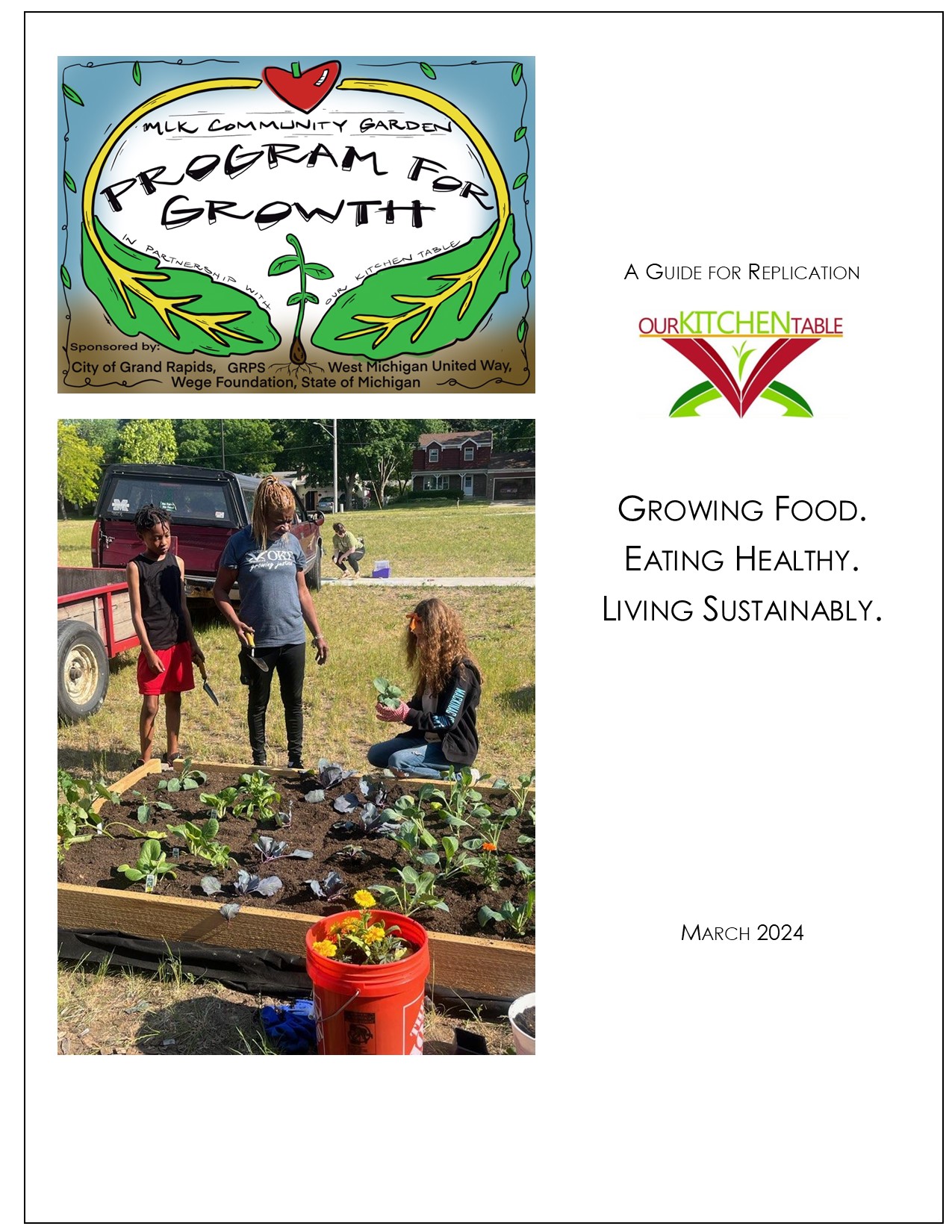
“Our primary program is called the Program for Growth,” said Lisa Oliver-King, executive director of Our Kitchen Table. “We work with school families to grow food onsite at Martin Luther King Junior Leadership Academy and Glenwood Elementary, as well as any school family that’s interested in growing food at home, we assist them with that by providing them with a container gardening system. They’re assigned a food garden coach who visits them on a weekly basis until they get really comfortable with their growing practices and visits them on a weekly basis to assist them with growing, harvesting food, watering, addressing insects, different things like that. They’re giving them different suggestions around meal planning and meal preparation.”

Lisa Oliver-King

The gardens may not be bustling with vegetables ripe for harvest, but winter doesn’t mean the end for Our Kitchen Table.

“Winter gives us an opportunity to talk about storage of your food,” Oliver-King said. “We talk about things you should be buying at the farmers market so you can store to get you through the winter. Baxter Community Center, they do a great job with canning. During that time, we’re doing some conversation around recipes and cooking, making a vegetable chili, particularly since meat is expensive, you may not be able to have ground beef to add it to your chili, so what does that look like?”

The growing and education programs at Our Kitchen Table are empowering neighbors to support their families with nutritious meals, and Oliver-King is proud to be part of it.

“We’re a small but mighty group trying to influence a just food system for all,” she said. “It is the team at Our Kitchen Table that allows us to do the community work that we do. It is collective; it is a strong belief that we have that every and anybody should have access and availability to good food, and we can make a difference around that together.”

Learn more at oktjustice.org.