Tag Archive | Food Justice

Beyond Fossilized Paradigms: Futureconomics of Food

This is reposted from Common Dreams via GRIID.

The economics of the future is based on people and biodiversity – not fossil fuels, toxic chemicals and monocultures.

New Delhi, India – The economic crisis, the ecological crisis and the food crisis are a reflection of an outmoded and fossilized economic paradigm – a paradigm that grew out of mobilizing resources for the war by creating the category of economic “growth” and is rooted in the age of oil and fossil fuels. It is fossilized both because it is obsolete, and because it is a product of the age of fossil fuels. We need to move beyond this fossilized paradigm if we are to address the economic and ecological crisis.Rice terraces near the Drukgyel Dzong, Paro Valley, Bhutan. (Photo: Blaine Harrington)

Economy and ecology have the same roots “oikos” – meaning home – both our planetary home, the Earth, and our home where we live our everyday lives in family and community.

But economy strayed from ecology, forgot the home and focused on the market. An artificial “production boundary” was created to measure Gross Domestic Product (GDP). The production boundary defined work and production for sustenance as non-production and non-work – “if you produce what you consume, then you don’t produce”. In one fell swoop, nature’s work in providing goods and services disappeared. The production and work of sustenance economies disappeared, the work of hundreds of millions of women disappeared.

To the false measure of growth is added a false measure of “productivity”. Productivity is output for unit input. In agriculture this should involve all outputs of biodiverse agro-ecosystems – the compost, energy and dairy products from livestock, the fuel and fodder and fruit from agroforestry and farm trees, the diverse outputs of diverse crops. When measured honestly in terms of total output, small biodiverse farms produce more and are more productive.

Bhutan has given up the false categories of GNP and GDP, and replaced them with the category of “gross national happiness” which measures the wellbeing of nature and society.

Inputs should include all inputs – capital, seeds, chemicals, machinery, fossil fuels, labour, land and water. The false measure of productivity selects one output from diverse outputs – the single commodity to be produced for the market, and one input from diverse inputs – labour.

Thus low output, high input chemical, industrial monocultures, which in fact have a negative productivity, are artificially rendered more productive than small, biodiverse, ecological farms. And this is at the root of the false assumption that small farms must be destroyed and replaced by large industrial farms.

This false, fossilized measure of productivity is at the root of the multiple crises we face in food and agriculture.
It is at the root of hunger and malnutrition, because, while commodities grow, food and nutrition have disappeared from the farming system. “Yield” measures the output of a single commodity, not the output of food and nutrition.

This is the root of the agrarian crisis.

When costs of input keep increasing, but are not counted in measuring productivity, small and marginal farmers are pushed into a high cost farming model, which results in debt – and in extreme cases, the epidemic of farmers’ suicides.

It is at the root of the unemployment crisis.

When people are replaced by energy slaves because of a false measure of productivity based on labour inputs alone, the destruction of livelihoods and work is an inevitable result.

It is also at the root of the ecological crisis.

Bhutanese Prime Minister Jigmi Thinley has recognised that “growing organic” and “growing happiness and wellbeing” go hand in hand.

When natural resource inputs, fossil fuel inputs, and chemical inputs are increased but not counted, more water and land is wasted, more toxic poisons are used, more fossil fuels are needed. In terms of resource productivity, chemical industrial agriculture is highly inefficient. It uses ten units of energy to produce one unit of food. It is responsible for 75 per cent use of water, 75 per cent disappearance of species diversity, 75 per cent land and soil degradation and 40 per cent of all Greenhouse Gas emissions, which are destabilizing the climate.

In food and agriculture, when we transcend the false productivity of a fossilised paradigm, and shift from the narrow focus on monoculture yields as the only output, and human labour as the only input, instead of destroying small farms and farmers we will protect them – because they are more productive in real terms. Instead of destroying biodiversity, we will intensify it, because it gives more food and nutrition.

Futureconomics, the economics of the future, is based on people and biodiversity – not fossil fuels, energy slaves, toxic chemicals and monocultures. The fossilized paradigm of food and agriculture gives us displacement, dispossession, disease and ecological destruction. It has given us the epidemic of farmers suicides and the epidemic of hunger and malnutrition. A paradigm that robs 250,000 farmers of their lives, and millions of their livelihoods; that robs half our future generations of their lives by denying them food and nutrition is clearly dysfunctional.

It has led to the growth of money flow and corporate profits, but it has diminished life and the wellbeing of our people. The new paradigm we are creating on the ground – and in our minds – enriches livelihoods, the health of people and eco-systems and cultures.

On April 2, 2012, the United Nations organised a High Level Meeting on Wellbeing and Happiness: Defining a new Economic Paradigm to implement resolution 65/309 [PDF], adopted unanimously by the General Assembly in July 2011 – conscious that the pursuit of happiness is a fundamental human goal and “recognising that the gross domestic product does not adequately reflect the happiness and well-being of people”.

I was invited to address the conference at the UN. The meeting was hosted by the tiny Himalayan Kingdom of Bhutan. Bhutan has given up the false categories of GNP and GDP, and replaced them with the category of “gross national happiness” which measures the wellbeing of nature and society.

Bhutanese Prime Minister Jigmi Thinley has recognised that “growing organic” and “growing happiness and wellbeing” go hand in hand. That is why he has asked Navdanya and I to help make a transition to a 100 per cent organic Bhutan.

In India, Navdanya is working with the states of Uttarakhand, Kerala, Madhya Pradesh, Jharkhand and Bihar for an organic transition. We aim for an organic India by 2050, to end the epidemic of farmers suicides and hunger and malnutrition, to stop the erosion of our soil, our biodiversity, our water; to create sustainable livelihoods and end poverty.

This is futureconomics.

Dr. Vandana Shiva is a philosopher, environmental activist and eco feminist. She is the founder/director of Navdanya Research Foundation for Science, Technology, and Ecology. She is author of numerous books including, Soil Not Oil: Environmental Justice in an Age of Climate Crisis;Stolen Harvest: The Hijacking of the Global Food SupplyEarth Democracy: Justice, Sustainability, and Peace; and Staying Alive: Women, Ecology, and Development. Shiva has also served as an adviser to governments in India and abroad as well as NGOs, including the International Forum on Globalization, the Women’s Environment and Development Organization and the Third World Network. She has received numerous awards, including 1993 Right Livelihood Award (Alternative Nobel Prize) and the 2010 Sydney Peace Prize.
Healthy food is a civil right

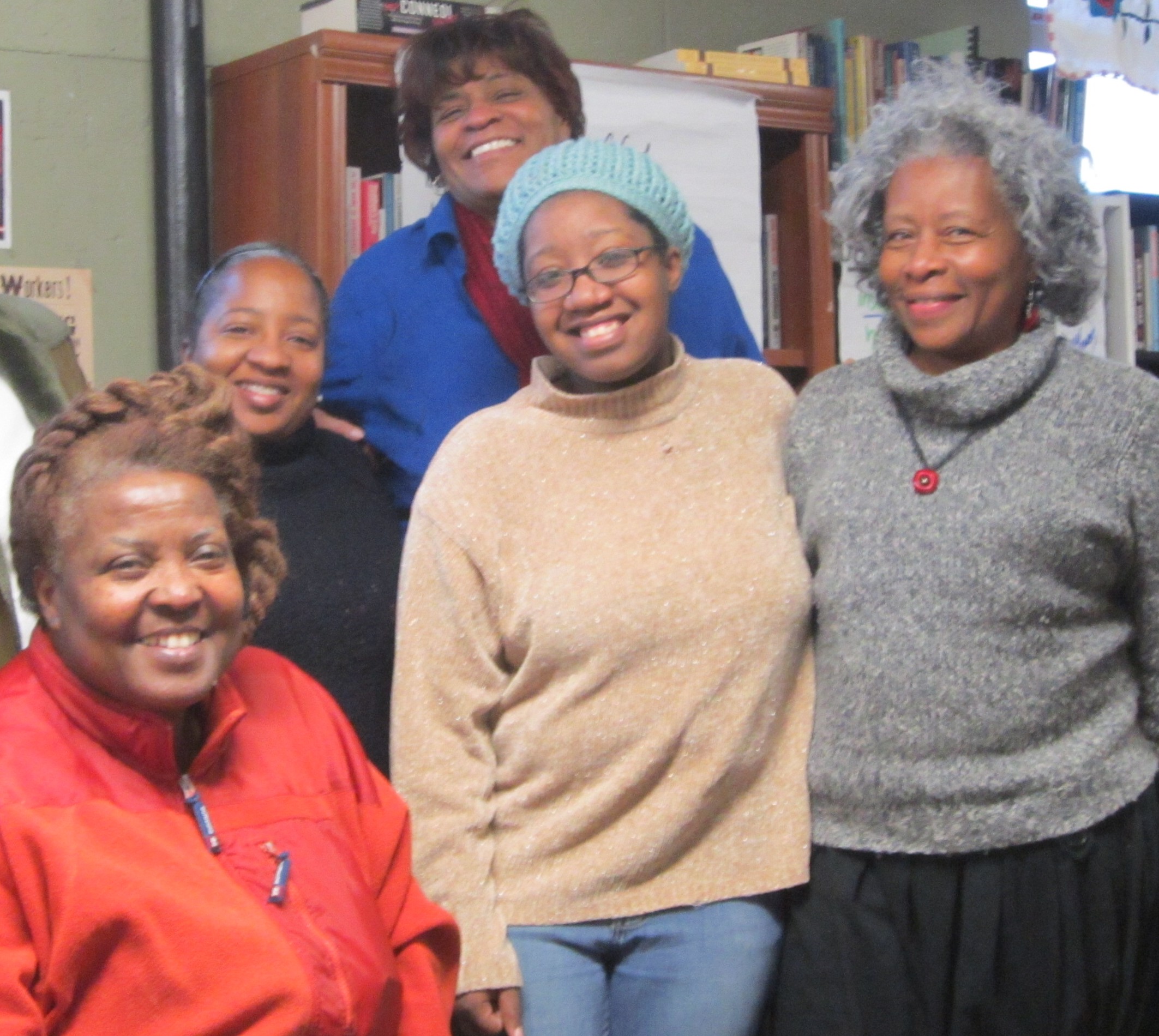
Lila Cabbil, president emeritus, Rosa Parks Institute, with OKT’s Lisa Oliver-King, Roni VanBuren, Sheri Munsell and Yvonne Woodard.

In preparation for another year of managing the Southeast Area Farmers’ Market, Our Kitchen Table has brought in Detroit activist and consultant, Lila Cabbil, to work with farmers’ market partners Our Kitchen Table, Kent County Health Department and Greater Grand Rapids Food Systems Council.

Ms. Cabbil, president emeritus of the Rosa Parks Institute, served as Mrs. Parks “right hand” for nearly 40 years. Her work with the farmers’ market team regards issues of power and race, particularly as they relate to challenges in minority groups. The goal is to create a market environment where the mainstream organizations involved value community assets and differences.

In her hometown of Detroit, Ms. Cabbil works with The People’s Water Board Coalition of Detroit, where tens of thousands of residents do not have access to clean and affordable water.  She also has a new book out, Accountability and White Anti-Racist Organizing: Stories from Our Work.

What has the fight for civil rights got to do with a farmers’ market? Everything. Healthy food is a civil right—a right that the current food system too often denies people of color.  Filling hungry bellies with junk food that increases asthma, heart disease, obesity, diabetes and other illnesses is not justice. We must work together to make healthy foods available and accessible in our neighborhoods. The Southeast Area Farmers’ Market is one small way the community can come together and build an alternative food system that ensures this civil right.

As we commemorate Martin Luther King’s accomplishments in the Civil Rights Movement on Monday, let’s not forget that the work for racial justice includes the right to healthy food.

“Why should there be hunger and deprivation in any land, in any city, at any table, when man has the resources and the scientific know-how to provide all mankind with the basic necessities of life? There is no deficit in human resources. The deficit is in human will.” –Martin Luther King

Occupy Our Food: “We are Farmers, We Grow Food for the People”

This article by Peter Rothberg and video is reposted from The Nation and was originally shared locally by GRIID.

On this past December 4, food activists from across the country joined the Occupy Wall Street Farmers March for “a celebration of community power to regain control over the most basic element to human well-being: food.”

The rally began at La Plaza Cultural Community Gardens where urban and rural farmers talked about the growing problems with the industrial food system and the solutions based in organic, sustainable and community based agricultural production. This was followed by a three-mile march from the East Village of Manhattan to Zuccotti Park, the birthplace of the Occupy Wall Street movement.

This video by Anthony Lappe offers an inspiring glimpse into this new movement. Check it out and then go toFood Democracy Now, a grassroots community dedicated to building a sustainable food system, to find out how you can help.

Empty Molesta Greenhouses Grow Food Plants for Grand Rapids Neighbors

Empty Molesta greenhouses grow food plants for Grand Rapids neighbors


June 13, 2011 Grand Rapids, MI–The women of Our Kitchen Table, a local grass roots environmental justice group, had a dream. They wanted to impact food security by providing resources to area residents who wanted to grow and share food. A grant from the W. K. Kellogg Foundation provided the seed money—but it was a local philanthropist “rolling up his sleeves and getting his hands dirty” that helped OKT’s Food Diversity Project sprout.

Dave Molesta, who operated Molesta Floral until it closed in 2010, invited Grand Valley State University’s Sustainable Agriculture Project to use Molesta’s empty greenhouses. The GVSU project extended the invitation to OKT.

Though flowers had been the wholesale grower’s focus for the past several decades, it originally provided Grand Rapids area residents with produce year ‘round. That all changed after World War II, when large-scale growers from across the country could ship larger varieties of produce at lower prices.

In a sense, Dave Molesta has gotten back to his roots. The greenhouses began growing 15,000 food plants in March. In addition to granting open access to the greenhouse space, Molesta provided planting containers, heat and water. He also allowed soil to be tested at the greenhouse site to support the effort to grow fresh and safe produce.

Community residents joined in events hosted at the Molesta greenhouse and another greenhouse site where they learned how to plant seeds, maintain seedlings and prepare for planting. In addition, two small urban farmers began growing produce to be sold at the Southeast Area Farmers Market.


Dave Molesta really helped us get our project off the ground this spring,” says Lisa Oliver King of OKT. “All the food plants have been donated out to various community gardeners providing food to families in need, low-income backyard growers and GRPS schools with food gardens. Now that people have these heirloom, organic plants in their gardens, they will be able to save the seeds and propagate their own food plants for years to come.”

OKT also provided plants to others with limited resources, for example, Well House, housing alternative for the homeless, and Clancy Street Church community garden space, where 18-low-income families grow and share food.

It was great to connect with Our Kitchen Table, with the work they do, to get healthy food to Well House community as well as the broader community,” said Judi Buchman, director of Well House. “The plants got us going when we were busy with lots of other tasks … It helped remind us:  it’s time!”


0ur Kitchen Table is a non-profit, grassroots community activist organization working for environmental justice and food security in Grand Rapids area urban communities.

Established in 1930, the W.K. Kellogg Foundation supports children, families and communities as they strengthen and create conditions that propel vulnerable children to achieve success as individuals and as contributors to the larger community and society. Grants are concentrated in the United States, Latin America and the Caribbean, and southern Africa. For further information, please visit the Foundation’s website at http://www.wkkf.org.

The South East Area Farmers’ Market is open for the 2011 season!

The South East Area Farmers’ Market is open for the 2011 season!
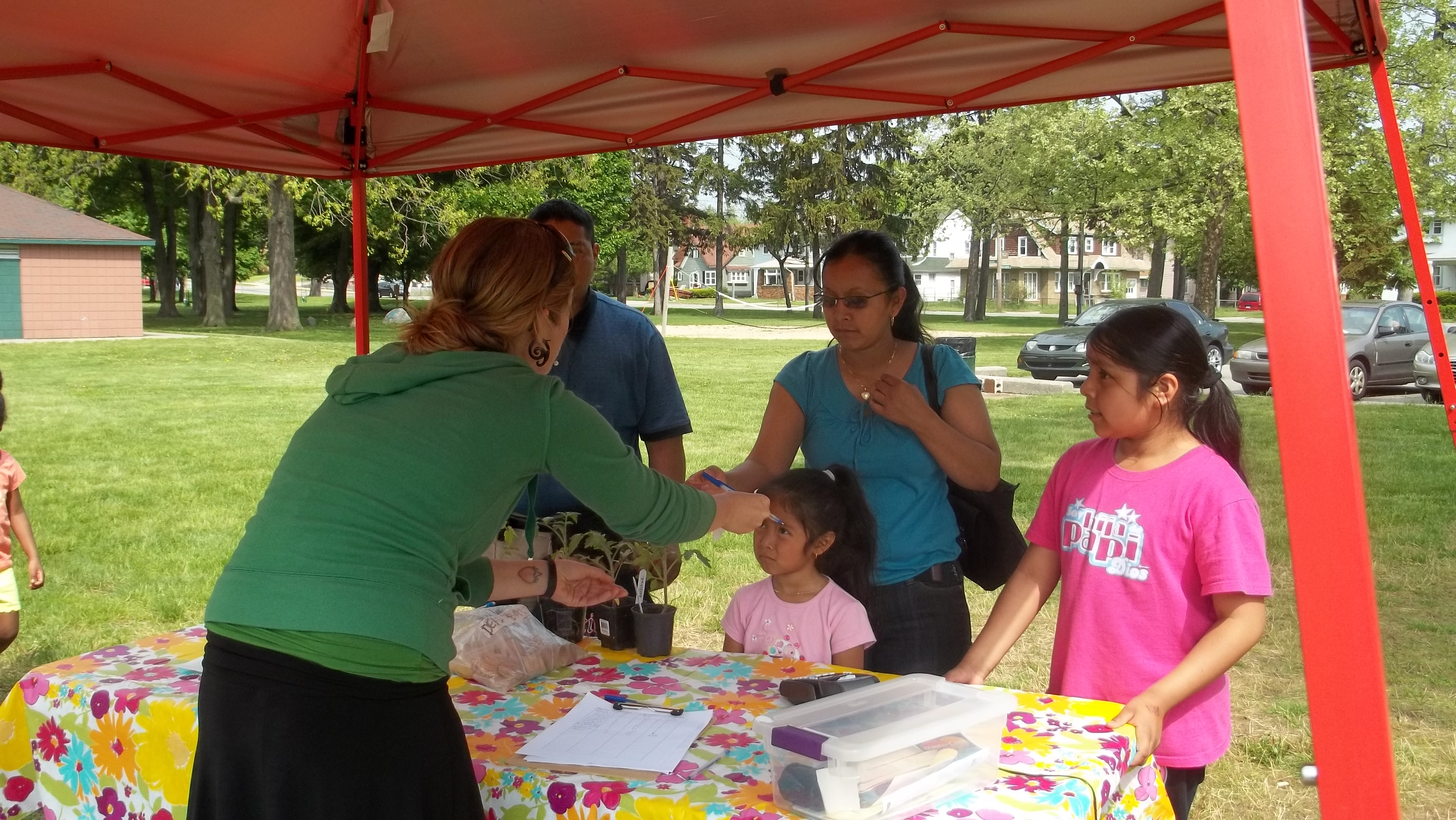
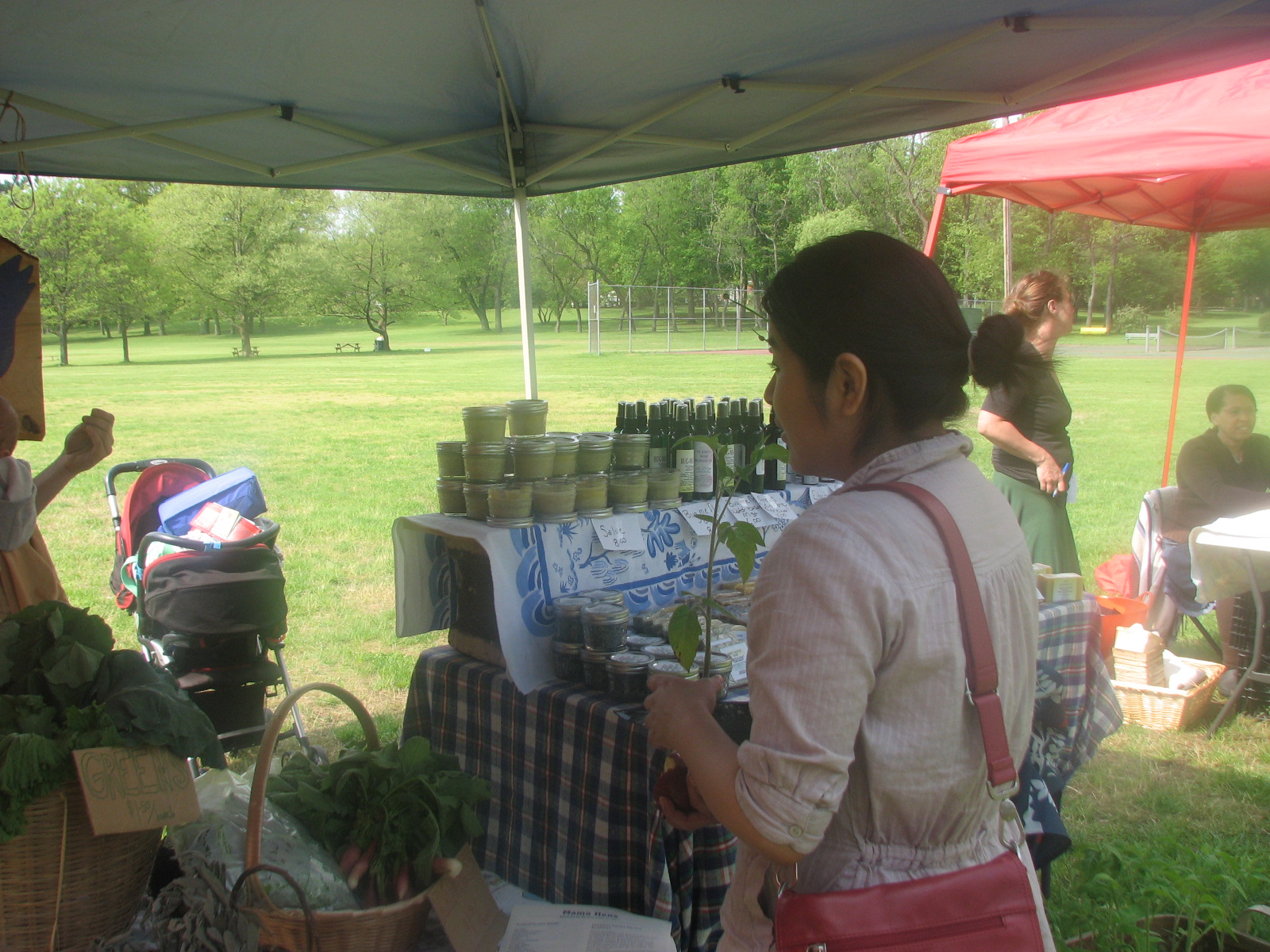
On Wednesday, the South East Area Farmers’ Market began at the Gerald R Ford Middle School from 5pm to 7pm.  Vendors sold herbs, greens, homemade crafts, and vegetable plants!  Community folks danced line dances and it was a festive atmosphere!

Come join us this Wednesday, May 25th, for more transplants for your garden, more spring greens to eat, and more dancing with your neighbors!

Saturday opened the market at Garfield Park from 9am to 1pm.  It was a beautiful day to stroll the park and shop with neighborhood vendors.  There were mustard greens, kale, herbs, lettuce, spinach, and homemade salves, and soaps for sale!  Many plants were donated to neighborhood families!  Join us on June 4th for the second Garfield Park market!

Please check out the “Farmers Market” tap under “Food Diversity” for a full list of farmers market days. or follow this link Farmers Markets

For more pictures please follow this link https://oktjustice.org/2011/05/21/the-southeast-farmers-market-opening-day-pictures/

[The 2011 Southeast Farmers Market is sponsored by a partnership between Greater Grand Rapids Food Systems Council, Kent County Health Department and Our Kitchen Table]

The Beehive Collective “Dismantling Monoculture”

The Beehive Collective “Dismantling Monoculture” a visual exploration of globalization and militarism in the Americas
The Beehive Design Collective- a non-profit, volunteer driven, political arts organization is headed to Grand Rapids Tuesday March 15!

11a.m.- 3 p.m. GRAPHICS FOR THE COMMONS
Collaborative Graphic Design for Movement Building
A hands-on collaborative image making workshop with the Bees at
Red Hydrant Press 314 Straight St. SW Door M
Limited to 50 participants.

6:30-8:30 p.m. DISMANTLING MONOCULTURE
Tales of Ants & Economies in the Americas
The Bees present their larger than life banners at
Kendall College Student Commons, 17 Fountain St. NW
On street parking or pay for parking at Ionia/Pearl ramp

www.beehivecollective.org.

Sponsored by Our Kitchen Table, Red Hydrant Press, The Bloom Collective
and Kendall College of Art and Design of Ferris State University.

2011 marks OKT’s 4th year of hosting the Food Diversity Project!

2011 marks OKT’s 4th year of hosting the Food Diversity Project!

Whether you came last week or not, please join us!


OKT Community Dialogue
10 a.m. to noon on Saturday Feb. 19
Eastown Community Association
415 Ethel SE, Grand Rapids, 49506

OKT is beginning year four by growing food starter plants. Join us for a community dialogue that identifies key steps to planning and planting sustainable, year-round neighborhood, indoor, yard and communal food gardens. You’ll also learn about seed selection and future OKT activities.

· Join OKT’s Food Buying Club. No cost for membership!

· Join OKT’s Free Seed Saving Bank.

· Bring used household batteries and CFL light bulbs for recycling.

· Exchange your mercury thermometer for a free digital thermometer.

· Sign up and receive free recycle bins.

While the program focuses on low-income and vulnerable residents from four neighborhoods―Eastown, Southeast (SECA), Garfield Park and Baxter―people from outside these areas are invited to attend. Those outside targeted income groups may have to pay fees for some services associated with the project.

Check out the flyer! Community Dialogue Feb 2011

Our Kitchen Table receives grant to expand local food security projects

article pulled from: http://griid.org/2011/01/19/our-kitchen-table-receives-grant-to-expand-local-food-security-projects/

JANUARY 19, 2011

by stelleslootmaker

A local grass roots nonprofit working for environmental justice and urban food security, Our Kitchen Table (OKT) has received a $360,000 grant “to strengthen the capacity of southeast urban neighborhood residents in Grand Rapids, Michigan, to address food and environmental health disparities impacting vulnerable children, families, and individuals by creating resident owned gardens and managed Healthy Food Demonstration Sites.” The grant will extend over a three-year period with the goal of neighborhood residents taking over the work for themselves. 

OKT has been addressing environmental justice and food security issues in the Grand Rapids area for the past several years. The grant will expand their

Urban gardeners learn about compost at one of OKT’s “Steps to Growing Healthy Urban Food Gardens” workshops last summer. 

programs to many more area residents with the hope of making a real and lasting impact on people’s health in Grand Rapids’ urban neighborhoods.

OKT’s objectives for the grant funded project include planting and maintaining 100 neighborhood-based food gardens. OKT focuses on helping individuals and families plant those gardens in their own spaces. Education and training components will teach adults and children how healthy foods help manage both diet related illnesses (diabetes, heart disease and obesity) and environmental health issues (asthma and lead poisoning).

Twenty trained community Urban Fellows/Peer Educators will teach even more community members about food self-reliance, food security and having access to a nutritional neighborhood-based food system. Other objectives include establishing resident owned and managed Healthy Food demonstration sites and training both adults and children how to safely address environmental hazards associated with food gardening.

The project will focus on four Grand Rapids neighborhoods: Eastown, Baxter, SECA and Garfield Park. These neighborhoods have been identified as being at highest risk for food insecurity as well as environmental health issues, including lead poisoning.

In 2010, OKT offered the Grand Rapids community many educational and gardening opportunities including a food summit, food garden walking and bicycle tours and a series on healthy urban food gardening.

Anyone interested in starting a food garden or engaging with the program can contact Lisa Oliver King for more information at lisak1@aol.com.

article pulled from: http://griid.org/2011/01/19/our-kitchen-table-receives-grant-to-expand-local-food-security-projects/