Tag Archive | Health equity

Michigan Public Health System is Not Ready to Combat Avian Flu

Dairy workers at risk of disease don’t have protective equipment when they need it

As H5N1, or avian flu, continues to spread among dairy and egg facilities across the state, Michigan farmworkers and outreach workers report that the personal protective equipment (PPE), testing, and vaccines needed to combat the disease are not readily available. Staff from the Michigan Immigrant Rights Center (MIRC) recently connected with 20 dairy workers in Michigan’s upper peninsula who were sick with flu-like symptoms. It took repeated communication from MIRC staff and partner organizations to determine who could provide testing, flu vaccines, and PPE for the affected workers. This experience highlights the wide gaps that exist in the current response to avian flu in Michigan to ensure workers at highest risk are protected, and the stark need for additional resources to stop the virus from gaining opportunities to mutate and spread person to person.

In 2024, two human cases of H5N1 were identified in Michigan, both among dairy workers who are at high risk of contracting the virus from cows. Currently the Michigan Department of Health and Human Services (MDHHS) directs affected workers to their local public health departments for H5N1 PPE, flu vaccines, testing, and treatment. However, the reality is that many public health departments are ill-equipped to serve in this role. Many do not have PPE, tests, treatment, or vaccines readily available, nor do they have the staff and language resources needed to communicate effectively with this vulnerable workforce.

On January 16, 2025, a group of 20 dairy workers in the northern peninsula reported being sick with flu-like symptoms. The illness spread quickly among the workers. On January 22, the local health department stated that they did not have  H5N1 PPE, testing, or flu vaccines on hand, but would try to locate some resources. On January 28, they provided paper masks and COVID testing for the workers. On January 29, MDHHS stated that they had run out of PPE kits but would also look for resources. Two weeks later, on February 14, the local health department was able to access about seven avian flu tests and arranged a testing site for workers, however due to miscommunication and confusion about whether their employer would allow them to attend, no workers attended. On February 17, after a month of advocacy efforts by MIRC staff, MDHHS obtained PPE to send to the local health department and the workers finally received H5N1 PPE. To date, the local health department is still working to arrange flu shots for these individuals. 

Public health experts assert that speed is essential in responding to potential avian flu outbreaks. As this timeline indicates, Michigan is not ready to respond with the swiftness necessary to mitigate the spread of H5N1. The Michigan Department of Agriculture and Rural Development (MDARD) tested either the farm’s cows or the milk within two weeks of the first reported illness and fortunately the tests came back negative. However, the response to test the animals was much swifter than the response for the human workers.

One of the sick workers provided a statement to MIRC in Spanish that was translated by our outreach workers:

“We hope that through this communication, there can be protective equipment for the other ranches, since we’ve already gotten PPE at the ranch where we are working. It arrived a little late, we hoped to get it sooner, but now we have it. We hope that the agencies that helped us can help other farms too. The agencies should be better prepared, so that when there is a request or someone is ill, the agency can respond quicker to those who need the protective equipment. If the protective equipment had arrived faster, we might not all have gotten sick.”

“The services that public health departments provide really vary by location,” said Rachelle Linsenmayer, MIRC staff attorney. “Some health departments have seasonal flu vaccines, flu testing, and H5N1 testing, but many do not. We’ve noticed that more remote health department locations are less likely to have the Spanish language resources that animal production workers need.”

In Barry County, a dairy worker noticed her co-workers were sick and wanted to avoid contracting the same illness. When she reached out to the local health clinic, she was told they didn’t have the avian flu vaccine. She then contacted her local health department but the staff did not speak Spanish and she could not explain in English what she needed. Fortunately, a few days later, an outreach worker from MDHHS assisted her with communication with the local health department. However, the worker was disappointed that she could not be vaccinated, because no vaccines were available. Dairy workers in Kent County also reported flu-like symptoms, but they didn’t go to the clinic due to a lack of information, and their busy work schedules did not allow them to miss work. 

Accessing medical care is especially hard for dairy workers who work extremely long shifts, at least 12 hours per day. Many dairy farms operate 24 hours a day, 7 days per week, with round the clock milking schedules. The farms are remote and may not have access to nearby health facilities. When workers do have time off, they need to be able to quickly find and access resources, and cannot waste time contacting multiple agencies to locate H5N1 resources. Many dairy workers also fear seeking health services because they cannot afford an expensive medical bill. Given the heightened climate of immigration enforcement, workers are also afraid to travel to nearby health agencies. Health departments, if given additional state and federal support, can lower some of the barriers that animal production workers face by offering mobile clinics and providing PPE, testing, and vaccines on-site at workers’ housing or workplace. With the recent passage of the Earned Sick Time Act, dairy workers should now have access to paid leave when they need to seek preventive care or are sick.

The experience of dairy workers around the state highlights a major disconnect between what animal production workers are advised to do if they have been exposed to avian flu and the actual resources available to them. State and federal recommendations underline the importance of workers having PPE, getting preventative flu shots, and getting tested for avian flu if they are symptomatic, yet many local health departments – particularly in more remote and rural areas of Michigan where workers are located – do not have testing, PPE, or flu shots readily available. This leads workers to lose trust in local health departments. Organizations like MIRC also fear losing trust with workers if we direct them to resources that are not actually available. 

Additionally, employers have a role to play in ensuring their workforce is protected. Employers are required to pay for PPE when a workplace hazard exists or is likely to exist. At a minimum, employers must provide gloves to protect animal production workers against avian flu and may be required to provide boots, bibs, respirators, and/or goggles, if animals have symptoms or have tested positive for avian flu. Dairy employers with affected herds can receive reimbursement from the U.S. Department of Agriculture for purchasing PPE for their employees.

While state and local health departments express a sincere willingness to help, miscommunication and difficulty finding resources persists. For example, health departments have had to request PPE or vaccines from other departments, and MDHHS had to ship PPE to health departments that did not have it. Last year MDHHS had promoted free resources but ran out of PPE in November 2024; unknowingly, other agencies continued making referrals to this service. Increased communication between state and local agencies is clearly needed to ensure services are available for animal production workers.

Simply put, Michigan’s public health departments, both state and local, are underresourced and not prepared or trained to sufficiently respond to avian flu. There is also a lack of support, funding, and resources from the Centers for Disease Control (CDC). Speed is critical to controlling the spread of H5N1 and public health agencies must have H5N1 tests and treatment medications like Tamiflu on hand, along with proper procedures to isolate the illness. Consistent supplies of PPE and vaccines are needed to help prevent the transfer of the illness from animal to human. COVID and flu vaccine access is also critical to reduce the risk of being infected with both avian flu and another virus at the same time, which can help prevent the formation of a hybrid virus that could be more severe or contagious. 

“The animal production industry frequently treats its workers as disposable, but the time has come for Michigan to prioritize the health of workers,” said Christine Sauvé, MIRC Policy and Communications Manager. “Not just for the workers’ sake, but to stop the spread of avian flu and protect the health of all Michiganders.”

Workers who have questions about their rights can call MIRC’s free confidential Farmworker and Immigrant Worker hotline at 800-968-4046.
As it prepares to disband, Michigan task force on COVID racial disparities leaves a healthy legacy

Reposted from Second Wave Michigan

This article is part of State of Health, a series about how Michigan communities are rising to address health challenges. It is made possible with funding from the Michigan Health Endowment Fund.

Black Michiganders were among the hardest hit in the early months of the COVID-19 pandemic, representing 29% of COVID-19 cases and 41% of COVID-19 deaths despite being only 15% of the state’s population. In April 2020, Michigan Gov. Gretchen Whitmer established the Michigan Coronavirus Task Force on Racial Disparities. By the end of September 2020, Michigan’s Black residents made up only 8% of cases and 10% of deaths.

“When that change happened, we were able to flatten the curve,” says task force member Renee Canady, CEO of the Michigan Public Health Institute (MPHI). “But more importantly, we were able to build and strengthen community voice and how government responds to the needs of individuals, needs they face all the time.”

This dramatic reduction in disparities involved creating more opportunities for testing within communities, connecting people of color with primary care providers, improving contact tracing and isolation strategies, promoting safe reengagement, and utilizing trusted community leaders in the broadcast of reliable COVID-19 information. Now, as the task force prepares to disband, its members are looking back on the work they’ve accomplished and the groundwork they’ve laid for continued progress toward dismantling health disparities in Michigan.

“Collectively as a task force, I was amazed at the level of commitment and dedication. … We had to problem solve and think deeply,” Canady says. “As a public health professional my entire career, seeing community engage and build partnerships at this deeply authentic level was absolutely inspiring and motivating for me. It really was about execution and action and change.”

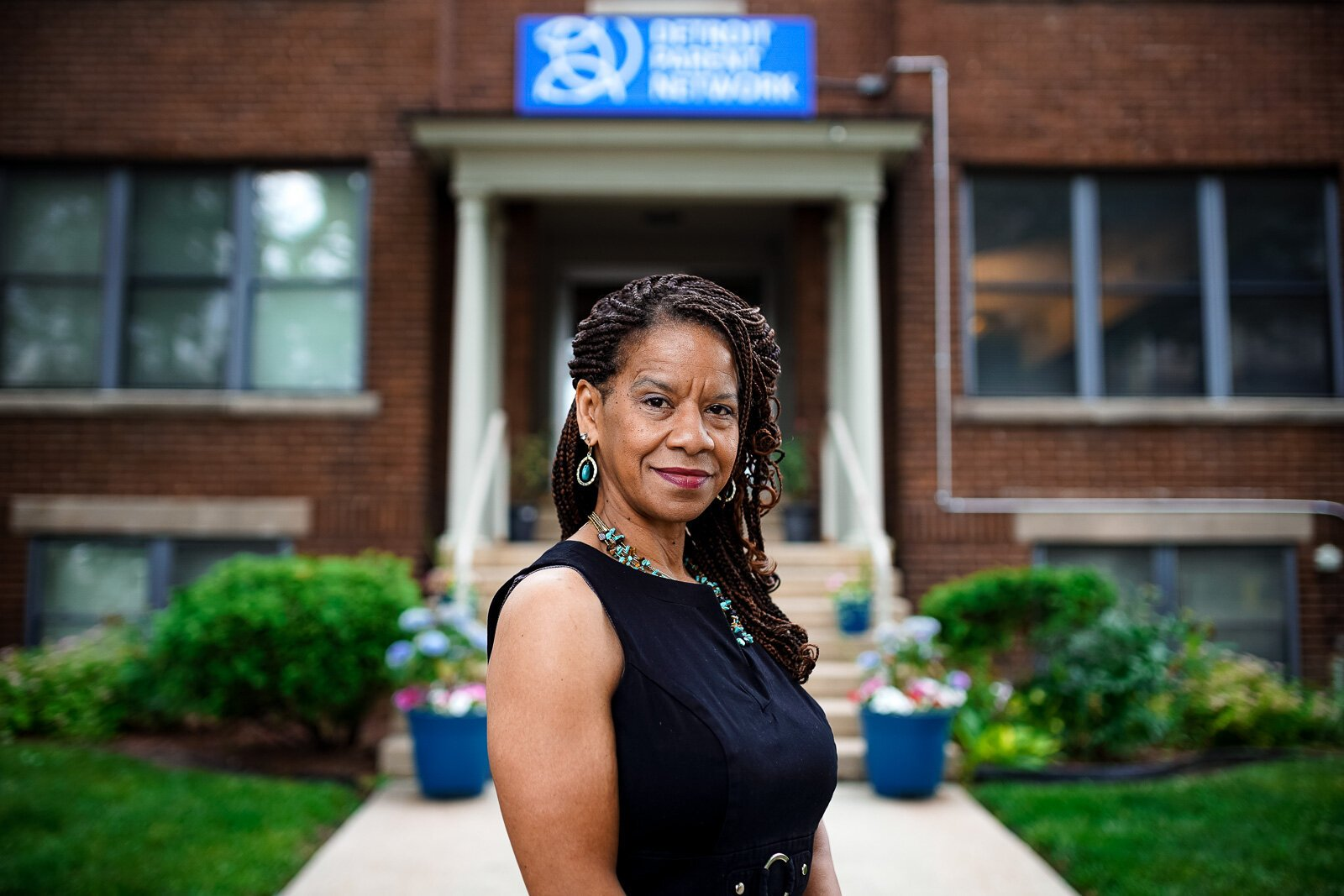
Comprised of 23 Michiganders from diverse locations, backgrounds, sectors, and ethnicities, the task force was directed to increase transparency in reporting COVID’s racial and ethnic impacts, remove barriers to accessing health care, reduce medical bias in testing and treatment, mitigate environmental and infrastructure factors that exacerbated mortality, and improve systems for physical and mental health care as well as long-term economic recovery. To accomplish these directives, members of the task force joined other community leaders in workgroups focused on strategic testing infrastructure, primary provider connections, centering equity, telehealth access, and environmental justice. Task force member Jametta Lilly, CEO of the Detroit Parent Network, says the task force’s reports in November 2020 and February 2022 show that the workgroups became “fast-moving entities” that identified goals at the community and statewide levels. 

“We brought together people who don’t necessarily plan together — community-based organizations, faith-based organizations, hospital administrators, academic administrators,” she says.

Overcoming roadblocks to telehealth

Lilly sat on both the Primary Provider Connections and Telehealth Access work groups. While increasing telehealth opportunities enabled people across the state to receive medical and mental health care during COVID shutdowns, the modality also underscored the reality of the digital divide.  

“An accomplishment is the work that’s been done to recognize how the digital divide exacerbated the death and mayhem that we saw, whether that was in health, in education, in all of our social services, in access to food, and in the employment market,” Lilly says. “There was a recognition that the digital divide had to be addressed if we were going to create structural change not only to address COVID but also to move the state of Michigan forward.”

The Telehealth workgroup’s efforts were in part responsible for a subsequent gubernatorial executive order that called for expanded high-speed internet access for all Michiganders, and an ensuing state investment of $3.3 million to realize that goal.

Rooting out implicit bias

Following another recommendation from the task force, a July 2020 gubernatorial executive order directed the Michigan Department of Licensing and Regulatory Affairs (LARA) to require implicit bias training for health care professionals licensed and registered in the state.

“It takes a level of courage and investment to start the journey, to say, ‘This is not acceptable,’” Canady says. “We do have evidence of bias, experiences of community members, partners, and patients. We’re not willing, as Michiganders, to look the other way on this. A one-hour training is not going to disrupt decades of socialization. But our hope, and certainly my hope as a member of the task force, is that it will whet the appetites of clinicians, employers, and civil servants in Michigan to say, ‘Wow, I didn’t realize this. I need to learn more. I need to think about what we should be doing differently.’”

Task force member Denise Brooks-Williams, senior vice president and CEO of market operations at Henry Ford Health (Henry Ford), acknowledges that Henry Ford was invited to the table because of its long history of trying to eliminate health disparities, in part by requiring its staff to complete implicit bias training.

“Amongst the task force’s many accomplishments was putting a culturally diverse lens around marketing and how we try to attract people to health services,” Brooks-Williams says. “As we moved into having vaccines available but seeing a low response among those wanting to have them, [it] really did take time to invest in some multicultural marketing resources. They did a really good job. That will pay dividends for a long time.”

Canady hopes that, in addition to requiring implicit bias training, the state will be able to measure significant changes and greater awareness, knowledge, and understanding of the unresolved consequences of bias and discrimination.

“We need to think differently about systemic inequities and how to maintain relationships across disciplines,” Canady says. “It’s not just the Department of Health and Human Services’ responsibility. It’s not just LARA pushing on people’s licenses to practice. It really is all of us in partnership together.”

Health care in community

The Primary Provider Connections workgroup sought to remove barriers to care by making health care more accessible. Strategies for doing so included creating test and vaccination sites within trusted neighborhood locations like churches and schools, developing mobile clinics, and involving trusted community leaders as ambassadors of reliable pandemic health information. Brooks-Williams reports that Henry Ford’s mobile clinics will continue post-pandemic as a much-needed resource for communities that lack primary care locations. Another plus is that various community stakeholders are now connected in conversation.

“We’ve now got community agencies talking with health systems, talking with the health departments, talking with the state, in a way that we probably didn’t before,” Brooks-Williams says. “If we keep those conversations going in our communities, that will help.”

Lilly says one key area for improvement is in quality care coordination – creating a primary care system where primary care providers, Federally Qualified Health Centers, community health workers, and hospitals are integrated into an accessible continuum of health and well-being for all.

“That’s our nirvana,” she says. “But that’s not the system we have in the United States.”

Funding will be a priority

Much of the task force’s work was funded with COVID relief dollars. Task force members hope that when those funds dry up, those making budgetary decisions at the federal and state levels will continue to fund successful developments like telehealth, mobile clinics, implicit bias training, and culturally competent messaging.

“We are all saying that we need to have a more robust public health system that gets funded adequately, not just because we suddenly find ourselves in a pandemic,” Lilly says. “Now that our public health systems have readiness, I think we are in a much better place. The Federally Qualified Health Centers are in a much better place. There are mobile clinics and electronic health systems that have the capability of talking to each other.”

While the task force will disband in the near future, members hope that their legacy and work will continue to reduce racial disparities in health care and on other fronts such as education, employment, and economic opportunity.

“Relationships don’t end when a committee ends or when a conference is over. They’re fortunately transportable,” Canady says. “I believe that those relationships will continue as we all, in our individual areas of responsibility, continue to try to execute on the things we learned on the task force.”

Lilly adds that now it’s time to assess the lessons learned from the task force’s work.

“What are the gaps? What are we doing about them?” she asks. “What is so encouraging is that [the Whitmer] administration understands that we have to look very closely at what are the policies that either enable or perpetuate [disparities], or can possibly be a vehicle to create the systemic change we need.”

Estelle Slootmaker is a working writer focusing on journalism, book editing, communications, poetry, and children’s books. You can contact her at Estelle.Slootmaker@gmail.com or www.constellations.biz.

Renee Canady photo by Roxanne Frith. Jametta Lilly photo by Nick Hagen. Denise Brooks-Williams photo courtesy of Denise Brooks-Williams.

“The Detroit Area Agency on Aging addresses food insecurity as the major health challenge for elders living at home.”

Michigan helps elders stay where they want to be: At home

Reposted from Second Wave-Michigan

womAccording to the Administration for Community Living, 24% of Michiganders will be 60 or older by 2030. While assisted living and long-term care facilities will become home to many of them, an AARP survey found that three out of four people aged 50 and older want to remain at home.

The Michigan Department of Health and Human Services (MDHHS) and Michigan’s 16 Area Agencies on Aging (AAA) recognize the need to support elders who want to age in place — and they are crafting programs to make that possible.

“A lot of seniors want to stay in their homes as long as possible,” says Scott Wamsley, deputy director for the MDHHS Aging and Adult Services Agency. “That’s … important in staying connected with their community, their family, and friends.”

Depending on which AAA administers them, services available to elders at home may include home-delivered meals; aides that help with bathing, dressing, and housework; and friendly reassurance phone calls to check in with elders. Other programs provide caregivers in-home relief and support.

“For those seniors that can be supported in their homes, the cost of service is typically lower than what you’d find in institutional care,” Wamsley says. “There are some cost savings for the state of Michigan when a person can stay in their home.”


Preventing premature death prolongs independence

The Detroit Area Agency on Aging (DAAA) bases its work on “Dying Before Their Time,” an award-winning 2003 study of the older residents DAAA serves. Updated in 2012, the study examined why premature death was common among Detroiters of color. The study found that lifestyle changes and better health practices could extend elders’ lifespans while also supporting increased independence and older Detroiters’ ability to age in place at home.

“Individuals would rather age in their community, age in place. I have not heard anyone openly indicate that they would rather go to a long-term care facility,” says Ronald Taylor, president and chief executive officer of DAAA. “By reducing likelihood of premature death, we also increase likelihood of remaining independent for more years. If we can better manage our chronic conditions, we can live a longer and a healthier life, a better quality of life.”

Ronald Taylor.

Taylor notes that programs encouraging elders to eat healthy, exercise, and quit smoking, coordinated with healthcare services, increase quality of life. The DAAA addresses food insecurity as the major health challenge for elders living at home. For the past 20 years, its nutrition programs — including its Meals on Wheels program, which is among the largest in the country — have met this challenge. As an added benefit, Meals on Wheels eases the social isolation that impacts so many elders. When drivers drop off meals, they chat a bit with folks, create friendships, and report back if they find any problems.

“Meals on Wheels puts a set of eyes on the individual,” Taylor says. “The meals, in many respects, are the backbone of a lot of our aging services program.”

A Detroit Meals on Wheels van loaded with meals.

Some programs help elders navigate healthcare systems. The DAAA hosts the Michigan Medicare Assistant Program, which helps individuals decipher Medicare coverage options. Not one to sit behind a desk, Taylor joins his staff as they engage older community members face-to-face to share information on housing options, nutrition, wellness, employment, and social opportunities. Further contact is made via the DAAA’s Senior Solutions newsletter and social media.

“We do a great deal of outreach as far as educating the community on services and programs and also whatever community resources may be available,” Taylor says.

Hospice home care: An overlooked option


According to Patrick Miller, Hospice of Michigan executive vice president and COO, supporting caregivers is equally as important as providing services to elders living in their own homes, especially when dementia comes into play. While a stand-alone diagnosis of dementia does not qualify elders for Medicare-covered hospice benefits, that care can be provided when certain other conditions are present.

“How do we care for the caregivers who are just burned out, really exhausted, and scared? We can provide medications so people with dementia don’t have confusion at night when they might become more agitated [and] confused and help them sleep,” Miller says. “We can provide respite when people say, ‘I just need a break,’ moving the patient into a skilled nursing home for five days where they are cared for in a safe environment and the caregiver can rest and do things for their own wellbeing. And we can provide aides to do personal care. That’s a big relief for caregivers.”

Hospice of Michigan.

Elders qualifying for hospice care also receive durable medical equipment, like hospital beds, mechanical lifts, and commodes, as a covered Medicare expense.

“All that stuff we can provide so you’re not breaking your back,” Miller says. “That’s a big deal and part of the benefit.”

Miller would like to see Medicare and other insurances offer shorter-term, in-home respite opportunities for caregivers – for example, offering an aide for a few hours on a Saturday, or overnight so the regular caregiver can get some sleep.

There’s an app for that

When asked how the Otsego County Commission on Aging supports elders living at home, executive director Dona Wishart will enthusiastically describe the capabilities of the Commun02 app. The multi-faceted platform can connect older adults to worship services or family and friends via video conference, virtual travel abroad, and community resources. It is currently being piloted in Gaylord, Flint, Traverse City, and St. Clair and Washtenaw counties.

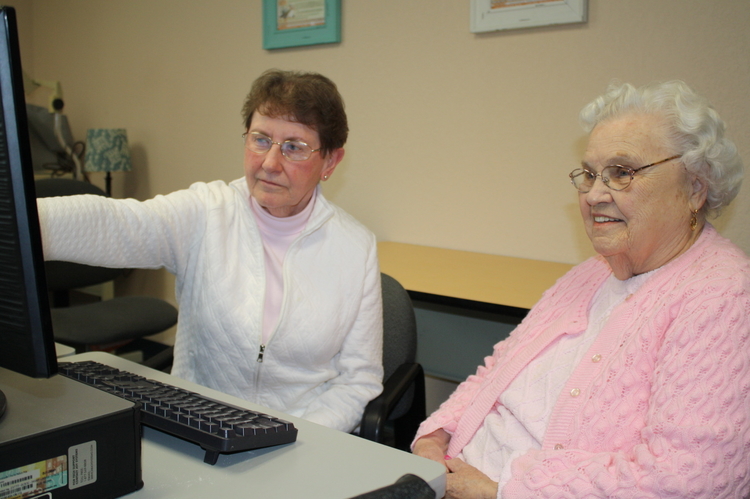
Betty (in pink) connects with her sister in the “old country” using CommunO2 with the help of Mary, a retired senior volunteer in Otsego County. Betty had not seen her sister in about 15 years.

Wishart notes recent research that found that despite the perception that older adults avoid or fear technology, more of them are using it than ever before. She tells a story about a time she shared the app with a group of elders and their smartphones kept distracting them.

“The platform is an opportunity for social connection to family, friends, and social organizations that are important to them,” she says. “We are finding that social isolation is very detrimental. Social connectivity is part of the answer.”

The platform has the capability to add features like remote patient monitoring and telemedicine, which would expand its practicality for older adults living in their own homes.

“If you overcome the barriers, even the oldest people find something that excites them about what the app offers,” says Commun02 developer Joel Ackerman. “To them, it’s safe, secure, and compelling. It helps when they need it, and it’s affordable. Even people in their 90s, if they can see their grandkids and talk to them, that’s enough to excite them to learn to use it.”

Tech is great, but more touch is needed

Like the rest of the nation, Michigan is experiencing a shortage of direct care health aides. Wamsley notes that MDHHS recognizes the direct care worker shortage as a huge issue. The state’s growing aging population exacerbates the problem, particularly in rural areas where young people move away for employment, leaving aging parents without a family safety net.

“It is an issue that our Area Agencies on Aging are facing,” he says. “It can be a demanding job, a job that people really feel is a mission. But it’s difficult work, so some choose other employment.”

In Detroit, Taylor notes that people can make $10 to $12 an hour at a fast food restaurant or $15 an hour working at a car wash — while most direct care workers scrape by on minimum wage.

“The direct care worker shortage is very real, something which we are aggressively working on,” Taylor says.

He says the state needs to find a way to “properly reimburse” workers, offer them more training, and also work on rebranding in order to “put a new face on what the direct care worker looks like and attract others to participate.”

In one analysis, researcher Dr. Robyn Stone said: “Home health aides, home care workers, and personal care attendants form the core of the formal home care system by providing assistance with activities of daily living and the personal interaction that is essential to quality of life and quality of care for their clients.”

Within 10 years, nearly a quarter of Michigan residents may be relying on those workers, whether they live in facilities or stay where they’d rather be: at home.

A freelance writer and editor, Estelle Slootmaker is happiest writing about social justice, wellness, and the arts. She is development news editor for Rapid Growth Media, communications manager for Our Kitchen Table, and chairs The Tree Amigos, City of Wyoming Tree Commission. Her finest accomplishment is her five amazing adult children. You can contact Estelle at Estelle.Slootmaker@gmail.com or www.constellations.biz.


All photos by Steve Koss except CommunO2 photo courtesy of Otsego County Commission on Aging and Ronald Taylor photo courtesy of Detroit Area Agency on Aging.