Free Planting Event 1 – 3 p.m. Sunday June 23 MLK Park, 900 Fuller SE 49506
In collaboration with OKT, the Grand Rapids Food Co-op is hosting a free Planting Event facilitated by Reynalda Jones,a fellow Co-op owner. The event will explore:
Gardening’s impact on mood and physical well-being.
Whole foods and mental health.
Connecting with nature through mindfulness.
Gardening for personal development
Each participant will plant seeds in a flowerpot (provided) to take home and enjoy.
A licensed clinical social worker practicing through her own business, A Solution B, Jones has over a decade of experience in the co-occurring, mental health field. She specializes in working with women experiencing stress, anxiety, and PTSD. She utilizes traditional talk therapy with a fusion of evidence-based holistic care to promote emotional wellness and whole-body wellness. Her goal is to educate others to actively prevent burnout before it is overwhelming for the body and mind. From May to October, her services also incorporate therapeutic gardening and clients have the opportunity to engage in therapy sessions, cultivate mindfulness skills, learn about nutrition, prioritize mental health, and much more.
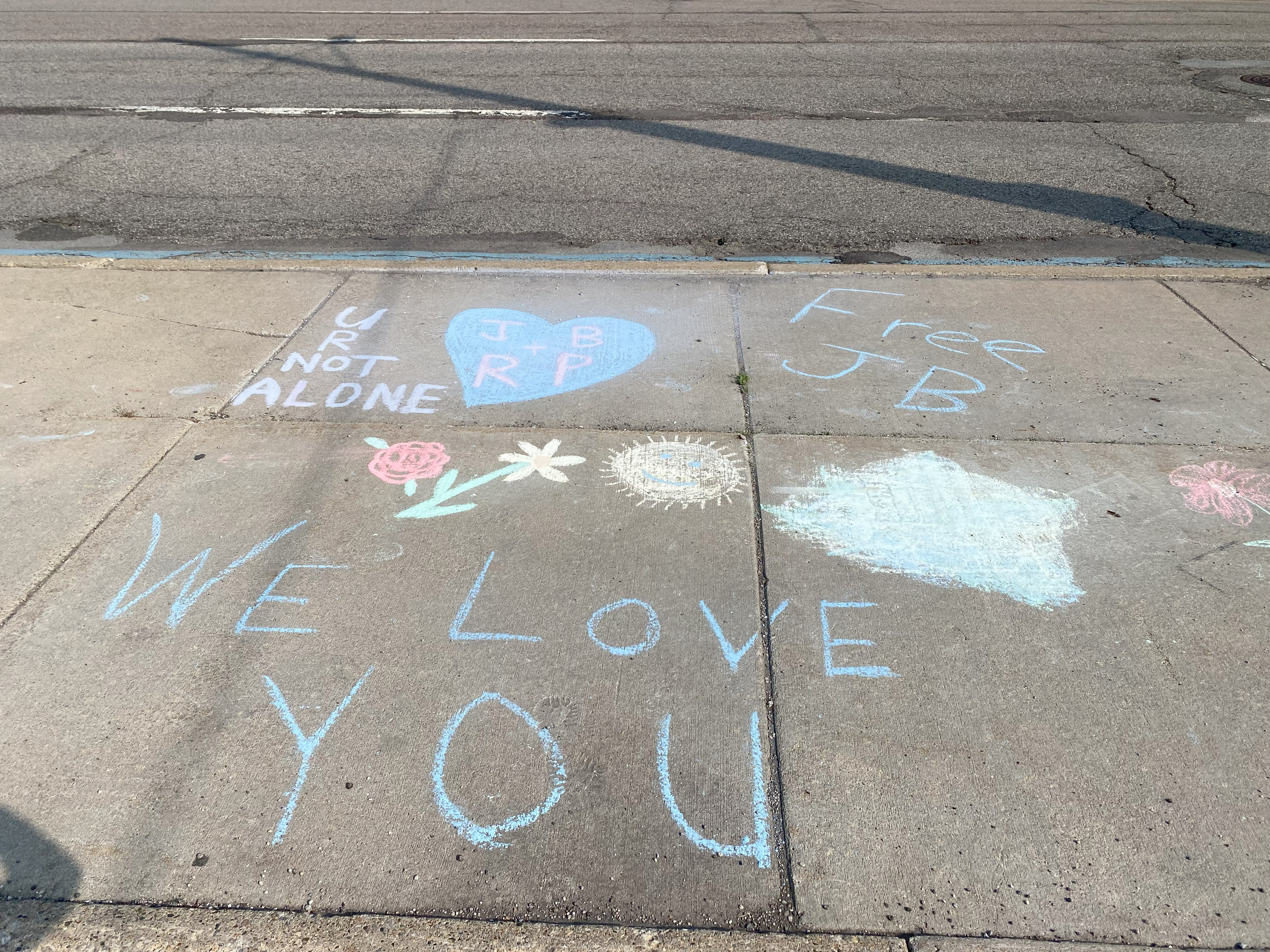
Children in Flint and Port Huron, Michigan have filed two landmark civil rights lawsuits asserting their constitutional right to visit their jailed parents. Hundreds of counties across the United States have banned in-person jail visits for families, depriving children of the ability to see their parents face-to-face for months or years. Why? To make money.
The class action lawsuits allege that beginning over a decade ago, the largest jail telecommunications companies had an idea—if jails banned children and families from visiting each other for free, families would be forced to purchase more expensive phone and video calls. The market for prison and jail “technology services” is dominated by just two companies—Securus Technologies and the company popularly known as Global Tel*Link, or GTL. Each year, these companies extract over a billion dollars in revenue from families forced to pay high prices for low-quality phone and video calls.
Securus and GTL, sheriffs, and county officials across the country worked together to negotiate lucrative monopoly contracts that charge families hundreds of millions of dollars per year while the companies and counties split the profits. The bans on family visits now leave costly, faulty phone and video calls as the only way for children and parents to talk to their jailed loved ones. Taking away the ability of children to hold hands with their mom and dad, hug them, and look them in the eye has devastating effects on the mental and physical well-being of millions of children. And evidence shows it hurts public safety as well.
The plaintiffs have filed two lawsuits. In S.L. v. Swanson, children and parents of people detained at the Genesee County Jail (Flint) sued Sheriff Chris Swanson; Genesee County; GTL; and the company’s CEO, Deb Alderson. In M.M. v. King, family members of people confined at the St. Clair County Jail (Port Huron) sued Sheriff Mat King; St. Clair County; Securus; the company’s billionaire owner, Tom Gores; Platinum Equity, the private equity firm that manages it; and several other corporate executives.
The plaintiffs are seeking immediate preliminaryinjunctions against the bans on family visits so that they can be allowed to see and hug their parents. They are represented by Civil Rights Corps, Public Justice, and Pitt McGehee Palmer Bonnani & Rivers. Partner Alex Spiro and Quinn Emanuel Urquhart & Sullivan have entered an appearance for purposes of litigating the preliminary injunctions.
“Family connection is a foundation of our well-being and society,” said Leslie Bailey, Director of the Debtors’ Prison Project at Public Justice. “Separating parents and children to make money is not only morally reprehensible, it is illegal and violates the Michigan Constitution.”
The complaints allege that by banning all in-person visits, defendants conspired to infringe on the parent-child relationship to make money. As one Genesee County official put it: “That video visitation is going to work…A lot of people are going to swipe that Mastercard and visit their grandkids.” “Well that is a nice increase in revenues!” said one St. Clair County employee. “Heck yes it is!” responded another. “Keeps getting bigger every month too .”
“These lawsuits allege that, for years now, Securus and GTL have essentially bribed counties to ban in-person visits so they can make more money hawking their expensive and drastically inferior forms of communication to families with no other options,” said Cody Cutting, Staff Attorney at Civil Rights Corps. “These companies and counties exploit the love between children and parents to make money, harming children and our communities in the process. We should be supporting children experiencing the pain of having a parent incarcerated, not punishing them.”
“After pandemic lockdowns in which we all felt the pain of being physically cut off from those closest to us, we can all appreciate that phone and video calls cannot compare to seeing and hugging our loved ones,” said Robin Wagner, Partner at Pitt McGehee Palmer Bonnani & Rivers. “For these children, there is simply no substitute for seeing and touching their parents.”
“When you’re talking to someone in person, you can actually feel them,” explained thirteen-year-old Plaintiff C.L. “On the phone, you’re so far away from each other.”
We here at Our Kitchen Table want to let you know that our hearts are with you during this 2020 holiday season. For some of us, the holidays will still hold opportunity for fun and fellowship with loved ones, though perhaps fewer of them than in years past.
For others of us, grief, loneliness, and financial difficulties may be fueling anxiety and depression.
The guide shares, “To preserve mental health, it is essential to maintain a sense of purpose and belonging. It is also important to find inventive ways to connect with others virtually through Facetime, Zoom, Skype or WhatsApp. Do this by maintaining engagement with faith and cultural institutions in a virtual capacity for social support. Additionally, to maintain connectedness with family cook dinner in your respective kitchens and have a remote dinner together while taking turns telling your favorite family story and reminiscing about past events.
Engage in Dr. Sue Varma’s 4 Ms of Mental Health: movement (exercising), meaningful engagement (connecting with other people), mastery (being creative), and mindfulness (deep breathing and being aware). Practicing this formula can bring peace of mind during stressful times. Lastly, make plans and remain hopeful because learning to cope with pandemic stress in a healthy way not only makes you stronger, but makes our community stronger.
Browse the NAMI-Michigan website for even more mental health resources.






 Our Kitchen Table