Tag Archive | Palestine

The risk of famine persists across the whole Gaza Strip.

Dove and Olives print by Caitlin Boyce-Jensen.

Reposted from World Food Program

Given the recent surge in hostilities, there are growing concerns that this worst-case scenario may materialize.

Violence has displaced nearly 2 million people, decimated livelihoods, crippled food systems, destroyed 70 percent of crop fields, severely restricted humanitarian operations and resulted in the collapse of health services and Water, Sanitation and Hygiene (WASH) systems.

Catastrophic acute food insecurity and concerning acute malnutrition levels will continue to prevail if the conflict continues, and humanitarian activities are restricted.

Starvation as a weapon of war.

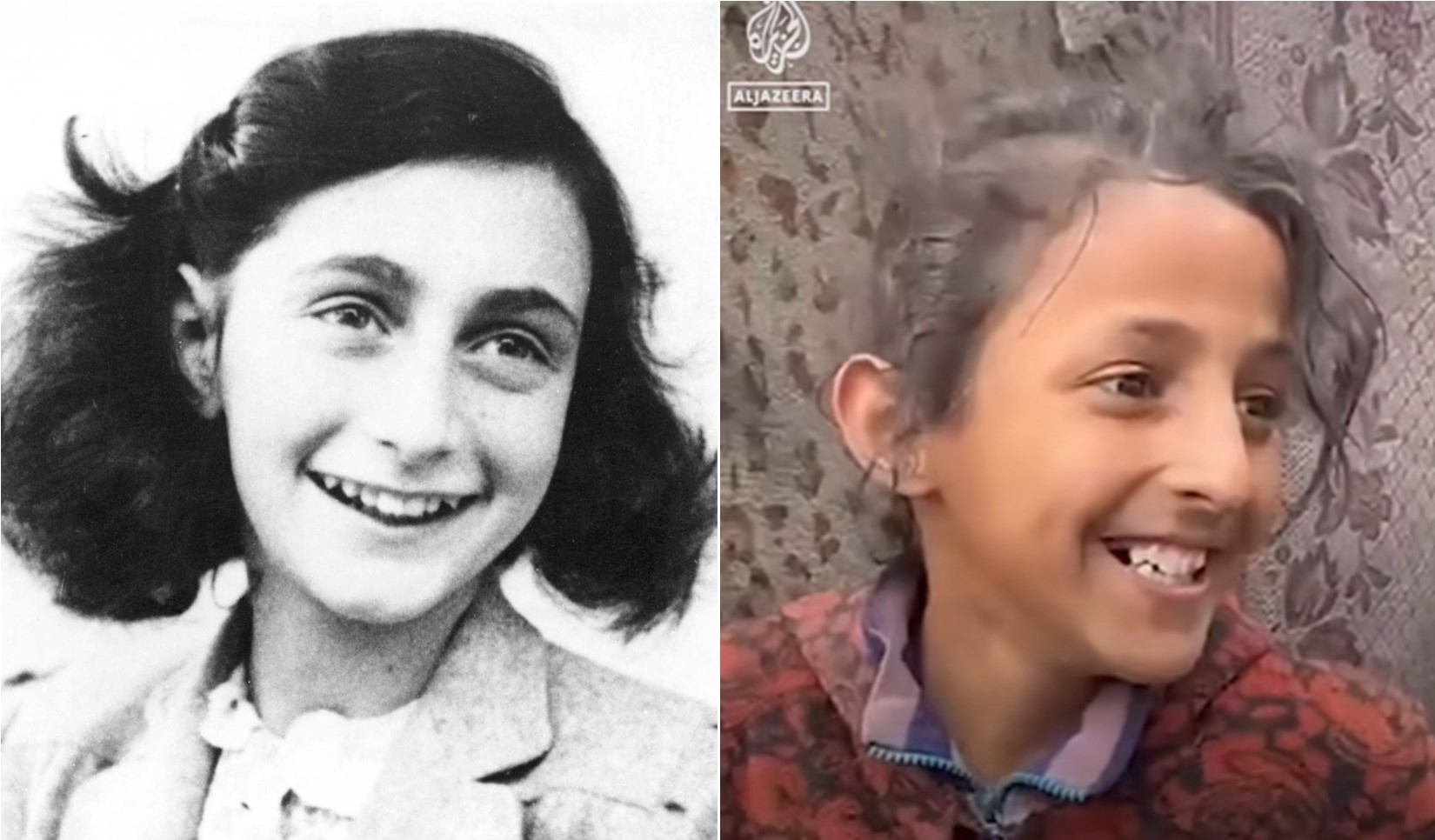
Most of us know the story of Anne Frank. But have you seen this Palestinian girl’s story? 

Please watch it here.

One of the most egregious forms of food injustice is the use starvation as a weapon of war. Throughout history, conquerors and colonialists have used this tactic. In the 1800s, the U.S. government encouraged the slaughter of buffalo in order to starve Native Americans off from from their lands. In Nazi Germany, Hitler used it against Germany’s Jewish citizens. In 2018, the use of starvation as a weapon of war was outlawed by the UN Security Council in Resolution 2417. But today, this weapon is being used against the infants, children, adults, and elders in Gaza.

Contact your senator and representative and ask them to vote for not only a ceasefire, but also aid and restoration of the supply chain in occupied Palestine.

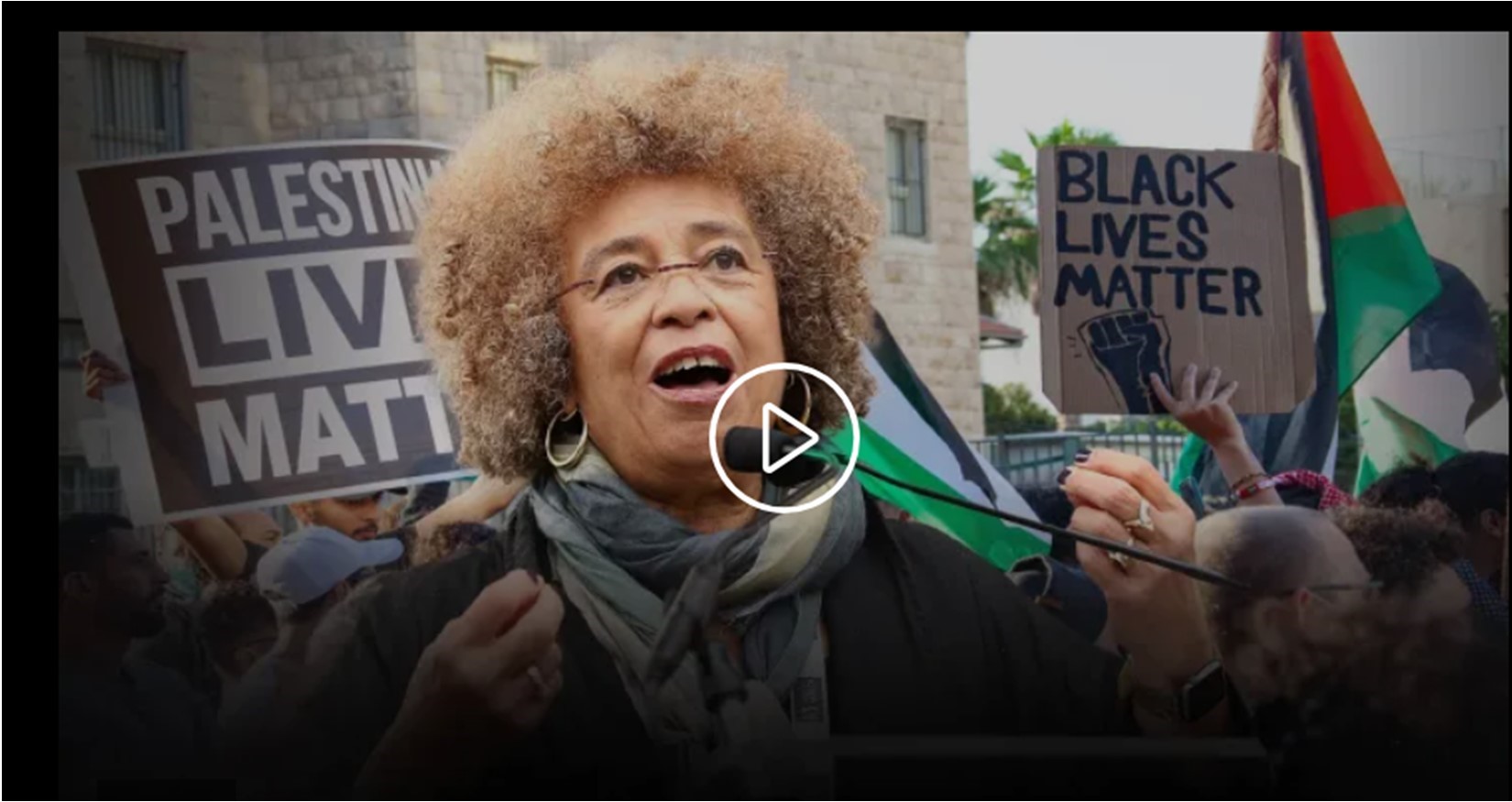
Angela Davis: “Palestine is a moral litmus test for the world”

Watch the full video interview here. Reposted from UpFront.

Citing the late poet June Jordan, political activist Angela Davis stresses the importance of Palestine for other social justice movements.

There has been a long history of solidarity between Palestinians and Black Americans, and these last few weeks have been no exception.

While Israel continues its bombardment of Gaza, numerous Black activists in the United States have come together to demonstrate their solidarity with Palestinians.

These two places are more than 6,000 miles away from each other, with very different histories. So what’s behind this common recognition of a shared struggle?

On UpFront, renowned political activist Angela Davis speaks with Marc Lamont Hill on the history and meaning of Black American solidarity with the Palestinian cause.

OKT joins in commemorating Dr. Martin Luther King

“This I believe to be the privilege and the burden of all of us who deem ourselves bound by allegiances and loyalties which are broader and deeper than nationalism and which go beyond our nation’s self-defined goals and positions. We are called to speak for the weak, for the voiceless, for the victims of our nation and for those it calls ‘enemy,’ for no document from human hands can make these humans any less our brothers.” Dr. Martin Luther King

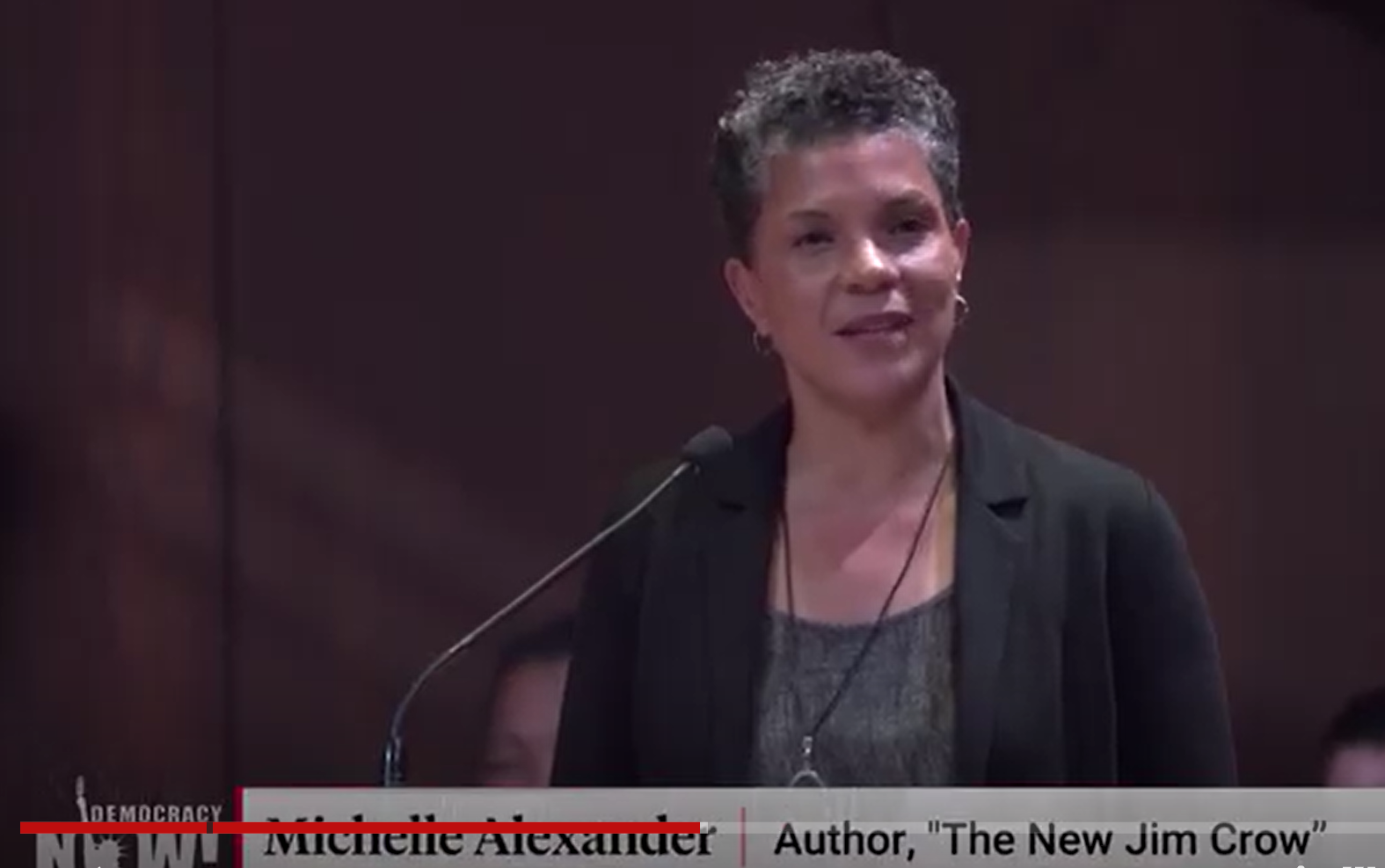
Dr. Martin Luther King’s 1967 speech about the Viet Nam war is not the one you’ll find on greeting cards. Those of us familiar with that speech wonder what Dr. King would have to say about the continuing genocide in Palestine. Civil rights attorney Michelle Alexander, author of The New Jim Crow: Mass Incarceration in the Age of Colorblindness had this to say on the subject during her presentation at “But We Must Speak: On Palestine and the Mandates of Conscience,” a November 2023 event organized by the Palestine Festival of Literature in New York

The fact that so many people are here tonight, so many, from all different religions, races, genders, is itself a testament of hope. I know that so many of us are carrying a great deal of grief, fear, anger, internal conflict and despair into this room. I hope that we can breathe together, now that we have arrived, exhale, open our hearts to one another and listen deeply to each other. We are here. We are many. We are not alone.

It’s no secret that many people are closing their doors to these kinds of vital conversations right now, fearful of what others might say, think or do in response. And so I am enormously grateful that Serene said yes when I asked her if the Palestine Literary Festival could come to Union and use this sacred space. She said yes, knowing that her decision might invite criticism or rebuke. But she also knew that James Chapel has been a site of many, many difficult, courageous conversations, dialogues that are essential to our collective liberation and the creation of beloved community.

In fact, it was in this very space that Reverend Dr. Martin Luther King Jr. was originally scheduled to deliver his 1967 speech condemning the Vietnam War. The event was ultimately relocated to Riverside Church across the street due to the overwhelming number of people who wanted to hear what he had to say and our space limitations here.

At Riverside, Dr. King stepped to the podium and said, quote, “I come to this magnificent house of worship tonight because my conscience leaves me no other choice. A time comes when silence is betrayal. And that time has come for us in relation to Vietnam.”

Dr. King acknowledged how difficult it can be for people to speak out against their own government, especially in times of war, and that the temptations of conformity may lead us toward a paralyzed apathy. He did not deny that the issues present in Vietnam were complex with long histories. And he recognized that there were ambiguities and that North Vietnam and the National Liberation Front were not paragons of virtue. But he said that he was morally obligated to speak for the suffering and helpless and outcast children of Vietnam. He said, quote, “This I believe to be the privilege and the burden of all of us who deem ourselves bound by allegiances and loyalties which are broader and deeper than nationalism and which go beyond our nation’s self-defined goals and positions. We are called to speak for the weak, for the voiceless, for the victims of our nation and for those it calls ‘enemy,’ for no document from human hands can make these humans any less our brothers.

He condemned the Vietnam War in unsparing terms. He decried the moral bankruptcy of a nation that does not hesitate to invest in bombs and warfare around the world but can never seem to find the dollars to eradicate poverty at home. He called for a radical revolution of values. He said, quote, “We must rapidly begin the shift from a thing-oriented society to a person-oriented society. When machines and computers, profit motives and property rights are considered more important than people, the giant triplets of racism, extreme materialism and militarism are incapable of being conquered,” end-quote.

Dr. King was condemned by virtually every major media outlet in America for taking this stand. And even within the civil rights community, many imagined that he was a traitor to the cause. And yet we now know — deep within us we know — that he was right. He is right. He is right today as he was back then about the corrupting forces of capitalism, militarism and racism and how they lead inexorably toward war.

And he was right that our conscience must leave us no other choice: We must speak. When the oppressed, the poor, the weak are under attack, when their homes are stolen or demolished, when they are forced to migrate and to live in unspeakable conditions, in open-air prisons, concentration camps, perpetually as refugees under occupation, we must speak. We must speak when Jewish children are brutally killed in the name of liberation, when antisemitism and Islamophobia slip in through the back door of supposedly progressive spaces. When Palestinian children in refugee camps are bombed and killed, when schools and hospitals and entire neighborhoods are laid waste, we must speak. When international law is treated like a naive suggestion, we must speak. Yes, it may be difficult. Yes, we will make mistakes. We are human. And yes, we may be afraid. But we must speak. Countless lives and the liberation of all of us depend on us breaking our silences.

And what’s required in these times, as I see it, is not only activism and politics, but also deeply personal spiritual work. As Grace Lee Boggs once said, quote, “These are the times to grow our souls.”

All of us have a conscience that whispers to us, sometimes in the dark. The mandates of conscience that arise within each of us arise not out of loyalty to abstract principles or doctrines, but from a place of deep knowing, a deep knowing that we owe something to each other as human beings, that we belong to each other, and that our freedom and liberation depends on one another. If I do not stand and speak up when the bombs are raining down on you, then who will speak up for me, for my loved ones, when the tables are turned? As James Baldwin wrote to Angela Davis more than 50 years ago when she sat in a prison cell ‘For, if they take you in the morning, they will be coming for us that night.’”

Detroit rallies for Palestine & Detroit Water Shut-offs

Reposted from The Electric Intifada  Submitted by Jimmy Johnson on Tue, 07/15/2014 – 01:10

Members of the Z Collective, one of the sponsoring organizations. (Noura Balout)


Over 1,000 people turned out for a demonstration and public outreach campaign in Detroit on Sunday outside the annual Concert of Colors on Woodword Avenue near the Wayne State University campus.

The day focused on both Israel’s ongoing military attacks against Palestinians in the Gaza Strip and the recent water shut-offs by the Detroit Water and Sewage Department. Tens of thousands of primarily black, working class residents are going thirsty because of this move by the bankrupted city of Detroit. It has been condemned as a public health disasterin the making by the largest professional association of nurses in the US.

An informal working group, which is part of a black-Palestinian and black-Arab solidarity effort, mobilized the largest local turnout for a Palestine event in recent years.

The crowd paused along Woodward Avenue. (Invincible)

Rather than choose symbolic or concrete places of oppression for the protest, organizers (of which I was one) decided to bring the message directly to the people. Demonstrators initially gathered outside of the Max Fisher Theater on Woodward Avenue, where the annual high-profile Concert of Colors was to begin.

The marchers engaged people they encountered in conversation, with leaflets calling for solidarity and joint struggle between Palestine and Detroit. At both the gathering spot and along the march demonstrators chanted, “Free Palestine! Free Detroit!” while numerous cars drove by with large Palestinian flags.

Claiming an elevated spot in the gathering space, Zena Ozeir, one of the organizers and a member of sponsoring organization the Z Collective (a Muslim feminist group), kicked off a series of rousing speeches, poetry and rhyme by local activists and artists from Detroit and the surrounding area.

Speakers included Dawud Walid from the Council on American-Islamic Relations, Detroiter and Palestinian-American member of the Michigan state legislature Rashida Tlaib, poet Omar Aburashed and hip-hop artists and organizers Invincible and William Copeland.

The poetry and speeches addressed both the Israeli attacks on Gaza and the bureaucratic attacks on both the Palestinian and Detroit water systems. The action was endorsed by numerous organizations representing large parts of black social justice groups in Detroit and Arab, Muslim and Palestinian groups in Dearborn and metro Detroit.

At the gathering place there was a “photo booth” where demonstrators could pose for photos with protest signs as one way for the protest to produce not only speeches and chants of dissent and solidarity, but critical art as well.

In the words of Copeland, a local delegate to the 2012 World Social Forum – Free Palestine: “People were claiming and being fully present in the space.” He pointed to the rousing crowd responses and sense of camaraderie, and also to the crowd’s maintenance of the space with hundreds of people remaining for long after the action ended.

The event was a success, yet organizers saw significant room for growth in solidarity and building joint struggle between Palestine and Detroit. Copeland remarked that “It’s a long term work to connect black populations to the struggle in Palestine, and it’s a long term struggle to connect those groups supporting Palestine to the struggle in black Detroit.”

On the event’s Facebook page, some (apparently Palestinian) metro Detroit community members accused organizers of trying to “push alternate agendas” by including human rights violations in Detroit as a central part of the rally. Several people commented that the mass water shut-offs were not human rights violations at all but simply the inevitable result of an unpaid water bill.

Organizers William Copeland and Dawud Walid. (Invincible)


One demonstrator named this as part of the work to be done in building solidarity and joint struggle in Detroit, saying, “There’s a gap in communication between the African experience, the black experience, and the Arab experience.”

Indeed, it is the tens of thousands of overwhelmingly working class and black residents of Detroit who are affected by the shut-offs. Several large venues frequented more commonly by wealthier, non-black metro Detroit residents saw no shut-offs, despite unpaid water bills amounting to tens of thousands of dollars each.

The shut-offs are no more a simple bureaucratic response to unpaid water bills than Israeli administrative home demolitions are a bureaucratic response to Palestinian construction without permits. This message needs to be better communicated.

The demonstrators responded in a uniformly positive way on the day and in the time since, continuing to post glowing messages and photos on the event’s Facebook page and contacting the action’s organizers. Copeland noted that the day was “a step, a big step” in the direction of building joint struggle between Detroit and Palestine.

A full video of the day can be viewed at https://www.youtube.com/watch?v=zVVli8xeU6U