
Reposted from the MEJC newsletter.
Remembrance of anniversaries are typically made from a standpoint of progress, but Flint activists say that though the crisis was the shot heard around the world, rallying outrage against the worst of the country’s environmental injustices, the call for help is still ringing from inside the city.
The city’s administration marked its 10-year anniversary by offering tours of its water plant, showcasing the latest upgrades and renovations. It’s a dystopian contrast considering the 3 demands from Flint residents —affordable clean water, pipe replacement, and healthcare—have yet to be met. Many still wake up to leaded pipelines and are forced to buy bottled water while also paying steep water bills.
“We’re seeing other communities like Benton Harbor, and Newark New Jersey, and everything, you know actually get work done. We’re so happy that [they] did. And we were a part of that, and happy for them, we’re still looking around saying, ‘we still can’t drink our water’,” said Melissa Mays, activist with our coalitional partner Flint Rising and founder of Water Are You Fighting For
This wouldn’t seem to be the case given that the Flint Water Crisis helped fine-tune critical state and federal environmental laws like the Safe Drinking Water Act and the Lead and Copper rule. But the same week of the 10-year anniversary of its water crisis, Flint, Michigan, was not represented at the April 23 White House Water Summit and the city was not mentioned alongside Detroit, Milwaukee, and Chicago in the Great Lakes Lead Pipes Partnership, a plan meant to fast-track the replacement of an estimated 555,000 lead service lines in the “Great Lakes big cities.” It is a portion of the administration’s Bipartisan Infrastructure Law and American Rescue plan, to replace all lead service lines within the next decade. These initiatives and the funding were only possible because of the Flint Water Crisis and its activists, said Mays.
“We’re still sitting here 10 years later with the same rotting infrastructure. And everybody’s just looking the other way,” said Mays.
Mays feels that Flint is overlooked as a result of perpetual “political finger-pointing” where the issues are tossed around in a game of Democrat v. Republican ping pong and the solutions dissipate between mayoral terms. The core of the water crisis is a human issue, not a political one, said Mays but this and the other growing crises that are grasping for public attention leave Flint in the nation’s blindspot.
Progress inevitably grows in between the bitter sweet though. May’s son learn’s beside other rapt learners in the Flint Public Health Youth Academy, often coming home reciting information public health disparities. Overall, residents have been forced to become more educated and aware, making them more and more willing to make their voices heard, said Mays.
“We still have a lot of folks that don’t believe this is what we deserve. We deserve better. And that’s what we hang on to and reminding us that we’ve changed the world. Flint changed the world for the better. And it’s not over yet.”



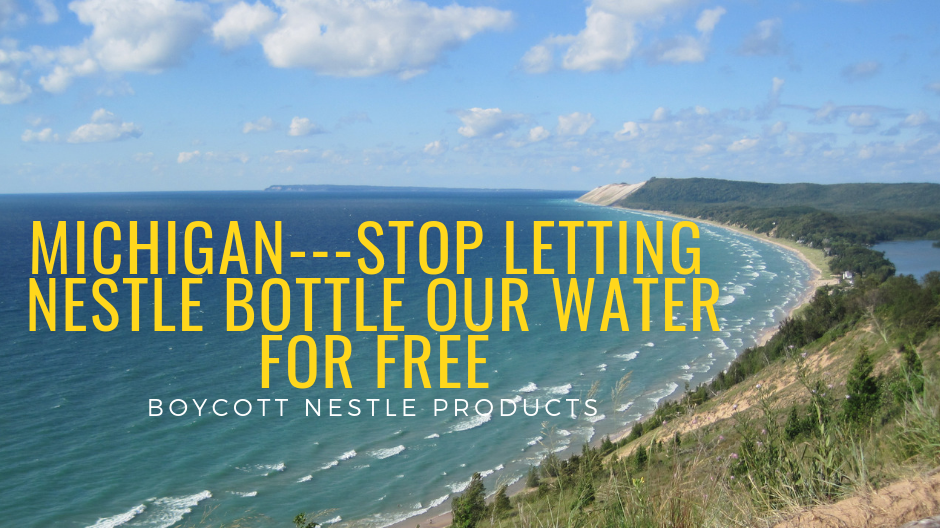

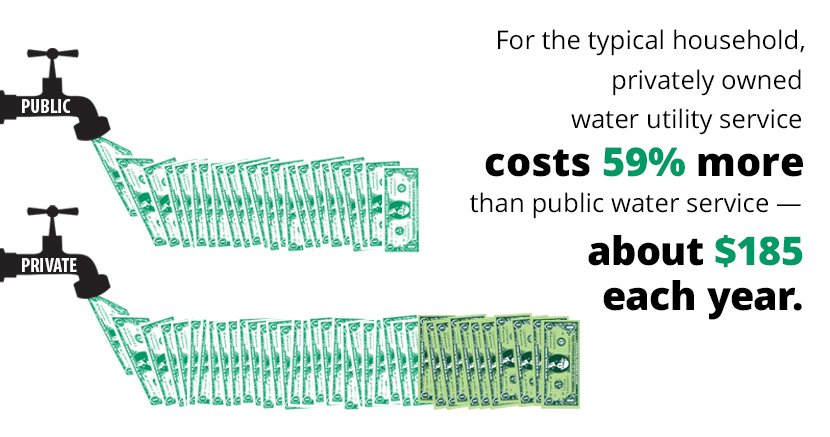 According to Food and Water Watch, water privatization “undermines the human right to water … When private corporations buy or operate public water utilities – is often suggested as a solution to municipal budget problems and aging water systems. Unfortunately, this more often backfires, leaving communities with higher rates, worse service, job losses, and more.”
 In its handouts, OKT often includes the words, “Healthy food is your family’s right.” We also proclaim, “Clean, harmless water is your family’s right.” This right must be taken by
 Our Kitchen Table