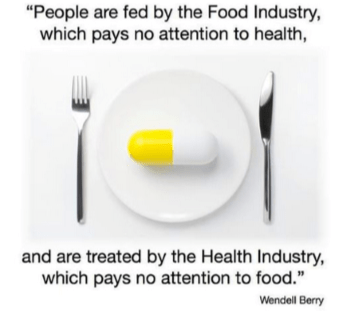
 This is the eighth in a series of weekly posts highlighting OKT’s Food Justice series. You can download series handouts here for free.Most Americans would put healthcare near the top of their list of concerns. Healthcare is not only an issue of cost, but deeply impacts our daily lives. Through the lens of Food Justice, Our Kitchen Table believes that Americans are facing a public health crisis; a major contributor to this crisis is the current food system.
The consequences of poor health are directly linked to the kind of food we eat and have access to. Whether heart disease, diabetes, obesity or any number of current health issues, all connect to what foods we eat and have access to.
Though we all have some responsibility for improving our health, the current agribusiness-driven food system is the main culprit in creating poor public health. From a Food Justice perspective, here is how we understand the issues of food and public health.
- Agri-business manufactures processed food items that make up the majority of what people buy in grocery stores. Most of these food products are unhealthy to consume over an extended period of time.
- These processed food items are saturated with sugar, salt, fat and chemical preservatives, which contribute to poor public health.
- Agri-business spends millions of dollars every year lobbying Congress to limit any regulation of the food system. This makes it difficult for us to know what foods make us unhealthy.i
- Agri-business spends billions every year researching new ways to make food items that are highly addictive. This is why we all really like the stuff that is not healthy.ii
- Agri-business spends billions more marketing the unhealthiest foods to the public: soda, candy, snack foods, fast food and many other highly processed food items. Much of this marketing targets children between the ages of two and 18.iii
- The current Agri-business driven food system most negatively impacts the people most marginalized in our country—people experiencing
poverty, communities of color, children and immigrant communities.
Agri-business costs us billions of dollars in public health care costs every year. Those who have the least healthcare insurance and or no insurance are the ones most |negatively impacted by these health care costs. The bottom line? The current food system profits by making us all sick.
What can we do about this?
- Stop solely blaming individuals for unhealthy eating habits and instead realize that the current food system is the root of poor health.
- Educate ourselves and organize campaigns that frame public health through a Food Justice lens.
- Find allies working on public health issues and build our own power base in order to confront the current food system and create community-based options for eating healthier.
- See that poor public health is connected to racism, sexism, economic exploitation and other forms of oppression.
- Support local farms, organizations and retailers that provide nutritious, healthy food that the most marginalized can access.
- Expand urban growing opportunities for communities experiencing poor health
- Create greater access to neighborhood-based farmers markets and provide more food sharing and community kitchen opportunities— the people most negatively impacted by the unhealthy food system have fewer resources (and time) to prepare and preserve food that is not processed.
- Pressure public health officials to acknowledge that many of the major health issues we face are caused by the food system and ensure that those same health institutions develop new strategies that challenge the current food system.
- Grow some of our own food as an opportunity to eat better and develop greater awareness of how food impacts our health.
Sources:
- www.opensecrets.org/industries/indus.php?ind=A
- Salt Sugar Fat: How the Food Giants Hooked Us, by Michael Moss
- http://casestudies.digitalads.org/wpcontent/uploads/2011/10/digitalads_brief_report.pdf
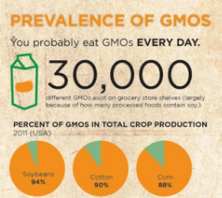 Genetically Modified Organisms (GMOs) are deeply entrenched in our current food system. Most of us don’t even know when we are eating something that contains GMOs. So what is the big deal? And what do GMOs have to do with food justice? The corporations behind the development and proliferation of GMOs would certainly like us to quit asking questions. Since Our Kitchen Table is a food justice organization, it’s our mission to ask such questions.
 The good news is that an international movement to ban GMOs is gaining ground. Several dozen countries have already banned the use of GMOs; more countries are moving in that direction. Our Kitchen Table supports banning GMOs in favor of biodiversity. The more biological diverse our diet is, the better off we will be. We also support transparency on the GMO issue. Most of us are eating GMO foods right now and don’t even know it. In the US, food labels do not have list GMOs. Many states are attempting to pass legislation to require that GMOs are labeled, but the agribusiness sector is spending billions to defeat such efforts.
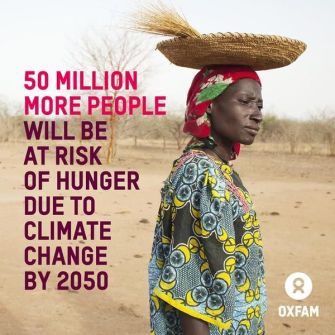 “Wild weather and unpredictable seasons are changing what farmers can grow and is making people hungry. Food prices are going up. Food quality is going down. Soon, climate change will affect what all of us can eat.”
 This is the fifth in a series of weekly posts highlighting OKT’s Food Justice series.
  Almost all workers in the food industry earn an unjust wage—from migrant workers and those working in food processing plants to grocery store clerks and people in restaurants, institutional food cafeterias and fast food chains. In both the restaurant and agriculture industries, minimum wage laws do not apply. Migrant workers are at the mercy of whatever farm owners want to pay them; people working for tips in restaurants have a whole different minimum wage standard applied to them.
 When we enter a grocery store, shop at a farmers market, eat at a restaurant or look at food labels, we should ask:
 Reposted from
  Lisa Oliver-King
 OKT dropped by the Grand Rapids African American Museum & Archives (GRAAMA) Royal Opening on December 26. GRAAMA is currently located at 87 Monroe Center, downtown Grand Rapids. The space functions as a museum store and donations center. The opening coincided with the first day of Kwanzaa, Umoja. Festivities included a ribbon cutting, proclamation and Kwanzaa ceremonies. It also kicked off a membership and fundraising campaign in hopes GRAAMA can secure a building for its permanent collection.


 This is the fourth in a series of weekly posts highlighting OKT’s Food Justice series.
 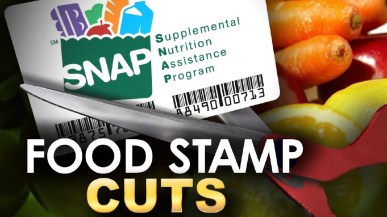 While providing huge subsidies to agribusiness, the 2014 Farm Bill cut $8.6 billion in Food Assistance. During a time when more and more Americans live in poverty and rely on government food assistance programs, Congress decided to drastically cut these funds and give more taxpayer money to large corporations.
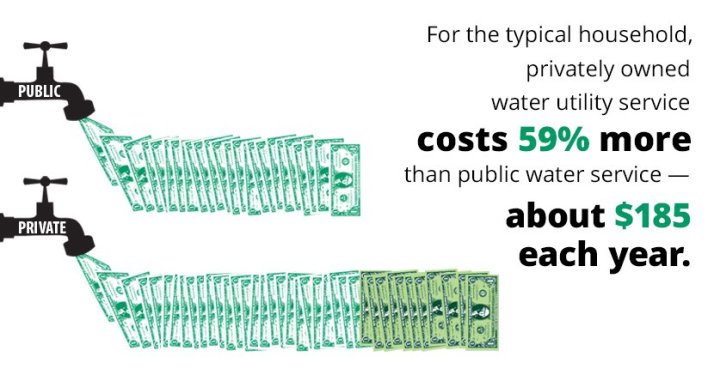 According to Food and Water Watch, water privatization “undermines the human right to water … When private corporations buy or operate public water utilities – is often suggested as a solution to municipal budget problems and aging water systems. Unfortunately, this more often backfires, leaving communities with higher rates, worse service, job losses, and more.”
 In its handouts, OKT often includes the words, “Healthy food is your family’s right.” We also proclaim, “Clean, harmless water is your family’s right.” This right must be taken by
 Our Kitchen Table