Archives

Healthier holidays begin with your fork and spoon

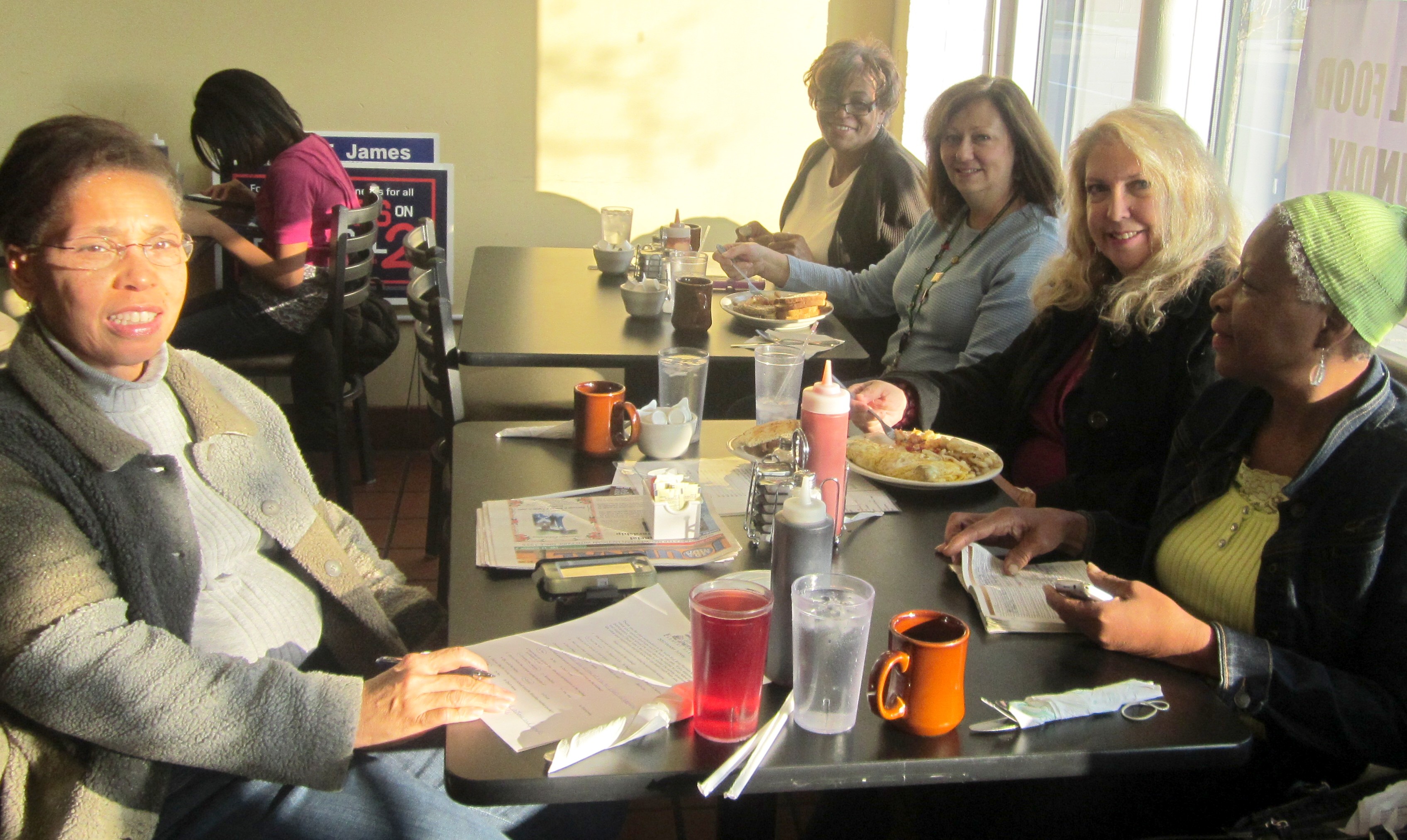
The Greater Grand Rapids Food Systems Council hosted Southeast Area Farmers’ Market vendors for an appreciation breakfast at Sanchel’s Breakfast Anytime last week. Left to right, Darlene Gibbons, vendor; Roni VanBuren, OKT; Jill Myer, KCHD; Cynthia Price, GGRFSC; and Yvonne Woodard, Vendor and OKT Vendor Liaison.

Last week, many of us kicked off the holiday season with a delicious Thanksgiving Day feast. At work and family gatherings, you may find ample opportunity to over-indulge in high-calorie, low-nutrient foods. Do your health a favor by limiting the amounts you let in your mouth.

Did you know that if you eat just 300 additional calories between now and New Year’s Day, you could gain five pounds of unwanted fat? In addition to added weight, indulging in sugary treats can also weaken your immune system, making you more likely to come down with winter colds and flu.

When tempting treats come your way, remember the following:

The banquet’s in the first bite. Did you ever notice that the first bite you take of a favorite food tastes the best? When it comes to high calorie treats, indulge in just one bite… or maybe two.

Portion patrol. Your stomach is about the size of your fist. Plan your portions accordingly. If you are served twice that much, save half for later.

Take your time. It takes your brain about 20 minutes to realize your stomach is full. Eat slowly, put your fork down in between bites and instead of reaching for seconds, wait 20 minutes to see if you are still hungry.

Get wet. Oftentimes, we confuse thirst with hunger. Make sure you are drinking at least 8 to 10 8-ounce glasses of water each day. Drink a full glass before meals so it takes less food to fill your stomach.

Just because the Southeast Area Farmers’ Market has closed for the season, keep on eating fresh fruits and veggies. While the grocery store variety may not compare to farmers’ market fare, choosing fresh produce rather than junk food snacks is always the healthier choice.

Help stop the unjust land-grab in Detroit

Lottie Spady, Eastern Michigan Environmental Action Council,  explains why the proposed sale of 1,800 lots of land to John Hantz is a case of preferential treatment and foregoes the rights of Detroit’s citizens. Share this with your Detroit area friends and contact  Detroit’s City Council about this unjust land-grab!

Still time to Double Up Food Bucks at Fulton Street Market

People shopping with a Bridge Card or with Double Up Food Bucks (DUFB) tokens left over from the Southeast Area Market can still take advantage of this program through the end of November locally at the Fulton Street Farmers’ Market. This is the only Grand Rapids area farmers’ market in the program that hasn’t closed for the season.

The Fulton Street Market is open Tuesdays, Wednesdays, Fridays and Saturdays from 8 a.m. -3 p.m. Simply stop by the Bridge Card booth in the brick building on Fulton and Fuller St. to get your DUFB tokens.

When a person eligible for SNAP (Supplemental Nutrition Assistance Program) uses their SNAP Bridge Card to shop for food at a farmers’ market, the amount of money spent is matched with Double Up Food Bucks bonus tokens. Shoppers earn up to $20 per market day in credits on their Market Card by using their Bridge Card to buy Michigan-grown fruits, vegetables and other approved farm foods with any participating vendor.

If you find it difficult to put healthy food on the table, USDA’s nutrition assistance programs may be able to help. Call 1-855-ASK-MICH. For information on emergency food assistance, visit the Food Bank Council of Michigan or call United Way’s 2-1-1 service (dial 211 on any phone). To apply for a Bridge Card, visit the website www.mibridges.gov on your home computer, at the library or at the Department of Human Services building.

New York Times article giddy over downtown GR market

Reposted from www.GRIID.org

Yesterday, the New York Times published a story about the market in downtown Grand Rapids, which is currently under construction.

The NYTs piece does what most local news coverage has done with this story so far, presented it as a wonderful thing. The Times piece talks about public/private partnerships, the benevolence of local philanthropists, the growing local food interest and how the market is one piece in the ongoing development of downtown Grand Rapids.

The only sources cited in the article are David Frey, a member of Grand Action, the entity that made the proposal; a representative from Rockford Construction, which is the primary construction company on this project; and the person who was hired to manage the market.

Excluded from the article are voices and perspectives that see this project through a much different lens.

For example, Our Kitchen Table, a local grassroots group working on food justice, had this to say about the New York Times article:

While it’s nice to see Grand Rapids receive national recognition, access to fresh, nutritious food in Grand Rapids’ neighborhoods remains a privilege reserved for those who can afford higher prices and transportation outside of the city’s food desserts. Our Kitchen Table works to address this injustice through food gardening programs and the Southeast Area Farmers’ Market. However, as government policies do not favor the small farmer, we have a hard time finding vendors who can afford the small returns our market brings them. In addition, existing philanthropic efforts to feed the hungry more often fill bellies with low-nutrient, high sugar, processed foods that only exacerbate medical issues caused by malnutrition: obesity, asthma, diabetes, heart disease and behavioral problems. While food industry donors get write offs, lower income families are written off. Furthermore, we do not believe the new Downtown Market will do anything to improve access to healthy foods for the Grand Rapids families who need it most.

Such a statement speaks to why this blog have been critical of the proposal from the beginning. We pointed out in an April 2010 article that the project was not just a farmers market, but a larger food complex that will serve an upscale population. InMay of 2010, we posted a second article that provided a summary from a meeting where area residents and food activists raised questions about the proposal, stating that many who live in the Heartside area and south and south east of the market site were not included in any discussions about the project.

The project was approved despite the lack of public input and since then has been receiving millions of dollars in public funding. Is this what is meant is meant by public private partnership? The private sector benefits, while the public foots the bill?

We reported in a December 2011 article that the amount of public funds for this project are substantial. The Michigan Economic Growth Authority (public money) gave the project a $4.5 million grant, the DEQ (public money) gave a $1 million grant for demolishing the previous building on site and the DDA (public money) has also provided the project with over $1 million and is committing an additional $75,000 annually for the next 20 years.

Imagine if that kind of monetary commitment was given to groups like Our Kitchen Table, we might actually be able to eliminate malnourishment in Grand Rapids. Too bad that is not anywhere near the goal of the soon to be open downtown market.

Go healthy with greens, fresh or frozen

Our contest winner, Donna King (right), braved the elements to share her delicious “Donna’s Greens and Cornbread.”

Cold, rainy weather put a damper on the Southeast Area Farmers’ Market October 13 Greens Cook-off and Green Tomato Festival. Our contest winner, Donna King, braved the elements to share her delicious “Donna’s Greens and Cornbread.”

Don’t let the weather fool you. Now is the perfect time of year for cooking greens. Greens like collards and kale can keep on growing and producing into December. Greens are easy to preserve in your freezer, too.

Here’s how. For collards, cut of the stalks and cut out the thick center stem. Fold the leaves and cut into bite size pieces. Heat a large pot of water on the stove to boiling. Blanche a couple big handfuls of greens in the boiling water for two minutes. Scoop out with a large slotted spoon or colander with a handle. Let drain and cool in another colander. Press out excess water (or spin it out with a salad spinner). Freeze in freezer bags.

While fresh always tastes best, the frozen greens sure taste good during those long winter months when locally grown produce is less available. Plus, your frozen greens provide you with lots of nutritional benefits. Research shows frozen vegetables have almost as much nutritional value as fresh—especially if you are buying them from a local source.

Do We Really Need Industrial Agriculture to Feed the World?

This video is re-posted from the Institute for Agriculture and Trade Policy via GRIID.org.

Have you heard the myth that we need industrial agriculture to feed the world?

The biggest players in the food industry—from pesticide pushers to fertilizer makers to food processors and manufacturers—spend billions of dollars every year not selling food, but selling the idea that we need their products to feed the world. But, do we really need industrial agriculture to feed the world? Can sustainably grown food deliver the quantity and quality we need—today and in the future? Our first Food MythBusters film answers these questions and more in under seven minutes.

Skill-share, “Canning Applesauce & Brewing Herbal Teas for the Cold Season” this Saturday

Our Kitchen Table hosts the last in its 2012 series, Preserving the Harvest, with a skill share on Canning Applesauce & Brewing Herbal Teas for the Cold Season. Co-sponsored by The Bloom Collective, the event takes place upstairs from The Bloom space in the kitchen of Steepletown Center, 671 Davis NW (corner of 5th) this Saturday, Sept. 29 from 2 – 4 p.m.

Facilitated by Jeff Smith, from The Bloom Collective, and Stelle, from The Bloom and OKT, the skill-share is free and open to everyone. OKT will provide fruit and jars.

OKT initiated the Preserving the Harvest series not as a way to jump on board the current “canning bandwagon,” but as part of its efforts to build an alternative food system within Grand Rapids’ neighborhoods. Canning your own food is easy and cheaper – you end up with a superior product when it comes to nutrition and flavor.

In addition, canning your own locally grown food takes you a step away from the industrial food system, a food system that is environmentally unsustainable, nutritionally bankrupt and profits by underpaying farmers and farm workers.

Are you one of the millions of Americans without health insurance? Brewing your own cold season remedies can provide you a gentle, inexpensive alternative to often dangerous prescription and over the counter remedies. We will look at simple teas that help relieve symptoms of sinus congestion, sore throat, cough and tummy troubles. If you have your own remedies, please bring them along to share.

In San Francisco, a secret project bears fruit

The Guerrilla Grafters are turning the city’s non-bearing public trees into an urban orchard — despite city regulations.

By Maria L. La Ganga, Los Angeles Times

Re-posted from the LA Times

SAN FRANCISCO — All Tara Hui wanted to do was plant some pears and plums and cherries for the residents of her sunny, working-class neighborhood, a place with no grocery stores and limited access to fresh produce.

But officials in this arboreally challenged city, which rose from beneath a blanket of sand dunes, don’t allow fruit trees along San Francisco’s sidewalks, fearing the mess, the rodents and the lawsuits that might follow.

So when a nonprofit planted a purple-leaf plum in front of Hui’s Visitacion Valley bungalow 31/2 years ago — all flowers and no fruit, so it was on San Francisco’s list of sanctioned species — the soft-spoken 41-year-old got out her grafting knife.

“I tried to advocate for planting productive trees, making my neighborhood useful, so people could have free access to at least fruit,” she said. “I just wasn’t getting anywhere.”

Today, Hui is the force behind Guerrilla Grafters, a renegade band of idealistic produce lovers who attach fruit-growing branches to public trees in Bay Area cities (they are loath to specify exactly where for fear of reprisal).

Their handiwork currently is getting recognition in the 13th International Architecture Biennale in Venice, Italy, as part of the U.S. exhibit called “Spontaneous Interventions: Design Actions for the Common Good.” Closer to home, however, municipal officials have denounced the group’s efforts.

Even the urban agriculture movement is torn when it comes to the secretive splicers, outliers in a nascent push to bring orchards to America’s inner cities. While many applaud their civil disobedience, others fear a backlash against community farming efforts. And few believe their work will ever fill a fruit bowl.

Not that that really matters.

“It’s like the gardener’s version of graffiti,” said Claire Napawan, assistant professor of landscape architecture at UC Davis and a grafters sympathizer. “Even if there’s some question about its ability to produce enough food to make a difference … as an awareness piece, it’s a good idea.”

::

On a sunny day toward the end of summer, Hui was bent over an immature tree, searching for the tell-tale strip of electrical tape that would show where a fruit-producing branch had been spliced onto an ornamental plant.

The small stand of cherry trees had been transformed during the most recent grafting season, late winter to early spring, using a simple method that Hui described as being “like tongue and groove in carpentry.”

First a slit is made in the host tree. Then the alien branch is whittled into a pointed wedge. The grafter inserts the wedge and matches up the elements’ nutrient-transporting layers before securing the area with tape. The Guerrilla Grafters use electrical tape instead of grafting tape so they can color code their work for future reference.

“Once it heals, it connects,” Hui said. “Basically the branch becomes part of the tree.”

The group only grafts trees that are nominated by a steward in the neighborhood, who promises to maintain it and make sure that fruit is harvested and does not become a hazard. Trees also are grafted within species, fruit-bearing apple onto ornamental apple, for example.

If all goes well, in several years grafted branches will blossom and bear fruit. Of the 50 or so trees Guerrilla Grafters has transformed, Hui said, a few already have produced fruit, including an Asian pear whose location she would not disclose.

“Two months after we grafted it, it flowered, and we went back again and saw little pears on it,” she said. “Some passersby must have picked it and had it, which is the idea. There’s no ownership of these trees. There’s just stewardship.”

The Guerrilla Grafters are as cagey about attracting members as they are about safeguarding the group’s operations. There is a Facebook page, and prospective grafters “contact us for the most part,” Hui said. “It’s a little tricky. We just want to be careful.”

It was a lesson learned the hard way.

On Feb. 18, a grafting project was announced on Facebook: “Hayes Valley Farm today at 1pm — Laguna b/w Fell and Oak.” Two days later, the website said that “all the viable grafts on those trees were gone. …The trees were so severely pruned, they even look kind of sad.”

The group suspected city gardeners were behind the “vandalism” and beseeched them to be kinder in the future: “Whether or not you agree with what we do,” the post said, “please trust that we care about those street trees as much as, if not more then you do.… We respect your hard work, please allow greater participation in caring for our public space.”

Carla Short, San Francisco’s urban forester, said that no one in the Department of Public Works had “formally” removed any of the guerrilla efforts performed by the group of 30 or so grafters.

If the city’s tree crews come upon a grafting, they have been instructed to report it to her, and “we’ll take it on a case-by-case basis.” Street trees are allowed by permit only, and the city will not grant a permit for an apple, plum, pear or any other fruit producer.

“We really support growing fruit trees in the right places,” Short said. But “we don’t want people to get hurt, and we don’t want to damage our already vulnerable street trees.”

::

Community gardens have prospered for decades on vacant lots in cities around the country. But urban orchards — which require a greater investment, particularly in time — have only begun to catch on in recent years.

That commitment is part of the allure to the many romantics in the urban orchard movement. If a tomato plant is a summer fling, they figure, then a fruit tree is more like a marriage.

“You can have a relationship over time with a tree,” said Lisa Gross, founder of the Boston Tree Party, which has planted 110 apple trees in civic spaces over the last year and a half and is planning its first harvest celebration in 2015. “We all love tomatoes, but you put it in and pull it out at the end of the season.”

Most urban orchards are created with at least some municipal cooperation. The Philadelphia Orchard Project, launched in 2007, has planted 449 fruit trees in partnership with the city water department. The Beacon Food Forest, which will break ground later this month, was developed on seven downtown acres owned by Seattle Public Utilities.

And Fallen Fruit, an art collective, has plans to create Los Angeles County’s first “public fruit park” — 100 trees planted in and around Del Aire Park near Hawthorne. Like the Guerrilla Grafters, the folks at Fallen Fruit say future harvests would be there for anyone who wanted them.

Ornamental street trees that are not bearing fruit “should be abolished,” said David Burns, who co-founded Fallen Fruit and is working on the park project with the L.A. County Arts Commission. “That should be just not legal.”

In a South of Market conference room, four members of the Guerrilla Grafters hunched over their laptops, working on the next phase of their sweetly subversive project.

Using data available online, they hope to pinpoint every one of the approximately 103,000 street trees in San Francisco that might be turned into a fruit producer. They also plan to map every grafted tree to aid in care, future harvesting and research into which species work best in the city’s varied microclimates.

The prototype maps look like abstract watercolors, and the database lists each tree’s location by latitude and longitude, as well as its scientific and common names. For a select few, there is a notation about what was grafted on and when.

After a decade working in high-tech, software developer Jesse Bounds, 35, took a year off and traveled the world with his wife. They volunteered on a vineyard in Italy, helped create water filters and stoves for South American villagers and lent a hand to Elephant Human Relations Aid in Namibia.

To Bounds, who has also grafted with the guerrilla group, the database is “software development work with a clear connection to the real world.”

Hui also was trained as a computer scientist, but left the industry years ago to dedicate herself to the causes that she said matter: social justice, sustainability and community.

Her day job is with a nonprofit organization called Kids in Parks, where she teaches outdoor science classes to middle-schoolers on a part-time basis. With the help of a friend, she designed and built the Poo Garden, a prototype composting toilet that, when full, becomes a planter.

Hui said she works hard “to be less dependent on money.” She barters and trades with friends. She keeps backyard chickens and eats from her home vegetable garden.

She dreams of cities filled with fruit trees.

maria.laganga@latimes.com
Copyright © 2012, Los Angeles Times

Is Alzheimers Caused By Too Much Sugar?

How the American Diet Is as Bad for Our Brains as Our Bodies

“Yet another reason to load up on fruit and veggies [13]—and work to wrest federal farm policy (which encourages the production of cheap sweeteners and fats [12])—from the grip of agribusiness
 [14].September 14, 2012  |

The following article first appeared in Mother Jones [3].

Egged on by massive food-industry marketing budgets [5], Americans eat a lot of sugary foods. We know the habit is quite probably wrecking our bodies [6], triggering high rates of overweight and diabetes. Is it also wrecking our brains?

That’s the disturbing conclusion emerging in a body of research linking Alzheimer’s disease to insulin resistance—which is in turn linked to excess sweetener consumption [7]. A blockbuster story [8] in the Sept. 3 issue of the UK magazine The New Scientist teases out the connections.

Scientists have known for a while that insulin regulates blood sugar, “giving the cue for muscles, liver and fat cells to extract sugar from the blood and either use it for energy or store it as fat,” New Scientist reports. Trouble begins when our muscle, fat, and liver cells stop responding properly to insulin—that is, they stop taking in glucose. This condition, known as insulin resistance and also pre-diabetes, causes the pancreas to produce excess amounts of insulin even as excess glucose builds up in the blood. Type 2 diabetes [9], in essence, is the chronic condition of excess blood glucose—its symptoms [9]include frequent bladder infections, kidney, and skin infections, fatigue, excess hunger, and  erectile dysfunction.

US Type 2 diabetes rates have tripled since 1980, New Scientist reports.

What’s emerging, the magazine shows, is that insulin “also regulates neurotransmitters, like acetylcholine, which are crucial for memory and learning.” That’s not all: “And it is important for the function and growth of blood vessels, which supply the brain with oxygen and glucose. As a result, reducing the level of insulin in the brain can immediately impair cognition.”

So when people develop insulin resistance, New Scientist reports, insulin spikes “begin to overwhelm the brain, which can’t constantly be on high alert,” And then bad things happen: “Either alongside the other changes associated with type 2 diabetes, or separately, the brain may then begin to turn down its insulin signalling, impairing your ability to think and form memories before leading to permanent neural damage”—and eventually, Alzheimer’s.

Chillingly, scientists have been able to induce these conditions in lab animals. At her lab at Brown, scientist Suzanne de la Monte blocked insulin inflow to the brains of mice—and essentially induced Alzheimer’s. When she examined their brains, here’s what she found, as described by New Scientist:

Areas associated with memory were studded with bright pink plaques, like rocks in a climbing wall, while many neurons, full to bursting point with a toxic protein, were collapsing and crumbling. As they disintegrated, they lost their shape and their connections with other neurons, teetering on the brink of death.

For a paper [8] published this year, Rutgers researchers got a similar result on rabbits with induced diabetes.

There’s also research tying brain dysfunction directly to excess sugar consumption. In a 2012study [10], UCLA scientists fed rats a heavy ration of fructose (which makes up roughly a half of both table sugar and high-fructose corn syrup) and noted both insulin resistance and impaired brain function within six weeks. Interestingly, they found both insulin function and brain performance to improve in the sugar-fed rats when they were also fed omega-3 fatty acids. In other words, another quirk of the American diet, deficiency in omega-3 fatty acids,  [11]seems to make us more vulnerable to the onslaught of sweets.

Another facet of our diets, lots of cheap added fats [12], may also trigger insulin problems and brain dysfunction. New Scientist flags yet another recent study, this one from University of Washington researchers, finding that rats fed a high-fat diet for a year lost their ability to regulate insulin, developed diabetes, and showed signs of brain deterioration.

Altogether, the New Scientist story makes a powerful case that the standard American diet is as devastating for our brains as it is for our bodies. The situation is tragic:

In the US alone, 19 million people have now been diagnosed with the condition, while a further 79 million are considered “prediabetic”, showing some of the early signs of insulin resistance. If Alzheimer’s and type 2 diabetes do share a similar mechanism, levels of dementia may follow a similar trajectory as these people age.

Yet another reason to load up on fruit and veggies [13]—and work to wrest federal farm policy (which encourages the production of cheap sweeteners and fats [12])—from the grip of agribusiness [14].

How to store fresh produce – From A to Zucchini. (And a handy printable.)

Re-posted form the thevspotblog.com

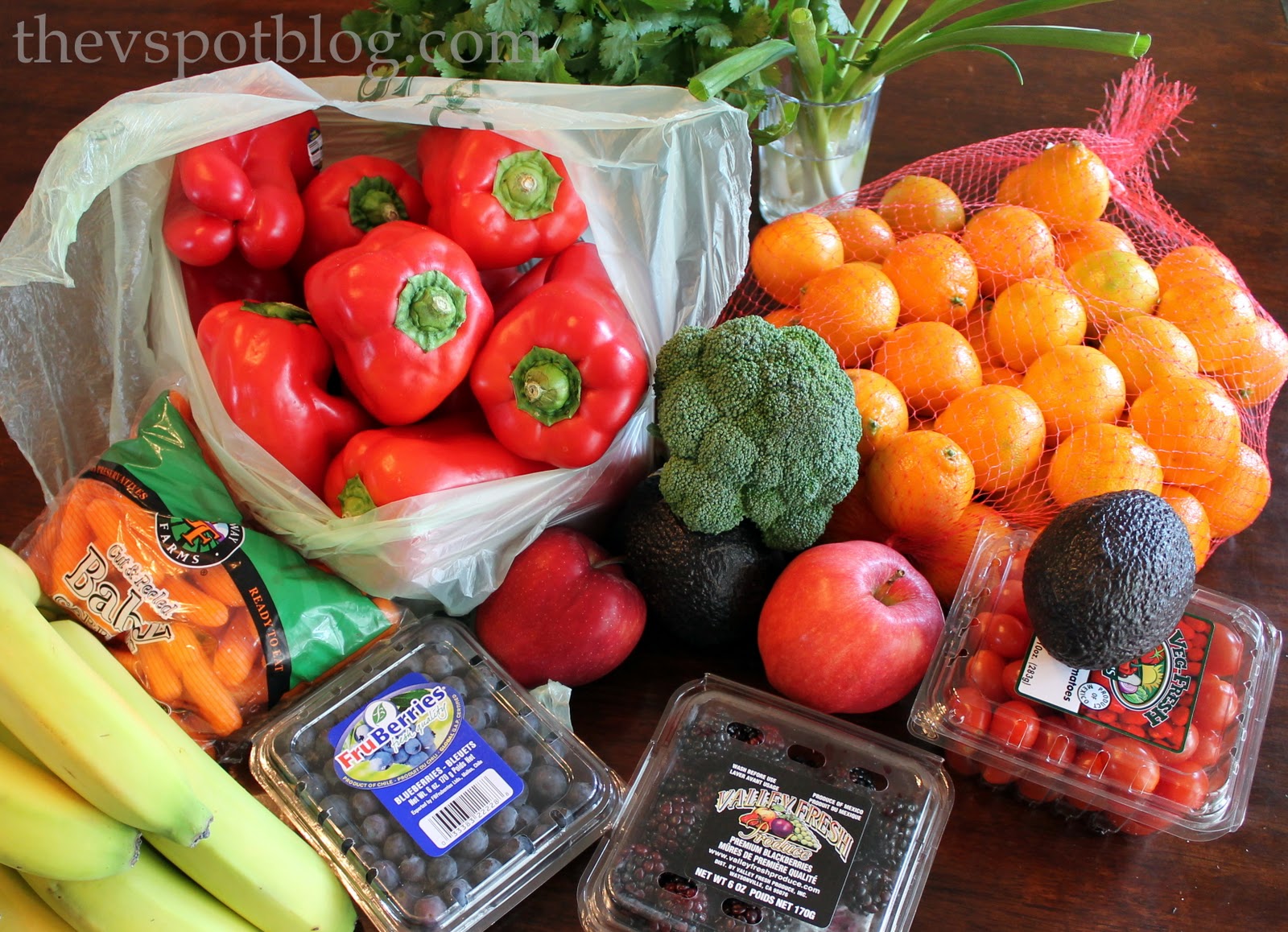
What’s the best way to store fresh produce?

Do you ever buy fresh fruits and vegetables, toss them into the produce drawer and forget about them?  Then a few days later you open the drawer only to discover that  it’s all spoiled?  (‘Fess up, because I know I’m not the only one….)

There’s a proper way to store fresh produce, and as I am about to launch into a new work-out routine and a healthier diet, I thought I would finally determine the proper ways to store it all.  I read up on it… I googled all over the place, and this is what I found.
Updated: In addition to researching this post, I tried many of these techniques myself and they worked great.

It kind of comes down to which fruits and vegetables give off the natural gas, ethelyne. 
Ethelyne can affect the other fruits and veggies that they are stored next to.  (That’s the premise of the Debbie Meyer Green Bags.)  You don’t need to buy special bags, but you do need to know which produce doesn’t play nicely with others.

Apples – Do not wash until just before eating, keep them sealed in the plastic produce bag, in the refrigerator. They give off a lot of ethelyne gas, so don’t store them next to anything else.
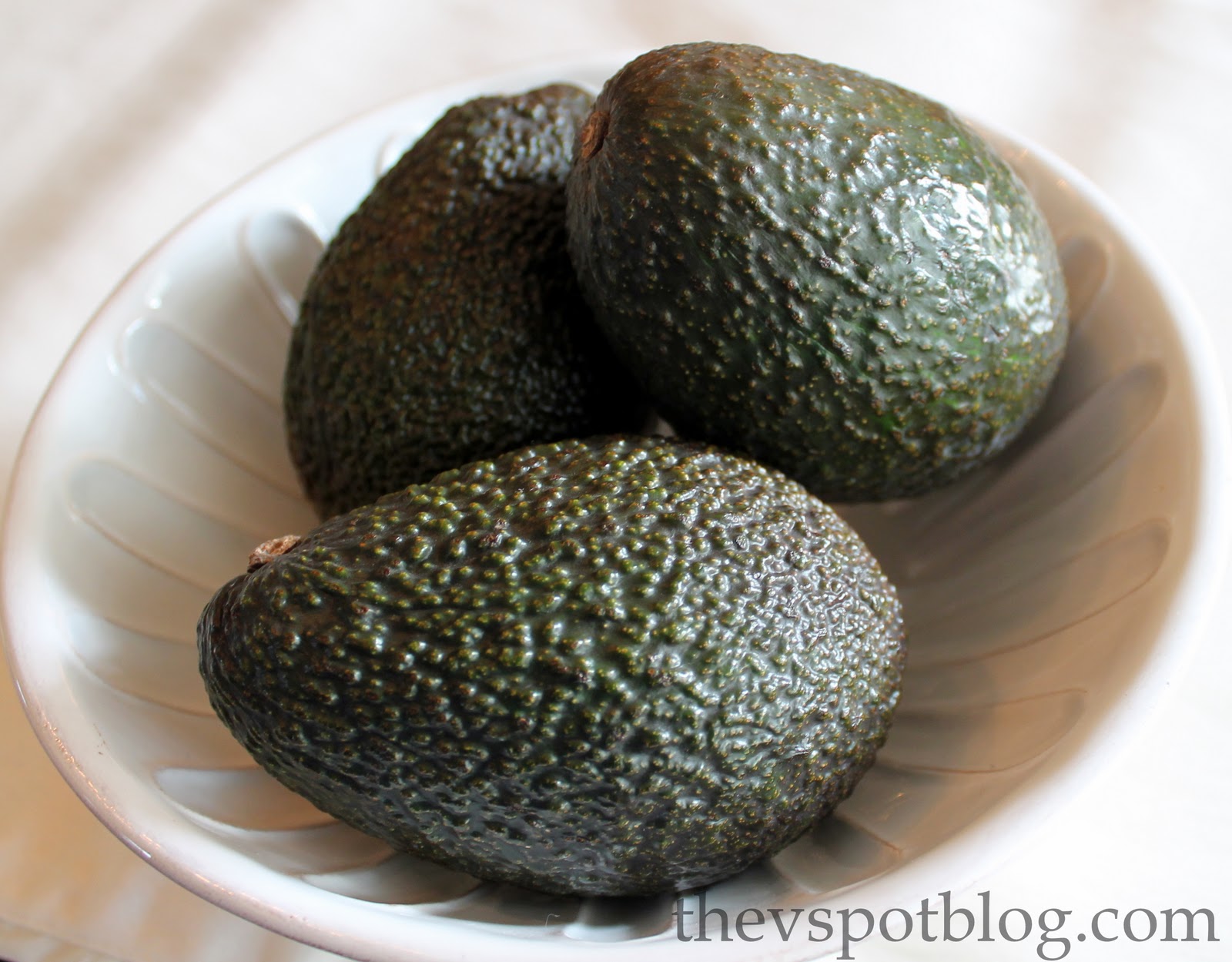
Avocados – Keep them at room temperature.  If you need one to ripen quickly, put it in a brown paper bag along with a banana.  If it is ripe and you need to slow the ripening process, put it in the fridge.

Bananas – They produce more ethelyne gas than any other fruit.  Keep them away from other produce,   on the counter-top, away from other produce.  Once they are ripe you can stop the ripening process by putting them in the fridge, just be sure to put them in a sealed bag.  The skin will turn black, but the fruit will be fine.
Beans (snap, string or wax) – Store in a plastic bag in the refrigerator.  Do not wash until just before use.
Berries – You know when you buy berries and they look like they have a dusty layer one them…? That is called bloom, and it serves as a natural preservative.  Never wash berries until just before use.  Pick through them and throw away any berries that are bruised or molding.  Store loosely in shallow containers, cover with plastic and keep them in the refrigerator.
Broccoli & Cauliflower – These need to be kept in their wrapping/packaging and kept in the fridge.  Do not wash until just before using.

Cabbage – Keep in the fridge, in a plastic bag. Do not wash until just before using
Carrots – Whole carrots?  Wash them thoroughly.  If they have green tops, cut off all but an inch.  Wrap them in a damp paper towel, seal in a plastic bag and store in the crisper drawer.
“Baby” carrots? I just discovered that I should stop buying them… but if you still do, you can put them in a plastic container, covered in water.  Be sure to change the water every few days.  (Note: this may reduce the flavor of the “baby” carrot.)
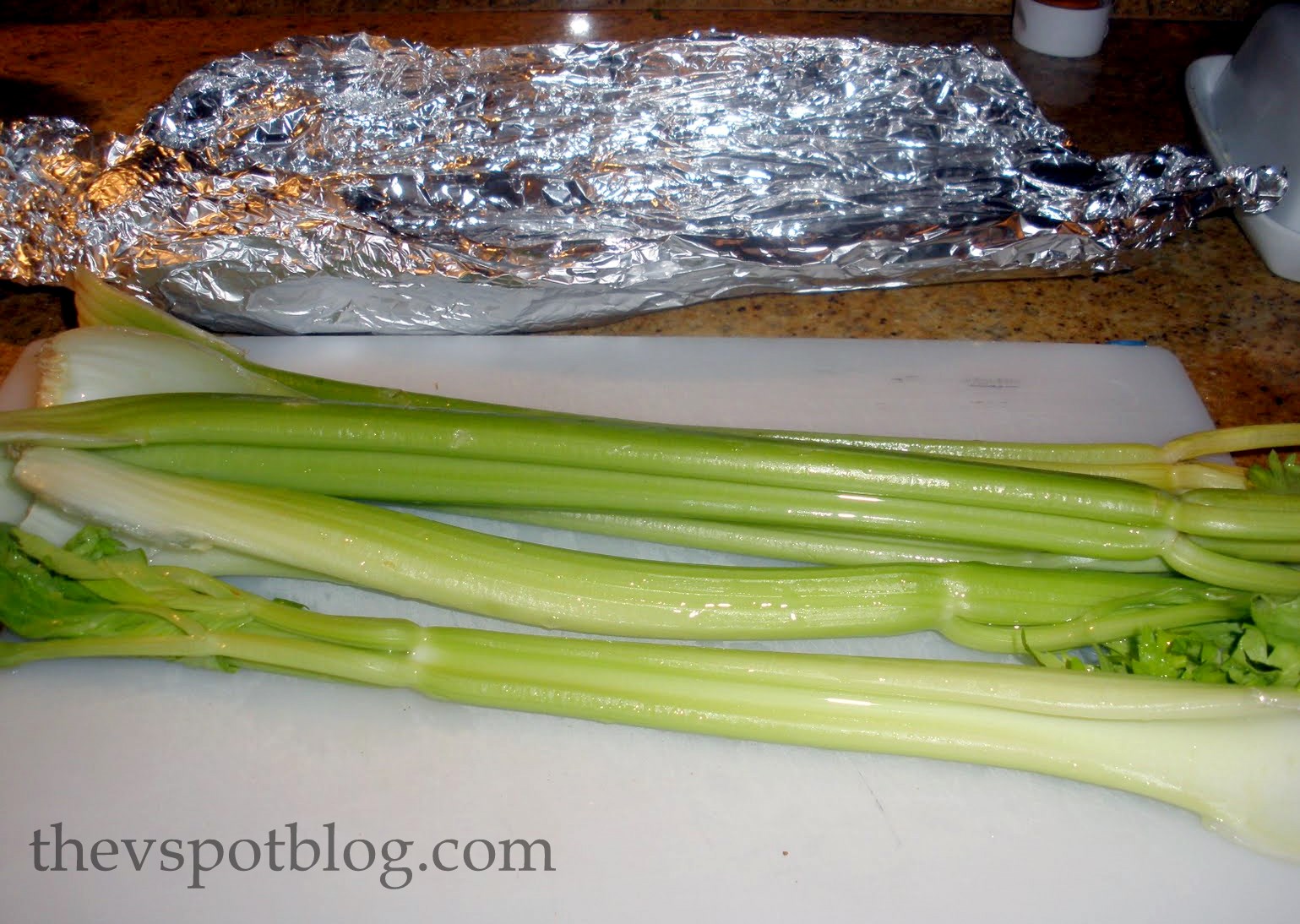
Celery – Give it a rinse, loosely wrap it in a paper towel, then tightly wrap the entire stalk in aluminum foil and keep in the crisper.  It will keep fresh and crisp for weeks.  (I actually have had celery that I bought to make stuffing at Thanksgiving still be fresh and crunchy for Bloody Marys on New Year’s Day! Amazing!)

Cherries – Store in the fridge in a plastic bag.  Do not wash until just before eating.
Citrus – Since citrus fruits have thicker skin, they are easier to store.  They’ll stay fresh for about 2 weeks in the fridge, about a week on the counter.  It doesn’t matter if they are near other produce.

Corn – Husks on? Store loose and uncovered in the fridge.  Husks off?  Wrap in foil and store in the crisper drawer. It will keep for 1 to 2 days.
Cucumber – Store in plastic bag in the refrigerator. Do not wash until just before use.
Eggplant – Wrap in plastic and refrigerate.
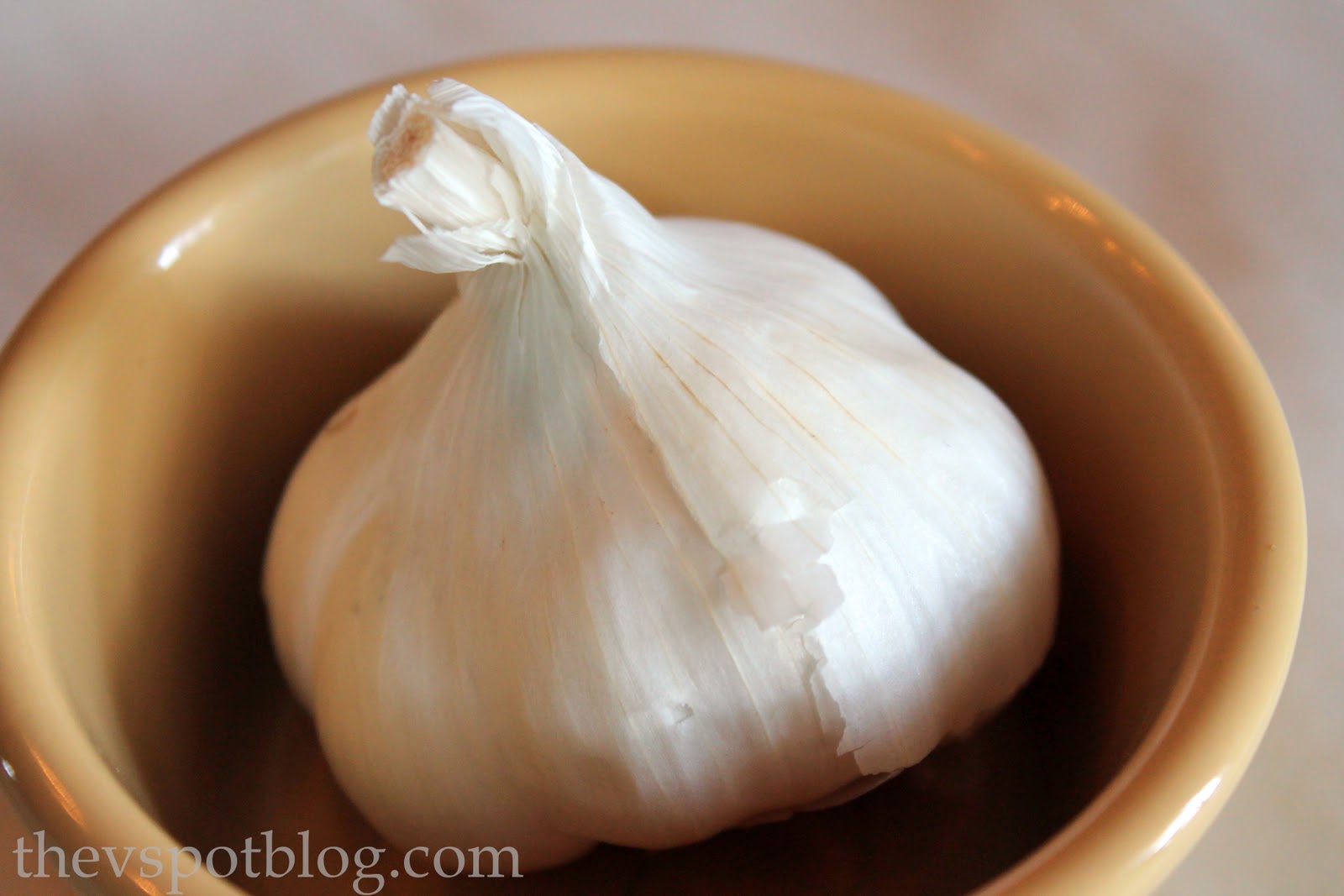
Garlic – Store at room temperature. Whole heads will last 3 to 5 weeks, but once cloves are separated, they will last about 10 days.

Grapes – Do not wash until just before eating, as they also have a bloom.  Store them in the fridge, in the plastic bags they come in, or poke holes in a plastic bag to allow for air circulation.  They say they should last up to 2 weeks.  (I have never seen them last longer than a week before getting shriveled up and gross…)
Jalapeno Peppers – Store in plastic bag, in the crisper drawer of the refrigerator.
Kiwi Fruit – store at room temperature until ripe, then cover with plastic and refrigerate.  Will keep for about a week.
Lettuces, Leafy Greens & Spinach – Wash, wrap loosely in paper-towels, then bag it… paper towel and all.
Melons – Store at room temperature until ripe, then refrigerate. They will keep for about a week.
Mushrooms – Do not wash until just before using.  Pre-sliced? Store in the refrigerator in their original packaging. They will last for about a week. Whole?  Store loosely in a brown paper bag in the refrigerator
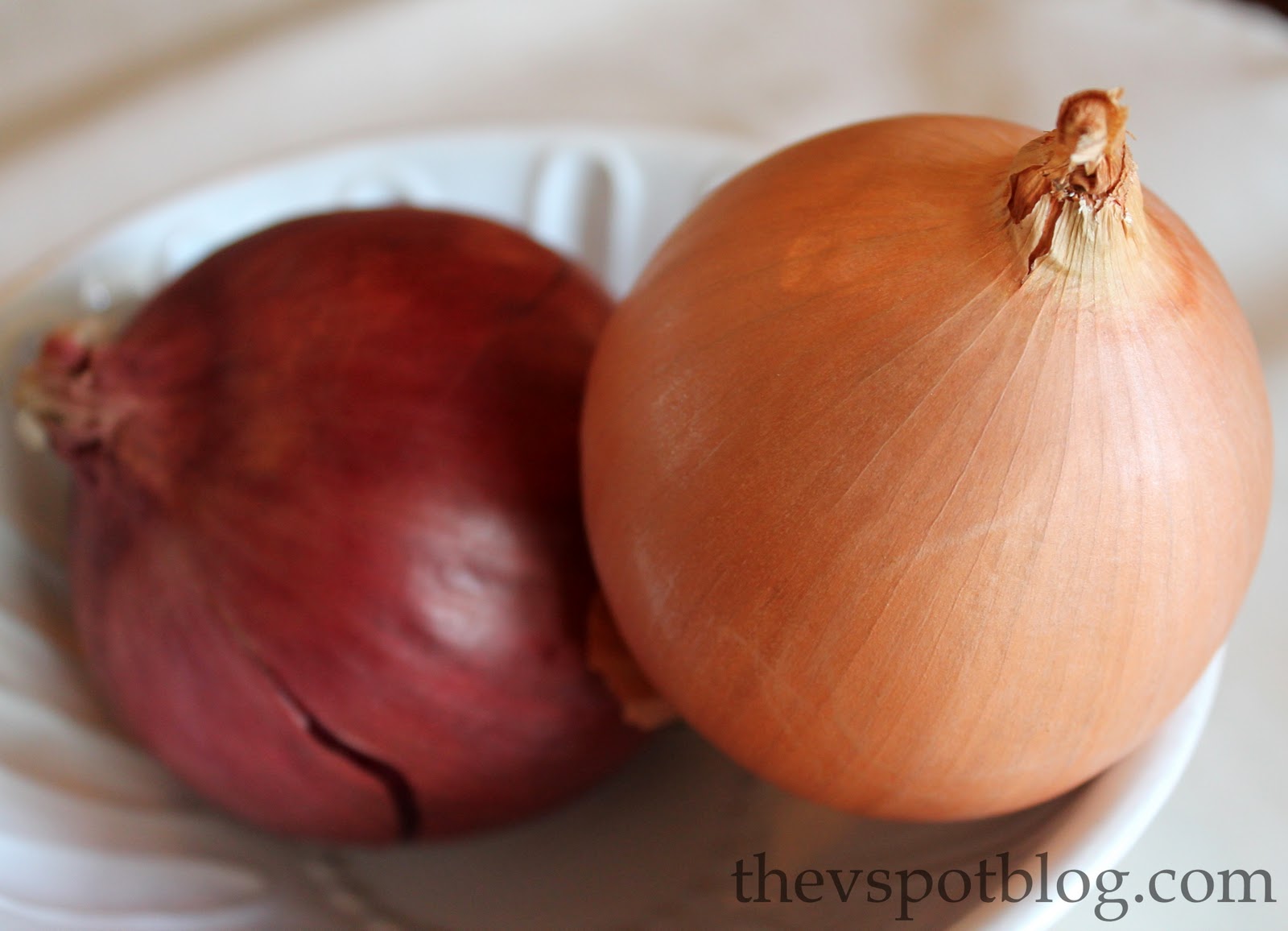
Onions – Store in a cool, dry place that has good air circulation.  (Store in the fridge if you don’t have such a place.) They will keep for 2 to 3 months.  DO NOT STORE WITH POTATOES.  (If next to each other they spoil faster.  Who knew?)

Pears – If they aren’t ripe, store them at room temperature.  Once they ripen, place them in a plastic bag and store them in the fridge.  They will keep for about a week.
Peaches, Plums, Nectarines & Apricots – Store at room temperature until ripe, then store in plastic bags in the refrigerator until ready to eat.  They will keep from 3 to 5 days.  Do not wash until ready to eat.
Pineapple – Store at room temperature until ripe, then store in the refrigerator for up to 5 days.
Potatoes – Store in a cool, dry, dark place that has good air circulation. They will keep for 2 to 3 months.  DO NOT STORE WITH ONIONS.  (If next to each other they spoil faster.  Who knew?)  Sweet Potatoes keep at room temperature for a week or in a cool dark place for about a month.

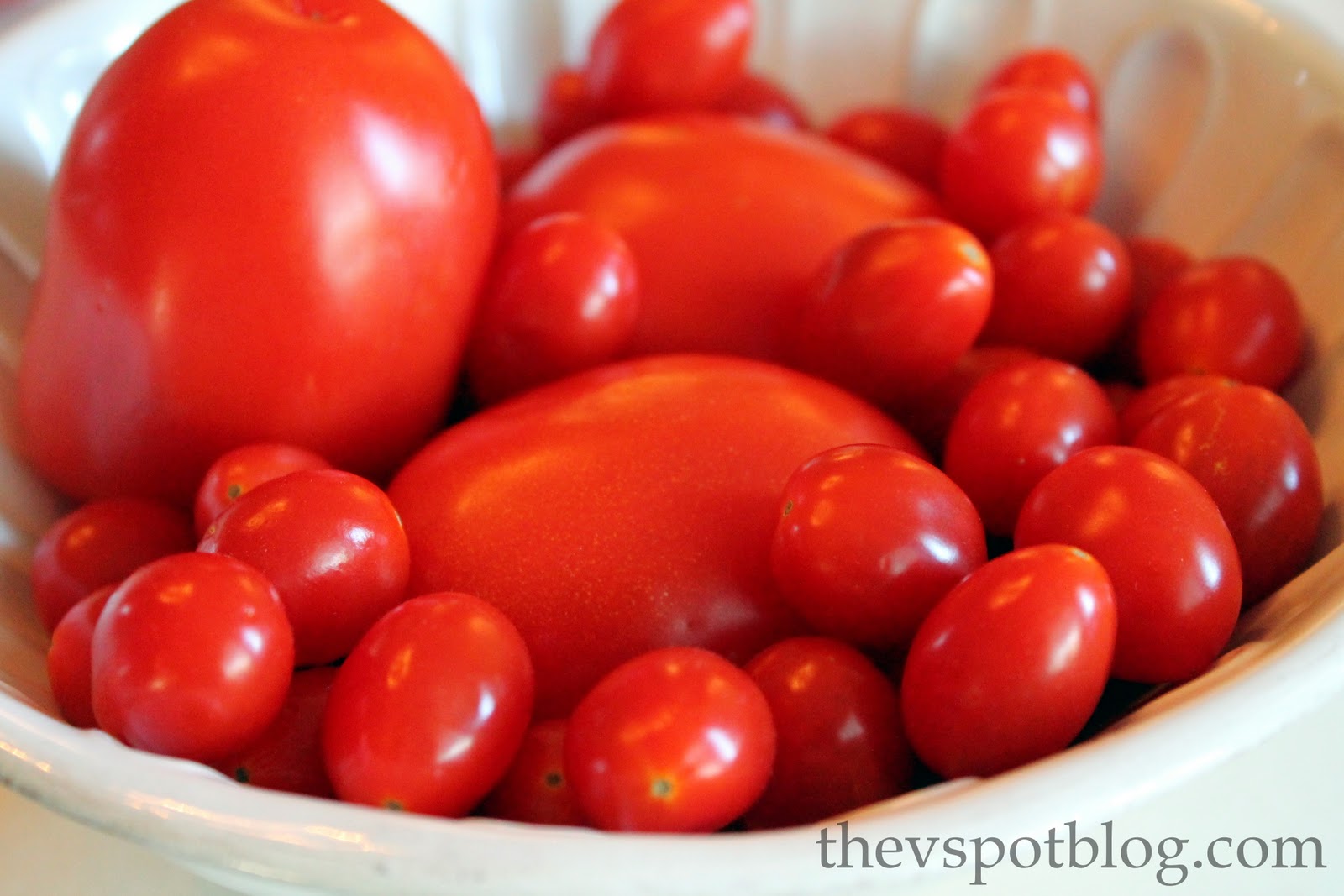
Tomatoes – Store them in a cool, dry place.  Don’t store them in plastic bags as the trapped ethylene will make them ripen more quickly. Once ripe, you can put them in the fridge to slow the ripening process, but let them come to room temperature before using them.

Zucchini – Refrigerate in a plastic bag.  Do not wash until just before using.

Be sure to check out my posts on keeping herbs fresh  and on how to chop and freeze fresh herbs for later use.

Here’s printable to tape inside your pantry or put of your fridge:
How to Store Produce