Archives

2017 Equity Profile highlights potential for equity to drive shared prosperity

d4d9f39aca054e979f1356c054ec4613_175x175_croppedReleased by Partners for a Racism-free Community 

An Equity Profile of Grand Rapids, released April 28 , highlights inequities in income, employment, education, and opportunity in Grand Rapids. The report was developed by PolicyLink and the Program for Environmental and Regional Equity (PERE) at USC, with support from the W.K. Kellogg Foundation.

Since 2011, PolicyLink and PERE have engaged in a formal partnership to amplify the message that equity—just and fair inclusion—is both a moral imperative and the key to our nation’s economic prosperity as America’s demographics shift and communities of color emerge as the new majority. An Equity Profile of Grand Rapids underscores while the city demonstrates overall strength and resilience, gaps in income, employment, education, and opportunity by race and geography place its economic future at risk. In 2014, more than 40 percent of residents were people of color, double the share (20 percent) in 1980. Diverse groups are driving growth and change in the region and will continue to do so for the foreseeable future.

“The City of Grand Rapids believes in equity-informed decision making which is why we are committed to creating and implementing an equity dashboard and scorecard,” said Stacy Stout, Assistant to the City Manager, City of Grand Rapids. “We don’t want data paralysis, we want action; if you have analysis without the action it often results in managerial racism and that hurts the community. Tools like the PolicyLink Equity Profile help us better visualize that work.”

“Robust data about the state of equity in Grand Rapids is essential for crafting strategies to improve outcomes for vulnerable children,“ said Huilan Krenn, Director of Learning and Impact at the W. K. Kellogg Foundation. “Our foundation is committed to enabling communities to take data-driven actions using the powerful data contained in the Equity Profile.”

“There has been growing consensus amongst economists that more equitable cities and regions experience more sustainable growth,” said Jessica Pizarek, Associate at PolicyLink. “This is also true for Grand Rapids.  If racial gaps in income were closed, its economy would be $4 billion stronger. We call this the ‘racial equity dividend.’”

Other key findings in the report include:

• Since 1980, communities of color have driven the city’s population growth.  While Grand Rapids’s population has not grown much overall (only a net increase of about 9,000 people), its demographic makeup has changed significantly.  All of the city’s population growth since 1980 has come from communities of color, which has countered steady decline in the number of residents who are White.
• Young people are leading this demographic shift.  Three in fiveyouth under the age of 18 in the city are non-White.  Looking to the future, Grand Rapids will become a majority people-of-color city around 2050, just behind the nation, which will become majority people-of-color in 2044.
• In 2014, 12 percent of all residents who could work and were employed full time but still lived below 200 percent of the poverty line.  Latinos have the highest rate of working poverty, at more than 26 percent.
• Median hourly wages have dropped for all residents since 2000, but Black workers saw the largest decrease of nearly $3 per hour from 2000 to 2014. Latino workers continue to earn the lowest median wage of all groups at $12.30 an hour.

“I am glad PolicyLink is elevating data about racial inequities, particularly at a time when we are being presented with new studies locally showing disparate interaction with law enforcement in Grand Rapids communities of color,” said Faye Richardson-Green, Executive Director of Partners for a Racism-Free Community.

The equity profile and potential solutions included therein will serve as a unique resource for local advocates and residents seeking to address disinvestment in communities of color. To this end,PolicyLink and Partners for a Racism-Free Community are holding a panel discussion and community forum around equity in Grand Rapids this morning at DeVos Place (303 Monroe Ave NW, Grand Rapids, MI 49503). To download a copy of the report, click here:

http://nationalequityatlas.org/sites/default/files/GrandRapids_final_profile.pdf

About PolicyLink
PolicyLink is a national research and action institute advancing economic and social equity by Lifting Up What Works®. For more information, visit PolicyLink.org.

Urgent Community Meeting – Tuesday, May 23

unnamed

This and following meetings in other parts of the city are a chance to gather resident feedback on the city’s implementation of the 12-point plan and community/police relations. Join the NAACP, Micah Center, LINC, and other community organizations in holding our city and police accountable. Come speak up and have a say in our city’s recommendations! Join the event on facebook.

Farm Bill Field Hearing in Michigan

snap-sign-credit-usda

Senators Stabenow, Roberts Announce Farm Bill Field Hearing in Michigan

WASHINGTON – U.S. Senate Committee on Agriculture, Nutrition, & Forestry Ranking Member Debbie Stabenow (D-Mich.) and Chairman Pat Roberts (R-Kan.) today announced the Committee will hold its second Farm Bill field hearing of the 115th Congress in Frankenmuth, Mich. on Saturday, May 6 to begin work on the 2018 Farm Bill. Congress passes a Farm Bill only once every five years. The current Farm Bill was passed with strong bipartisan support in 2014 and expires in September 2018.

“The Farm Bill is critical to Michigan agriculture, which supports one in four jobs across our state,” said Stabenow. “Thanks to input from our farmers and stakeholders, the 2014 Farm Bill has Michigan on every page, and was signed into law here at Michigan State University. We made historic investments to support our small towns, protect our land and water, help our farmers export and sell more products locally, and end unnecessary subsidies and programs – saving taxpayers $80 billion more than we first expected. As we begin our work on the 2018 Farm Bill, I’m committed to making sure Michigan’s voice is heard again so we can continue to support our state’s farmers and families and create new jobs.”

“Listening to producer perspectives from across the country is a critical step in writing the next Farm Bill,” said Roberts. “We had a successful first field hearing in Kansas, and I look forward to continuing the tradition of listening to farmers, ranchers, and other stakeholders with Senator Stabenow in Michigan.”

The hearing, entitled “Growing Jobs and Economic Opportunity: Perspectives on the 2018 Farm Bill from Michigan,” will feature testimony from a wide variety of agricultural producers and Farm Bill stakeholders, examining agriculture, as well as conservation, rural economic development, research, forestry, energy, and nutrition policies that affect Michigan. Witnesses will be announced shortly.  All stakeholders and the general public are invited to submit testimony or comments in writing for the official Committee record (see below).

What: U.S. Senate Agriculture Committee Field Hearing on the 2018 Farm Bill

Date:  Saturday, May 6, 2017

Time:  10 a.m. – 12:30 p.m. EDT

Place:  Saginaw Valley Research & Extension Center – Michigan State University, 3775 S Reese Rd, Frankenmuth, MI

RSVP: To attend, email your name and organization (if representing a group) to MIRSVP@ag.senate.gov

Testimony: You are invited to submit testimony or comments for the official record for this field hearing in advance, but no later than May 12, 2017, either online at www.agriculture.senate.gov/farm-bill-input or by mailing it to the Committee on Agriculture Nutrition and Forestry, 328A Russell Senate Office Bldg, Washington, D.C. 20510.

Live Broadcast: The hearing will be webcast live on ag.senate.gov.

Food Justice Primer April 17

April 17, 6—8 p.m. at Garfield Park Lodge, 334 Burton St SE 49507

The idea of eating healthier foods in many ways has become mainstream. However, for people experiencing income challenges or living in neighborhoods of color, access to these healthier foods is not a reality. A true food apartheid exists in our community—and that’s where the work of food justice begins.

This food justice class will define what food justice is, explore the roots of the industrial food system and investigate the many facets of food justice. If you want to know more about food justice—or become involved in it yourself—please join us for this free, brief introduction to food justice. OKT will conclude the informal dialogue with group input on how we can practice food justice locally.

LINC UP, NAACP Greater Grand Rapids Branch and Micah Center: Police incident with youth must lead to change

unnamed (1).pngReposted from LINC UP

Take action! Click here to send an email to Chief Rahinsky of the Grand Rapids Police Department and Greg Sundstrom, City Manager of Grand Rapids to voice your concern.

On Friday, March 24th, Grand Rapids Police detained 5 innocent and unarmed children at gunpoint. Having viewed the body camera footage with the Grand Rapids Police Department, LINC, NAACP and the Micah Center feel the actions of the police officers involved demonstrate a practice of policing that perpetuates mistrust, instills fear and causes harm to residents that are supposed to be protected and served. Collectively, we are calling for a change in Grand Rapids policing practices to ensure that no other children will unnecessarily go through the traumatic experience that these children did, and that our community as a whole is not subjected to this type of racism. We call on the police to work with the parents to ensure that the issues that are raised about this particular incident are addressed to the families’ satisfaction.

In 2015 the community pushed the city to adopt a 12 point plan to begin improving community and police relations. One key component of the plan was to ensure body cameras were used by every police officer. These cameras have revealed the work of GR police officers in action. Although the tactical use of force deployed by officers was consistent with training and aligned with the policies of the department, it also reveals that such training and policies are not consistent with what the community is stating are acceptable policing practices. In essence, the historically strained relations between community and law enforcement are being perpetuated, and further action is needed to prevent a continuing decline in such relations.

We encourage all community members to attend the April 11 city commission meeting to support these 5 young boys and their families as they seek to get answers from GRPD and to express any other concerns for policing practices in Grand Rapids, particularly as they relate to interaction with the youth of our community.

We also ask the police department to update the community on the implementation of the 12-point plan and other efforts to improve relationships with the community. Specifically, the plan called for the adjustments to the structure of the police department to increase community interactions. We are asking the GRPD to outline how they have implemented those changes and how they are tracking the success of their community relations building efforts. The plan also called for the implementation of implicit bias testing; we are asking GRPD to update the community on the results of such testing, how they are tracking the results of the training and future plans to ensure its effectiveness.

Having viewed the body camera videos, it is the belief of LINC UP, the NAACP and Micah Center that this incident is an example of the systemic problems that contribute to racial disparities in Grand Rapids. The problems do not stem from any moral flaws of the officers involved but from systemic processes that perpetuate mistrust and fear between communities of color and institutions within Grand Rapids. As such we encourage all people to pay attention to this incident, learn from it and above all, change how we are acting to ensure that we can break that cycle of mistrust.

Sincerely,

LINC UP                 NAACP Greater Grand Rapids Branch               Micah Center

Neighborhood meeting to address dangerous chemicals contaminating Hall/Madison neighborhood

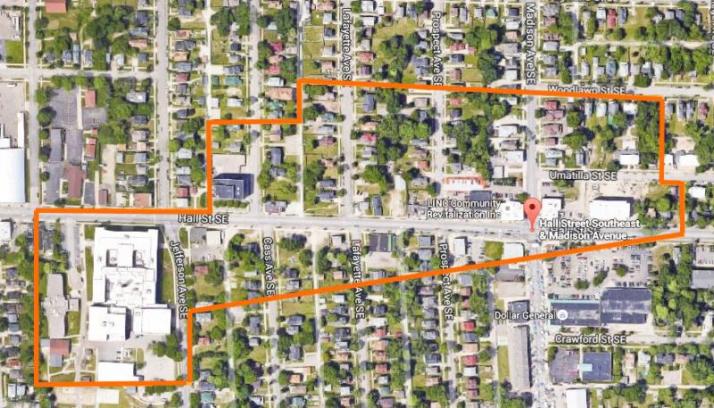
Come to the LINC Gallery, 341 Hall St. SE, for a community meeting Thursday, April 20 from 6:30 to 8 p.m. to learn about the investigation and clean up of dangerous chemicals in the Hall St. and Madison Ave. area.

epa-se-gr-updated-mapRepresentatives from the Environmental Protection Agency (EPA), the Department of Health and Human Services (DHHS), the Michigan Department of Environmental Quality (MDEQ) and the Kent County Health Department (KCHD) along with a doctor and fellow residents will take questions from the community.

Bring your neighbors and your questions! Contact us at 616.451.9140 with any questions.

This entry was posted on March 29, 2017, in Policy and tagged .

Food Policy for Food Justice: Food Justice & Brain Equity

This is the twelfth in a series of weekly posts highlighting OKT’s Food Justice series. You can download series handouts here for free.

1972gn2dfy55yjpgWhen considering intellect, intelligence, IQ or mental health, we seldom make a connection with food. However, a very distinct and strong connection exists – from the womb to the meals we prepare for our elders. Because people of color are more likely to lack access to the foods that build healthy brains and maintain well-functioning psyches, intelligence levels and mental health are another facet of food justice. OKT calls this lack of access “food apartheid.”

Since environmental toxins play a part in diminishing intellect and contributing to mental illness, these are facets of the larger environmental justice conversation.

In the Womb

Studies have shown that pregnant moms need to eat 80 to 100 grams of protein as part of a well-balanced diet to ensure healthy infant outcomes. That well-balanced diet includes foods rich in calcium, healthy fats, fresh fruits and vegetables and 100% whole grains. The Standard American Diet will not satisfy this requirement. The junk food, fast foods and convenience foods prevalent in most income-challenged neighborhoods are even worse. Healthy brain growth especially depends on protein.

Infant mortality rates are double for black babies, compared to white. While the stress of racism plays a huge part in these numbers, under-nutrition during pregnancy is a factor, especially when babies born at term are underweight.

At the Breast … or Bottle

Breastfeeding is the very best food for infants. Among its many benefits, breast milk boosts baby’s intelligence. When the CDC investigated why fewer black women breastfed than white women, they found that the hospitals serving black women during childbirth were less likely to encourage and support breastfeeding. In addition, women in poverty, working one or more low-wage jobs, may not be able to pump milk when they are away from their babies.

breastfeedingBecause breastfeeding moms need to continue the same healthy diet they ate during pregnancy, lack of access to healthy foods continues to be a barrier to infants reaching their full intelligence potential after birth.

The human brain grows the most during pregnancy and the first three years of life. Diets high in fat, sugar, and processed foods during the first three years of life permanently lower children’s IQ. Wilder Research reports, “… nutrition affects students’ thinking skills, behavior, and health, all factors that impact academic performance. Research suggests that diets high in trans and saturated fats can negatively impact learning and memory, nutritional deficiencies early in life can affect the cognitive development of school-aged children, and access to nutrition improves students’ cognition, concentration, and energy levels.”

Baby’s only food during the first year of life should be breastmilk (or formula). Introducing solid foods earlier can lead to obesity, allergies, asthma and digestive difficulties. Breastfeeding until age three or longer is common in many cultures and can help support healthy brain growth. Whatever age babies wean from the breast, it’s important that parents introduce a healthy, whole foods diet. The commercial-baby-food diet (we are brainwashed to believe in) does not meet these needs.

In the Classroom

Research has also established a link between nutrition and behavior. “Access to nutrition, particularly breakfast, can enhance a student’s psychosocial well-being, reduce aggression and school suspensions, and decrease discipline problems “

Harvard studies agree. “Diets high in refined sugars … are harmful to the brain. In addition to worsening your body’s regulation of insulin, they also promote inflammation and oxidative stress. Multiple studies have found a correlation between a diet high in refined sugars and impaired brain function — and even a worsening of symptoms of mood disorders, such as depression.”

As an Adult

“Food is like a pharmaceutical compound that affects the brain,” says UCLA food-brain expert, Fernando Gómez-Pinilla. He reports that junk food and fast food negatively affect the brain’s synapses. This can result in loss of cognitive function (memory loss, brain fog, dementia) and mental illness (depression, schizophrenia, ADD and bi-polar) Gomez-Pinilla goes as far to say, “Evidence indicates that what you eat can affect your grandchildren’s brain molecules and synapses.”

In other words, when an unjust food system prevents a generation from having access to healthy, whole foods, its children and grandchildren have increased risks for lowered cognitive function and mental illness.

Our Elders, Forgetting and Forgotten

Food apartheid inexcusably impacts our elders. When it’s too difficult to prepare meals, junk and convenience foods are too easy an answer. Fixed incomes can result in choosing the least nutritious options available. The food charity that elders access mostly consists of highly processed foods and white grain products. Some are making strides in offering elders healthier meals, for example Meals on Wheels, but what is needed is a food system that makes whole foods accessible to everyone, no matter their income, age or neighborhood.

Only Food Justice can ensure brain equity. When all people have access to healthy whole foods, from cradle to grave, only then can they reach their potentials for intellect and mental health.


Gov. Snyder Appoints EJ Work Group Absent of Impacted EJ Community Members

unnamedMichigan Environmental Justice Coalition
Statement on Gov. Snyder’s EJ Work Group

In December 2016, the Environmental Justice community caught wind of Governor Rick Snyder’s plan to create an Environmental Justice Work Group. With optimism that the Governor was finally responding to the environmental and public health concerns of Michigan’s most vulnerable communities, the EJ community hoped that this action would be a step in the right direction. After all, the creation of an EJ Work Group was a direct recommendation from the Governor’s own Flint Water Advisory Task Force in response to the still-existing Flint Water Crisis. However, it became clear this week that the Governor’s plan to remedy environmental injustice is shaping up to be yet another government sanctioned, private industry-heavy fiasco.

On Wednesday February 15th, Governor Snyder quietly released his list of the Environmental Justice Work Group members on the State’s website. Most glaring about this list is that the Governor did not reserve a single appointment for a resident of an actual EJ community who is directly impacted by environmental injustice. While the Governor states that “ensuring every Michigander has the same protections from environmental and health hazards is of the utmost importance,” the overwhelming majority of his appointments to this EJ Work Group would suggest otherwise. This 19-person Work Group consists primarily of private industry executives and state government agency representatives. This is an unmistaken brush-off and knowing dismissal of the residents and organizations who wrote letters, made phone calls, and sent emails asking the Governor to ensure that EJ communities were represented on the Work Group.

As it stands, the very makeup of the Governor’s  Environmental Justice Work Group runs counter to every rule of the widely accepted Principles of Environmental Justice -in particular, the principle that “Environmental Justice demands the right [of impacted communities] to participate as equal partners at every level of decision-making, including needs assessment, planning, implementation, enforcement and evaluation.” However, the Governor’s transgressions do not have to persist. Standing in solidarity with EJ communities around Michigan, the Michigan Environmental Justice Coalition is calling on Governor Snyder to not only reconsider his appointments with the Principles of Environmental Justice in mind, but to also make appointments of EJ community members who suffer the impacts of unfair environmental decision-making on a daily basis.

To view the Environmental Justice Workgroup members click here. To connect with the Michigan Environmental Justice Coalition, please visit us online or contact us (313) 577-1687.

Congress to Defund Fair Housing Act Data on Racial Disparities in Housing

unnamedThe Michigan Environmental Justice Coalition just issued this statement:

Statement on H.R. 482 & S.B. 103

On January 11th and 12th, Senate Bill S.B. 103 and House Bill H.R. 482 (the “Bills”) were introduced respectively by Sen. Mike Lee (R-UT) and Rep. Paul Gosar (R-AZ) in the Senate Banking, Housing, and Urban Affairs Committee and the House Financial Services Committee. Being mirror images of one another, both Bills are an outright attempt to disempower the U.S. Department of Housing and Urban Development (“HUD”) by rolling back necessary protections of the Federal Fair Housing Act (“FHA”) by “nullify[ing] certain regulations and notices of the Department of Housing and Urban Development, and for other purposes.”

Among the numerous detrimental provisions, the Bills call for the defunding of Federal programs that provide access to housing data for States, local governments, and public housing agencies regarding “community racial disparities or disparities in access to affordable housing.” The specific language is as follows:

“Notwithstanding any other provision of law, no Federal funds may be used to design, build, maintain, utilize, or provide access to a Federal database of geospatial information on community racial disparities or disparities in access to affordable housing.”

While the Bills purport “to further the purposes and policies of the Fair Housing Act,” by giving State and local officials more control over housing decisions, this assertion couldn’t be further from the truth. Sen. Lee and Rep. Gosar make walking-contradictions of themselves and an oxymoron of their proposed Bills by implying that the best way to enforce the Fair Housing Act is to actually create financial barriers to accessing data that clearly informs whether housing decisions are in fact “fair.”

States, local governments, and public housing agencies in the U.S. have a long, well documented history of housing discrimination when it comes to racial minorities. This is the very reason why the FHA exists today. Yet, the Bills would strip housing officials of Federal resources and then turn the reigns back over to them –suggesting that they are now better equipped to enforce the FHA. This simply cannot happen.

As fair, affordable housing is an essential component of Environmental Justice, we are calling on our representatives in the U.S. Senate and U.S. House of Representatives to reject the notion that States’ sovereign powers are somehow boosted by defunding Federal housing databases that are meant to protect vulnerable citizens and communities. Reject this notion by voting no when the Bills come up in Committee and making sure that they never reach the chamber floors.

To view the H.R. 482 and S.B. 103 click on the hyperlinks. To connect with the Michigan Environmental Justice Coalition, please visit us online or contact us (313) 577-1687.