 Today, President Obama is in East Lansing to sign the new Farm Bill. Is this cause for celebration? Only for Big Ag and the crop insurance industry. The new Farm Bill cuts $8 billion dollars from the SNAP food assistance program. Watch this video for key information on the new Farm Bill.
Archives
Seeds of Love: End of the year message from seed-warrior Vandana Shiva
Published on Dec 18, 2013
At a time where mega corporations want to control our food, it is imperative that we stand together to protect our food, the planet and each other. Listen to Vandan Shiva’s end-of-year message, Seeds of Love.
https://www.youtube.com/watch?v=YEdpE0Aspf0&feature=youtu.be
in this earth
in this earth
in this immaculate field
we shall not plant any seeds
except for compassion
except for love
-Rumi
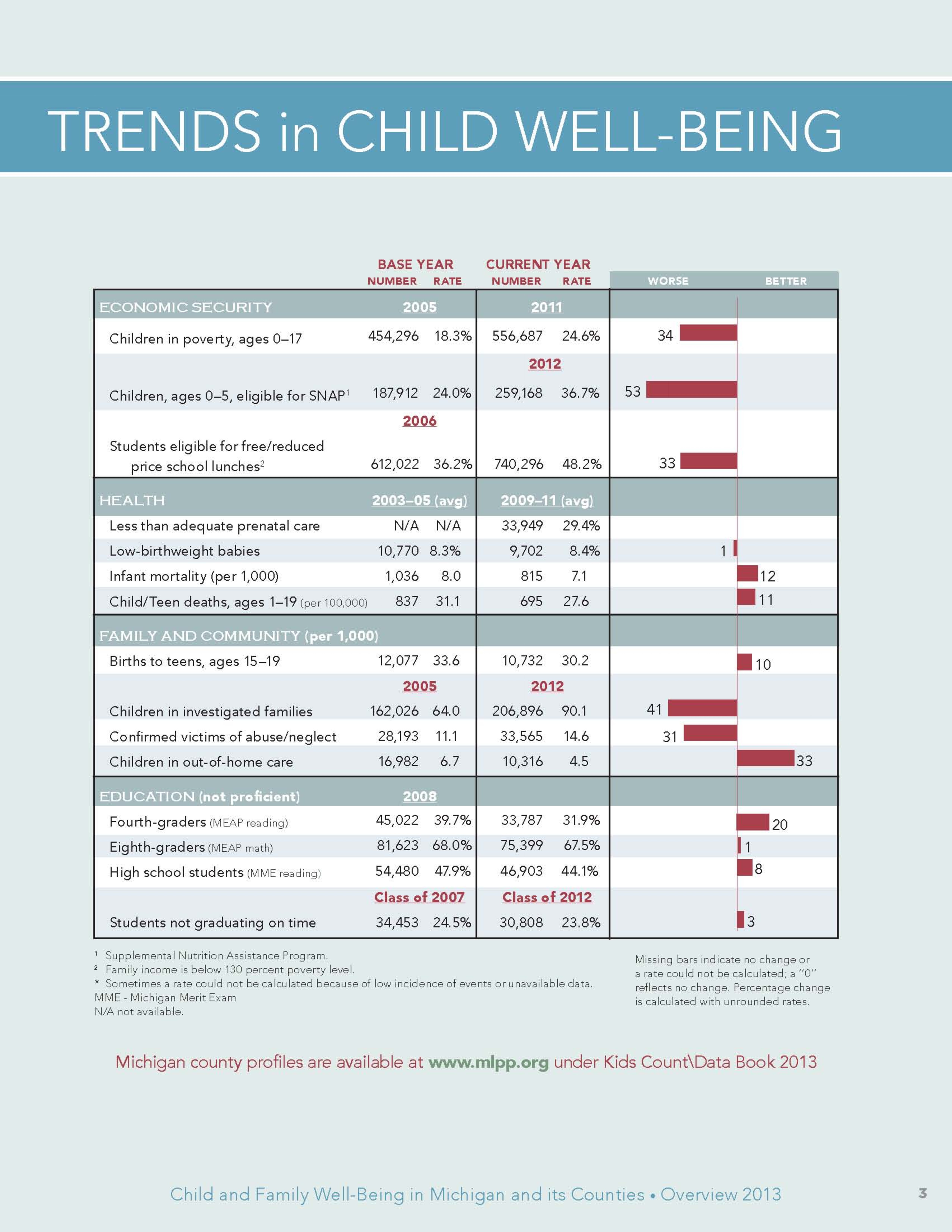
Nearly one out of every four Michigan children live in poverty.
According to the Kids Count 2013 Report, child poverty has increased by 34%. This on the heels of reductions in SNAP benefits used to feed our children. The system as we know it is destroying families and depriving children of nutritious foods. Our work for 2014 is cut out for us.
Free webinar this Wednesday: “Building the Chemical Dimension of a Sustainable Civilization”
|
|||||
|


While Obama Talks Poverty, Stabenow Agrees to $8 Billion More in SNAP Cuts
Published on Friday, December 6, 2013 by The Nation
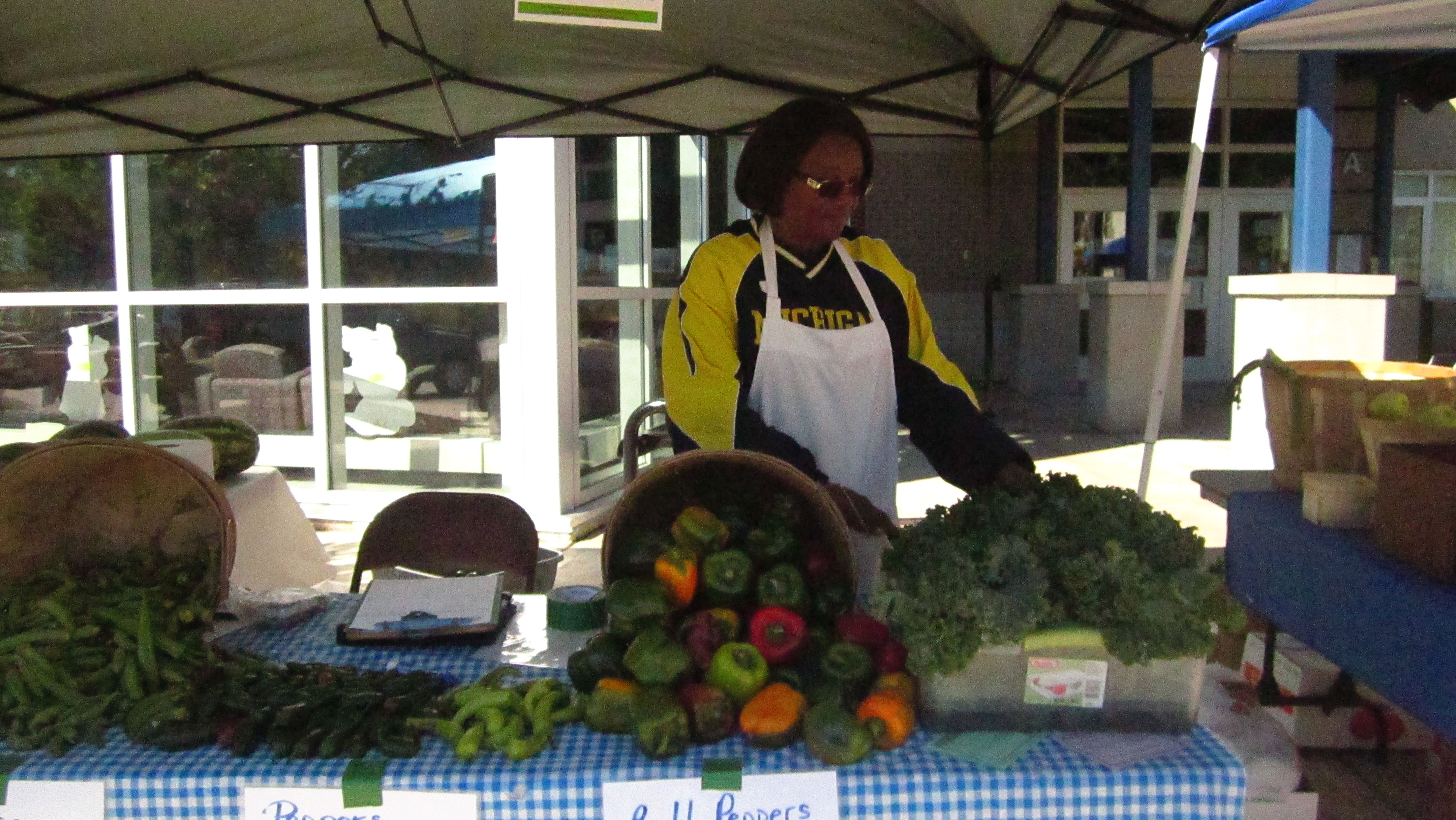
A large portion of purchases at the Southeast Area Farmers market are made ith SNAP benefits.
On the same day that President Obama eloquently described his vision of an economy defined by economic mobility and opportunity for all, Senate Agriculture Committee Chairwoman Debbie Stabenow was busy cutting a deal with House Agriculture Committee Chairman Frank Lucas to slice another $8 to $9 billion from food stamps (SNAP), according to a source close to the negotiations.(Photo: Associated Press)
“One study shows that more than half of Americans will experience poverty at some point during their adult lives,” said President Obama. “Think about that. This is not an isolated situation… That’s why we have nutrition assistance or the program known as SNAP, because it makes a difference for a mother who’s working, but is just having a hard time putting food on the table for her kids.”
Indeed it does, but the Chairwoman consistently fails to get the memo.
There are currently 47 million Americans who turn to food stamps to help make ends meet. According to the Center on Budget and Policy Priorities, nearly 72 percent are in families with children; and one-quarter of SNAP participants are in households with seniors or people with disabilities. Further, 91 percent of SNAP benefits go to households with incomes below the poverty line, and 55 percent to households below half of the poverty line (about $9,500 annually for a family of three).
Despite the fact that the Institute of Medicine demonstrated the inadequacy of the SNAP benefit allotment, and that a child’s access to food stamps has a positive impact on adult outcomes, the program was just cut by $5 billion on November 1. The average benefit dropped from $1.50 to $1.40 per meal. The Senate Agriculture Committee’s previous proposal to cut yet another $4 billion from SNAP would have led to 500,000 losing $90 per month in benefits, the equivalent of one week’s worth of meals.
“That was the first time in history that a Democratic-controlled Senate had even proposed cutting the SNAP program,” said Joel Berg, executive director of the New York City Coalition Against Hunger. “The willingness of some Senate Democrats to double new cuts to the program… is unthinkable.”
The President recognized in a very personal way the need for a SNAP program that protects families from severe hardship.
“When my father left and my mom hit hard times trying to raise my sister and me while she was going to school, this country helped make sure we didn’t go hungry,” he said.
In contrast, Berg tells of a mother he recently met who now sees this country turning away from her and her children.
“I recently met a mother of two, trying to advance herself and her family, by working her way through college,” said Berg. “After November 1st, she lost $46 worth of groceries a month, which equals at least 30 fewer meals for her family.”
It seems she and her kids are about to absorb another hit.
“These SNAP cuts will be devastating to families across the nation,” said Dr. Mariana Chilton, co-principal investigator of Children’s HealthWatch, a research organization analyzing the effects of economic conditions and public policy on children in emergency rooms and clinics around the country. “Not only will families lose significant SNAP dollars—which will make it harder for them to feed their kids and also reduce their children’s nutrient intakes—but it will also cause major health problems for children, increased hospitalizations for very young kids, and greater need for psychosocial and mental health services for school aged kids.”
President Obama perfectly captured what it means for this country to turn its back on children.
“The idea that a child may never be able to escape poverty because she lacks a decent education or health care, or a community that views her future as their own, that should offend all of us and it should compel us to action,” said President Obama.
We are the community, and it is offensive. Now is the time to tell the President: if these cuts land on his desk, he must veto the bill.
© 2013 The Nation
The Beehive’s much anticipated graphic, Mesoamérica Resiste, is finally hatching!

After 9 years of collaborative research, story gathering, design, and illustration, The Beehive Collective is thrilled to announce the release of the Mesoamérica Resiste graphics campaign.You may have seen The Beehive Collective’s work when OKT helped bring them to Grand Rapids in 2011.
Click here to see the launch video and to contribute to the project.
The Mesoamérica Resiste graphicillustrates stories of resistance, resilience, and solidarity from Mexico to Colombia. The double-sided poster focuses on the clash between two very different worldviews. When folded, the outside of the poster is the top-down view: a map of megaprojects planned for the region that draws parallels between colonial history and modern day capitalism.
The poster opens up to reveal the view from below: amidst the roots of a Ceiba tree, communities are fighting off the invasion of the plans on the map, defending their land and traditions, building local and regional economies, and exercising their collective power. The graphic is a powerful tool for learning about the importance of cultural and ecological diversity, with a cast of characters that includes over 400 endemic species of plants, animals, and insects.
Why French Kids Don’t Have ADHD
When are we going to pay more attention to the chemicals in our foods and sprayed on our lawns? Chemical exposures especially impact children living in income-challenged neighborhoods.~OKT
Published on March 8, 2012 by Marilyn Wedge, Ph.D. in Suffer the Children
In the United States, at least 9% of school-aged children have been diagnosed with ADHD, and are taking pharmaceutical medications. In France, the percentage of kids diagnosed and medicated for ADHD is less than .5%. How come the epidemic of ADHD—which has become firmly established in the United States—has almost completely passed over children in France?
Is ADHD a biological-neurological disorder? Surprisingly, the answer to this question depends on whether you live in France or in the United States. In the United States, child psychiatrists consider ADHD to be a biological disorder with biological causes. The preferred treatment is also biological–psycho stimulant medications such as Ritalin and Adderall.
French child psychiatrists, on the other hand, view ADHD as a medical condition that has psycho-social and situational causes. Instead of treating children’s focusing and behavioral problems withdrugs, French doctors prefer to look for the underlying issue that is causing the child distress—not in the child’s brain but in the child’s social context. They then choose to treat the underlying social context problem with psychotherapy or family counseling. This is a very different way of seeing things from the American tendency to attribute all symptoms to a biological dysfunction such as a chemical imbalance in the child’s brain.
French child psychiatrists don’t use the same system of classification ofchildhood emotional problems as American psychiatrists. They do not use the Diagnostic and Statistical Manual of Mental Disorders or DSM.According to Sociologist Manuel Vallee, the French Federation ofPsychiatry developed an alternative classification system as a resistance to the influence of the DSM-3. This alternative was the CFTMEA(Classification Française des Troubles Mentaux de L’Enfant et de L’Adolescent), first released in 1983, and updated in 1988 and 2000. The focus of CFTMEA is on identifying and addressing the underlying psychosocial causes of children’s symptoms, not on finding the best pharmacological bandaids with which to mask symptoms.
To the extent that French clinicians are successful at finding and repairing what has gone awry in the child’s social context, fewer children qualify for the ADHD diagnosis. Moreover, the definition of ADHD is not as broad as in the American system, which, in my view, tends to “pathologize” much of what is normal childhood behavior. The DSMspecifically does not consider underlying causes. It thus leads clinicians to give the ADHD diagnosis to a much larger number of symptomatic children, while also encouraging them to treat those children with pharmaceuticals.
The French holistic, psychosocial approach also allows for considering nutritional causes for ADHD-type symptoms—specifically the fact that the behavior of some children is worsened after eating foods with artificial colors, certain preservatives, and/or allergens. Clinicians who work with troubled children in this country—not to mention parents of many ADHD kids—are well aware that dietary interventions can sometimes help a child’s problem. In the United States, the strict focus on pharmaceutical treatment of ADHD, however, encourages clinicians to ignore the influence of dietary factors on children’s behavior. (Editor’s note: common chemicals, like those found in lawn pesticides, on sales receipts and in certain plastics, are also known to have neurological impacts on children from the womb on.)
And then, of course, there are the vastly different philosophies of child-rearing in the United States and France. These divergent philosophies could account for why French children are generally better-behaved than their American counterparts. Pamela Druckerman highlights the divergent parenting styles in her recent book, Bringing up Bébé. I believe her insights are relevant to a discussion of why French children are not diagnosed with ADHD in anything like the numbers we are seeing in the United States.
From the time their children are born, French parents provide them with a firm cadre—the word means “frame” or “structure.” Children are not allowed, for example, to snack whenever they want. Mealtimes are at four specific times of the day. French children learn to wait patiently for meals, rather than eating snack foods whenever they feel like it. French babies, too, are expected to conform to limits set by parents and not by their crying selves. French parents let their babies “cry it out” if they are notsleeping through the night at the age of four months. (Editor’s note: We do not agree with letting babies “cry it out.”)
French parents, Druckerman observes, love their children just as much as American parents. They give them piano lessons, take them to sportspractice, and encourage them to make the most of their talents. But French parents have a different philosophy of discipline. Consistently enforced limits, in the French view, make children feel safe and secure. Clear limits, they believe, actually make a child feel happier and safer—something that is congruent with my own experience as both a therapist and a parent. Finally, French parents believe that hearing the word “no” rescues children from the “tyranny of their own desires.” And spanking, when used judiciously, is not considered child abuse in France. (Author’s note: I am not personally in favor of spanking children).
As a therapist who works with children, it makes perfect sense to me that French children don’t need medications to control their behavior because they learn self-control early in their lives. The children grow up in families in which the rules are well-understood, and a clear family hierarchy is firmly in place. In French families, as Druckerman describes them, parents are firmly in charge of their kids—instead of the American family style, in which the situation is all too often vice versa.
Copyright © Marilyn Wedge, Ph.D.
Marilyn Wedge is the author of Pills Are Not for Preschoolers: A Drug-Free Approach for Troubled Kids
Well House 19:1 Campaign: No one needs to be homeless
As a campaign supporter, OKT asks you to join Well House for the 19:1 Campaign kick-off, 5:30 p.m. Monday, November 18 at 600 Cass SE.
Watch the campaign video: https://www.youtube.com/watch?v=8sbq9UPbtEU
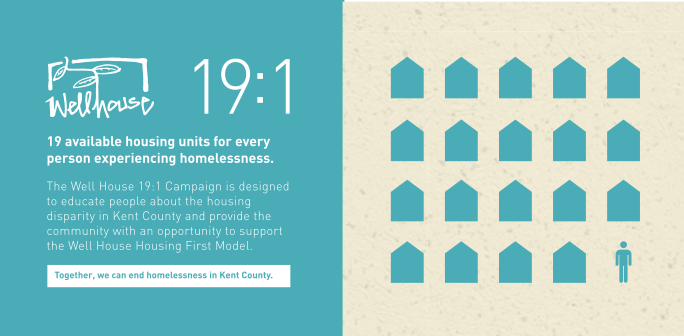
On any given night in Kent County there is an estimated 1,000 people who are experiencing homelessness. These are people living on the street, sleeping under an overpass or staying in a temporary shelter.
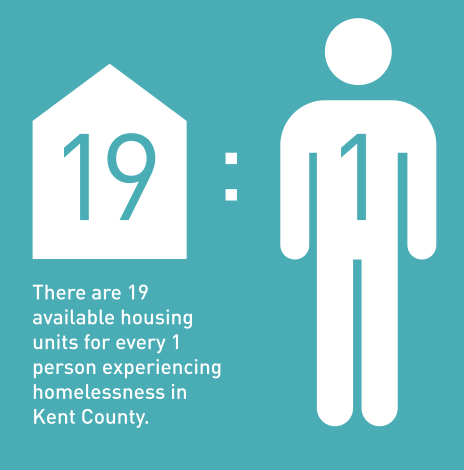
According to the West MI Realtor’s Association, there are roughly 19,000 available housing units in Kent County. These housing units consist of both homes and apartments that are currently not occupied. This means that for every person who is currently experiencing homelessness in Kent County, there are 19 empty housing units they could be sleeping in.
The reality is that no one needs to be homeless, especially not with the housing resources available in this community. The fact is that most people experiencing homelessness have a source of income; they just can’t afford the current market rate for homes and apartments. In addition, this should tell us something about the dysfunctional nature of “the market,” which allows people to suffer the injustice of homelessness.
The 19:1 Campaign is designed to do two things. First, educate people about the housing disparity in Kent County that leaves hundreds of people in a state of homelessness. Second, provide the community with an opportunity to support the Well House Housing First Model.
The Well House Housing First Model provides people with low-cost housing opportunities to people currently experiencing homelessness. Well House operates on a housing first, tenet-centered approach, which recognizes that every person’s need is different. However, if you can first provide people with low-cost housing, you give them an opportunity to have a safe place to live and the necessary support to address any personal issues they may need to.
Support this campaign!
• Attend one or more educational opportunities (Beginning Nov. 18)
• Endorse the campaign formally. If your organization or group supports this campaign, post it here or send it to us at contact@wellhousegr.org
• Post and share campaign materials. Call Well House at (616) 245-3910 or stop by the Well House office at 600 Cass SE.
• Donate to Well House – wellhousegr.com/donate.Well House plans to raise $25,000 between November 18 and the end of 2013. The money Well House raises will be used to finish rehabilitating a boarded up house that will be used to provide more affordable housing opportunities to people currently experiencing homelessness.
Seed Monopolies, GMOs and Farmer Suicides in India – A response to Nature
 Posted on Tuesday, November 12th, 2013 by Navdanya Response to an article published on 1st May 2013 in Nature by Natasha Gilbert titled “Case studies: A hard look at GM crops”
by Dr Vandana Shiva
The article by Natasha Gilbert begins a section entitled GM cotton has driven farmers to suicide by quoting me: “During an interview in March, Vandana Shiva, an environmental and feminist activist from India, repeated an alarming statistic: ‘270,000 Indian farmers have committed suicide since Monsanto entered the Indian seed market,’ she said. ‘It’s genocide.’”
Yes, I am an ecologist and feminist. But I am also a scientist – a fact that Natasha intentionally avoids mentioning. As a Quantum Physicist, I have been trained to look at the interconnectedness and non-separability of processes, which in a mechanistic and reductionist paradigm, are seen as separate and unrelated.
As a scientist, I have tried to understand what is driving our small farmers to suicide. Two things are evident. One, the suicides begin with the period of globalization which allowed MNC’s entry into India’s Seed Sector, making seeds a non-renewable ‘input’, to be bought every year.
Secondly, the suicides have further intensified after the introduction of GMO Bt cotton. GMOs are intrinsically linked to Intellectual Property Rights, which in turn are linked to royalty payments. Royalties are extracted from poor farmers through credit and debt. The Monsanto representative, who appeared before India’s Parliamentary Committee on Agriculture, admitted that Monsanto was collecting Rs 700 as royalty for a 450 gm packet of seed costing Rs 1600. The shift to Bt cotton meant a jump of 8000% in the cost of seed. This is at the root of the farmers’ distress in the cotton areas of India.
As a human being, it concerns me deeply that 284,694 small farmers of India, the most resilient and courageous people I have known, have in recent times been driven to the desperation of taking their lives because of a debt trap created by a corporate driven economy of greed that profits from selling them costly chemicals and non-renewable seeds. And we must not forget that the agrochemical industry is the biotechnology industry is the global seed industry.
I look at GMOs as a system of corporate control over seed, a system of Intellectual Property, a system of ecological impacts on soil and biodiversity, a system of health impacts on humans and animals, a system of socio-economic impacts on the livelihoods and survival of farmers.
GMOs are not a “thing”, they are a set of relationships, and it is the context created by these relationships that is driving farmers to suicide. GMOs are not a disembodied “technology” as so many pro-GMO commentators try to present. These commentators then proceed to protect this abstract construction of GMOs as disembodied technologies from the evidence of reality. In reality, what exists is a GMO complex, or nexus, that has an impact on real ecosystems and real farmers.
Shutting out evidence from reality is a completely unscientific approach. Reality cannot be cooked up in papers, no matter how prestigious the journals in which these concoctions are published. Reality is what happens in reality – the reality of farmers’ suicides, reality of the emergence of super-pests and super-weeds, the reality of rising costs of seed as royalties are extracted from poor peasants. These are no abstractions; rather, they are the lived realities of the consequences of GMOs.
In a systems framework, the scientific approach is to identify the interconnections in reality, and identify systems causality and contextual causation. In the cotton areas, farmers’ suicides started in a context of seed monopolies and destruction of alternatives. And that is the context that must be understood. Contexts require the understanding of contextual causality. Systems require an understanding of systems causation.
The figures of farmers’ suicides are not mine. They come from government statistics of the National Bureau of crime records. The latest figure updated up to 2012 is 284,694. Any human being anywhere should be outraged at this tragedy. And any scientist working for social and ecological responsibility should want to go to the roots of the crisis, not try and cover it up with unscientific analysis and false claims.
As Natasha’s quote makes clear, I link farmers suicides, which are concentrated in the cotton areas, to Monsanto’s entry into the Indian seed market and its establishment of a monopoly in the cotton seed market. However, Natasha leaves out the role of Monsanto’s monopoly in her article, and reduces the issue to GM cotton. This is not a hard look, but a blinded, blinkered and biased delusion. What Natasha, in her article, brushes off as an ‘oft repeated story of corporate exploitation’ is a story that is deeply grounded in both human and scientific realities. It is, indeed, a genocide.
The Emergence of Farmers’ Suicides
When the role of seed monopolies in cotton as contributing to farmers suicides has to be studied, one must focus on the cotton areas, not on the entire country . All studies that try and disconnect suicides in the cotton areas from Monsanto’s seed monopoly take the aggregate national data, not the figures of the regions and states where cotton cultivation and cultivation of Bt cotton is concentrated. It is equivalent to declaring that a patient suffering from throat cancer is fine by looking at the health of cells in the entire body, instead of focusing on the cancerous cells in the throat.
We have been studying the creation of seed monopolies since 1987, during the period of the Uruguay Round of the GATT, when corporations like Monsanto pushed intellectual property rights over seeds and life forms into trade treaties. This led to the TRIPS agreement of WTO. Monsanto has admitted that it was the “patient, diagnostician, and physician” in defining intellectual property in WTO. In this way, GMOs are the vehicle for introducing patents and IPR in order to collect royalties. With the introduction of Bt. cotton, the price of seed jumped 8000% because of royalties. Every year more $200 million flows from the Indian peasants to Monsanto. This is at the heart of the intensification of farmers suicides in the cotton belt of India.
We have been studying farmers’ suicides on the ground since 1997 when we first witnessed a suicide of a farmer in Warangal, who had shifted from mixed dry land agriculture to hybrid cotton cultivation and gotten into debt for seeds, fertilizer, pesticides and irrigation. We have issued reports entitled ‘Seeds of Suicide’ since 1997, based on field research on the ground, not secondary data analyzed incoherently in distant places.
In 1997, Monsanto started its illegal field trials of Bt. cotton in India. We had to sue them in the Supreme Court of India, and as a result they could not commercialize their Bt cotton until 2002. But the consolidation of the seed industry and the erosion of farmers’ seed sovereignty through creating dependence on purchase of non-renewable seed was already underway.
Farmers’ suicides started in 1995 when globalization enabled seed MNCs like Monsanto to enter the Indian seed market and start establishing seed monopolies. The suicides have increased with the commercial sales of GMO Bt. cotton. Bt. cotton currently accounts for 95% of the cotton seeds commercially sold in India. Famers have adopted Bt. cotton not because it gave higher yields or gave them higher incomes, but because all alternatives have been destroyed.
Destruction of Choice
Farmers are not choosing Bt. cotton. They have no choice left. The systematic wiping out of non Bt. alternatives from the market and the aggressive marketing of Bt. cotton has created a monopoly. It is not profits, but deliberate destruction of alternatives that have pushed farmers into the Bt. cotton trap, and as a consequence, into the suicide trap. Farmers’ varieties are displaced through the very clever strategy termed as “seed replacement”. Public varieties have mysteriously stopped being released. And most Indian companies are locked into licensing arrangements with Monsanto, and can only sell Monsanto’s Bollgard Bt. cotton seeds.
The Standing Committee on Agriculture of the Indian Parliament went to Vidarbha, an area where farmers been deeply affected, to hold public consultations. Here they found the reality to be entirely different from what promoters of Bt cotton had been telling them about increased production, productivity, and prosperity. The report from the committee states, “The last 10 years of Bt cotton also establish the fact that monopolies in the seed sector could be a great concern. In the current scenario, 93% of Bt. cotton has the propriety gene of Monsanto, the American seed giant, which is the world’s largest seed company. This monopoly has also given Monsanto the power to arm twist governments to increase prices of seeds.
Strangely, this lack of choice for the farmers is drummed around as farmers accepting Bt. cotton seeds.” (Report of Parliamentary Standing Committee on Agriculture, Indian Parliament, 2012).
Failure to Yield
Yields of cotton have not grown since Bt. cotton was introduced. Cotton yields were higher before Bt cotton than after. Our field surveys reveal frequent failure. There has been a trend of declining yields as corroborated in the paper by Dr. Keshav Kranthi (CICR) reviewing the 10 years of Bt Cotton. “Currently the main issue that worries stakeholders is the stagnation of productivity at an average of 500 kg lint per ha for the past seven years. The gains have been stagnant and unaffected by the increase in area of Bt cotton from 5.6% in 2004 to 85% in 2010. The yield was 463 kg per hectare when the Bt cotton area was 5.6% in 2004 and reached a mere 506 kg per hectare when the area under Bt cotton increased to 9.4 M hectares at 85% of the total 11.1 M hectares.” (Kranthi.K (2011), “10 years of Bt. in India”
http://www.cotton247.com/article/27520/part-ii-10-years-of-bt-in-india
Increase in Pests and Pesticide Use
Secondly, contrary to the claim of the GMO lobby, pests have increased not reduced, and therefore pesticide use has gone up, not come down. Insects which were not cotton pests have become pests. These include aphids and jassids, mealy bug, army bug. The mealy bug was not observed in India before the introduction of Bt. cotton. The increase in no target pests is as high as 300%. In his 2011 report Dr. Kranthi states, “Productivity in north India is likely to decline because of the declining potential of hybrids; the emerging problem of leaf curl virus on the new susceptible Bt-hybrids; a high level of susceptibility to sucking pests (straight varieties were resistant); problems with nutrient deficiencies and physiological disorders; and mealy bugs, whiteflies and miscellaneous insect problems that are likely to increase (Kranthi.K (2011). Part-3: “10 years of Bt. in India”
http://www.cotton247.com/article/27614/part-iii-10-years-of-bt-in-india
Meanwhile, the bollworm, which was supposed to be controlled by the Bt. toxin in Bt. Cotton, has become resistant. This is admitted by Monsanto, which has now introduced the more expensive Bollgard II to replace the Bollgard I. (Sharma, D (2010). Bt cotton has failed, admits Monsanto. India Today, March 6, 2010 http://indiatoday.intoday.in/site/Story/86939/India/Bt+cotton+has+failed+admits)
Bollworm resistance to Bt. resistance monitoring studies done at CICR have demonstrated that bollworm (helicoverpa armigera), the target pest of Bt cotton, has developed tolerance for it. Other studies have also shown bollworm surviving and reproducing in Bt. Cotton, in both single gene and double gene Bt.
(M.T. Ranjith, A. Prabhuraj, & Y.B. Srinivasa. (2010). Survival and reproduction of natural populations of Helicoverpa Armigera on Bt. cotton hybrids in Raichur, India, Current Science, 99, (11) 1602-1606)
Our field studies in Vidarbha show a 13 fold increase in use of pesticides after Bt cotton was introduced. Farmers’ profits have not increased; in fact, the farmers have got into debt, and that is the reason they are committing suicide
Table 1: Increasing Cost of Pesticide in Maharashtra
|
Year |
Maharashtra |
|
|
Area under Bt Cotton Million Hectares |
Cost of Pesticide (Rs. Crores) |
|
| 2004-05 | 0.200 | 92.10 |
| 2005-06 | 0.607 | 273.45 |
| 2006-07 | 1.840 | 847.32 |
| 2007-08 | 2.880 | 1326.24 |
| 2008-09 | 2.984 | 1335.34 |
| 2009-10 | 3.315 | 1483.22 |
| 2010-11 | 3.9 | 1654.00 |
| 2011-12 | 4.095 | 1858.00 |
The increase in pesticide use in Maharashtra is confirmed by the official statistics. The pesticide usage trends in the major cotton-growing states of Gujarat, Maharashtra, Andhra Pradesh, Punjab, Madhya Pradesh and Karnataka are shown above. While Maharashtra shows a significant upward trend from 3198 MT to 4639 MT, the other states show only marginal change, except for the downward trend in Andhra Pradesh. The decline in Andhra Pradesh is because of a major government programme to promote sustainable, non pesticide farming.
Table 2: Pesticide usage in Metric Tonnes technical grade
| 2005-06 | 2006-07 | 2007-08 | 2008-09 | 2009-10 | |
| Andhra Pradesh | 1997 | 1394 | 1541 | 1381 | 1015 |
| Gujarat | 2700 | 2670 | 2660 | 2650 | 2750 |
| Karnataka | 1638 | 1362 | 1588 | 1675 | 1647 |
| Maharashtra | 3198 | 3193 | 3050 | 2400 | 4639 |
| Punjab | 5610 | 5975 | 6080 | 5760 | 5810 |
| Madhya Pradesh | 787 | 957 | 696 | 663 | 645 |
| All India | 39773 | 41515 | 43630 | 43860 | 41822 |
Source: Directorate of Plant Protection, http://ppqs.gov.in/IpmPesticides.htm
Seeds of Suicide: GMO Bt. cotton has contributed to an increase in farmers’ suicides
The combination of high costs of seed due to royalty collection, failure to increase yields or control pests, Bt. cotton has intensified the agrarian distress faced by farmers in the cotton areas of India.
Maharashtra is the state which today has maximum area under Bt. cotton. In the state there were 1083 farmer suicides in 1995 which increased to 3695 in 2002, more than three times jump; coinciding with the year when Monsanto introduced Bt Cotton. The scenario of Vidarbha, which is the epicenter of Bt. cotton cultivation, and the epicenter of farmers suicides, clearly shows that suicides increased after the introduction of Bt. Cotton. There were only 52 farmer suicides in 2001 but since 2002 suicides increased alarmingly as the area under Bt. cotton increased.
|
Year |
No of Suicides |
|
2001 |
52 |
|
2002 |
104 |
|
2003 |
148 |
|
2004 |
447 |
|
2005 |
445 |
|
2006 |
1148 |
|
2007 |
1246 |
|
2008 |
1248 |
|
2009 |
916 |
|
2010 |
748 |
|
2011 |
916 |
|
2012 |
927 |
Graph 1: Farmer suicides over the years in
Vidarbha, Maharashtra
The figures went down in 2008 after the announcement of the Rs. 169.78 billion debt relief package by the Prime Minister.
Farmers” suicides prompts Cabinet into announcing over 16,000 crore rehabilitation package
http://agrariancrisis.in/tag/prime-minister-relief-package/
What even the accurate figures, hide, though, are the lives ruined as collateral damage. Every suicide ruins the lives of 8-9 people in a family. A simple calculation shows that during 2002-2011 the lives of 55,000-65,000 people was ruined due to the farmers’ suicides in Vidarbha. The stories of surviving members are tragic. With the husband’s death, a new vicious cycle of debt is set in motion, wherein the widows inherit their husbands’ debts and work round the clock both to pay it back as well as to make ends meet.
According to P Sainath, who has covered farmers’ suicides systematically, “The total number of farmers who have taken their own lives in Maharashtra since 1995 is closing in on 54,000. Of these, 33,752 have occurred in nine years since 2003 at an annual average of 3,750. The figure for 1995-2002 was 20,066 at an average of 2,508.”
The fact is clear: suicides have increased after Bt. cotton was introduced. The price of seed jumped 8000%. Monsanto’s royalty extraction and the high costs of purchased seed and chemicals have created a debt trap. According to Government of India data, nearly 75% rural debt is due to purchased inputs. Farmers’ debts grow as Monsanto profits grow. It is in this systemic sense that Monsanto’s seeds are Seeds of Suicide. An internal advisory by the agricultural ministry of India in January of 2012 had this to say to the cotton growing states in India – “Cotton farmers are in a deep crisis since shifting to Bt. cotton. The spate of farmer suicides in 2011-12 has been particularly severe among Bt cotton farmers,” (http://www.hindustantimes.com/News-Feed/Business/Ministry-blames-Bt- cotton-for-farmer-suicides/Article1-830798.aspx)
Natasha quotes Martin Qaim, who in many of his studies has used data from Monsanto. She states” Bt. cotton has benefited farmers, says Matin Qaim, an agricultural economist at Georg August University in Göttingen, Germany, who has been studying the social and financial impacts of Bt. cotton in India for the past 10 years. In a study of 533 cotton-farming households in central and southern India, Qaim found that yields grew by 24% per acre between 2002 and 2008, owing to reduced losses from pest attacks. Farmers’ profits rose by an average of 50% over the same period, owing mainly to yield gains (see ‘A steady rate of tragedy’). Given the profits, Qaim says, it is not surprising that more than 90% of the cotton now grown in India is transgenic.”
Every statement of Qaim’s is false as shown from both our field studies and studies of India’s parliament and leading scientific institutions.
Natasha also cites Gruère, G. & Sengupta, D. Their findings, published in 2008 (ref. 4) and updated in 2011 (ref. 5), “show that the total number of suicides per year in the Indian population rose from just under 100,000 in 1997 to more than 120,000 in 2007.
But the number of suicides among farmers hovered at around 20,000 per year over the same period.” What she does not cite is that they admit that in the Bt. cotton dominated states of Andhra Pradesh and Maharashtra, the suicides have increased. “What we cannot reject, however, is the potential role of Bt cotton varieties in the observed discrete increase in farmer suicides in certain states and years, especially during the peaks of 2002, 2004 and 2006 in Andhra Pradesh and Maharashtra.”
Graph 2: Farmers Suicides in Maharashtra
In the cotton areas of India, which are now predominantly Bt. cotton, the potential role of Bt. cotton in aggravating farmers distress cannot be brushed aside.
Artificially separating farmers’ suicides from seed monopolies and Bt cotton is bad science. But the issue of farmers’ suicides is not an academic debate. It is a social debate about lives unnecessarily extinguished for corporate profits. It is a debate about democracy, and the choices we make as free citizens, without our alternatives being closed by corporations and their spokesmen and women. It is a choice between corporate control over seed and over our knowledge systems.
I am not the only one connecting farmers’ suicides to debt and seed monopolies. The Agriculture Committee has made this point. The Parliamentary Standing Committee on Agriculture, of India’s National Parliament led by CPM’s Basudeb Acharya, which tabled the report “Cultivation of Genetically Modified Food Crops – Prospects and Effects” has also stressed the link between Bt. cotton and farmers’ distress. Unlike the researchers who work separated from reality, the Parliamentary Committee has worked over 4 years, interacting with every sector of society – government, industry, scientists and farmers. The All Party Committee visited the epicenter of suicides, Vidarbha in Maharashtra, to interact with farmers and understand the ground reality. This is what they concluded unanimously:
“8.124 During their extensive interactions with farmers in the course of their Study Visits, the Committee has found there have been no significant socio-economic benefits to the farmers because of introduction of Bt. cotton. On the contrary, being a capital intensive agriculture practice, investments of the farmers have increased manifolds thus, exposing them to far greater risks due to massive indebtedness, which a vast majority of them can ill afford. Resultantly, after the euphoria of a few initial years, Bt. cotton cultivation has only added to the miseries of the small and marginal farmers who constitute more than 70% of the tillers in India.”
Winona LaDuke: Food Sovereignty and Environmental Justice tonight at Aquinas College.
Don’t miss this fabulous opportunity!

 Our Kitchen Table