Archives
Free Diabetes Screening at the Southeast Area Farmers’ Market

Kent County Commissioner Candace Chivis shops the Southeast Area Farmers’ Market for the fresh produce she uses as one strategy to maintain a healthy blood sugar level.
In Michigan, 758,000 adults live with diabetes. An additional 250,000 have it and do not even know it. Do you worry that you or someone you love may be among these numbers? Come to the Southeast Area Farmers’ Market for free diabetes screening!
- 3 – 7 p.m. Friday Sept. 27, Garfield Park, Madison and Burton SE.
- 11 a.m. to 3 p.m. Saturday Sept. 28, Gerald R Ford School, Madison and Franklin SE.
Practitioners from Community Advancement will be providing this service to our market community. This local organization reaches out to area residents living in underserved communities who are at risk for diabetes, recently diagnosed with diabetes, living with diabetes or have family members with diabetes.
If you are worried about diabetes, you have another good reason to visit the farmers’ market. Fresh produce! Did you know?
- The fiber in fresh vegetables slows the release of sugar into the bloodstream so your body uses less insulin.
- Fresh fruits and vegetables also contain complex carbohydrates that do not cause as sharp of a rise in blood sugar since they digest much more slowly.
- Most fresh vegetables are low in sugar.
- Eating raw fruits and vegetables fills you up with more fiber and nutrients so you do not get hungry again as quickly.
The following vegetables are your best, low-glycemic choices: Asparagus, butter beans, black beans, garbanzo beans, green beans, navy beans, black eyed peas, broccoli, celery, cucumber, lettuces, onions, peppers, spinach, sweet potatoes, tomatoes and zucchini.
Webinar “Farmers’ Markets in Low-Income Communities: Strategies & Best Practices”
Thursday, August 29
2:00 p.m. – 3:00 p.m. EST
Across the country healthy food stakeholders are working to support farmers’ markets that increase access to healthy foods in low-income communities.
This webinar will discuss how incentive programs, retail strategies and policies are changing how consumers shop at farmers’ markets in their neighborhoods. Experts will share best practices and lessons learned from the field about how to implement programs to promote the sale of healthy food at these retail outlets.
Featured Speakers:
- Mukethe Kawinzi, Project Coordinator, The Food Trust
- Oran Hesterman, President/CEO, Fair Food Network
- Jennifer O’Brien, Executive Director, Farmers Market Coalition
You can also follow highlights from the conversation on Twitter @PolicyLink using #healthyfoodaccess.
Meals from Your Market
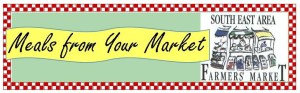 Turnip Puff

Ingredients:
- 1 lb parsnips, washed/peeled/chopped
- 1/4 c sliced carrots
- ½ c chopped onion
- 2 tbsp butter
- ½ tsp salt
- ¼ tsp pepper
 ⅛ ground nutmeg
- ⅓ c soft bread crumbs
- 2 large beaten eggs

What to do with it all:
1. Cook the parsnips, onion and carrots in boiling water (just enough to cover) for 10 minutes.
2. Strain and mash with whatever you have handy (it will look a bit watery).
3. Add butter, salt, pepper and nutmeg and continue to mix and mash.
4. Add bread crumbs and eggs. Continue mixing/mashing until well blended.
5. Pour mixture into a 1qt casserole dish sprayed with olive oil.
6. Bake for 40 minutes @ 375˚. Do not cover.
7. Allow to cool for about 10 minutes. Serve and enjoy!
Meals from Your Market: Vitamin Water
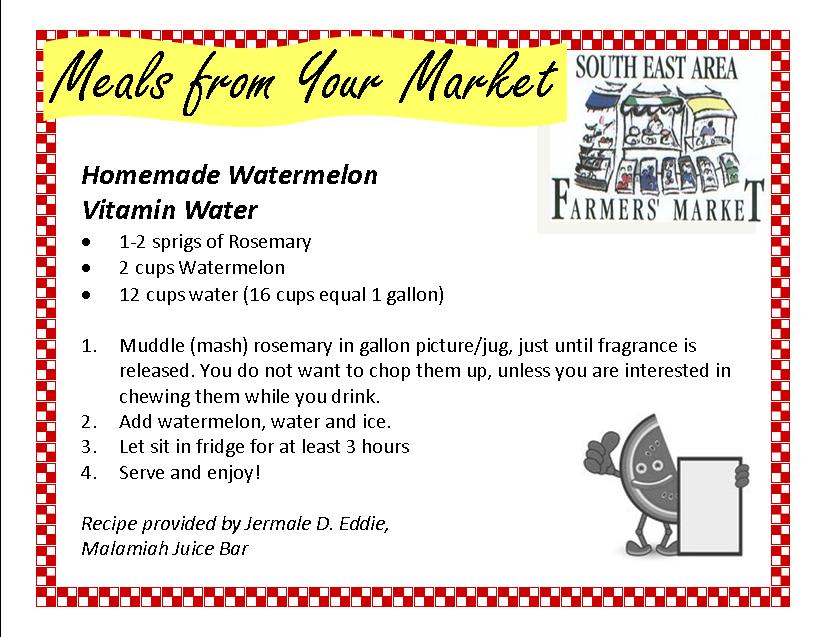 Here is a recipe for Watermelon Vitamin Water, provided by our July Cook, Eat & Talk presenter, Jermale D. Eddie, owner of Malamiah Juice Bar. Substitute other fruits–lemons, oranges, strawberries, blueberries–and other herbs to make your own great flavor combinations.
Homemade Watermelon Vitamin Water
- 1-2 sprigs of Rosemary
- 2 cups Watermelon chunks
- 12 cups water (16 cups equal 1 gallon)
1. Muddle (mash) rosemary in gallon picture/jug, just until fragrance is
released. You do not want to chop them up, unless you are interested in chewing them while you drink.
2. Add watermelon, water and ice.
3. Let sit in fridge for at least 3 hours
4. Serve and enjoy!
Take the Bus to the Farmers’ Markets
Here are area market locations and hours:
The Southeast Area Farmers’ Market at Gerald R Ford Middle School 851 Madison Avenue SE: ROUTES 3 Madison and 2 Kalamazoo. Open Saturdays 11:00 am to 3:00 pm through November.
The Southeast Area Farmers’ Market at Garfield Park 334 Burton Street SE: ROUTES 3 Madison and 24 Burton. Open Fridays from 3:00 to 7:00 pm.
Downtown Market, 435 Ionia Ave. SW: ROUTE 2 Kalamazoo. Open Tuesday & Saturday 8:00 am to 1:00 pm and Thursdays from 4pm to 7pm.
The Fulton St. Farmers Market, Fulton and Fuller: ROUTE 14 East Fulton. Open from 8:00 am to 3:00 pm Tuesdays, Wednesdays, Fridays, and Saturdays. Also, open Wednesday evenings from June to September 4:00 – 7:30 pm.
Grand Valley State University, Allendale Campus Parking Lot H: ROUTE 50, GVSU Campus Connector. Open Wednesdays 10:00 am – 1:30 pm through September 25th. Check gvsu.edu for occasional bus schedule changes. (http://www.gvsu.edu/bus/bus-routes-and-schedules-52.htm)
Grandville Farmers Market (at the library) 4055 Maple Street: ROUTES 8 Grandville/Rivertown Crossings, 24 Burton, and 28 28th Street. Open Tuesdays 8:00 am to 1:00 pm through October.
Metro Health Farmers Market, 5900 Byron Center Avenue: ROUTE 16 Wyoming/Metro Health. Open Thursdays from 9:00 to 2:00 through October 10th.
YMCA Farmers Market (downtown) 475 Lake Michigan Drive: ROUTES Routes 9 Alpine and 50 GVSU Campus Connector and DASH routes Hill and West. Open Thursdays 3:00-7:00 pm OR, visit their website to view the schedule of their Veggie Van.
For bus schedule information, visit The Rapid.
Sacramento Food Bank Changes Lives With ‘Farm-To-Fork’ Program
 Reposted from the Huffington Post.
By TRACIE CONE
SACRAMENTO, Calif. — The Sacramento Food Bank once was one of those standard food distribution centers where bags of processed foods, carbohydrate-laden government commodities and day-old breads and sweets were bagged and handed to people who stood in line for hours to get it.
One day five years ago, then-new CEO Blake Young had an epiphany: “I kept seeing people coming through the line and they were getting fatter and fatter. I realized we were killing them.”
So Young set about to remake how food banks operate, taking advantage of Sacramento’s location in California’s rich agricultural heart.
He and his staff forged partnerships with local farmers, most of them organic, and upped the amount of fresh produce to more than half of clients’ food allotment. Then knowing that most of them live in food deserts without transportation to grocery stores and the region’s many farmers’ markets, they moved distribution sites to about two dozen neighborhood schools and churches they visit once a month.
Just like at farmers’ markets, the produce is laid out on tables, and clients can “shop” for fresh carrots, kale, tomatoes, spinach, cabbage, squash or whatever else is in season. Background music lends a festive air, and informational booths offer clinics on smoking cessation and health screening.
The number of families served has grown from 8,000 to 20,000 over the two years since it has taken off.
“My health has improved, I have more energy now,” said Marlene Hill, 57, at a recent event the Sacramento community of Del Paso Heights. “What we don’t eat we juice up in a blender, and that’s something I’d never done before.”
The movement toward healthier food banks, which a handful of other cities recently have adopted, pleases food and nutrition guru Michael Pollan, who has written books encouraging people to eat fresh, seasonal produce grown locally.
“For too long, America’s food banks have been giving out the worst kind of food– precisely the sort of highly processed food-like substances that contribute to obesity and chronic disease,” he said in an email. “‘Better than nothing,’ is the best you can say about it. But in recent years, there has been an encouraging effort to improve the food in food banks, adding significant amounts of fresh produce, and focusing on the quality, not just quantity, of calories.”
A number of food banks in California, including San Francisco and Los Angeles, also are working to deliver more fresh produce to clients, as the trend grows. The Sacramento bank distributes $5.5 million worth of food annually, but because of partnerships with local farmers it spends only $175,000 for it.
Now the Sacramento Food Bank is upping the ante as Young and his crew set out to create one of the nation’s first farm-to-fork food banks by using 100 percent local growers, up from three-quarters. One of the biggest partners now is Capay Organic family farm in neighboring Yolo County, which donated 142,732 pounds of local produce to the food bank last year and sold it another 51,858 pounds.
“Sometimes the market can’t handle all of the products we’ve picked, which is why our relationship with the Sacramento Food Bank is so good for us,” said co-owner Thaddeus Barsotti, whose farm also supplies some of the region’s best restaurants. “Sometimes they buy it from us and sometimes we give it to them. It’s a cool relationship. They contribute to year-round work for our farmworkers.”
The aim of all involved is to improve the health of clients like Johnny Bunyard, who said he lost 100 pounds when he started eating healthily. He also quit smoking.
“Now I’m a lot more active than I was,” he said. “It’s all from the healthy food I get here, plus determination.”
Bunyard, once homebound, rides his bike to the distribution center at a local church to select exotic, fresh produce that has broadened his palate along with recipe cards for preparing it.
“My friend cooked the kale for me one time and said `This is that kale you didn’t think you liked.’ Well, I was wrong,” Bunyard said.
Young hopes to open new markets for local farmers as clients buy more healthy food. He believes a true farm-to-fork movement must include socioeconomics groups not inclined to shop at farmers markets or Whole Foods.
“A community is better off if farm-to-fork includes folks who struggle to put nutritional food on the table,” Young said.
Client Laura Poree, who lives on her Social Security income, switched to a vegan diet and enrolled in the food bank’s twice weekly home gardening seminars, which educate about 30 clients a week. She lost 27 pounds and no longer needs blood pressure medication.
In containers behind her duplex she grows zucchini, bell peppers, tomatoes, beets, kale and okra, all of her favorite vegetables. The food bank provides the soil, plants and tools for growing organically. She harvests enough to share with her neighbors.
“You know the saying `Teach a man to fish and they can fish for a lifetime,'” she said. “I’ve really cut back on my grocery bill and my health is better. I’m eating out of my yard and I’m sharing with others. It’s a wonderful feeling.”
___
Reach Tracie Cone: www.twitter.com/TConeAP
A morning walk with Our Kitchen Table
 This June I had the opportunity to meet Lisa Oliver-King and others working with Our Kitchen Table (OKT), a Grand Rapids area grass-roots, non-profit organization. OKT promotes social justice by serving as a vehicle to empower their neighbors so they can improve their health, the health of their communities and their environment. My time with OKT consisted of a walking tour of the Eastown neighborhood where Oliver-King and others pointed out the multiple urban gardening and foraging projects they are involved with. This experience made a marked impression on my own interests in the natural, culinary and agricultural world. Rather than describing OKT’s mission in total, I would instead like to focus in on two aspects of this experience that especially resonated with me.

First, and most broadly, OKT seeks to inform policy-makers and neighborhood residents alike that there are more than just private retail solutions to the problem of lack of access to healthy food. OKT works in neighborhoods where nutritious and fresh food are largely not accessible. In such places, the knee-jerk solution is to locate a new grocery store. While this approach has its obvious merits, one problem with the retail model is that it fails to address the widening gap between people and decisions about which foods are both healthy and beneficial for communities. Instead, OKT works in both the policy arena and with their neighbors to develop alternatives to retail models, including a range of urban gardening practices. This range specifically is what I want to emphasize. Urban gardens operate under multiple management practices. On our walking tour we visited a garden run by a neighborhood association, where individual families tended specific portions of the garden, a garden where neighbors collaborated and negotiated space and shared responsibilities on their own, as well as private gardens of area residents. In private gardens, OKT works with residents to develop container gardens that are easy to manage and highly productive. Each model had its upsides and downsides. For instance, the garden operated by the neighborhood association encouraged a patchwork management style, where individual growers came and went on their own terms. The collaborative garden necessarily entailed closer networks and communication. The private gardens performed yet another role in that they served as a means to spark conversation and new social ties between neighbors that began to share ideas, information, knowledge, and gardening techniques. Together, each of these gardens provide alternative means for individuals, families, and communities to access food and increase control over their own lives.
Second, along with urban gardens, OKT emphasizes urban foraging. One need not travel to rural areas to find wild food. Instead, the trees, bushes, shrubs, and other various plants throughout the Eastown neighborhood provide multiple sources of nutrition – if you know where to look. Oliver-King emphasized two types of food in particular that area residents had low access to – berries, and seeds and nuts. While seeds such as sunflower seeds could be grown quite successfully, others such as black walnuts were abundant in the area, and if harvested seasonally, could provide a healthy addition to meals all year long. Moreover, black cap raspberries were abundant but somewhat overlooked in the area.

The key to connecting communities to these resources, however, involves more than merely changing the behavior of individuals via educating people on how to grow and identify sources of food. Instead, OKT identifies and engages with structural and policy barriers. We discussed two in particular on our walk. First, OKT encourages its neighbors to see their potential gardens through a historical lens and ask what exactly is in the soil they might till up? OKT’s on-staff biochemist, for instance, samples area soils for lead and arsenic, toxic residuals from house paint as well as pesticides and herbicides historically used to treat the residential area’s previous use as apple orchards. Some soil samples in the area were many times higher than EPA standards for playground toxicity — a default equivalent as standards for outdoor gardens do not exist. Rather than soil remediation, which is expensive and not probable under most circumstances, OKT works with families to develop container gardens in order to avoid disturbing contaminated soil.
Second, and hitting close to home for me, OKT works with the city’s Parks and Recreation Department to influence policy decisions on selecting tree and plant varieties for public spaces as well as maintenance practices – including treatment with chemicals. Trees and other plants can provide significant benefits to urban spaces such as moderating the micro-climate and absorbing and filtering storm water. There are many efforts nationally that are working to reforest urban areas to acquire such benefits. However, as OKT stresses, not all trees are created equal. Rather than simply encouraging the planting of more trees, OKT is interested in the impact new trees will have on neighborhoods and how residents will respond. For some, more trees can be seen as causing an additional nuisance from leaves that clog gutters and roots that block pipes. The leaves of certain trees, however, such as maples, break down in composts much better than other varieties, such as oaks. Moreover, maples can be tapped in the spring and the sap evaporated into maple syrup, which could provide neighborhoods with an alternative and healthier source of sugar. In regards to chemical treatments, little communication exists between the Parks department and neighborhood residents, leading to heightened perception of risks around foraging for fruit such as apples and mulberries as well as nuts and roots.
To put this together, part of OKT’s effort is to reframe both policy practices and local understandings of the area’s resources. Key to success is what social movement scholars call “frame transformation,” which refers to a change in the relevance of things such as trees and plants and urban spaces that in some sense are already meaningful. My own frame transformation took place around two of my own favorite practices, namely, winemaking and maple syruping. I have approached both of these activities from the perspective of my own personal enjoyment. I revel in fresh fruit and the yearlong process of pressing, fermenting and aging my wines on oak, as well as tapping maple trees in the dark months of February and March and boiling down the sap into sweet syrup. In spending time with OKT, however, I began to see that these individual practices could also be part of something much larger. The ingredients necessary for both winemaking and syruping can be collected through urban foraging. Neighbors can work together to collect fruit as well as care for fruit bearing plants and thereby begin building a repertoire of foraging practices that are largely removed from reliance on the area’s limited retail market. Moreover, maple syruping is a time and labor intensive practice – yet nothing about syruping demands it be done in a shack in the woods. Instead, neighborhood residents can collectively identify viable maple species and collaborate on constructing many individual or one central evaporator, much in the same way that collaborations are underway for managing shared gardens. In this way, OKT’s walking tour has broadened my appreciation of the socially positive attributes of being aware of, using, and sharing publicly available resources. My many thanks to OKT for this knowledge and experience as well as their ongoing efforts to shape policy in directions that explicitly benefit not only national scale but local needs and concerns.
OKT moves to new Garfield Park office
While The Bloom Collective has been a most gracious host for the past several years, Our Kitchen Table recently got the opportunity to move into affordable office space in one of our target neighborhoods, Garfield Park. We are now located within the Garfield Park Lodge, 334 Burton SE, Grand Rapids 49507. We hope that this move makes it more convenient for our southeast side constituents living in Gafield, Eastown, Baxter and SECA/Southtown neighborhoods.
Kellogg boycott raises awareness of GMOs in foods marketed to children
“Kellogg’s total advertising for their child and family cereal brands came in at $162.3 million in 2011 … Kellogg spent another $790,700 to help defeat Prop 37 in California, a ballot initiative that would have required the mandatory labeling of GMOs.”
GMO Free USA uses education, advocacy and action to foster consumer rejection of genetically modified organisms, until they are proven safe. Its current Kellogg boycott campaign is one strategy the group is using. The following article and video are reposted from the GMO Free website:
We aim to speak collectively to force food manufacturers to come clean with the ingredients they use in their products, and to remove untested and potentially harmful genetically modified organisms (GMO). If they won’t remove GMOs, we will boycott them until they do. We will begin with one industry leader until our numbers grow large enough to expand our boycotts.
Kellogg states, “At Kellogg we believe that when you start with a great breakfast, great things can happen. That’s why we make foods that you and your family know, trust and enjoy.” After repeated attempts to get them to be transparent and cooperative on the issue of GMOs, in the interest of the health and well being of their customers, we only got the cold shoulder.
We began with and targeted Kellogg, an American icon since 1906, because of its heavy marketing to children and its wholesome family image. While all people – children, teens, and adults – should be concerned with their health, children are most vulnerable because their bodies are still developing. Increasing evidence suggests that long term consumption of GMOs is harmful and that the escalated use of toxic herbicides and pesticides in GMO agriculture is compounding the problem. Additionally, Kellogg was chosen because they sell the same products abroad, in countries that require the labeling of genetically engineered foods, but without using genetically engineered ingredients. Americans deserve the same.
According to the Rudd Center for Food Policy & Obesity at Yale University, marketing of cereals to children has increased significantly over the years. Their first study found that the least healthy breakfast cereals are those most frequently and aggressively marketed directly to children as young as age two. Kellogg is one of two companies that led in child-targeted marketing, in spite of their participation in the Children’s Food and Beverage Advertising Initiative (CFBAI), the food industry’s self-regulatory program.
Kellogg’s total advertising for their child and family cereal brands came in at $162.3 million in 2011. And this year, 2012, Kellogg spent another $790,700 to help defeat Prop 37 in California, a ballot initiative that would have required the mandatory labeling of GMOs. So not only does Kellogg market its most nutritionally deficient products to children, all of which contain GMOs and toxic chemicals, they decisively bet against Democracy and peoples’ freedom to choose by funding a propaganda campaign designed to trick people into voting against their own best interests.
Well Kellogg, we used to know, trust, and enjoy your foods, but not anymore! We will continue to grow this boycott. We will ramp up our efforts in the coming months. And we will not stop until you address and work with us to reach a solution. The solution: remove all GMOs from your products.
 Our Kitchen Table