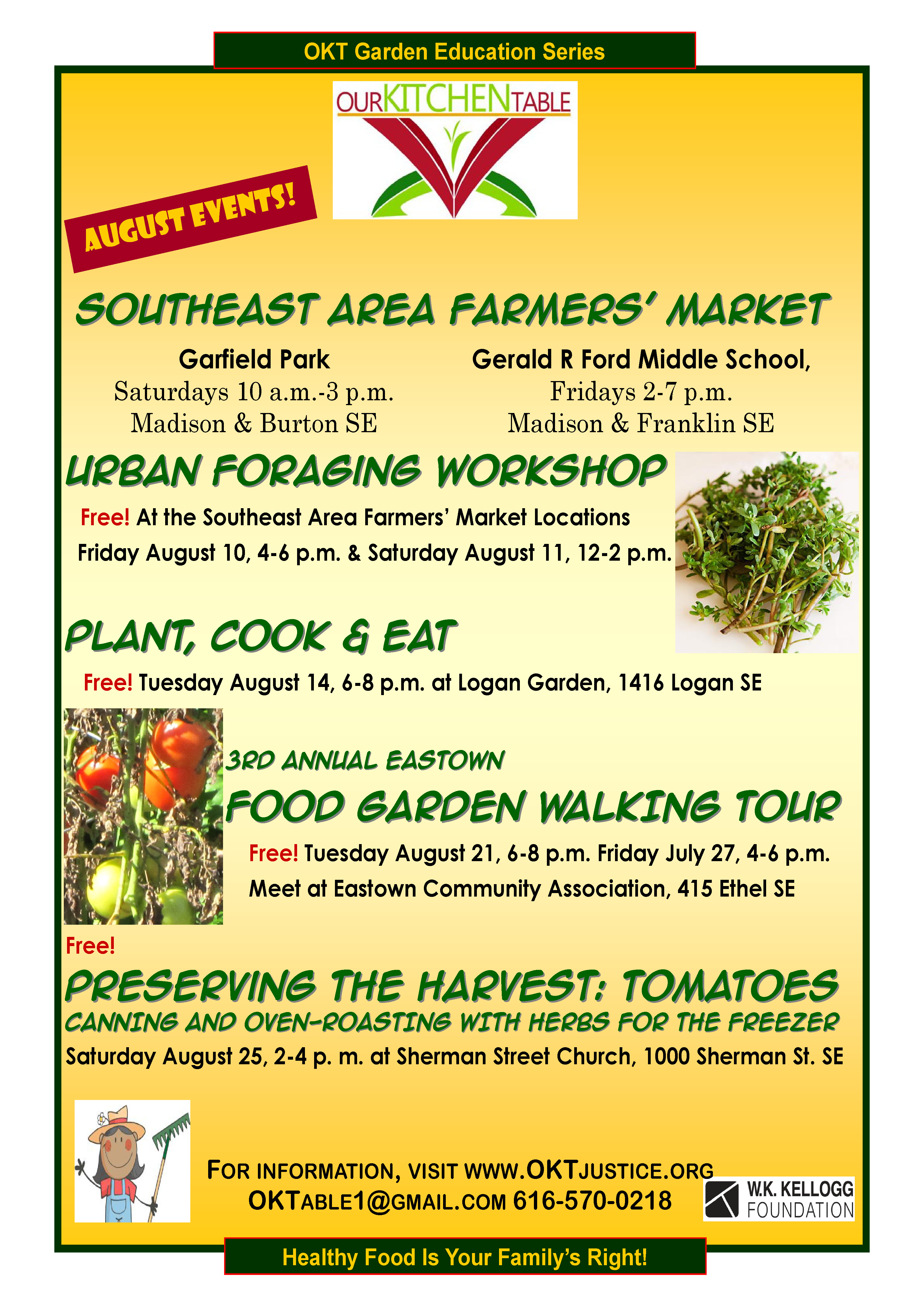
Urban foraging workshops at farmers’ markets this weekend

Where the Wild Things Grow Urban Foraging Workshops

  • 4 – 6 p.m. Friday August 10 at Gerald R Ford Middle School with Ms. Yvonne Woodard, market manager and Master Gardener
  •  12 – 2 p.m. Saturday August 11 at Gerald R. Ford Middle School with Kristin Tindall, Blandford Nature Center

The Southeast Area Famers’ Market will host Urban Foraging Workshops for the second year in a row, 4 – 6 p.m. Friday August 10 and 12 – 2 p.m. Saturday August 11 at Gerald R Ford Middle School.  Just like the grocery stores have helped us forget that food comes from farms, cultivation of domestic crops has helped us forget that many of the native species we see around us (and label as weeds) once were a prize source of both food and medicine.
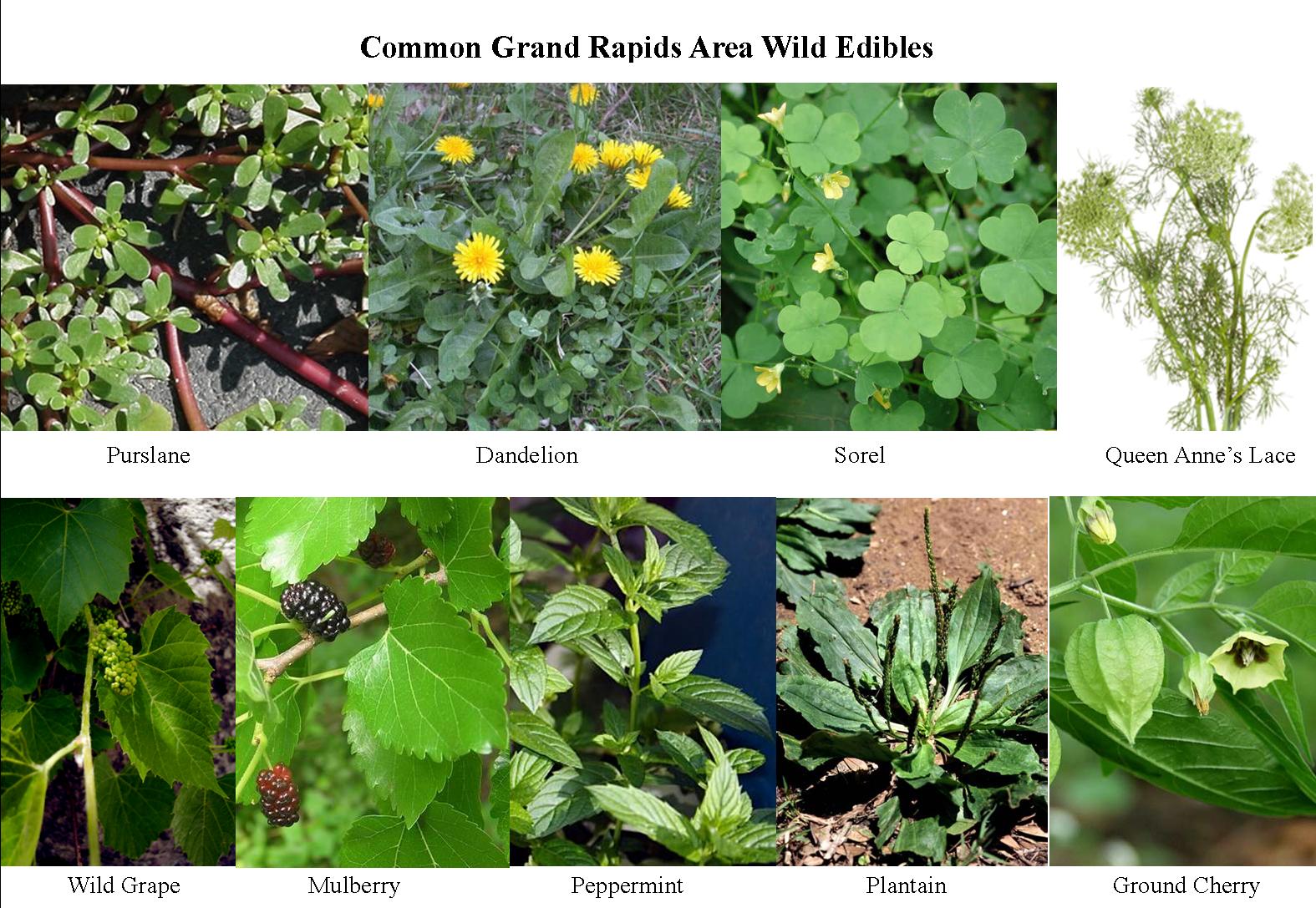
Last year, people attending the workshop learned how to identify the following edible plants—all of which grow in Grand Rapids neighborhoods.

  • Purslane, dandelion and sorrel: delicious salad greens
  • Queen Anne’s lace: Deep fry the flowers.
  • Wild grape and mulberry leaves: wrap rice and meat mixtures, think Middle Eastern cuisine.
  • Mulberries:  a great summer fruit snack and delicious made into jelly or jam.
  • Peppermint:  brew as tea to settle an upset stomach; chew a leaf instead of a breath mint.
  • Plantain: the leaves can relieve insect bites and bee stings. Roll and crush the leaf, apply it to the sting, use a whole leaf as a “band-aid” to hold the crushed mixture in place.
When foraging, make sure you pick plants from an area that has not been chemically contaminated. For example, utility companies usually spray a swath of herbicides under electricity towers.

The Southeast Area Farmers’ Market is open Fridays from 2 to 7 p.m. at Gerald R Ford Middle School, Madison Ave. and Franklin St. SE and Saturdays from 10 a.m. to 3 p.m. at Garfield Park, Madison Ave. and Burton St. SE. Both market locations accept cash, debit cards, EBT/SNAP, Double Up Food Bucks, WIC Project Fresh and Kent County Health Department coupons.
In a pickle

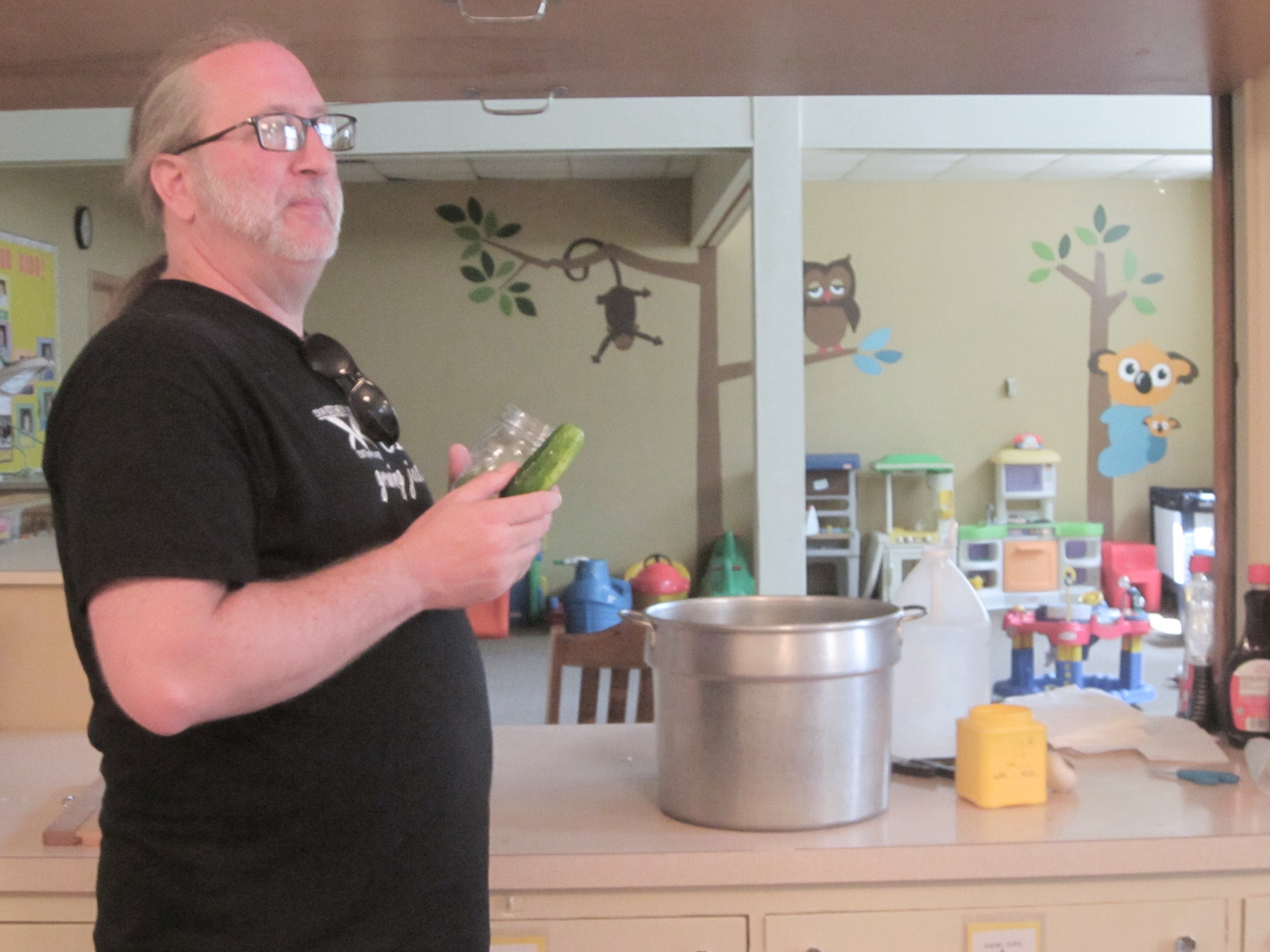
OKT Collaborative Partner, Jeff Smith, facilitated the “How to Can Pickles” workshop.

Last Friday and Saturday were busy days for the Our Kitchen Table staff. At the Southeast Area Farmers’ Market, OKT market manager, Yvonne Woodard led “Make Your Own Soap” workshops both Friday and Saturday. Later on Saturday, Stelle Slootmaker, OKT’s communication person, and Jeff Smith, an OKT collaborative partner, facilitated a dill pickle canning workshop.

It’s really easy to can your own pickles. You’ll save money and avoid the chemical preservatives added to most store-bought pickles. Do you have extra cucumbers? Do you love dill pickles? Jeff shared his grandmother Robena Dove’s  tried and truly delicious garlic dill pickles recipe along with some simple canning hints.

Robena Dove’s  Garlic Dill Pickles

Ingredients

  • Cucumbers, small whole or sliced to fit jars.
    1 peck of pickle cucumbers will yield approximately 20 quarts or 40 pints of pickles. However, you can do just a few jars if that works better for you.
  • Sea salt
  • Peppercorns
  • White vinegar
  • Raw garlic cloves
  • Dill weed

Supplies:

  • Large kettle for brine
  • Canning kettle with rack for jars
  • Canning jars, lids and rings
  • Hot Pad, tongs
  • Dish towels
  • Cutting board and knife
  • Large ladle
  • Canning funnel

Directions

  1. Wash pickles and dill thoroughly. Peel garlic cloves. Wash jars and lids in hot soapy water. Rinse well. Check jar rims to make sure they are not chipped (this will prevent sealing).
  1. Brine. Mix water, vinegar and salt in large kettle and bring to boil. Lower heat to keep simmering.
  1. Begin heating water in canning kettle. Use enough water to barely submerge jars, or a little less.
  1. Place some dill, peppercorns and a 2 0r 3 cloves of garlic in each jar. Stuff pickles into jars tightly. Slice some if needed to fill jars up to (but not higher than) the bottom of the jar rim. Pour hot brine into jars up to rim bottom (1/2 inch from top of jar).
  1. Wipe the top of the jar rims off with a clean cloth. Dry jar lids and place on jars. Secure with a screw on rings.
  1. When canning kettle water is boiling, place jars in rack and lower into kettle. Cover. Watch heat so that the kettle is barely boiling, but not too vigorously. Process for 20 minutes.
  1. Turn off heat. Remove cover. Using canning tongs or a hot pad, gently remove the jars of pickles and place on dish cloths on counter a few inches apart. Do not disturb! Watch to see if the jars make a “pop” sound indicating that they have sealed. In four or five hours, check cooled jars to see if they have sealed by pressing gently on the center of the lid. If the lid goes down and pops back up under pressure, it is not sealed. Keep unsealed jars in the fridge. Sealed jars can be stored at room temperature for a year or more.

Whenever opening a jar for consumption, make sure the seal is good (you will hear a “pop” when you open it). If the contents have discolored, look foamy or have a bad odor, throw away.

This slideshow requires JavaScript.

Free Healthy Food Action Health Webinar

Healthy Food, Healthy Farms Webinar Series


Chicken, Life-threatening UTIs and Women’s Health
Wednesday, Aug. 8th
1:30pm CDT
11:30 am PT~12:30 pm MT~2:30 pm ET

With 6-8 million cases per year, urinary tract infections primarily impact women. As many as 85 percent of UTIs are caused by E. coli bacteria, most often a specific form of E. coli known as ExPEC. ExPEC are believed to cause up to 40,000 deaths from bloodstream infections each year. As they get more resistant to antibiotics, ExPEC infections and resulting deaths will rise. It’s a troubling trend, given that these infections are already becoming more antibiotic resistant. This webinar focuses on the new, compelling science showing that women are contracting ExPEC infections from eating contaminated chicken. What’s more, we are now finding that chickens raised in environments where antibiotics are routinely added to chicken feed for growth promotion has helped create this problem. Read more and register

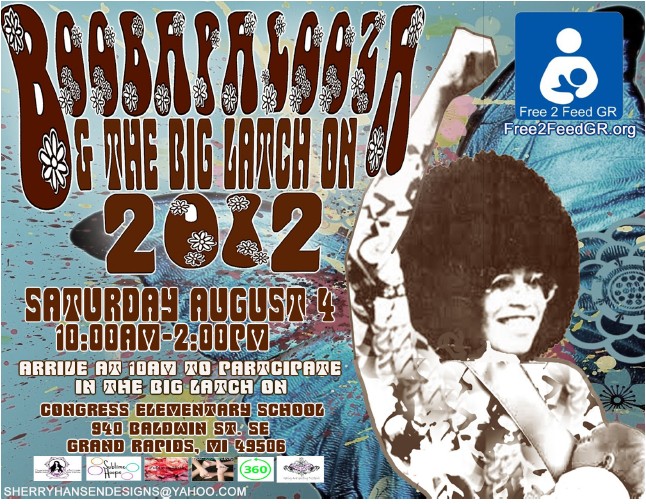
Celebrate BOOBAPALOOZA Saturday in Grand Rapids

BOOBAPALOOZA: The Big Latch On
(international breastfeeding in unison event)

  • 10 a.m. to 2 p.m.  Saturday August 4
  • Congress Elementary School, 940 Baldwin St. SE, Grand Rapids.
  • For breastfeeding moms, their babies and children as well as community and family members who support breastfeeding.

August 1 through 7 every year, The World Alliance for Breastfeeding Action organizes World Breastfeeding Week to raise awareness of the benefits of breastfeeding and the need for global support. Celebrated in 120 countries, World Breastfeeding Week  marks the signing of the WHO/UNICEF document Innocenti Declaration, which lists the benefits of breastfeeding along with global and governmental goals.

To mark this occasion, thousands of breastfeeding women, their babies and children across the world will gather in their own communities to take part in the Big Latch On, a synchronized breastfeeding event in multiple locations.

To celebrate the Big Latch On and normalize breasts and breastfeeding, Free 2 Feed GR is hosting BOOBAPALOOZA as Grand Rapids’ Big Latch On event 10 a.m. to noon Saturday August 4 at Congress Elementary School, 940 Baldwin St. SE,
Grand Rapids.

The first Big Latch On took place in Aotearoa New Zealand in 2005. It was introduced to the US in Portland, Oregon in 2010. In 2011, 5687 women participated in the Global Big Latch On, including 57 moms and babies right here in Grand Rapids. This year organizers of the event are aiming to help break the world record. The Big Latch On is informed by the principles of community development, providing the opportunity for breastfeeding women to get together in their local communities, host their own events, and identify opportunities for on-going support.
Free 2 Feed GR’s big goal is to establish a local resource guide to mothers to find establishments in Grand Rapids who support nursing mothers by simply allowing them to nurse wherever they are otherwise allowed to be. This will be the first resource guide of its kind, meaning Grand Rapids could be the first ‘official’ Free 2 Feed city in the country. Free 2 Feed GR’s goal is to promote breastfeeding as a normal, healthy and respected choice within the Grand Rapids community and beyond.

Did you know?

  • Breastfeeding contributes to the normal growth and development of babies and children.
  • Children who are not breastfed are at increased risk of infant morbidity and mortality, adult
    obesity, diabetes, cardiovascular disease, osteoporosis, and premenopausal breast cancer and
    ovarian cancer (both mom and baby.)
  • The World Health Organization recommends breastfeeding exclusively for the first six months of a baby’s life to optimize these benefits, continuing to breastfeed for 2 years and as long thereafter as is mutually desired by a woman and her child.

For information, visit www.Free2FeedGR.org or www.biglatchon.org

August means abundant produce and market activities

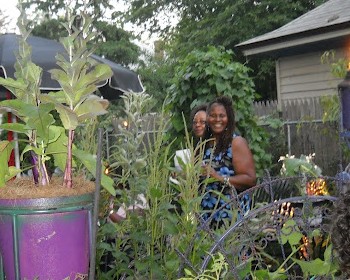
Ms. Penda Childrey’s spectacular backyard food garden was one of many on the 2011Eastown Food Garden Tour.

August is looking to be an eventful month for the Southeast Area Framers Market. Join OKT for these market-based activities.

Want to find a way to stretch your food budget even further? Join us for free “Urban Foraging” workshops, Friday
August 10, from 4-6 p.m. at the Gerald R Ford Middle School market location and Saturday August 11 from 12-2 p.m. at the Garfield Park market location.

Learn and share how to identify, prepare and eat native food sources growing all around you.

On Tuesday August 14 from 6-8 p.m., join us for a “Plant, Cook & Eat” at the Logan Community Garden, 1416 Logan SE. This free community dialogue about urban gardening, healthy foods and food justice includes a healthy food demo with sampling .

On Tuesday August 21 from 6-8 p.m., join OKT for the free Eastown Food Garden Walking Tour. This informative and fun tour of Eastown residents’ amazing food gardens features cooking demos along the way. Wear comfortable shoes and bring a water bottle. The tour will start at the Eastown Community Association, 415 Ethel Ave. SE.

On Saturday August 25 from 2-4 p. m., learn how to can  and oven-roast tomatoes at Sherman Street Church kitchen, 1000 ShermanAve. SE.

Apply for Bundled Benefits at the Southeast Area Farmers’ Market

Stop by and say hello to LaDonna Brown. She is assisting neighbors to sign up for “Bundled Benefits” at both market locations via the new online MI Bridges system.

When you visit either Southeast Area Farmers’ Market location, stop by and chat with LaDonna Brown, an intern with Heart of West Michigan United Way. She is on–site at the markets to provide information and sign people up for Bundled Benefits, a “one-stop-shop” approach to applying for food assistance, medical assistance, cash assistance, childcare and emergency services. “I think that the bundle benefits program will be a great asset to the community,” says Sheri Munsell, OKT market management team. “People will be able to sign up for the help that they need with a friendly and informative helper who knows the programs well, right there at the market.”

All residents applying for any kind of assistance must now enroll online via the MI Bridges system—even at the DHS offices. Instead of meeting with a person, applicants are steered to computer kiosks where they enter their information. They can also enroll using their own home computers, a library computer or at specific Bundled Benefit sites, like the Southeast Area Farmers’ Market. The website address is http://www.mibridges.michigan.gov.

Using a computer to apply for assistance can be an intimidating experience. This is why Ms. Brown is such a treasure. She is happy to work with neighbors navigating the new system for the first time—and she always makes their confidentiality a priority.

Don’t forget to stop by the Southeast Area Farmers’ Markets this weekend: 2 – 7 p.m. Friday at Gerald R Ford Middle School or 10 – 3 Saturday at Garfield Park. Both market locations accept cash, debit cards, EBT/SNAP, Double Up Food Bucks, WIC Project Fresh and Kent County Health Department coupons.
CANCELLED DUE TO HEAT ADVISORY Plant, Cook & Eat!

OKT regrets that today’s Plant, Cook & Eat is being cancelled due to the high heat advisory.

Join OKT for a Plant, Cook & Eat event. Let’s share what we know about gardening  and the community food system while enjoying a healthy food demo.

2012 Farm Bill rewards large agri-business, punishes small farmers and low income families

“The House Agriculture Committee Farm Bill cuts $16 billion from SNAP benefits, primarily by limiting eligibility. The Committee rejected an effort to make the cuts even steeper (by applying the draconian Ryan Budget cuts) but also rejected an effort to restore the SNAP cuts or use the lower level of $4 billion in cuts in the Senate Farm bill.”

This is reposted from www.GRIID.org

Yesterday, MLive ran a story citing Michigan Senator Debbie Stabenow who believes that the 2012 Farm Bill that passed in the Senate and is being voted on in the House today is a “win for Michigan.”

Actually, the MLive posting wasn’t much of an article, since it was mainly a re-printing of a statement from Senator Stabenow, with no other voices or a critical assessment of the version of the bill passed by the Senate.

The version passed by the Senate is not a win for Michigan, unless you define Michigan as big business. According to Food & Water Watch, which has been organizing a campaign to get the federal government to pass a Fair Farm Bill, the Senate passed version of the Farm Bill benefits the large agri-businesses in the US, not small farmers or a sustainable food system.

Although the Senate bill made changes to commodity policy that will be touted as reform,the bill reinforced prior farm policies that favor large industrial-scale agriculture and overproduction of commodity crops like corn and soybeans. Only a few companies sell what farmers need (like seeds, fertilizer and tractors) and only a few firms buy what farmers raise, which means they pay more for supplies and get less for their crops and livestock. The four largest companies in each industry slaughter nearly all the beef, process two-thirds of the pork, sell half the groceries and process about half the milk in the United States.

This is no accident. It’s the direct result of lobbying campaigns by major agribusinesses, industry trade associations and the policies that Congress passed on their behalf. And the process in which the Farm Bill was decided is even more disconcerting. Started in secretunder the guise of the Supercommittee budget slashing process last fall, the farm bill has had little input from anyone other than a handful of legislators and the Big Ag lobbyists who pay the most to play. The secret farm bill developed for the Supercommittee got scant scrutiny from the Senate Agriculture Committee. The 1,000-page proposal was released only a few days before the Committee finalized the nearly trillion-dollar legislation in three short hours  – that’s about $90 million a second.

Then, when the Farm Bill finally made its way to the Senate’s agenda last week, nearly 300 amendments flooded in. From the absurd (ending the federal food stamp program and taking on Canadian geese) – to the outright irrelevant  (aid to Pakistan and protecting the Pentagon budget), many of the amendments had little to do with farming or food.

The House version of the bill was introduced last week and might be decided on today. The MLive story mentions this in one sentence, but offers up no information on what is in the House version of the Farm Bill, nor where Michigan members of Congress stand on this issue.

Again, according to Food & Water Watch, the House version so far has not been a benefit to the public. They state:

Most of today’s action was related to the nutrition title, which primarily funds the Supplemental Nutrition Assistance Program (formerly known as food stamps). The House Agriculture Committee Farm Bill cuts $16 billion from SNAP benefits, primarily by limiting eligibility. The Committee rejected an effort to make the cuts even steeper (by applying the draconian Ryan Budget cuts) but also rejected an effort to restore the SNAP cuts or use the lower level of $4 billion in cuts in the Senate Farm bill.

So, it not only appears that the Farm Bill will maintain the tax payer subsidies to big Ag, it will continue massive support for factory farms, unsustainable agriculture practices and punish low income families with cuts to food assistance. One more reason why we need a food revolution!

Southeast Area Farmers’ Market Vendor Profile: Darlene Gibbons

One of Our Kitchen Table’s founding members, Darlene Gibbons is also one of the Southeast Area Farmers’ Markets’ most faithful vendors. A 1974 graduate of Ottawa Hills High School, Ms. Gibbons has deep ties to the neighborhoods the market serves—even though her small farm is located in Allendale.

If you’ve been to the farmers’ market the past few weekends, no doubt you have chatted with Ms. Gibbons and admired the chemical free produce she has grown. As a staunch advocate for community improvement, she expends a lot of energy advocating for environmental and social justice right here in the Grand Rapids area.

If you have a conversation with this soft spoken grandmother, you’ll no doubt discover her heart for justice as well as a great depth of political and historical knowledge.

Ms. Gibbons is also a college student—and the mother of two successful college graduates. This past spring, her son Dr. Baron Colbert, 30, received his PhD from Michigan Technological University. He lives in the Upper Peninsula with his wife and four children. Her son Brandon Colbert, 27, who earned his Master’s Degree in Sociology this year, works as a Regional Director of Leadership Platform Acquisitions, in Washington, DC.

In addition to gardening, Ms. Gibbons spends time reading about social justice issues, quilting and sewing for her grandchildren.

Don’t forget to stop by the Southeast Area Farmers’ Markets this weekend: 2 – 7 p.m. Friday at Gerald R Ford Middle School or 10 – 3 Saturday at Garfield Park. Both market locations accept cash, debit cards, EBT/SNAP, Double Up Food Bucks, WIC Project Fresh and Kent County Health Department coupons.