Free webinar explores neurodevelopmental effects of chemical exposures in children

On March 14, a free webinar, “Neurodevelopmental outcomes in children associated with chemical exposures occurring early in life” will be presented by  Amir Miodovnick, MD, MPH, DTM&H (Pediatric Environmental Medicine, The Mount Sinai School of Medicine). The webinar takes place from 3-4PM EST.

OKT’s collaborative partner Dr. Clinton Boyd  serves as the technical director for this effort which is a part of the state-funded Michigan Green Chemistry Clearinghouse. “As part of the Clearinghouse’s mission, we are trying to bring information on green chemistry to multiple audiences including: education sector, industry, government, not-for-profits and the public.” Boyd says.

If there is interest, OKT is considering setting up a venue where attendees could gather and listen. For information and registration (after March 1), visit  www.migreenchemistry.org.

Renters Rights, Foreclosure Fights Potluck Discussion at The Bloom Collective Saturday

12:00pm until 2:00pm
Saturday, February 25, 2012

At The Bloom Collective
Steepletown Center
671 Davis NW
Grand Rapids
(Corner of 5th & Davis)

Learn about your rights during this lively discussion about renters rights, the housing foreclosure crisis as well as some creatives ways that people are resisting being evicted and abused by landlords around the country. We have invited guests who work on these issues, but we welcome all ideas and perspectives on how to stand up for everyone’s right to descent housing.

This is a potluck event. We invite to to bring food to share and the Bloom Collective will make sure there are vegan food options. This event will go from noon until 2pm.

~Our Kitchen Table shares space with The Bloom Collective in Steepletown Center.

MLive uncritically looks at GRCC farmer certification program

This article was originally posted on GRIID.

Last week,  MLive posted a story by reporter Brian McVicar, which promoted a new program by the Grand Rapids Community College that seeks to assist local farmer obtain certification and allow them to sell to larger food distributors.

The article states that GRCC is offeringGood Agricultural Practice (GAP)certification classes to area farmers who want to expand their sales beyond farmers markets. Nowhere in the story does the reporter question the premise of the project, which seems to be shifting food sales from farmers markets to involve food marketers and food brokers. The article does not include voices that would suggest that farmers markets are the best mechanisms for promoting local food.

The only sources cited in the article are the director of work force training at GRCC and someone with the MSU extension, which is one of the partners in this project.

However, the article omits the other partners in this project, which according to GRCC are Sysco, Walsma Lyons and Morse Marketing Connections. The MLive story does mention Sysco, but not as a partner.

Understanding who the partners are in this project makes all the difference in the world. Sysco, Walsma Lyons and Morse Marketing Connections do not grow food, they only distribute and market food products. These entities also have a long history of being food brokers and marketers with an emphasis that is not on the local. For instance, Walsma Lyons states they offer access “to a large global network of preferred suppliers.”

Morse Marketing Connections, “originally worked with Michigan-based agricultural groups and has expanded nationally, now working in multi-sector partnerships across a variety of food-related initiatives, with government agencies, private and public universities and corporations.” Sysco, while it has a Grand Rapids office, is one of the largest food distributors in the US.

What the MLive reporter failed to acknowledge or investigate is that when companies like Sysco get involved in purchasing from local growing’s, particularly small farmers is that they then exert tremendous influence in what those farmers grow. The reason being is that Sysco and other food brokers operate on volume, which means they not only are likely to determine food prices, they sometime can determine what farmers grow, based on “the market.” If a small blueberry farmer begins to sell their product to companies like Sysco they are submitting themselves to an unstable market that is often determined by what Sysco other food distributors can market around the country or around the global. This means that when a crop disaster happens anywhere else in the world it can impact the sales of food grown locally that are now in the global market because of their relationship to companies like Sysco.

This topic was explored briefly in the film Food Inc., but is better explained in Raj Patel’s book Stuffed and Starved: Markets, Power and the Hidden Battle for the World’s Food System.

If the local news media is going to report on local programs that are supposed to “assist” area farmers, then they need to ask important questions about the commercial partners in this project and what it really means for farmers and the public.

Stabenow continues to support Farm Bill subsidies to agribusiness

This story is reposted from GRIID.

Last week, Michigan Senator Debbie Stabenow announced that the Agriculture, Nutrition and Forestry Committee will be holding four hearings over the next month on the 2012 Farm Bill.

The four hearings will cover the following topics: Energy and Economic Growth for Rural America; Strengthening Conservation through the 2012 Farm Bill; Healthy Food Initiatives, Local Production; and Nutrition and Risk Management and Commodities in the 2012 Farm Bill.

The announcement also says, “Witnesses, times and other specific hearing details to be announced.” This clearly suggests that Stabenow and the other Committee members have selectively invited people to address the committee, which if it follows the same pattern of the Michigan Farm Bill hearing from 2011, then all the “witnesses” will be representatives from Agri-business.

The selection of who will no doubt be speaking at these hearings could also be deduced by looking at who the major campaign contributors are to Senator Stabenow, who is in the midst of a re-election year. Several of the top 20 contributors for the 2012 election are from the agribusiness sector.

A third indicator on who might be speaking at the upcoming Ag Committee hearings is reflected in whom Senator Stabenow has recently provided taxpayer subsidies.

On February 3rd, Stabenow announced that several Michigan food suppliers would be receiving federal funding. All four recipients will be using the “grant” money to“develop marketing strategies for agricultural commodities.” The four businesses are producers of beet sugar, chocolate & yogurt-covered blueberries, fruit wines and bio-based chemical products. Interesting, since none of these products seem like essential food staples and that promote better nutrition. Indeed, all four products seem to be specialty items that will all be fairly pricey and target more upscale consumers. This is what your tax dollars are being used for……..to advertise luxury food items to upscale consumers.

The Seed Emergency: The Threat to Food and Democracy

This article by Vandana Shiva is re-posted from ZNet and GRIID.

The seed is the first link in the food chain – and seed sovereignty is the foundation of food sovereignty. If farmers do not have their own seeds or access to open pollinated varieties that they can save, improve and exchange, they have no seed sovereignty – and consequently no food sovereignty.

The deepening agrarian and food crisis has its roots in changes in the seed supply system, and the erosion of seed diversity and seed sovereignty.

Seed sovereignty includes the farmer’s rights to save, breed and exchange seeds, to have access to diverse open source seeds which can be saved – and which are not patented, genetically modified, owned or controlled by emerging seed giants. It is based on reclaiming seeds and biodiversity as commons and public good.

The past twenty years have seen a very rapid erosion of seed diversity and seed sovereignty, and the concentration of the control over seeds by a very small number of giant corporations. In 1995, when the UN organised the Plant Genetic Resources Conference in Leipzig, it was reported that 75 per cent of all agricultural biodiversity had disappeared because of the introduction of “modern” varieties, which are always cultivated as monocultures. Since then, the erosion has accelerated.

The introduction of the Trade Related Intellectual Property Rights Agreement of the World Trade Organisation has accelerated the spread of genetically engineered seeds – which can be patented – and for which royalties can be collected. Navdanya was started in response to the introduction of these patents on seeds in the General Agreement on Tariffs and Trade – a forerunner to the WTO – about which a Monsanto representative later stated: “In drafting these agreements, we were the patient, diagnostician [and] physician all in one.” Corporations defined a problem – and for them the problem was farmers saving seeds. They offered a solution, and the solution was to make it illegal for farmers to save seed – by introducing patents and intellectual property rights [PDF] on those very seeds. As a result, acreage under GM corn, soya, canola, cotton has increased dramatically.

Threats to seed sovereignty

Besides displacing and destroying diversity, patented GMO seeds are also undermining seed sovereignty. Across the world, new seed laws are being introduced which enforce compulsory registration of seeds, thus making it impossible for small farmers to grow their own diversity, and forcing them into dependency on giant seed corporations. Corporations are also patenting climate resilient seeds evolved by farmers – thus robbing farmers of using their own seeds and knowledge for climate adaptation.

Another threat to seed sovereignty is genetic contamination. India has lost its cotton seeds because of contamination from Bt Cotton – a strain engineered to contain the pesticide Bacillus thuringiensis bacterium. Canada has lost its canola seed because of contamination from Roundup Ready canola. And Mexico has lost its corn due to contamination from Bt Cotton.

After contamination, biotech seed corporations sue farmers with patent infringement cases, as happened in the case of Percy Schmeiser. That is why more than 80 groups came together and filed a case to prevent Monsanto from suing farmers whose seed had been contaminated.

As a farmer’s seed supply is eroded, and farmers become dependent on patented GMO seed, the result is debt. India, the home of cotton, has lost its cotton seed diversity and cotton seed sovereignty. Some 95 per cent of the country’s cotton seed is now controlled by Monsanto – and the debt trap created by being forced to buy seed every year – with royalty payments – has pushed hundreds of thousands of farmers to suicide; of the 250,000 farmer suicides, the majority are in the cotton belt.

Seeding control

Even as the disappearance of biodiversity and seed sovereignty creates a major crisis for agriculture and food security, corporations are pushing governments to use public money to destroy the public seed supply and replace it with unreliable non-renewable, patented seed – which must be bought each and every year.

In Europe, the 1994 regulation for protection of plant varieties forces farmers to make a “compulsory voluntary contribution” to seed companies. The terms themselves are contradictory. What is compulsory cannot be voluntary.

In France, a law was passed in November 2011, which makes royalty payments compulsory. As Agriculture Minister Bruna Le Marie stated: “Seeds can be longer be royalty free, as is currently the case.” Of the 5,000 or so cultivated plant varieties, 600 are protected by certificate in France, and these account for 99 per cent of the varieties grown by farmers.

The “compulsory voluntary contribution”, in other words a royalty, is justified on grounds that “a fee is paid to certificate holders [seed companies] to sustain funding of research and efforts to improve genetic resources”.

Monsanto pirates biodiversity and genetic resources from farming communities, as it did in the case of a wheat biopiracy case fought by Navdanya with Greenpeace, and climate resilient crops and brinjal (also known as aubergine or eggplant) varieties for Bt Brinjal. As Monsanto states, “it draws from a collection of germ-plasm that is unparalleled in history” and “mines the diversity in this genetic library to develop elite seeds faster than ever before”.

In effect, what is taking place is the enclosure of the genetic commons of our biodiversity and the intellectual commons of public breeding by farming communities and public institutions. And the GMO seeds Monsanto is offering are failing.  This is not “improvement” of genetic resources, but degradation. This is not innovation but piracy.

For example, the Alliance for a Green Revolution in Africa (AGRA) – being pushed by the Gates Foundation – is a major assault on Africa’s seed sovereignty.

Agribusiness

The 2009 US Global Food Security Act [PDF] also called the Lugar-Casey Act [PDF], “A bill to authorise appropriations for fiscal years 2010 through 2014 to provide assistance to foreign countries to promote food security, to stimulate rural economies, and to improve emergency response to food crisis, to amend the Foreign Assistance Act of 1961 and for other purposes”.

The amendment to the Foreign Assistance Act would “include research on bio-technological advances appropriate to local ecological conditions, including genetically modified technology”. The $ 7.7bn that goes with the bill would go to benefit Monsanto to push GM seeds.

An article in Forbes, titled “Why Uncle Sam Supports Franken Foods”, shows how agribusiness is the only sector in which US has a positive trade balance. Hence the push for GMOs – because they bring royalties to the US. However, royalties for Monsanto are based on debt, suicidal farmers and the disappearance of biodiversity worldwide.

Under the US Global Food Security Act, Nepal signed an agreement with USAID and Monsanto. This led to massive protests across the country. India was forced to allow patents on seeds through the first dispute brought by the US against India in the WTO. Since 2004, India has also been trying to introduce a Seed Act which would require farmers to register their own seeds and take licenses. This in effect would force farmers from using their indigenous seed varieties. By creating a Seed Satyagraha – a non-cooperation movement in Gandhi’s footsteps, handing over hundreds of thousands of signatures to the prime minister, and working with parliament – we have so far prevented the Seed Law from being introduced.

India has signed a US-India Knowledge Initiative in Agriculture, with Monsanto on the Board. Individual states are also being pressured to sign agreements with Monsanto. One example is the Monsanto-Rajasthan Memorandum of Understanding, under which Monsanto would get intellectual property rights to all genetic resources, and to carry out research on indigenous seeds. It took a campaign by Navdanya and a “Monsanto Quit India” Bija Yatra [“seed pilgrimage”] to force the government of Rajasthan to cancel the MOU.

The Dangerous Sweet Tooth

This blog entry is re-posted from Dr. Sears Healthy Tips Newsletter

In America, the amount of sugar consumed yearly has increased by 30% since 1983 and has been linked to an increase in more than 60 different ailments including acne, arthritis, cancer (particularly breast and colon/rectal cancer), indigestion, heart disease, osteoporosis, ulcers, and obesity. The average American typically eats three times the recommended amount of sugar each day and consume their body weight in sugar each year.

Where is all this sugar coming from? Surprising to many, it’s not necessarily from just eating candy and drinking soda. Sugar is often one of the main ingredients in everyday food like bread, crackers, condiments, canned food, yogurt, chips, frozen meals, breakfast foods, beverages, and more! The low-fat food trend has caused an increase in the amount of sugar added to foods because when fat is taken out, flavor is lost. Sugar is then added to replace the lost flavor.

The problem with sugar is mainly a quality issue. The sugar that is added to foods is highly refined and lacks nutrition. During the refining process, important nutrients such as chromium, manganese, cobalt, copper, zinc, and magnesium are stripped away so the body has to use its own mineral reserves just to digest it. Sugar that is foundnaturally in foods like fruit andCommon forms of sugarveggies is not refined and oftencontain many additional nutrients. Honey is a natural food that can even help build immunity against certain seasonal allergies. Learning how to identify the different types and names of sugar is the first step to reducing our processed sugar intake.

Download the Sugar Handout for more information.

10 Tips to Reduce Your Sugar Intake

  1. Limit processed and packaged foods. Salad dressings, soups, sauces, and even bread contain high amounts of processed sugar.
  2. Sweeten naturally. Eating foods that are naturally sweet will help cut down on the amount of added processed sugar you consume.
  3. Avoid liquid sugar. Coffee, soda, tea, energy drinks, and even many smoothies or juice drinks contain a lot of added sugar. Look for 100% fruit smoothies and juice and add your own sugar to your tea or coffee using cubes or packets. If using cream, use half-and-half rather than the sweetened, flavored coffee creamers.
  4. Quality over quantity. Rather than buying a 2 lb bag of cheap candy, treat yourself to a rich dark chocolate truffle that you really enjoy. You will get more satisfaction from the one quality sweet than you will from the entire bag of the cheaper candy.
  5. Pack your own snacks. Keeping a few treats like almonds or dried fruit with you will reduce the urge to snack on candy at worksites, offices, or businesses.
  6. Read labels. If sugar (or a form of sugar) is listed in the first five ingredients, make a different choice.
  7. Start and end wisely. Avoid high-sugar/fat foods at breakfast and end your meals with a piece of fruit.
  8. Water not syrup. When buying canned fruit and veggies, choose ones that are canned in water or natural juices rather than sugar heavy syrups.
  9. Reduce in recipes. Try halving the amount of sugar used in most recipes or substituting a natural sugar instead of refined sugar.
  10. Cut down slowly. Don’t try to cut out sugar cold turkey. Start by reducing the amounts you eat little by little and you will be much more successful.

Kids’ contest challenges childhood obesity

Blue Cross Blue Shield of Michigan invites students in grades 4 through 8 to participate in the “Make the Play for Healthy Habits: A Kid Contest for a Healthier Michigan.” The contest gives a voice to Michigan students on the topic of healthy lifestyle choices, including eating and exercise. The winner will receive a school assembly with Detroit Lions quarterback Matthew Stafford and will become a featured vlogger (video blogger) on BCBSM’s site, AHealthierMichigan.org!

To enter, students will be prompted to share their ideas on a healthy lifestyle, which can include themselves, their family and even classroom. They will submit a short video answer to the question: “How would you make Michigan healthier?”
Videos must be submitted by March 25, 2012 at midnight (11:59:59 PM ET)  to www.ahealthiermichigan.org/kidcontest.

More information for teachers and parents including official contest rules and more can be found at www.ahealthiermichigan.org/kidcontest. For official contest rules, please visit http://www.ahealthiermichigan.org/kidcontest/terms.html.


OKT kicks off 2012 education series, “How to Plan Your Food Garden”

How to Plan Your Food Garden
6 to 8 p.m. Monday Feb. 20
Baxter Community Center
935 Baxter St SE,
Grand Rapids, MI 49506

Are you interested in planting your own food garden and don’t know where to start? During this free workshop, you will learn food garden basics with Beverly Weathersby of OKT’s garden posse.

In addition, qualified residents of Baxter, SECA/Southtown, Eastown and Garfield Park neighborhoods can sign up OKT urban food gardening support and resources.

Southeast Area Farmers’ Market Vendor Spotlight: Vandalia Farms

Vandalia Farms, Cassopolis, Michigan

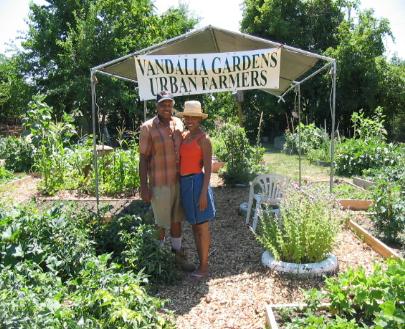
With the opening of the 2012 Southeast Area Farmer’s Market season more than four months away, you might think our vendors are enjoying some leisurely time off. Not so! Take a look at Ms. Leslie Huffman and Mr. Cornelius Williams from Vandalia Farms. After consulting with Grand Rapids neighborhood growers and OKT’s garden posse, Ms. Huffman placed an order for food-plant seeds. These seeds will be planted next month in specially selected growing medium at the former Molesta Greenhouse on Madison Avenue. The vacant greenhouse owner, Dave Molesta, let OKT grow seedlings there in 2011, as well.

In all, Ms. Huffman will oversee the planting, care and distribution of approximately 10,000 food plants. Many of these plants will be given to the gardeners and small farmers who sell produce at the Southeast Area Farmers’ Market. Others will go to yard gardeners and community gardens participating in OKT’s Food Diversity Project. The food you may be eating next summer is already on its way to being grown.

Mr. Williams comes from a long line of southwest Michigan black farmers. He began Vandalia Farms with Ms. Huffman in Detroit several years ago. He also taught other Detroit residents how to grow fruit and vegetables on vacant lots―and to make money from what they grew.

This past season, Mr. Williams also worked with OKT to build raised beds for demonstration gardens in southeast side Grand Rapids’ neighborhoods. In addition to farming and growing, Ms. Huffman also works as an experienced homebirth midwife. To her, the two occupations go hand in hand as healthier foods build healthier babies.

Vandalia Farms has since added a rural farm in Cassopolis. Be sure to sample the farm’s blueberries and chemical free vegetables when you visit Southeast Area Farmers’ Market next season!