Family Futures sharing resources at farmers market Aug. 6

Southeast Area Farmers Market, 11 a.m. – 4 p.m. Saturday July 6, MLK Jr. Park

Family Futures is a nonprofit that works to create communities in which all children achieve their full potential. They do that by supporting children and strengthening families. Their programs, Connections and Healthy Families Kent County, focus on children under age five. They work with parents to understand their children’s development, support them every step of the way, and connect them to resources when needed. When we all set up children and families for success, communities thrive!

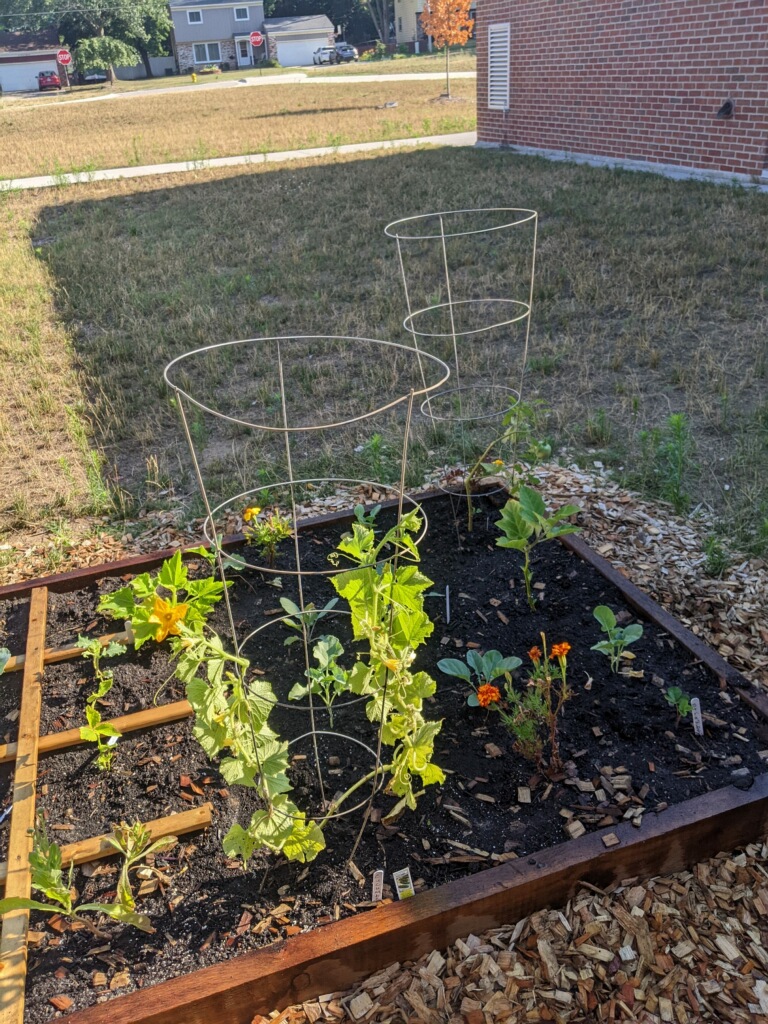
The Southeast Area Farmers’ Market provides a wide variety of local produce, cottage kitchen foods, personal care items, crafts and ready-to-eat foods. Our vendors are primarily women of color, home growers and residents of OKT’s targeted neighborhoods. In addition to providing access to healthy food, the market hosts meal preparation activities, workshops and guests from community organizations.

We welcome Bridge Card, SNAP, Double Up Food Bucks, WIC and many other assistance and coupon programs. How the Double Up Food Bucks Program Works 

Michigan Court of Claims Rules Reversal of State’s 2018 Minimum Wage Law Unconstitutional

The State of Michigan Court of Claims issued a ruling that the Michigan legislature’s 2018 decision to reverse state law mandating a $12 minimum wage for all workers, including tipped workers earning the subminimum wage, was unconstitutional. 

VIEW THE ORDER HERE: https://drive.google.com/file/d/1LHKvdlZbu1iiBp48oAQFXbCdkR5CBP5N/view?usp=sharing

In reaction to the Court’s announcement, Saru Jayaraman, President of One Fair Wage, a national nonprofit advocating on behalf of restaurant workers earning the subminimum wage for tipped workers, issued the following statement:

“The subminimum wage for tipped workers has existed since Emancipation in 1863, when restaurant owners sought to hire newly freed slaves and pay them nothing, making them live on tips alone. Workers have been fighting this subminimum wage, which has been a source of sexual harassment and racial inequity, for decades – including in 2018, when we collected 400,000 signatures to put the issue on the ballot. 

“Today, the courts in Michigan vindicated the rights of these millions of workers, and millions of voters, to demand that workers in Michigan be paid a full, livable wage with tips on top. So many states are about to follow – given the Great Resignation. And Michigan’s minimum wage will continue to go up, because we at One Fair Wage have collected enough signatures to force the wage up to $15 an hour in 2024. Today we made history!” 

Mark Brewer, election attorney, added: 

“This is a great victory for all Michigan workers and for all Michigan voters whose constitutional right to initiative has been protected by the court.”

In 2018, the Republican-controlled legislature passed as law two ballot measures approved to be on the November 2018 ballot – a minimum wage increase and required paid sick leave – specifically stating that they were doing so in order to take these measures off the ballot and thus prevent low-wage workers and workers of color from going to the polls in large numbers. After the November 2020 election, Republicans then gutted the law with a simple majority vote, returning the proposed $12 per hour minimum wage for tipped workers down to a little over $3 per hour.

The Court’s decision was in response to a lawsuit, filed by One Fair Wage and a coalition of Michigan organizations, which argued that the Republican legislature’s attempt to subvert the will of the people through manipulative legislative practices should be deemed unconstitutional per the state constitution and demands that the law requiring a minimum wage increase and One Fair Wage – a full minimum wage for tipped workers, as originally passed, be enforced. The law would guarantee hundreds of thousands of Michigan workers a raise, including hundreds of thousands of tipped Michigan workers currently earning a subminimum wage, the full minimum wage with tips on top, as well as earned paid sick leave.

“It is a moment of severe restaurant industry crisis, when over half of restaurant workers are saying they’re leaving the restaurant industry due to low wages and tips, and Michigan restaurant owners cannot re-open due to a lack of workers,” added Jayaraman. “Over three quarters of Michigan workers say the number one reason they’d consider coming back to work in the restaurant industry, allowing restaurants to reopen, is a raise.”

FOR MORE INFORMATION: https://www.huffpost.com/entry/rick-snyder-michigan-minimum-wage-sick-leave_n_5c092023e4b0bf813ef4ac39

Free doula training to support to birthing people of color


Fall 2022 Training Series:
September 6 – November 29
Tuesdays 6-9 pm
Baxter Community Center
(hybrid option will be available.)

Learn more and apply here through July 22.

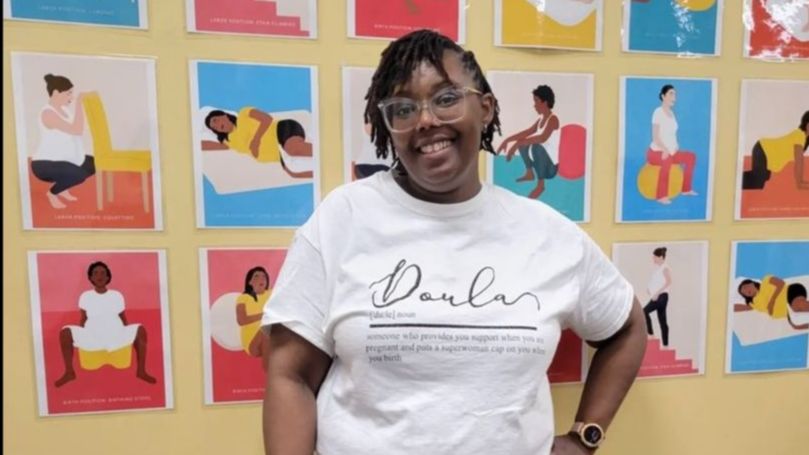
Day One Doula Collective is looking for people to join their team of community-based doulas. Comprehensive training and hands-on experience are provided at no cost. Their doulas provide holistic, culturally affirming support to birthing people of color throughout their full reproductive experience to address the racial inequalities in parental and infant health outcomes.

Day One Doula Collective has a dual-mission: recruit, train, and support people of color as community-based doulas and provide holistic, culturally affirming doula support to birthing people of color throughout their full reproductive experience to address the inequalities in parental and infant health outcomes. Improved birthing outcomes include increased birth weight, decrease preterm births, decreased rates of infant mortality, decreased rates of maternal/parental mortality, decreased c-sections, and increased breastfeeding initiatives

Doula eligibility requirements:

  • Live within Kent County
  • Identify as black and/or a person of color
  • Passion for supporting birthing people of color

Doulas earn up to $800 per client supported (for six visits and labor/delivery support). Doulas must provide support to at least five clients through Day One Doula Collective within 18 months of your training in order to be eligible for Community-based Doula Certification.

Learn more and apply at https://forms.gle/7xHhPBrpWbVELMLK6

Community-based doulas provide culturally sensitive pregnancy and childbirth education, early linkage to health care and other services; labor coaching, breastfeeding promotion, and counseling, and parenting education while encouraging parental attachment. Community-Based Doula Programs improve infant health, strengthen families, and establish supports to ensure ongoing family success:

  • Improved prenatal care
  • Increased breastfeeding rates
  • Fewer medical interventions
  • Fewer c-section deliveries
  • Increased parent-child interaction
  • More positive birth experiences
  • Improved parenting skills