Farm Bill Update: the Good, the Bad, and the Uncertain

PrintReposted from the Farmers’ Market Coalition

Last Thursday, the Chairman of the House Agriculture Committee, Mike Conaway, introduced draft farm bill legislation, which Democrats and anti-hunger groups were quick to deride. For farmers markets, the legislation in its current form would be something of a mixed bag.

The best news in the bill for farmers markets comes from the Food Insecurity Nutrition Incentive Program, which would get a big jump in funding to $275 million over the next five years, assuring the program baseline funding, and naming the program after former Farmers Market Coalition Board Member, Gus Schumacher.

In more modest news, the Seniors Farmers Market Nutrition Program would be extended at the same funding level as in the 2014 farm bill. Here at Farmers Market Coalition, we had hoped to see an expansion of the program to include low-income veterans, and will continue to work with the Senate to encourage them to include it in their version of the bill.

The bad news for farmers markets is a big one: mandatory funding for the Farmers Market Promotion Program (FMPP) was eliminated entirely.

WhyMarkets_2017Small in terms of funding, but mighty in impact, FMPP has proven time and again to increase sales for direct-marketing farmers. Greg Traywick, County Extension Director of Foothills Farmers Market, reported total sales per vendor increased by 240% over three years after receiving an FMPP grant. The program also helps to increase the number of vendors selling at direct-to-consumer markets, supports new farm businesses, and enables markets to hire much needed staff.

While FMPP remains authorized and has the ability to receive funding through the annual appropriations process (what’s known as discretionary funding authority), the program has never received discretionary funding, and it’s unlikely that it would in the future. Given the success of the FMPP program, we hope that the House Agriculture Committee will see fit to fix this oversight, and restore mandatory funding at the $30 million dollar level of the 2014 farm bill.

Read how the FMPP program helped increase Texas Rancher Amy Greer’s farmers market sales by 34%.

So, what’s next?

While the release of the House bill is an important step, the path to a new farm bill is far from over, and it’s unclear what that path will look like. Normally, members of the committee would offer amendments through what is known as “markup.” Markup is scheduled for this week, but it remains unclear how that process will go and whether Democrats will even offer amendments. Even once the bill passes out of committee, there is no guarantee enough votes will be secured to pass the bill on the House floor.

Meanwhile, the Senate Agriculture Committee continues to work on their version of the bill without the partisan rancour that exists in the House, and reportedly without the same SNAP work restrictions. Should both chambers pass a bill before the September 30th deadline, they will still need to reconcile the bills.

How can you help?

While the path forward is uncertain, it is important for legislators in both the House and Senate to hear from you, particularly with regards to the Farmers Market Promotion Program. Please contact your legislators to express your desire to see FMPP funded at the same $30 million level as in the 2014 farm bill.
Click here to FIND and CONTACT your representatives

Click here for a SAMPLE SCRIPT for emails and phone calls

OKT leads food justice training for Walk for Good Food recipient agencies.

Lottie Training#Walk4GoodFood

For the second year in a row, Access of West Michigan has asked agencies receiving funds raised by the walk to attend a half-day food justice training. This reflects Access’s commitment to not only provide food to the hungry as charitable endeavor bit to also address the root causes of hunger and under-nutrition, globally, nationally and locally. In fact, Access changed the name of the walk this year to reflect that change in direction What was the Annual Hunger Walk is now the Walk for Good Food.

Access explains its rationale for the name change, “we together seek to cultivate a Good Food System. Namely, a system in which healthy (food that provides nourishment and enables people to thrive), fair (food that no one along the production line was exploited during its creation), affordable (food that all people have access to), and green (food that was produced in a manner that is environmentally sustainable) food are available to all. “

On Wednesday April 11, OKT executive director, Lisa Oliver-King and longtime OKT Detroit colleague, Lottie Spady, led the morning dialogue. A media-maker and herbalist who often lends her talent to OKT’s programs, Spady spent many years working with the East Michigan Environmental Action Council (EMEAC). She utilizes a framework rooted in popular education, social justice, and social entrepreneurship to help develop relevant 21st century skills that community residents can translate into community and economic development.

To get the conversation started, Spady shared a spot-on music video, Food Fight: Bullies Poisoning the Hood Get Splattered.

The dialogue continued by having small groups come up with their own working definitions of food justice, food security and food sovereignty. As Access, OKT and other agencies share the message of how a just food system is the real answer to hunger, under-nutrition, and the many disease caused by nutrient-poor foods, we can hope that communities and countries will wake up and work to ensure that food is viewed as a human right and not just a profitable commodity.


OKT garden coaches attend “Sharing Garden” training

Gardening classThree garden coaches overseeing Our Kitchen Table’s food gardens at Martin Luther King Jr. Leadership Academy made time out of their busy schedules to attend a full-day garden training, “The Sharing Garden,” hosted by Urban Roots at Blandford Nature Center.

Lee, Belinda and Octavius joined a room full of participants from many local community gardens, including Dwelling Place Inc., several church-based gardens, and others seeking to grow healthier foods for neighbors with limited access to them.

Topics included how to get community more involved, choosing vegetables that people want to eat, getting the soil ready, garden planning, and planting instruction. OKT’s garden coaches will bring their own experience as food growers to MLK’s students and families as well as the information they learned at the training. Each is deeply dedicated to making the garden work for the MLK community of families and neighbors.

OKT is blessed to have such knowledgeable, dedicated staff on its team. Grow justice!

#Walk4GoodFood

3 22 postThe 41st Annual Access Walk for Good Food supports The Southeast Area Farmers’ Market as well as these local agencies which strive to bring healthier food to our income-challenged neighbors:

Urban Roots, New City Neighbors, Asian Community Outreach, Baxter Community Center, East Paris Food Pantry, Heartside Gleaning Initiative, Hope Farms, Meals on Wheels Western Michigan, North End Community Ministry, United Methodist Community House, Plainsong Farm, SECOM Resource Center, The Pantry, Community Ministry Program (Trinity UMC), United Church Outreach Ministry, Westminster Food Pantry, HQ GR, St. Marks and Access of West Michigan.

Please take a minute, click on the links, and learn about the work being done here in the Greater Grand Rapids Area. Then, Ssign up to walk or donate today! Look for Team: Our Kitchen Table!

Food justice advance for Michigan blueberry pickers

Migrant Legal Aid Wins Class Action Certification Motion for Blueberry Pickers
 

March 13, 2018, In the U.S. District Court for the Western District of Michigan, Judge Robert J. Jonker issued his Order granting Class Certification for a group of up to 330 blueberry pickers. The Opinion states, “The claims for violations of the AWPA will rise or fall on whether Defendants had a uniform policy of failing to compensate the workers for wait time, keeping inaccurate records, and providing false and misleading information to its workers.”

Fire Department now accepting applications for Fire Youth Academy

youthfire_webThe Grand Rapids Fire Department is now accepting applications for this summer’s Fire Youth Academy for high school freshmen, sophomores and juniors. The academy runs 8 a.m. to 4:30 p.m. June 18-22 at the Grand Rapids Fire Training Center, 1101 Monroe Ave. NW.

The one-week course includes classroom and hands-on activities that cover:

  • Search and rescue
  • Fire engine and aerial truck operations
  • Special rescue operations
  • Protective equipment
  • Fire prevention
  • Fire investigation
  • Emergency medical services


To participate, students must:

  • Be a high school sophomore, junior or senior
  • Be younger than 18
  • Have a minimum GPA of 2.0
  • Be in good standing at school
  • Understands and/or exhibits the GRFD core values of honesty, integrity, loyalty, teamwork and excellence
  • Have no felony convictions
  • Be in good physical condition and pass a physical


To apply online or for more information, visit grandrapidsmi.gov/Services/Apply-for-the-Fire-Youth-Academy.

Say No Natural Gas in Dearborn, Michigan

By the Michigan Environmental Justice Coalition

Michigan Department of Environmental Quality permit hearing
5:30 p.m., Tuesday, March 27 at Edsel Ford High School
(Last day that MDEQ is accepting public comment for this permit.)
Can’t attend?
Sign on to the Great Lakes Environmental Law Center comments to the MDEQ.

cropped-mejc_logo_colorMichigan is at a crossroads in the decision to rapidly expand Natural Gas, phasing out coal, and Dearborn Michigan is in the crosshairs.  Approximately two months ago, over 300 people showed up at a Michigan Department of Environmental Quality hearing to tell Consumers Energy that a new natural gas plant in South Dearborn would negatively impact the community’s health. The new plant was unwanted and unwelcome. The following week, the company rescinded that proposal.
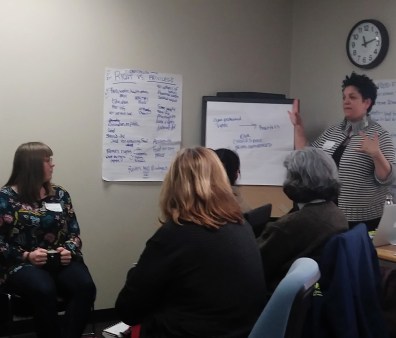
On Tuesday, March 20, residents gathered again in Dearborn to learn about yet another proposed natural gas plant, this time by DTE Energy. Located at the Ford Research and Engineering Facility, the gas plant would be within a one mile radius of five schools and Beaumont Hospital. At the hearing, public health scholar Dr. Amy Schulz from the University of Michigan School of Public Health explained that South Dearborn and West Dearborn are already overburdened by air pollution, putting vulnerable populations including children, pregnant mothers and their unborn children at risk. Some of the air pollutants that will be coming out of the DTE natural gas facility would exacerbate illnesses like lung disease, increase cardiovascular risks and in some cases contribute to increases in cancer rates and lead to death.


What we also learned at that event from attorney Nicholas Leonard at the Great Lakes Lakes Environmental Law Center, is the permit put forward by DTE to the Michigan Department of Environmental Quality leaves much to be desired. Many serious questions are left unanswered including:

Are all of the pollution calculations that DTE Energy used to estimate emissions coming from their smokestack accounted for?

Is the company using the best technology to mitigate the pollution coming out of the smokestacks? From Leonard’s estimations, the company did not include spikes in pollution emissions caused during start up and shut down of the facility which may happen 136 times annually.

Further, his research resulted in finding that the exact same type of facilities in California and Massachusetts have used technology that has reduced pollution by significantly greater amounts. DTE  has failed to include this improved technology as options here in Michigan. It should be investigating and incorporating them for the best protections of a community already overburdened by pollution. The company is also not including continuous monitoring of pollution, making residents and advocates using guess work as towhat happens in between periodic emissions testing.

But the larger question remains, when will Michigan residents have a fair chance to give input into what kind of energy Michigan actually deserves– cheaper, cleaner, renewable energy. MDEQ gives us just 40 days – basically the time one has to pay a phone or a cable bill- to respond to a permit for a facility that may be running for 30 years or more. We need the time to iterate that Michigan needs solar panels and wind farms, not more dirty energy that results in volatile costs for consumers, climate causing methane emissions, or an increased mortality – not only of the people that live around it and the workers of the plants – but by the natural systems that depend on the environment from the extraction point to the smokestack. Because even the best technology of today will be old and outdated tomorrow, and we’re literally sick of and from dirty energy.

The public should question the rush to natural gas. Michiganders deserve a say about what kinds of energy our Great Lakes State is producing because, frankly, we don’t have a choice whether to breathe or not. MDEQ has a decision to make that will impact the health of our children, families, and communities, the workers and the economy.


Slow Food West Michigan awards grant to OKT

SFWMLogo-e1425570965857Slow Food West Michigan has awarded OKT a you $500 grant to fund our heirloom greens and herbs project, which is part of our food growing project with students and households of Martin Luther King Jr. Leadership Academy. The heirloom herbs to be grown include basil, sage, cilantro, rosemary and more. Students will also be planting a variety of vegetables and fruit plants. The produce will be used for healthy school-day snacks and shared with students’ households.

Blandford Farm is in the process of starting the herb plants for OKT. OKT will also provide seeds, window boxes and containers, soil and soil amendments, and a garden coach to oversee the project.

Please support the Walk for Good Food! 

3 15 post

#Walk4GoodFood

As food pantries across the nation begin to look at root causes of hunger and under-nutrition, they are beginning to address the injustices in the food system that make food charity a necessity. Access of West Michigan has been on the leading edge of this movement, as is reflected in the new name they’ve given their annual fund-raising walk, The Walk for Good Food.

Please support the Walk for Good Food! The Southeast Area Farmers’ Market is one of the recipients of Walk funds — and OKT manages the market! Open from the first Saturday in July to the second Saturday in November at Grand Rapids’ Martin Luther King Jr. Park, our market ‘s vendors are primarily women of color from Grand Rapids’ Southeast neighborhoods. Most of our sales are completed with food assistance dollars. Because the market takes part in the Double Up Food Bucks program,  our patrons using SNAP benefits can purchase twice as much fresh, local produce. This means that our neighbors with income challenges can feed their households even more nutritious food –even though they live in neighborhoods that otherwise have very limited access to healthy foods.

When you support the walk you support the market. Sign up today to join the OKT walk team or pledge your support through an online donation. OKT also seeks corporate donors to be our sponsors for the event. Download the corporate sponsor packet here.