This is the seventh in a series of weekly posts highlighting OKT’s Food Justice series. You can download series handouts here for free.
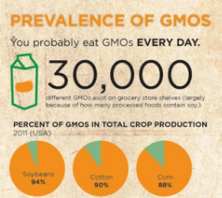 Genetically Modified Organisms (GMOs) are deeply entrenched in our current food system. Most of us don’t even know when we are eating something that contains GMOs. So what is the big deal? And what do GMOs have to do with food justice? The corporations behind the development and proliferation of GMOs would certainly like us to quit asking questions. Since Our Kitchen Table is a food justice organization, it’s our mission to ask such questions.
GMOs are plants or animals created through the gene splicing techniques of biotechnology. This experimental technology merges DNA from different species, creating unstable combinations of plant, animal, bacterial and viral genes that cannot occur in nature or in traditional crossbreeding.
GMOs are part of the current food system in a big way, as reflected by the above info-graphic. And, they are something that the public has had little or no say in. Genetically modified organisms cause numerous problems.
Since most GMOs are not fully tested, we don’t fully understand their impact on human health over a long period of time. According to sources like the Organic Consumers Association,
GMOs have been linked to:
- Thousands of toxic and allergenic reactions.
- Thousands of sick, sterile and dead livestock.
- Damage to virtually every organ and system studied in lab animals.
- Increased likelihood of allergies.
- Damage of the immune system.
- Damage of the liver.
The growth of GMO plants causes genetic pollution when GMO plants infect the DNA strain of non-GMO plants. This contamination may pose public health threats by creating “super weeds” that require greater amounts of more toxic pesticides to manage; threaten extinction of rare plants and their weedy relatives that we need for crop and plant bio-diversity. These weeds are not only the traditional relatives of our domesticated plants; they also assist us in overcoming crop blight.
GMO plants and seeds create huge problems for small farmers if, through naturally occurring cross-pollination, GMOs being used at neighboring farms contaminate their plants. Farmers save seeds from their crops to save money and rely on proven seed stock. When their seeds show evidence of containing the GMO’s DNA, the current US legal system allows companies like Monsanto to sue the farmers unless they pay royalties. Seems unjust doesn’t it? Well, it is unjust. However, since agribusiness entities have lots of influence with the political system, the courts often rule in their favor, leaving both small farmers and the public on the losing side.
 The good news is that an international movement to ban GMOs is gaining ground. Several dozen countries have already banned the use of GMOs; more countries are moving in that direction. Our Kitchen Table supports banning GMOs in favor of biodiversity. The more biological diverse our diet is, the better off we will be. We also support transparency on the GMO issue. Most of us are eating GMO foods right now and don’t even know it. In the US, food labels do not have list GMOs. Many states are attempting to pass legislation to require that GMOs are labeled, but the agribusiness sector is spending billions to defeat such efforts.
Our Kitchen Table practices food justice that rejects the use and proliferation of GMOs by:
- Providing heirloom seeds and plants to families involved in our home gardening program.
- Ensuring that our Southeast Area Farmer’s Market vendors sell only non-GMO produce.
- Working on public policy issues that promote greater transparency and justice in our food system.

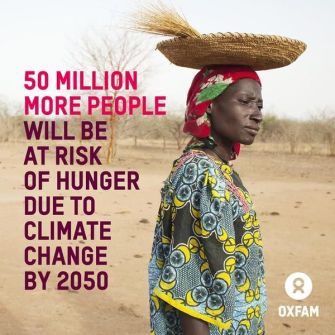 “Wild weather and unpredictable seasons are changing what farmers can grow and is making people hungry. Food prices are going up. Food quality is going down. Soon, climate change will affect what all of us can eat.”
 This is the fifth in a series of weekly posts highlighting OKT’s Food Justice series.
  Almost all workers in the food industry earn an unjust wage—from migrant workers and those working in food processing plants to grocery store clerks and people in restaurants, institutional food cafeterias and fast food chains. In both the restaurant and agriculture industries, minimum wage laws do not apply. Migrant workers are at the mercy of whatever farm owners want to pay them; people working for tips in restaurants have a whole different minimum wage standard applied to them.
 When we enter a grocery store, shop at a farmers market, eat at a restaurant or look at food labels, we should ask:
 Reposted from
  Lisa Oliver-King
 OKT dropped by the Grand Rapids African American Museum & Archives (GRAAMA) Royal Opening on December 26. GRAAMA is currently located at 87 Monroe Center, downtown Grand Rapids. The space functions as a museum store and donations center. The opening coincided with the first day of Kwanzaa, Umoja. Festivities included a ribbon cutting, proclamation and Kwanzaa ceremonies. It also kicked off a membership and fundraising campaign in hopes GRAAMA can secure a building for its permanent collection.


 This is the fourth in a series of weekly posts highlighting OKT’s Food Justice series.
 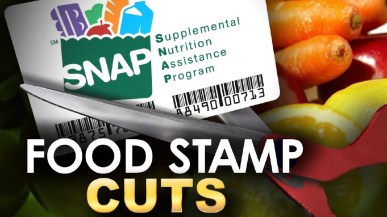 While providing huge subsidies to agribusiness, the 2014 Farm Bill cut $8.6 billion in Food Assistance. During a time when more and more Americans live in poverty and rely on government food assistance programs, Congress decided to drastically cut these funds and give more taxpayer money to large corporations.
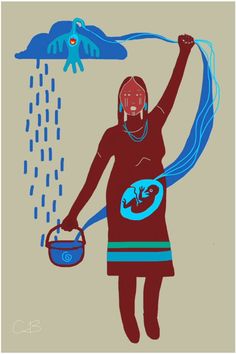
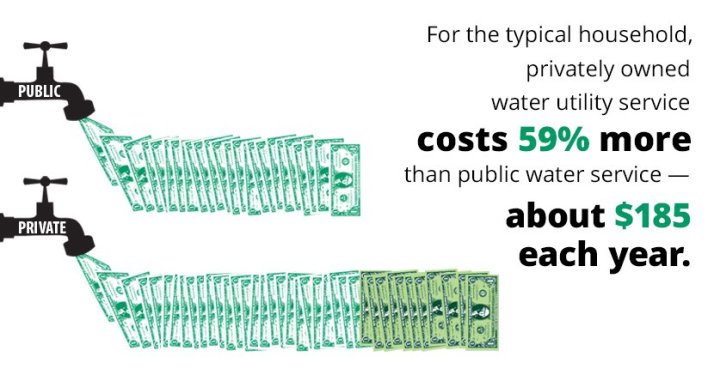 According to Food and Water Watch, water privatization “undermines the human right to water … When private corporations buy or operate public water utilities – is often suggested as a solution to municipal budget problems and aging water systems. Unfortunately, this more often backfires, leaving communities with higher rates, worse service, job losses, and more.”
 In its handouts, OKT often includes the words, “Healthy food is your family’s right.” We also proclaim, “Clean, harmless water is your family’s right.” This right must be taken by
 OKT’s cooking coach, Toni Scott, led a Cook, Eat and Talk event at Baxter Community Center on Friday Dec. 16. The group had a great time rolling out, baking and decorating cookies. Toni’s simple recipe is shown below the slide show.
 Our Kitchen Table