Archives

Team OKT claims success in virtual #Walk4GoodFood2020

It’s not to late to donate to Team OKT! Click here!

Doris Johnson and her grandchildren completing the #Walk4GoodFood2020

For the past 42 years, hunderds of folks from all over the greater Grand Rapids area have walked annually to raise funds to help those with income challenges to access healthy food. Access of West Michigan did not let COVID-19 sideline the tradition. Instead of gathering walkers for one walk downtown, the #Walk4GoodFood2020 was completed by individuals and family groups who walked following social distancing guidelines during their own chosen times between May 3 and May 13.

Our Kitchen Table’s team included 29 team members. A special shout out to our Program for Growth participants who joined up!  Team OKT met its fundraising goals. In addition, corporate sponsor, Edenz, donated $500.

As a #Walk4GoodFood recipient agency, OKT will use funds received to help support its Southeast Area Farmers’ Market.

A Beautiful Walk for Good Food Kickoff! You can still join OKT’s Walk Team!

walk
You can view the full blessing “With Every Step Let Us Notice You” written for the opening kickoff by Margarita Solis-Deal, Access Board Member and Dominican Center at Marywood Director on our website. We encourage you to use this as a focus for your walk.
This morning (Monday) we started with Walk for Good Food Yoga with Nick from Flip Dog Yoga to get us ready to walk. Join us Live on Facebook (@AccessOfWestMichigan) on Wednesday, Friday, Sunday, and the following Tuesday (every other day) to join in at 7:30am; videos will also be available to stream anytime after they are posted.
Can you get involved? YES! The Walk runs through May 13- there is still plenty of time!
  • Get involved as a walker on your own/with your household. While there are many things in place to stop the spread of COVID-19 in our community, you can still go for a walk! You do need to continue to follow social distancing guidelines and other directives made by public health officials and government leaders. You can do your walk anytime between May 3-13. When you register you’ll get your own fundraising page and can ask others to support your walk.
  • Make a donation– your support will make a difference as we work towards a thriving food system for all people during these challenging times. You can also mail a donation to: Access of West Michigan, 1700 28th St. SE, Grand Rapids, MI 49508, note it is for the Walk for Good Food.
  • Sponsor the Walk, or ask your company or organization if they are interested! It’s not too late to join us in this way.
For specific details, visit our Walk For Good Food Website. Additional questions? Contact Alaina at 616-747-0988 or alaina@accessofwestmichigan.org.

Walk Kickoff on Facebook Live on Sunday at 2:30pm

Join the #Walk4GoodFood kick-off on the Access of West Michigan Facebook page

It’s not too late to join the OKT virtual walk team! Pick your day and time to walk!

walkIn light of the COVID-19 Pandemic, the Walk for Good Food will take place in your own neighborhood. Access of West Michigan is asking us to walk individually or with our households, staying six feet away from anyone else, of course. OKT will post updates as we get them. For specific details, visit the Walk For Good Food Website. Funds from the Walk help OKT run the Southeast Area Farmers’ Market.
How can you get involved?

For more information, visit our Walk for Good Food Website.

OKT joined WMSBF online round-table about food systems during COVID-19

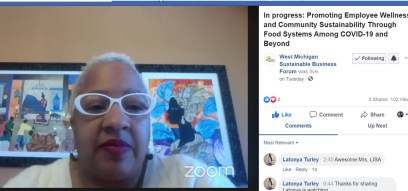
lisaWest Michigan Sustainable Business Forum (WMSBF) hosted an online round-table discussing how local organizations and community leaders can promote health,wellness and sustainability through their local food systems during the coronavirus pandemic and beyond.

On the event page, WMSBF stated, “The coronavirus pandemic and its containment strategies are highlighting the importance of food systems to personal health and community resiliency. Food security and nutrition have become increasingly visible concerns as restaurant closures, grocery shortages and emergency food distributions came to represent the pandemic’s economic and social impacts. It is quickly becoming one of the key measures of resilience for Michigan communities and their workers.”
The panel discussion sought to address how can local organizations support their workers and communities through investments in food systems; how can local residents can better support themselves and the community through their purchases and practices; and how neighborhoods can become more resilient and connected through individual and neighborhood investments in food production. Panelists included Kate Lieto, Experience Grand Rapids; Lisa Oliver-King, Our Kitchen Table; and Garrett Ziegler, Michigan State University community food systems educator.

The webinar was one of WMSBF’s series exploring sustainability and sustainable business in context of the COVID-19 pandemic. Click here for information on the series.

Here are the talking points which guided OKT’s contribution to the discussion.

What are some of your initial takeaways about how the pandemic could inform food system policies and practices moving forward?

  • The current industrial food system is neither sustainable nor resilient. For the most part, growing practices harm the environment (soil, air, and water) and foods are distributed to create profit, with the result that income challenged people, most often people of color, find it difficult or impossible to access nutrient rich foods.
  • Our African American and Native populations have high incidence of nutrition related issues such as obesity, heart disease, diabetes, asthma, ADHD, behavioral health impacts etc.
  • Small changes are made being made on local levels, but we have a long way to go, especially as the affluent are those most benefitting from the healthy “foody” movement.

How can local organizations support their workers and communities through investments in food systems?

  • While I may not feel I have the expertise to advise business how to invest in a better food system, I can relate that the underlying factor contributing to inequities in the food system and the healthcare system is racism, both the cultural impacts of institutional racism as well and the personal impacts of day-to-day experience of racism, which causes chronic stress. The stress of racism has been proven to increase morbidity and is especially borne out by our maternal-infant mortality rates.

Building on that, how can local residents better support themselves and the community through their purchases and practices?

  • Supporting local, clean food via CSA membership, farmers’ markets, and grocery purchases.
  • Sad to say, the current system thrives on selling profitable junk and fast foods. Policy change and regulations in advertising (especially to children) are needed.

LISA How can neighborhoods become more resilient and connected through individual and neighborhood investments in food production?

  • Growing food.
  • Food mapping.
  • Advocate for policy change.
  • Food “literacy”
  • Healthier foods served at school
  • Recognition of wisdom within the community, especially elders

What efforts are you seeing that support a change in these disparities? 

I don’t know that we are seeing much effort. We need:

  • Paid sick days
  • Living wages ($20 an hour?)
  • High quality healthcare for all
  • Appreciation and fair compensation for our immigrant farm workers

What are some of your initial takeaways about how the pandemic could inform food system policies and practices moving forward?

  • COVID-19 has borne out the inequities in our food systems.
  • People of color are contracting and dying from the disease at much higher rates. The underlying conditions predisposing them to his are all results of a food system that denies them nutrient-rich foods.

In your neighborhood: The 43rd Annual Walk for Good Food

Reposted from Rapid Growth Media  #Walk4GoodFood2020
BY ESTELLE SLOOTMAKERSATURDAY, APRIL 25, 2020group-picture-from-Jim

Over the past 42 years, the Access of West Michigan Walk for Good (formerly the Hunger Walk) has raised more than $6 million for dozens of local and international nonprofits addressing hunger and food insecurity. This year, the Walk is funding eight local organizations that are working hard to improve access to healthy foods and diminish other impacts of poverty: the Kent County Food Policy CouncilNorth End Wellness CoalitionOur Kitchen TableRevive and Thrive ProjectSECOM Resource CenterSt. Mark’s Episcopal Church, and UCOM.The work of these organizations ranges from community gardens, neighborhood-based food markets, and meal delivery programs to emergency food pantries and community development initiatives.

When the COVID-19 crisis dashed plans for the 750 expected walkers to take to Grand Rapids’ downtown streets on May 2, Walk organizers shifted gears and took the Walk in a different direction. Instead of congregating in the center city, people who have registered to walk will chart their own 5K courses within their own neighborhoods, all the while adhering to social distancing guidelines.

“This year, the Walk will be held in accordance with social distancing guidelines and other directives given by public health officials and government leaders,” says Alaina Dobkowski, Access of West Michigan Walk organizer. “Participants are encouraged to walk in their neighborhoods individually or with members of their household while maintaining at least a six-foot distance from others. The walk, which is usually a 5K, can be completed all at once or over multiple days. Despite social distancing, the community can still unite for good.”

Each walker raises donations for the Walk from their friends, family, co-workers, and congregations.

Walk-Logo“The Walk for Good Food is one of the best ways to invest donations and energy that will impact thousands of low-income individuals,” Dobkowski adds. “Though inequities in our food system were present already, they are heightened right now as many in our community are impacted by COVID-19 through loss of income, access to meals, and more.”

All are invited to join the walk anytime between May 3 to May 13, either individually, creating a team, or joining an existing team. Those who would rather not walk can make a donation. Donations can be made to a specific walk recipient organization, as well. It’s easy to do on the Walk for Good Food website.

“We need a Good Food System that functions for everyone, especially in times of crisis,” Dobkowski concludes. “It is more important than ever to support organizations working to provide healthy, fair, green, and affordable food to those who need it the most.”

Those who would rather send a check can send one to Access of West Michigan, 1700 28th Street SE, Grand Rapids, MI 49508.

GRAAHI & Cherry Health hosting special COVID-19 Facebook Live event 5 p.m. today

Join Grand Rapids African American Health Institute’s Micah Foster and Cherry Health’s Tasha Blackmon today, Wednesday, April 22, at 5 p.m. for a special Facebook Live discussion about COVID-19’s impact on our community and the resources available at Cherry Health.

93973917_3104322896265809_6584817676659458048_o

The event, which will be live streamed on both GRAAHI and Cherry Health’s Facebook pages, will focus on COVID-19 screening and testing available at Cherry Health as well as tips for practicing good social distancing and use of PPEs. Foster and Blackmon will also be answering viewer questions via the comments during the informative session.

OKT represented at Neighborhood Summit

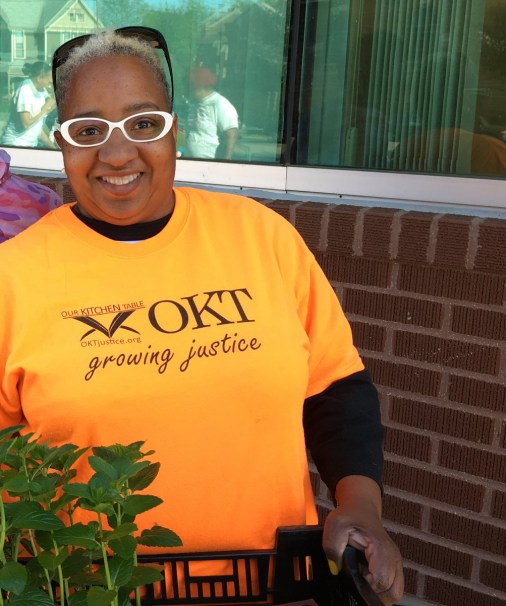
3OKT’s executive director, Lisa Oliver-King, took part as a panelist and presenter in two City of Grand Rapids Neighborhood Summit workshops on March 7, one on environmental justice and another on urban agriculture. The 2020 summit theme was “Growing Justice and Community.” For the event, OKT created an updated version of the guide developed with the City in 2019, “Growing Community, Justice, & Food.”

This guide covers how to grow food gardens, with tips on selecting plants and seeds, choosing a garden spot, planning a planting schedule, watering, dealing with Growing Community, Justice and Food 3-4-20pests, and saving seeds for next year and neighbors. Updates addressed how to compost healthy soil, air quality and foods that reduce asthma and allergies, and the importance of trees. In addition, the new version highlighted Grand Rapids Public Schools sustainability initiatives.

You can view and download “Growing Community, Justice and Food” here.

Dr. Kristi Artz and Mary Brown inspired new ways of looking at the Future of Food

WOC2Kristi Artz, MD, CCMS, with the Spectrum Health Culinary Medicine, and Mary Brown, Lead, Learning & Development Consultant Diversity, Equity & Inclusion (DEI) at Spectrum Health, led an interesting discussion at OKT’s Feb. 24 Women of Color Convening, which was sponsored by OKT and the Singularity University (SU) Grand Rapids.

WOC1Brown, a futurist, shared the role that artificial intelligence such as drones could play on farms of the future, how scientists are working to create food equivalents in the lab, and how we might be looking to alternative sources for protein in the future, for examples insects.

Dr. Artz shared the role that whole plant-based foods play in building good health. She began by citing the shortfalls of the Standard American Diet (SAD), which ignores nutritiousWOC4 fruits and vegetables in favor of high calorie, low fiber foods that promote chronic diseases including cancer, heart disease, diabetes, rheumatoid arthritis, and obesity. These foods can also impact mental health and make us more vulnerable to common  maladies like the flu and colds.
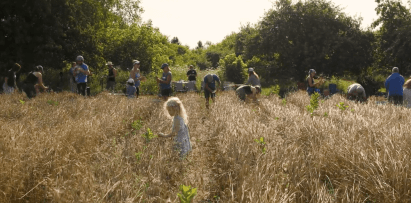
Eating a whole food diet that is based on lots of fruits and vegetables can prevent and sometimes reverse both chronic and acute health problems and address inflammation that underlies many of these issues.

Dr. Artz shared electronic copies of her presentation as well as many reccipes. If you’d like an electronic copy of these, email media@OKTjustice.org.

Plainsong Farm offering Christian-based Young Adult Farm Fellowship

Screen-Shot-2019-10-03-at-1.52.51-PMPlainsong Farm Young Adult Fellowship
Rockford, Michigan
May 31, 2020 – August 15, 2020

Plainsong Farm is located in Rockford, Michigan, with a mission of restoring lost
connections between people, places and God. The Young Adult Fellowship residential
program is designed for young adults aged 25 to 31 who are seeking to explore the
intersection of regenerative agriculture, Christian spirituality, justice and their personal
vocations.
The farm itself is a 12-acre, historic, small-scale organic practice farm just outside
Grand Rapids in West Michigan, on the ancestral lands of the Anishinabe people. The
Fellowship program combines field work, reading, discussion, and independent,
self-directed projects that support Plainsong Farm’s mission. It is both immersive and
experiential, with the goal of equipping Fellows to become future leaders in the
re-integration of Christianity and the care of Creation.
Over an 11-week session, Plainsong Fellows will experience:
● A balanced life of prayer, study and work rooted in Benedictine spirituality
● Immersion in regenerative agriculture and contemplative practice for health and
healing
● Contextual analysis of power, possession, people, and place, both in history and
today
● Life in community with one another and the various communities of Plainsong
Farm
● Mentoring in clarifying, goal setting, and completing a personal project
Applications are now being accepted for the 2020 Plainsong Fellowship cohort.
For more information, contact hello@plainsongfarm.com or visit:
http://www.plainsongfarm.com/2020-summer-young-adult-fellowship/.