Archives

Food justice series continues Dec. 12 & 19

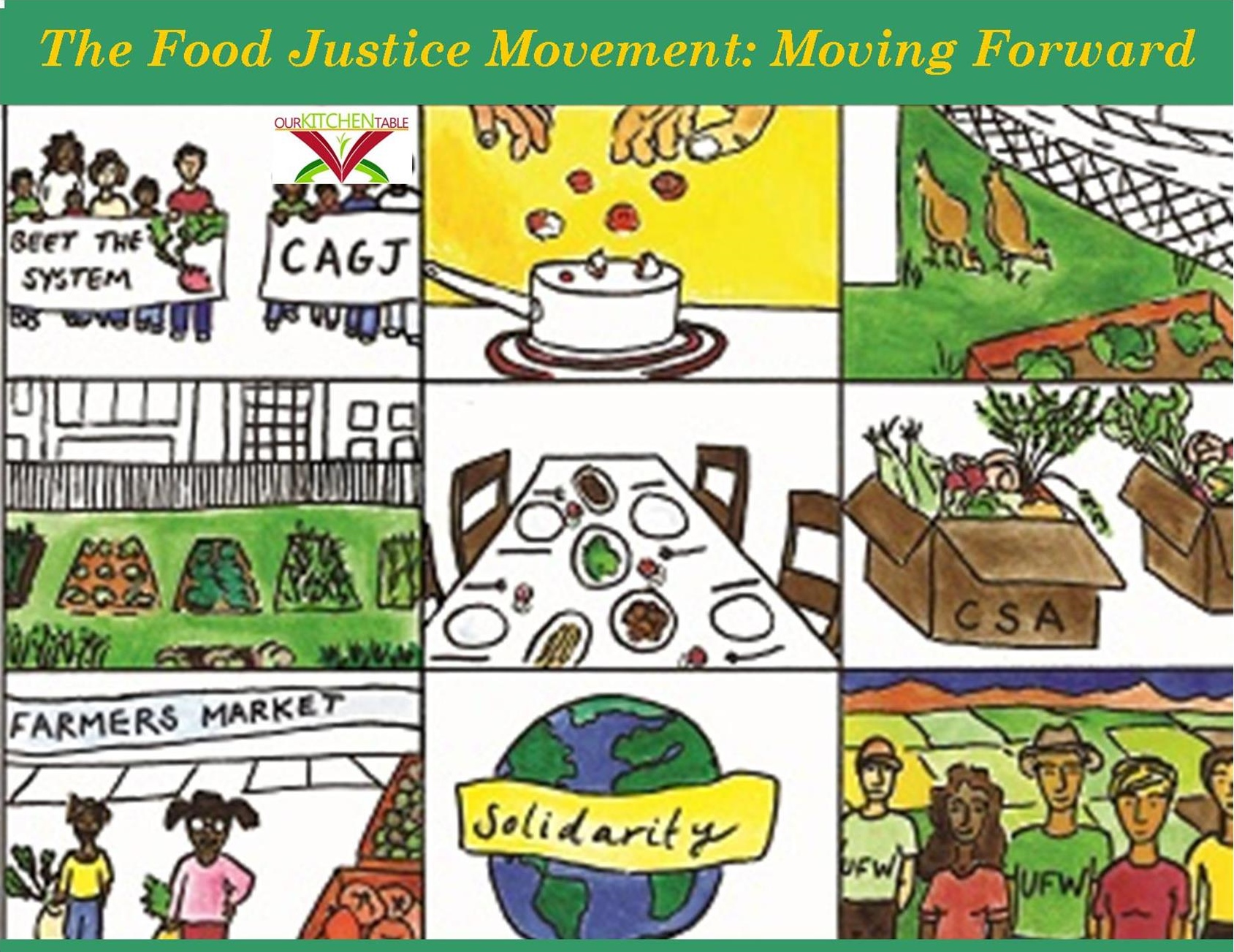
Food Justice class logoA dozen or so community members have come out for the first two sessions of OKT’s food justice series, The Food Justice Movement: Moving Forward. The group, which includes OKT constituents, people from the Grand Rapids Food Co-op Initiative, Access of West Michigan and Calvin College has enjoyed great conversations. We are excited to see these folks delving into the issues of food justice and looking for ways to incorporate it into their work and lives.

Please join us for weeks three and four of this free series, 10 a.m. to 12 p.m. Saturday Dec. 12 and 19  at Garfield Park Lodge, 334 Burton St. SE 49507. The first two sessions covered food justice definitions and how the current food system came to be. Session three will address, Why food justice is about overcoming racism, sexism consumerism and other “-isms.” Session four’s dialogue will encompass What the Food Justice Movement is doing to create a better world and defining our part in it, here in Grand Rapids.

Reading material for the class will include the book Our Food, Our Right and the OKT Food Justice Series. You can view the PowerPoints and handouts from sessions one and two on OKT’s website. Please email OKTable1@gmail.com to let us know you are coming!

Food Justice class meets Saturday

tomato justicePlease join OKT for week 2 of its free, four-session class series that explores what is food justice is, why we need it and what we can do in Grand Rapids to make it happen. The class, “The Food Justice Movement: Moving Forward,” will meet 10 a.m. to 12 p.m. Saturdays Nov. 21,  Dec. 12 and Dec. 19  at Garfield Park Lodge, 334 Burton St. SE 49507.

OKT staff member, Stelle Slootmaker, is facilitating this dialogue that covers:

  1. Defining food justice and food sovereignty–what does it all mean?
  2. How the current food system came to be and the injustices it promotes (food apartheid, exploitation of workers and animals, environmental destruction, nutrient-poor foods, et al.)
  3. Why food justice is about overcoming racism, sexism consumerism and
    other “-isms.”
  4. What the Food Justice Movement is doing to create a better world and defining our part in it, here in Grand Rapids.

Reading material for the class will include the book Our Food, Our Right and the OKT Food Justice Series.

  • You can view the PowerPoint from class 1 here:

1 The Food Justice Movement Moving Forward

Please email OKTable1@gmail.com to let us know you are coming!

The Food Justice Movement: Moving Forward

Food Justice class logoPlease join OKT for this updated 4-session class series to explore what is food justice is, why we need it and what we can do in Grand Rapids to make it happen. Saturdays Nov. 14 & 21, Dec. 12 & 19 from 10 a.m. to 12 p.m. at Garfield Park Lodge, 334 Burton St. SE 49507. Please sign up by emailing OKTable1@gmail.com to help us plan materials accordingly.

OKT staff member, Stelle Slootmaker, is facilitating this dialogue that covers:

  • Defining food justice and food sovereignty–what does it all mean?
  • How the current food system came to be and the injustices it promotes (food apartheid, exploitation of workers and animals, environmental destruction, nutrient-poor foods, et al.)
  • Why food justice is about overcoming racism, sexism consumerism and
    other “-isms.”
  • What the Food Justice Movement is doing to create a better world and defining our part in it, here in Grand Rapids.

Reading material for the class will include the book Our Food, Our Right and the OKT Food Justice Series. Stelle’s experience includes eight years teaching a nutrition-based childbirth method, 20 years writing about nutrition and alternative health and 10 years actively working for social justice, including seven years with OKT.

Campaign seeks to “Just change how you feel about food assistance.”

JFD logo $2Just imagine a just food system.

.With government food assistance comes social stigma. However, each year, the current Farm Bill gives $956 billion of taxpayer money (your money) to big agribusiness that destroy the environment, exploit workers and are at the root of our public health crisis.Meanwhile, it cut $8.6 billion from food assistance programs.

OKT’s Just Food Dollars Campaign seeks to:
1) Educate how  tax dollars are used to support an unjust and unhealthy food system.
2) Challenge the public to view government food assistance programs as beneficial and
warranting increased funding.
3) Illustrate that food assistance programs give public money back to the public.
4) Invite more people to sign up for any and all food assistance programs, especially Double Up Food Bucks.
5) Encourage people to support the local food system by patronizing the South East Area Farmers
Market, participating in OKT’s Food Growing Program and attending workshops and food sharing opportunities so that we can build a movement that creates food justice.

For more information, download our new handout, “Just Food Dollars.”

Mourning her passing, celebrating her life: Grace Lee Boggs

Reposted from AL Jazeera America

Until her passing, the Detroit-based community activist never stopped questioning

October 7, 2015 2:00AM ET

It seems odd to reinvent oneself after 95 years, but in 2011, Grace Lee Boggs, a Chinese-American philosopher turned radical civil rights activist, basically started afresh. In her last book, “The Next American Revolution,” she began to call for a new, holistic way of human development that braided environmental and social justice; she urged activists to looked to direct action in the community, not law or government, as a wellspring of urban change.

Last year she told me about her new vision of social renewal in one of her final interviews, published in Guernicaafter the release of a biographical documentary. I pressed her on the need for poor people to seize control of their lives and political systems, expecting her to agree. But she demurred on the question of power, turning instead to the question of healing souls. “I think that at some level, people recognize that growing our economy is destroying us,” she said. “I think there’s a great human desire for solutions, for profound solutions — and that nothing simple will do it. It really requires some very great searching of our souls.”

These were searching words from a woman who never stopped questioning.

When Boggs died earlier this week, she had lived for a full century, but her social and political movement — the product of 100 years of witnessing and pushing forward cycles of social struggle — remains incomplete.

Writing on her adopted hometown of Detroit a few years ago, where she moved in the 1950s from Chicago, she described the American economic system as doomed. She called for a program of humanistic development. “Instead of trying to resurrect or reform a system whose endless pursuit of economic growth has created a nation of material abundance and spiritual poverty — and instead of hoping for a new FDR to save capitalism with New Deal–like programs — we need to build a new kind of economy from the ground up,” she wrote in “The Next American Revolution.”

At the heart of Boggs’ vision of social renewal was a reimagining of America as a more compassionate society. As a veteran radical of the civil rights and black power movements — an Asian-American academically trainedphilosopher with a Ph.D. from Bryn Mawr who devoted decades to working with racial and environmental justice campaigns — Boggs knew too well the power and contradictions of social movements.

Her final proposition contains tough lessons on both their potential and their complexities.

Boggs saw hope blossoming in a city that had been written off by politicians and even some of its own residents as hopeless. She found it by redefining hope itself. In contrast to the Fordist industrial evangelism that spawned, then cannibalized the Motor City, she didn’t see the future springing from mass production. She instead drew upon the grass-roots ethos cultivated in the youth development projects she helped found, such as Detroit Summer, which championed social change through sustainable and cooperative restoration of neighborhoods. Hope, for her, was the spirit of community regeneration.

The most sustainable solution for Boggs seemed to be to reach equilibrium by turning inward, constructing the neighborhood asa utopian microcosm.

Having witnessed Detroit’s hellish demise in the years leading up to the Great Recession, Boggs saw developmentin terms of artisanship and creativity, not the assembly line or the relentless drive to consume more, faster. Or, in her words, when blending socialism and anarchism, “we need to see progress not in terms of ‘having more’ but in terms of growing our souls by creating community, mutual self-sufficiency and cooperative relations with one another.”

In her ideal social structure, one’s sense of personal worth would be invested in one’s neighbors and the local social fabric and, down the line, invested yet again in the economic infrastructure through mutual aid and place-based education — the urban farm, community center and neighborhood store instead of the factory compound or big-box retailer.

Constructing such a society could require some self-sacrifice — giving up material comforts we take for granted, for instance. But to Boggs, these weren’t so much modern indulgences as they were burdens that needed to be shed. She saw materialism and greed as impediments to genuine social innovation; at the same time, she saw human invention taking place on a far more intimate level than the massive scale on which public social programs are executed today. She theorized that we wouldn’t have to wait for wealth to trickle down: A horizontally structured economic landscape would not focus on pursuing redistributive policies but rather revolve around sharing of resources and decentralized governance.

The Right to the City movement, which operates in cities from New York to Los Angeles, picks up where Boggs left off, with urban communities taking ownership of the city’s land and claiming the right to public space in an age of gentrification, police oppression and economic blight. Its members reimagine urban space to build economic justice, seeing communities as ecosystems and ecosystems as social structures. Mobilizing against a toxic waste dump in a poor neighborhood becomes as vital an environmental issue as curbing global carbon emissions or fighting deforestation on the other side of the world. Locally, fighting structural poverty might start with tiny acts of solidarity and resistance — rallying to block a neighbor’s eviction or planting a community garden.

Although her new vision certainly helped humanize radical politics, I see an underlying element of resigned, hardened realism, which ought to inform future movements struggling to balance local and global and to combine community service with political organizing.

The most sustainable solution for Boggs seemed to be to reach equilibrium by turning inward, constructing the neighborhood as a utopian microcosm. Perhaps that is the best way to maintain a revolution, writ small; while she observed generations of sweeping social change, tiny revolutions thrived on the community level.

It’s nevertheless incumbent on the rest of us to look beyond this sphere. Perhaps her primary legacy might be not her Detroit experiments but her willingness to connect the soul, with all its vulnerabilities, to the political, environmental and economic challenges facing future generations. I still wonder about the question of power that she left unanswered. Building solidarity doesn’t mean retreating to anti-politics or rejecting the role of the state in bringing about social equity. We can’t work toward social solutions without social conflict, whether we’re resisting police violence with Black Lives Matter, demanding gender equality at work or marching for climate justice. Achieving racial and economic equity by dismantling oppressive institutions requires more than soul searching.

The arc of Boggs’ life embodied the vast potential and inevitable limitations of the individual as revolutionary. She left open the question of bringing an individual revolution to scale. We all need to seek peace within ourselves, but that cannot preclude — indeed, that demands — a parallel pursuit of justice.

“Support Local Food” discussion did not address Downtown Market concerns

On Monday Sept. 14, Urban Roots hosted a panel discussion at the Wealthy Theatre titled “Support Local Food: A conversation on access, growing, and the local food economy.” An organizer of the event contacted Our Kitchen Table to ask if we would like to represented on the panel for the event, which was to continue the conversation started by Urban Roots‘ Levi Gardner in his recent opinion piece, a critique of the Downtown Market’s failure to address food insecurity in the neighborhood where it is located. We were excited to at long last be part of such a public conversation.

Since the Market was in its planning stages, OKT has raised concerns about it to planners, city commissioners and our own constituents via our website and food justice classes. Initially, OKT raised concerns that such a market project, using substantial public monies, should only proceed with input from food insecure neighbors and have a goal of improving food security in the neighborhood, which offers income challenged residents here nearly no access to affordable, healthy foods (other than through charities). After the Downtown Market Farmers’ Market opened, OKT again raised concerns that it did not provide a welcoming atmosphere for income challenged people and most of its product was far too expensive.

During last Monday’s event, the panelists did deliver an animated discussion about the challenges of building an equitable food system; the high costs and small returns experienced by small local farmers; and the need for an alternative to the failing industrial food system as well as a heart touching testimony shared by a long-term Heartside resident.  However, OKT had hoped to challenge the Downtown Market with these questions:

  • Millions of public dollars were used to build the Downtown Market. Hundreds of thousands more are maintaining it. Because the market is publicly funded, should it not serve the public, specifically the people living closest to it, seeing as income-challenged neighbors living nearby have very little access to affordable, healthy foods?
  • Many people living near the market have limited or no access to a good working kitchen. Since the market’s kitchen facilities were built using public funds, is there not a moral imperative to give people with income challenges — living in its neighborhood –access through community kitchen programs where they could prepare healthy foods?
  • The Downtown Market farmers’ market participates in government food assistance programs. Why is not more effort made to create an environment more welcoming to people with income challenges and people of color? For examples, the sign advertising the Double Up Food Bucks program also warns against loitering and soliciting. What kind of message does this send? Most of the foods are high end gourmet items. What does this product selection tell people with income challenges?
  • Vendors have shared that fees at the Downtown Farmers Market are prohibitive and force them to charge higher prices. Why can’t this publicly funded market subsidize or waive fees for small-farm vendors selling local fruits and vegetables as this would increase food access for neighborhood people with income challenges?

Let’s get back together and get some answers to these questions. Together, we can make the Downtown Market a place Grand Rapids can really be proud of. Not only because foodies from across the country make it their destination, but also because it is helping to bring food security to its income challenged neighbors whose health is currently being ravaged by nutrient-poor diets.

Nestle exec, “Human beings don’t have a right to water”

Nestlé’s water privatization push

Reposted from The Story of Stuff.com  

Note: Nestle has water extraction operations in Michigan. Click here for information.

Peter BrabeckAcross the globe, Nestlé is pushing to privatize and control public water resources.

Nestlé’s Chairman of the Board, Peter Brabeck, has explained his philosophy with “The one opinion, which I think is extreme, is represented by the NGOs, who bang on about declaring water a public right. That means as a human being you should have a right to water. That’s an extreme solution.”

Since that quote has gotten widespread attention, Brabeck has backtracked, but his company has not. Around the world, Nestlé is bullying communities into giving up control of their water. It’s time we took a stand for public water sources.

Tell Nestlé that we have a right to water. Stop locking up our resources!

At the World Water Forum in 2000, Nestlé successfully lobbied to stop water from being declared a universal right —declaring open hunting season on our local water resources by the multinational corporations looking to control them. For Nestlé, this means billions of dollars in profits. For us, it means paying up to 2,000 times more for drinking water because it comes from a plastic bottle.

Now, in countries around the world, Nestlé is promoting bottled water as a status symbol. As it pumps out fresh water at high volume, water tables lower and local wells become degraded. Safe water becomes a privilege only affordable for the wealthy.

In our story, clean water is a resource that should be available to all. It should be something we look after for the public good, to keep safe for generations, not something we pump out by billions of gallons to fuel short-term private profits. Nestlé thinks our opinion is “extreme”, but we have to make a stand for public resources. Please join us today in telling Nestlé that it’s not “extreme” to treat water like a public right.

Sign the petition to tell Nestlé to start treating water like a public right, not a source for private profits!

Sources and further reading:
Nestlé: The Global Search for Liquid Gold, Urban Times, June 11th, 2013
Bottled Water Costs 2000 Times As Much As Tap Water, Business Insider, July 12th, 2013
Peter Brabeck discussion his philosophy about water rights

Looking for Leaders on Climate? Follow the Women Farmers

Published on Sunday, March 08, 2015 by Common Dreams
by Jon Queally, staff writer

Across the globe, countless women are standing up to the ravages of climate change – and to the governments and big businesses who are allowing it to destroy the world.

Ipaishe, a farmer and climate campaigner from Zimbabwe, is among the women climate leaders who are showing others the path towards a more sustainable and equitable future. (Photo: Oxfam International)

Ipaishe, a farmer and climate campaigner from Zimbabwe, is among the women climate leaders who are showing others the path towards a more sustainable and equitable future. (Photo: Oxfam International)

“I give you a message from my heart,” she says, “let’s move forward and work together for the benefit of everyone. And especially for those who work in the fields, as we are the ones who suffer the most.”

That is the voice of Arminda, a farmer and agro-forestry advocate from Bolivia, who is among a number of women farmers and activists featured in a campaign video by Oxfam International which celebrates female voices from around the world who are raising the alarm about climate change, organizing their communities in response, challenging others to recognize their wisdom, and pressuring local and national officials to follow their lead.

According to Oxfam, the small group of brave women in the film is just a sample of the thousands of others who are standing up to the ravages of climate change – and to the governments and big businesses who are allowing runaway global warming to destroy the world.

With Sunday recognized by the United Nations as International Women’s Day, Oxfam’s focus on the vital role played by the women farmers is part of the organization’s ongoingGROW Campaign, which targets the intersection of hunger, climate change, and global inequality.

Alison Woodhead, director of the campaign, says women make up 43 percent of the agricultural workforce in the world’s developing countries and play a vital role in both food production and preparation.

These women, explains Woodhead in a blog post on Sunday, “have a wealth of knowledge about seeds, crops, water and land management. But the imbalanced responsibility of them putting food on their own family tables, as well as producing much of the world’s sustenance, is getting tougher all the time because of increasingly unpredictable weather.”

As this recent reporting by Agence France-France explores, climate change may be a “man-made” problem, but its negative impacts are disproportionally felt by women across the world.

“It boils down to the fact that women and men have different types of vulnerabilities already in the world,” explained Tara Shine, special advisor to the Mary Robinson Foundation-Climate Justice think tank, headed by the former Irish president-turned UN special envoy for climate change. “And then climate change comes along and accentuates all of those.”

In addition to their insight on the threat of climate and food insecurity, it is because of their unique role within their families and communities, argues Woodhead, that women are now essential leaders in the global fight against climate change. The video produced by Oxfam, she says, represents only “a snapshot of the huge contribution women across the world are making in the battle against climate change – an issue that impacts everyone, regardless of gender identity.”

Also featured in the video is Langing, a farmer and climate youth leader in the Philippines, who says she saw no other option but to rally to the cause after her schooling was cut short after drought killed off the crops of her family’s farm.

“In my opinion it’s unfair on us,” says Langing. “We are not the main contributors to climate change. But in these times, we should not blame each other. If we do what is right and start with ourselves, imagine the impact we could have. If we all believed in the same principles, we surely would be able to mitigate the effects of climate change.”

And Rosario, who like Arminda hails from Bolivia, adds, “If you want something, you can get it – it’s just about the power inside you to go and do things.  So my message to people would be ‘let’s get organized, let’s get together, let’s talk and move forward towards the same point.'”
OKT hosted press conference shared benefits of paid sick days.

Press COnf 1Danielle Atkinson of Mothering Justice joined OKT staff members and spokesperson, board member Anita Moore, to share the rationale of paid sick days with local media. Moore was also acting on behalf of Black Lives Matter-GR. Representatives from WOOD TV-8 and WGVU were among media attending. The press conference also launched a strategic relationship between OKT, Black Lives Matter-GR and Mothering Justice. OKT looks forward to continuing to address policy issues with these two organizations. You can review the Michigan House Paid Sick Days Bill 4167 here.

Paid Sick Days: The Facts

  • 3 million emergency room visits could be prevented each year in the United States, saving $1.1 billion annually. 1
  • Sick workers who are not working at full productivity is estimated to cost employers $160 billion per year — twice as much as the cost of absenteeism due to illness. 2
  • This past election, Massachusetts, Oakland, Calif. and two cities in New Jersey — Montclair and Trenton, passed paid sick day proposals. 3
  • More than 1.5 million Michigan workers — about 46 percent of the state’s private sector workforce — are not able to take a paid sick day when they are ill. 4
  • Only 19 percent of workers in the lowest tenth of wage earners have paid sick days. 5
  • A study of the restaurant industry showed that nearly two-thirds of cooks and servers reported cooking or serving food while sick. 6
  • Pres Conf 2Parents without paid sick days are more than twice as likely as parents with paid sick days to send a sick child to school or day care (28 percent vs. 13 percent). 7
  • There are no federal legal requirements for paid sick leave. For companies subject to the Family and Medical Leave Act (FMLA), the law only requires unpaid sick leave .8
  • In a recent poll, 57 percent of respondents, including 79 percent of Democrats and 41 percent of Republicans, said it was “very important” for lawmakers to consider new laws to help keep working families economically secure, including ensuring workers the right to earn paid sick days. 9
  • More than half of working mothers (54 percent) do not have paid sick days they can use to care for their sick children. 10
1 Miller, K., Williams, C., & Yi, Y. (2011, October 31). Paid Sick Days and Health: Cost Savings from Reduced Emergency Department Visits.Institute for Women’s Policy Research publication. Retrieved 10 October 2012, from http://www.iwpr.org/publications/ pubs/paid-sick-days-and-health-cost-savings-from-reduced-emergency-department-visits
2 Stewart, W., et al. (2003, December). Lost Productive Health Time Costs from Health Conditions in the United States: Results from the American Productivity Audit. Journal of Occupational and Environmental Medicine, 45(12), 1234-1246. Retrieved 10 October 2012, fromhttp://www.workhealth.org/whatsnew/whnewrap/Stewart%20etal_lost%20productive%20work%20time%20costs%20health%20conditions%20in%20the%20US_%20Results%20from%20the%20American%20Productivity%20Audit%202003.pdf
3 National Partnership for Women & Families Press Release (November 2014) http://www.nationalpartnership.org/news-room/press-releases/massachusetts-voters-approve-nations-third-paid-sick-days-law.html
4 Williams, C. et al. (2010). Access to Paid Sick Days in the States, 2010. Institute for Women’s Policy Research publication. Retrieved 17May 2012, from http://www.iwpr.org/publications/pubs/access-to-paid-sick-days-in-the-states-2010
5 National Partnership for Women & Families Press Release (November 2014) http://www.nationalpartnership.org/news-room/press-releases/massachusetts-voters-approve-nations-third-paid-sick-days-law.html
6 See footnote #5
7 http://www.nationalpartnership.org/research-library/work-family/psd/paid-sick-days-improve-our-public-health.pdf
8 http://www.dol.gov/dol/topic/workhours/sickleave.htm
9 http://www.nationalpartnership.org/research-library/work-family/lake-research-and-tarrance-group-2014-midterm-election-omnibus-poll-results.pdf
10 http://www.nationalpartnership.org/research-library/work-family/psd/working-women-need-paid-sick-days.pdf

5th Annual Detroit Food Summit March 31 – April 2

Focus: HOPE Conference Center
1400 Oakman Blvd.
Detroit, MI 

Join us for the 5th Annual Detroit Food Summit as we highlight new collaborations and celebrate local food. Each year the Detroit Food Policy Council hosts an annual conference to bring together community members, organizations and public sector leaders to develop strategies for building a healthier food system and in Detroit. Detroit Food 2015 is hosted by Detroit Food Policy Council and the Detroit Food and Fitness Collaborative. Detroit Food 2015 will emphasize Reclaiming the food system for the betterment of the city’s citizens, Redefining our needs and Rebuilding our food system so that it works for all in the short, near and long terms.

The registration fee is $150 for all three days; $50 for Day 2, Day 3 or both; and $50 for youth. Scholarships are available for students and others who might not otherwise have the financial means to attend. Registration and scholarship requests will be available on our website March 3. To find more information on Detroit Food 2015 visit www.detroitfoodpc.org or call313.833.0396