 This is the second in a series of weekly posts highlighting OKT’s Food Justice series. You can download series handouts here for free.
When people think of farmers in the United States, the image that most people have is a man. For the most part this is true, especially with the onset of industrial agriculture, where men operate machines to produce food. However, globally, women dominate food production.
According to the United Nation’s Food and Agriculture Organization (FAO), women produce about 80% of the world’s food.
If you think about food preparation and preservation, the image, probably, is of work being done by women. This is also true whether it’s
preparing meals, baking breads, canning or saving seeds, women are
responsible for the majority of these tasks. Isn’t it ironic that while the world’s women are the most involved with food, they have the least to say in our current food system, which is dominated by large multinational corporations. This system doesn’t consider the well being of women in the decisions it makes, especially not the well being of women of color.
Because communities of color experience higher rates of poverty, women of color are forced to make difficult decisions about food with limited income every day. Research shows that the current food system impacts women of color disproportionately with higher rates of heart disease, diabetes, asthma, obesity and other illnesses of under-nutrition. The vicious cycle of poverty and limited access to healthy food is further compounded because communities of color have little or no health insurance.
Our Kitchen Table believes that these injustices need to be fought and the fight needs to be led by women of color. While providing temporary relief, food handouts and food assistance, are not the answer. We need a food system where women of color and communities of color play an intricate role in determining the kind of food they eat, how it is produced and who participates and benefits from that food production.
Organizations like Via Campesina, Navdanya and the Coalition of Immokalee Workers all recognize the vital role that women play in food justice and food sovereignty movements. Our Kitchen Table is committed to playing this same role in West Michigan, empowering women of color to have a voice in determining the kind of food system they want.
We see women of color creating food justice in the following ways:
- Having real access to healthy and nutritious food through growing, preserving and
preparing their own food. We do this by offering food growing resources and
operating neighborhood-based farmers
markets. - Changing school food policies to guarantee that their children eat healthy, nutritious meals, made fresh daily. We do this by
supporting food growing projects and local schools with students and parents. - Sharing knowledge and skills on food
growing, food preparation, seed saving and food preservation. The more women have these skills and share them with each other, the more influence they will have in creating a food justice movement. We do this by hosting forums, workshops and creating educational materials on food justice. - Challenging local restaurants to prepare food that is local, fresh, culturally
relevant and does not use exploitative labor, including those who pick the food, prepare the food and serve the food. - Demanding that the City of Grand Rapids allow women of color to garden on vacant, city-owned land for food production in their neighborhoods.
For more information on the food growing and food justice work of
Our Kitchen Table, contact us at OKTable1@gmail.com.
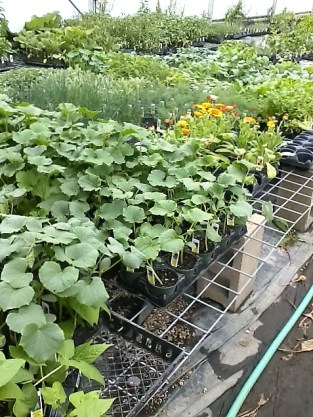 Growing food!
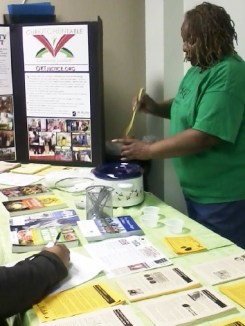 Healthy Eating Strategies
  In 2016, OKT decided to hold both its Friday and Saturday markets at MLK Jr. Park, 900 Fuller St. SE. The park setting brought increased traffic to our market vendors. OKT estimates that 656 patrons visited the market to generate $8,100 in sales.
 This is the second in a series of weekly posts highlighting OKT’s Food Justice series.
  on how to grow, prepare and preserve food, while exposing the current food
 During the first year of life, twice as many black babies die in Kalamazoo and Grand Rapids (11.9 per thousand) than white babies. In Muskegon, the numbers are even higher. To take a look at why these numbers continue to plague infants born to black women of all socio-economic and educational levels,
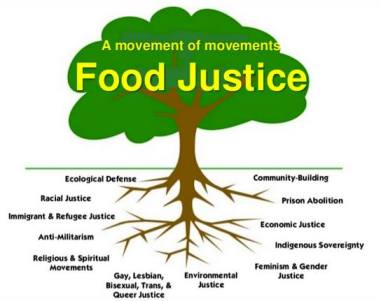
 Our Kitchen Table has developed a series of publications about different facets of Food Justice over the past several years. As our farmers’ market and growing programs are in seasonal hibernation, we will be highlighting the series on a weekly basis here on the website. Today, we will commence with brief definitions of a few Food Justice terms. (By the way, we may be starting up a limited, indoor, winter farmers’ market soon — we will keep you posted!)
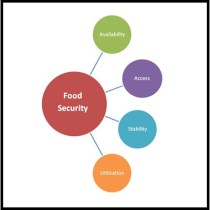 Food Insecurity
 ecosystem. And, grocery stores are not a measure of food security.
 Interested in gardening, natural building, farming, community organizing, finding right livelihood, or building a more regeneraitive resilient life in a crazy world? Permaculture is a great place to start!
 This fall, Our Kitchen Table has had the opportunity to attend and four different Michigan conferences relative to its work.
 Deconstructing Institutional Bias
 Thursday Nov. 17 marks the final public session of OKT’s 8-week cooking series with Grand Rapids’ cooking chef and farmer, Anja Mast. Participants have prepared and tasted a host of healthy dishes, become more “food literate” so healthy choices are easier, and learned about food justice. Please join us for either the morning 10 a.m. to 12 p.m. session of the evening 6 to 8 p.m. evening session to learn how to make healthy mac-n-cheese from scratch. Both take place at Sherman Stree Church, 1000 Sherman St. SE 49506.
 Our Kitchen Table